

Kirjahaku
Etsi kirjoja tekijän nimen, kirjan nimen tai ISBN:n perusteella.
1000 tulosta hakusanalla Marcel Proust

David Hopkins analyses the extensive network of shared concerns and images in the work of Marcel Duchamp and Max Ernst, the greatest names associated with Dada and Surrealist art. This book covers a broad period from c.1912 to the mid-1940s, during which the emergence of Dada and Surrealism in Europe and the United States challenged earlier movements such as Cubism and Expressionism, creating scope for the expression of the unconscious fears and desires of artists acutely sensitive to the troubled nature of their times. Examining Duchamp's and Ernst's subversion and manipulation of religious and hermetic beliefs such as Catholicism, Rosicrucianism and Masonry, David Hopkins demonstrates the ways in which these esoteric concerns intersect with themes of peculiarly contemporary relevance, including the social construction of gender and notions of ordering and taxonomy. This detailed comparison of components of Duchamp's and Ernst's work reveals fascinating structural patterns, enabling the reader to discover an entirely new way of understanding the mechanisms underlying Dada and Surrealist iconography.

Laila Storch is a world-renowned oboist in her own right, but her book honors Marcel Tabuteau, one of the greatest figures in twentieth-century music. Tabuteau studied the oboe from an early age at the Paris Conservatoire and was brought to the United States in 1905, by Walter Damrosch, to play with the New York Symphony Orchestra. Although this posed a problem for the national musicians' union, he was ultimately allowed to stay, and the rest, as they say, is history. Eventually moving to Philadelphia, Tabuteau played in the Philadelphia Orchestra and taught at the Curtis Institute of Music, ultimately revamping the oboe world with his performance, pedagogical, and reed-making techniques. In 1941, Storch auditioned for Tabuteau at the Curtis Institute, but was rejected because of her gender. After much persistence and several cross-country bus trips, she was eventually accepted and began a life of study with Tabuteau. Blending archival research with personal anecdotes, and including access to rare recordings of Tabuteau and Waldemar Wolsing, Storch tells a remarkable story in an engaging style.

A groundbreaking reading of Duchamp's work as informed by Asian "esoterism, " energetic spiritual practices identifying creative energy with the erotic impulse.Considered by many to be the most important artist of the twentieth century, the object of intensive critical scrutiny and extensive theorizing, Marcel Duchamp remains an enigma. He may be the most intellectual artist of all time; and yet, toward the end of his life, he said, "If you wish, my art would be that of living: each second, each breath is a work which is inscribed nowhere, which is neither visual or cerebral." In Marcel Duchamp and the Art of Life, Jacquelynn Baas offers a groundbreaking new reading of Duchamp, arguing in particular that his work may have been informed by Asian "esoterism, " energetic spiritual practices that identify creative energy with the erotic impulse. Duchamp drew on a wide range of sources for his art, from science and mathematics to alchemy. Largely overlooked, until now, have been Asian spiritual practices, including Indo-Tibetan tantra. Baas presents evidence that Duchamp's version of artistic realization was grounded in a western interpretation of Asian mind training and body energetics designed to transform erotic energy into mental and spiritual liberation. She offers close readings of many Duchamp works, beginning and ending with his final work, the mysterious, shockingly explicit Etant donnes: 1 Degrees la chute d'eau 2 Degrees le gaz d'eclairage, (Given: 1. The Waterfall, 2. The Illuminating Gas).Generously illustrated, with many images in color, Marcel Duchamp and the Art of Life speculates that Duchamp viewed art making as part of an esoteric continuum grounded in Eros. It asks us to unlearn what we think we know, about both art and life, in order to be open to experience.
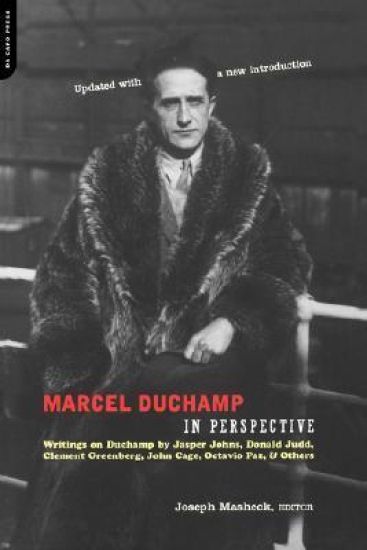
Best known for cheeky conceptual works,like his signed urinals ("R. Mutt") and his graffitioed Mona Lisa,Marcel Duchamp (1887-1968) was also an extraordinary painter and sculptor ( Nude Descending a Staircase ) who changed the language of twentieth-century art and reigns with Picasso and Matisse as one of its greatest influences. Joseph Masheck has compiled a sampler of the best writing on Duchamp, with pieces that include Duchamp's obituary from Artforum , written by Jasper Johns Octavio Paz on the ready-mades a Duchamp post-mortem by Hans Richter Donald Judd's investigation of Rrose Sélavy a "Counter-Avant-Garde" by Clement Greenberg a consideration by Guillaume Apollinaire and John Cage's "26 Statements on Marcel Duchamp." Illustrated with photographs of Duchamp's seminal pieces, and updated with a substantial preface that offers new scholarship as well as a fascinating consideration of why Duchamp's popularity has exponentially increased since this book first appeared, this is an essential volume for the Duchamp devotee.
Marcel Gauchet and the Crisis of Democratic Politics
TAYLOR FRANCIS LTD
2022
sidottu
This book presents, for the first time in the English language, Marcel Gauchet’s interpretation of the challenges faced by contemporary Western societies as a result of the crisis of liberal democratic politics and the growing influence of populism.Responding to Gauchet’s analysis, international experts explore the depoliticising aspects of contemporary democratic culture that explain the appeal of populism: neo-liberal individualism, the cult of the individual and its related human rights, and the juridification of all human relationships. The book also provides the intellectual context within which Gauchet’s understanding of modern society has developed—in particular, his critical engagement with Marxism and the profound influence of Cornelius Castoriadis and Claude Lefort on his work. It highlights the way Gauchet’s work remains faithful to an understanding of history that stresses the role of humanity as a collective subject, while also seeking to account for both the historical novelty of contemporary individualism and the new form of alienation that radical modernity engenders. In doing so, the book also opens up new avenues for reflection on the political significance of the contemporary health crisis.Marcel Gauchet and the Crisis of Democratic Politics will be of great interest to scholars and postgraduate students of social and political thought, political anthropology and sociology, political philosophy, and political theory.
Marcel Gauchet and the Crisis of Democratic Politics
TAYLOR FRANCIS LTD
2023
nidottu
This book presents, for the first time in the English language, Marcel Gauchet’s interpretation of the challenges faced by contemporary Western societies as a result of the crisis of liberal democratic politics and the growing influence of populism.Responding to Gauchet’s analysis, international experts explore the depoliticising aspects of contemporary democratic culture that explain the appeal of populism: neo-liberal individualism, the cult of the individual and its related human rights, and the juridification of all human relationships. The book also provides the intellectual context within which Gauchet’s understanding of modern society has developed—in particular, his critical engagement with Marxism and the profound influence of Cornelius Castoriadis and Claude Lefort on his work. It highlights the way Gauchet’s work remains faithful to an understanding of history that stresses the role of humanity as a collective subject, while also seeking to account for both the historical novelty of contemporary individualism and the new form of alienation that radical modernity engenders. In doing so, the book also opens up new avenues for reflection on the political significance of the contemporary health crisis.Marcel Gauchet and the Crisis of Democratic Politics will be of great interest to scholars and postgraduate students of social and political thought, political anthropology and sociology, political philosophy, and political theory.

Genius. Anti-artist. Charlatan. Impostor! Since 1914 Marcel Duchamp has been called all of these. No artist of the 20th century has aroused more passion and controversy, nor exerted a greater influence on art, the very nature of which Duchamp challenged and redefined as concept rather than product by questioning its traditionally privileged optical nature. At the same time, he never ceased to be engaged, openly or secretly, in provocative activities and works that transformed traditional artmaking procedures. Written with the enthusiastic support of Duchamp’s widow, this is one of the most original and important books ever written on this enigmatic artist, and challenges received ideas, misunderstanding and misinformation.With 172 illustrations in colour

Marcel Duchamp's Fountain has been cited as the most important art 'work' of the Twentieth century. This book gives essential background to any understanding of Duchamp and his art. Duchamp's French language, literary precedents and historical context frame the Fountain and give new insights into it's meaning, or lack thereof...

Marcel Duchamp's older artist brothers Jacques Villon and Raymond Duchamp Villon chose to rename themselves after the cheeky mediaeval poet Francois Villon. They were key in the formation of Marcel's ideas, both in his agreement with them and reaction to their actions. Despite this there are to date no studies of Francois Villon's work and its relation to Marcel Duchamp. This in depth study reveals surprising correlations both in attitude and method. It discusses several readymades and explains Duchamp's use of French linguistic nuance clearly. Above all with his humor in mind.

This book is the first intellectual biography of Marcel Mauss (1872-1950), the father of modern ethnology and a leading early figure in the French school of sociology. Mauss left a rich intellectual legacy in the social sciences, influencing the work of Claude Levi-Strauss and others. His masterpiece, the 1925 essay The Gift, on reciprocity and gift economies among archaic societies, remains required reading in anthropology, and his work more broadly resonates today with students and scholars in fields from the history of religion to sociology. Mauss taught the first generation of French field researchers in anthropology and helped secure the legacy of his uncle, emile Durkheim, the founder of modern sociology. In Marcel Mauss: A Biography, Marcel Fournier situates Mauss's ideas in their biographical context, focusing not only on the details of Mauss's life but also on the people and the academic milieus with which he was associated in early twentieth-century France. He shows how Mauss--through his writings, teaching, and socialist politics--found himself at the center of the intellectual and political life of his country and of Europe through two world wars. The book addresses, among other topics, the effect of the Dreyfus Affair and the First World War on Mauss's thought, and the inner dynamics of the group of scholars around Mauss and Durkheim at the journal they helped establish, Annee Sociologique. The fruit of vast research, Marcel Mauss: A Biography is the life story both of a legendary scholar and of the institutionalization of sociology and anthropology.
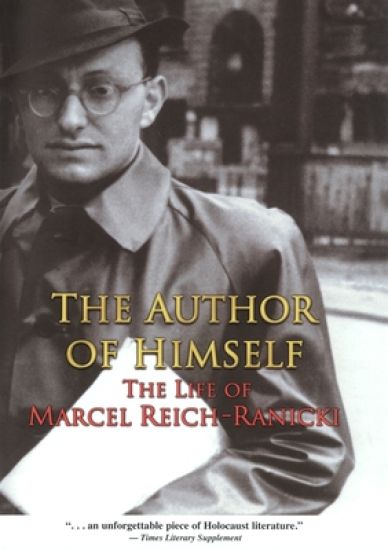
The Author of Himself: The Life of Marcel Reich-Ranicki
Marcel Reich-Ranicki
PRINCETON UNIVERSITY PRESS
2020
nidottu
Marcel Reich-Ranicki is remarkable for both his unlikely life story and his brilliant career as the "pope of German letters." His sublimely written autobiography is at once a fascinating adventure tale, an unusual account of German-Jewish relations, a personal rumination on who's who in German culture, and a love letter to literature. Reich-Ranicki's life took him from middle-class childhood to wartime misery to the heights of intellectual celebrity. Born into a Jewish family in Poland in 1920, he moved to Berlin as a boy. There he discovered his passion for literature and began a complex affair with German culture. In 1938, his family was deported back to Poland, where German occupation forced him into the Warsaw Ghetto. As a member of the Jewish resistance, a translator for the Jewish Council, and a man who personally experienced the ghetto's inhumane conditions, Reich-Ranicki gained both a bird's-eye and ground-level view of Nazi barbarism. Written with subtlety and intelligence, his account of this episode is among the most compelling and dramatic ever recorded. He escaped with his wife and spent two years hiding in the cellar of Polish peasants--an incident later immortalized by G nter Grass. After liberation, he joined and then fell out with the Communist Party and was temporarily imprisoned. He began writing and soon became Poland's foremost critical commentator on German literature. When Reich-Ranicki returned to Germany in 1958, his rise was meteoric. In short order, he claimed national celebrity and notoriety as the head of the literary section of the leading newspaper and host of his own television program. He frequently flabbergasted viewers with his bold pronouncements and flexed his power to make or break a writer's career. His list of friends and enemies rapidly expanded to include every influential player on the German literary scene, including Grass and Heinrich B ll. This, together with his keen critical instincts, makes his memoir an indispensable guide to contemporary German culture as well as an absorbing eyewitness history of some of the twentieth century's most important events.
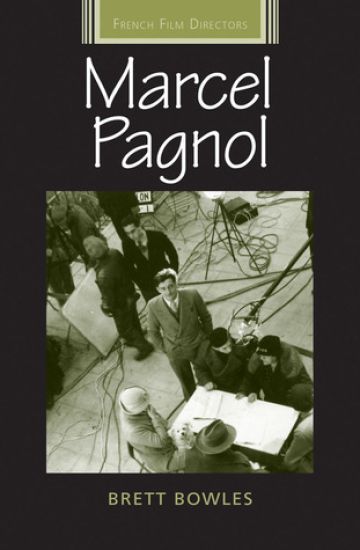
Though long ignored or dismissed by film critics and scholars, Marcel Pagnol (1895-1974) was among the most influential auteurs of his era. This comprehensive overview of Pagnol’s career, the first ever published in English, highlights his unique place in French cinema as a self-sufficient writer-producer-director and his contribution to the long-term evolution of filmmaking in a broader European context. In addition to reassessing the converted playwright’s controversial prioritisation of speech over image, the book juxtaposes Pagnol’s sunny rural melodramas with the dark, urban variety of poetic realism practised by influential peers such as Jean Renoir and Marcel Carné.In his penchant for outdoor location shooting and ethnographic authenticity, as well as his stubborn attachment to independent, artisanal production values, Pagnol served as a precursor to the French New Wave and Italian Neo-Realism, inspiring the likes of Jean-Luc Godard, François Truffaut, Vittorio De Sica, and Roberto Rossellini.

This book provides a scholarly yet accessible account of the work of Marcel Carné, one of the great directors of classical French cinema and the key figure behind the poetic realist film movement of the 1930s. His films, a number of which were made in collaboration with the poet-turned-scriptwriter Jacques Prévert, include such well-known works as Le Quai des brumes, Le Jour se lève and Les Enfants du paradis. As the first book to be written on Carné for a number of years, it offers a fresh perspective on his cinema, particularly through a re-examination of his post-war work – although many of these films were very popular and offer a fascinating insight into France at the time, they have, until now, largely been neglected.Adopting a carefully crafted aesthetic, his films explore a tension between pessimism and entrapment on the one hand, and transcendence, idealised romantic love and a populist celebration of working-class life on the other. His career traversed key moments in French cinema, including poetic realism, the tradition of quality and the French New Wave, and spanned important historical moments such as the Popular Front of the 1930s, the Second World War and France’s post-war modernisation. This book will be of interest to scholars, students and film-lovers alike.
A catalog documenting an exhibition of Marcel Duchamp's editioned readymades at Gagosian Gallery, New York, replicating his American debut at Cordier and Ekstrom in the same building in 1965 and including new essays.
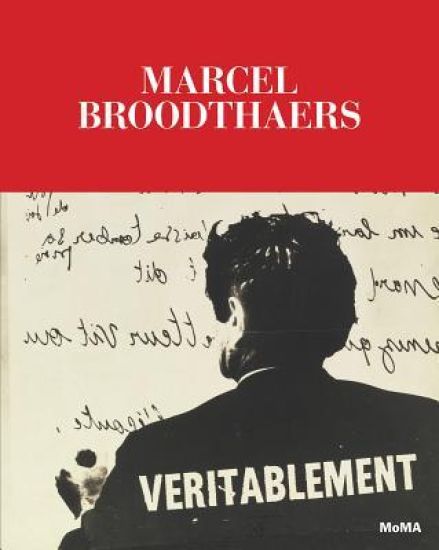
The catalog for the Museum of Modern Art's acclaimed Broodthaer's exhibitionMarcel Broodthaers' extraordinary artistic output placed him at the center of international activity during the transformative decades of the 1960s and 1970s. Throughout his career, from early objects variously made of mussel shells, eggshells and books of his own poetry, to his most ambitious project, the Mus e d'Art Moderne, D partement des Aigles (Museum of Modern Art, Department of Eagles), and the D cors made at the end of his life, Broodthaers occupied a unique position, often operating as both innovator and commentator. Setting a precedent for what we call installation art today, his work has had a profound influence on a broad range of contemporary artists, and he remains vitally relevant to cultural discourse at large. Published to accompany Broodthaers' first retrospective in New York, this volume examines the artist's work across all mediums. Essays by the exhibition organizers Christophe Cherix and Manuel Borja-Villel, along with a host of major scholars, including Benjamin H.D. Buchloh, Jean Fran ois Chevrier, Thierry de Duve and Doris Krystof, provide historical and theoretical context for the artist's work. The book also features new translations of many of Broodthaers' texts.Marcel Broodthaers (1924-76) worked as a poet and critic until the age of 40, when he declared himself a visual artist. Over the next 12 years, he moved between Brussels, his birth city, and D sseldorf and London. From 1968 to 1972 Broodthaers operated the Mus e d'Art Moderne, D partement des Aigles, an itinerant museum devoted to the exploration of the role of the institution itself and the function of art in society.
An extended tour de force with no act or scene breaks, Marcel Pursued by the Hounds examines how our "innocent" childhood games and fantasies can come back to haunt us in adult life, full of the dangers and realities that were invisible to us as children. An extended dialogue between the characters Marcel (one of the main characters in Tremblay's novel The First Quarter of the Moon) and Therese (one of the main characters in the novel Therese and Pierrette and the Little Hanging Angel), illuminated by a chorus of the fates, it is Michel Tremblay's toughest, most uncompromising play to date. Cast of 4 women and 1 adolescent male.

MARCEL MOYSE VOICE OF THE FLUTE
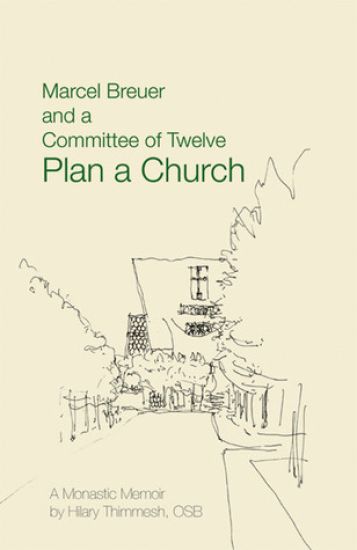
Marcel Breuer and a Committee of Twelve Plan a Church
Hilary Thimmesh
Saint John's University Press
2011
pokkari

Marcel & Me: A Memoir of Love, Lust, and Illusion
Paulette Frankl
Lightning Rod Publications
2014
nidottu
A young divorc e, searching for creativity and her true nature, meets the world's greatest mime, Marcel Marceau, backstage after a performance. Attracted to each other, they write and speak on the phone. He invites her on a one-week blind date that develops into a thirty-six-year liaison of love, lust, and illusion. This book is about what happens when the mistress of fantasy meets the master of illusion. Written in the language of the heart, this story has depth of soul. It is funny, erotic, poignant, and filled with wisdom about life, fame, and relationship. It is about the profound longing for union and the ferocious need for independence, being simultaneously vulnerable and daring. Marcel is portrayed onstage and off, as a friend and lover. Frankl unmasks the genius and humanizes the man. Marcel & Me contains original art by both the author and Marceau, as well as photos, along with a richly evocative read that, in the end, is real.