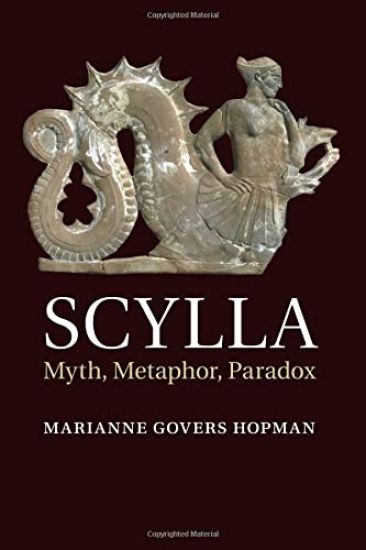
What's in a name? Using the example of a famous monster from Greek myth, this book challenges the dominant view that a mythical symbol denotes a single, clear-cut 'figure' and proposes instead to define the name 'Scylla' as a combination of three concepts - sea, dog and woman - whose articulation changes over time. While archaic and classical Greek versions usually emphasize the metaphorical coherence of Scylla's components, the name is increasingly treated as a well-defined but also paradoxical construct from the late fourth century BCE onward. Proceeding through detailed analyses of Greek and Roman texts and images, Professor Hopman shows how the same name can variously express anxieties about the sea, dogs, aggressive women and shy maidens, thus offering an empirical response to the semiotic puzzle raised by non-referential proper names.
Marianne North (1830–90), the Victorian amateur botanist and painter, travelled to distant countries of the world to paint exotic flora in their natural surroundings. This two-volume collection of her memoirs, edited by her sister and published in 1892, records North's remarkable travels. Laden with her palettes and easels, the independent North travelled alone and fended for herself. Her journals describe how she endured swarms of insects, scaled cliffs, trudged through wilderness and crossed swamps in order to reach the plants she wanted to paint. Volume 1 covers North's early upbringing and the origins of her enthusiasm for nature, and traces her travels through Canada and the United States, Jamaica, Brazil, Japan, Borneo, India and Sri Lanka. This fascinating autobiography reveals the stories behind North's art, which can still be appreciated today since she bequeathed her vivid paintings to Kew Gardens, where they are on display.
Marianne North (1830–90), the Victorian amateur botanist and painter, travelled to distant countries of the world to paint exotic flora in their natural surroundings. This two-volume collection of her memoirs, edited by her sister and published in 1892, records North's remarkable travels. Laden with her palettes and easels, the independent North travelled alone and fended for herself. Her journals describe how she endured swarms of insects, scaled cliffs, trudged through wilderness and crossed swamps in order to reach the plants she wanted to paint. Volume 2 covers North's travels to Australia and New Zealand, which she undertook at the suggestion of Charles Darwin. The work concludes with the last journey she made, to Chile in 1884–5, to paint the monkey-puzzle tree in its natural habitat. This autobiography reveals the stories behind North's art, which can still be appreciated today since her vivid paintings are displayed at Kew Gardens.
Harry Potter fans contribute their immaterial and affective labor in multiple arenas: as peer-to-peer marketers via fan sites and social media; as participants in amateur fan festivals; or as activists for social change. Fans' participation in the Harry Potter universe has contributed to its success. This Element examines how fans' labor might continue to support the franchise for future readers. Starting with the context and theoretical frameworks that support a multidimensional analysis of the Harry Potter fan experience, this Element examines tensions between fans and Warner Bros., as fan participation tests the limits of corporate control.
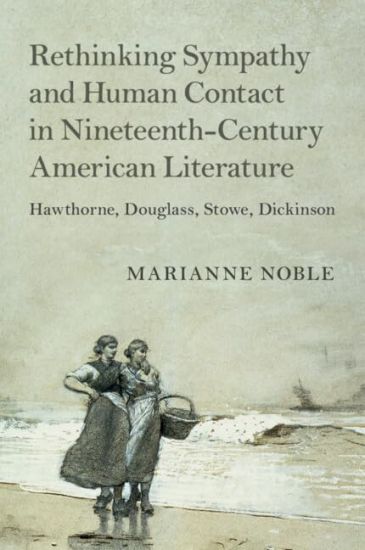
In accessible and impassioned discussions of literature and philosophy, this book reveals a surprising approach to the intractable problem of human contact. Nathaniel Hawthorne, Frederick Douglass, Harriet Beecher Stowe, and Emily Dickinson rethought the nature of human contact, turning away from transcendentalist approaches and towards sympathetic ones. Their second and third works portray social masks as insufficient, not deceptive, and thus human contact requires not violent striking through the mask but benevolent skepticism towards persons. They imagine that people feel real in a real world with real others when they care for others for the other's sake and when they make caring relationships the cornerstone of their own being. Grounded in philosophies of sympathy - including Adam Smith and J. G. Herder - and relational psychology - Winnicott and Benjamin - Rethinking Sympathy and Human Contact in Nineteenth-Century American Literature shows that antebellum literature rejects individualist definitions of the human and locates the antidote to human disconnection in sympathy.
In this book, Marianne Hem Eriksen explores the social organization of Viking Age Scandinavia through a study of domestic architecture, and in particular, the doorway. A highly charged architectural element, the door is not merely a practical, constructional solution. Doors control access, generate movement, and demark boundaries, yet also serve as potent ritual objects. For this study, Eriksen analyzes and interprets the archaeological data of house remains from Viking Age Norway, which are here synthesized for the first time. Using social approaches to architecture, she demonstrates how the domestic space of the Viking household, which could include masters and slaves, wives and mistresses, children and cattle, was not neutral. Quotidian and ritual interactions with, through, and orchestrated by doorways prove to be central to the production of a social world in the Viking Age. Eriksen's book challenges the male-dominated focus of research on the Vikings and expands research questions beyond topics of seaborne warriors, trade, and craft.
In accessible and impassioned discussions of literature and philosophy, this book reveals a surprising approach to the intractable problem of human contact. Nathaniel Hawthorne, Frederick Douglass, Harriet Beecher Stowe, and Emily Dickinson rethought the nature of human contact, turning away from transcendentalist approaches and towards sympathetic ones. Their second and third works portray social masks as insufficient, not deceptive, and thus human contact requires not violent striking through the mask but benevolent skepticism towards persons. They imagine that people feel real in a real world with real others when they care for others for the other's sake and when they make caring relationships the cornerstone of their own being. Grounded in philosophies of sympathy - including Adam Smith and J. G. Herder - and relational psychology - Winnicott and Benjamin - Rethinking Sympathy and Human Contact in Nineteenth-Century American Literature shows that antebellum literature rejects individualist definitions of the human and locates the antidote to human disconnection in sympathy.
Now in its fourth edition, this comprehensive, best-selling methodology resource gives both prospective and experienced ESL/ELT teachers the theoretical background and practical applications they need to decide which approaches, materials, and resources can and should be used in their classrooms.
The fully updated single-source guide to creating successful packaging designs for consumer products Now in full-color throughout, Packaging Design, Second Edition has been fully updated to secure its place as the most comprehensive resource of professional information for creating packaging designs that serve as the marketing vehicles for consumer products. Packed with practical guidance, step-by-step descriptions of the creative process, and all-important insights into the varying perspectives of the stakeholders, the design phases, and the production process, this book illuminates the business of packaging design like no other. Whether you're a designer, brand manager, or packaging manufacturer, the highly visual coverage in Packaging Design will be useful to you, as well as everyone else involved in the process of marketing consumer products. To address the most current packaging design objectives, this new edition offers: Fully updated coverage (35 percent new or updated) of the entire packaging design process, including the business of packaging design, terminology, design principles, the creative process, and pre-production and production issuesA new chapter that puts packaging design in the context of brand and business strategiesA new chapter on social responsibility and sustainabilityAll new case studies and examples that illustrate every phase of the packaging design processA history of packaging design covered in brief to provide a context and framework for today's businessUseful appendices on portfolio preparation for the student and the professional, along with general legal and regulatory issues and professional practice guidelines
Covering a wide range of magazine work, including editing, illustration, poetry, needlework instruction and typesetting, this book provides fresh insights into the participation of women in the nineteenth-century magazine industry.
This book demonstrates how the roles of “author,” “marketer,” and “reviewer” are being redefined, as online environments enable new means for young adults to participate in the books they love.Prior to the expansion of digital technologies around reading, teachers, parents and librarians were the primary gatekeepers responsible for getting books into the hands of young people. Now publishers can create disintermediated digital enclosures in which they can communicate directly with their reading audience. This book exposes how teens contribute their immaterial and affective labor as they engage in participatory reading experiences via publishers’ and authors’ interactive websites and use of social media, and how in turn publishers are able to use such labor as they get invaluable market research, peer-to-peer recommendations, and even content which can be used in other projects all virtually free-of-charge.
This book provides a cutting-edge analysis of the ways in which higher education institutions have become more international over the past two decades. Drawing upon a range of post-foundational spatial, network, and mobilities theories, the book shifts our thinking away from linear, binary, Western accounts of internationalization to understand the complex, multi-centered and contradictory ways in which internationalization processes have played out across a wide variety of higher education landscapes worldwide. The author explores transnational student, scholar, knowledge, program and provider mobilities; the production of mobile bodies, knowledges, and identities; the significance of place in internationalization; and the crucial role that global university rankings play in reshaping the spatial landscape of higher education.
This book provides a cutting-edge analysis of the ways in which higher education institutions have become more international over the past two decades. Drawing upon a range of post-foundational spatial, network, and mobilities theories, the book shifts our thinking away from linear, binary, Western accounts of internationalization to understand the complex, multi-centered and contradictory ways in which internationalization processes have played out across a wide variety of higher education landscapes worldwide. The author explores transnational student, scholar, knowledge, program and provider mobilities; the production of mobile bodies, knowledges, and identities; the significance of place in internationalization; and the crucial role that global university rankings play in reshaping the spatial landscape of higher education.
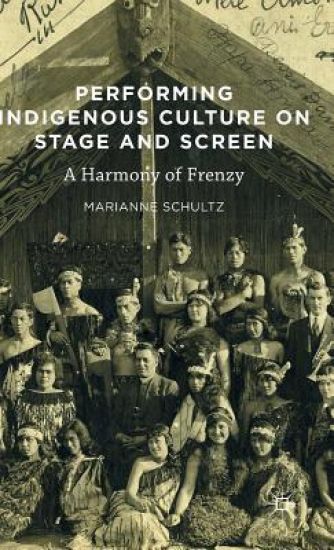
Examining corporeal expressions of indigenousness from an historical perspective, this book highlights the development of cultural hybridity in New Zealand via the popular performing arts, contributing new understandings of racial, ethnic, and gender identities through performance. The author offers an insightful and welcome examination of New Zealand performing arts via case studies of drama, music, and dance, performed both domestically and internationally. As these examples show, notions of modern New Zealand were shaped and understood in the creation and reception of popular culture. Highlighting embodied indigenous cultures of the past provides a new interpretation of the development of New Zealand's cultural history and adds an unexplored dimension in understanding the relationships between M?ori (indigenous New Zealander) and P?keh? (non-M?ori) throughout the late nineteenth and into the early twentieth centuries.
In the sixteenth century and seventeenth centuries it was women who were almost exclusively persecuted as witches. However, the witch craze has been subjected to surprisingly little feminist analysis. In Lewd Women and Wicked Witches, Marianne Hester reviews and develops revolutionary feminist thinking. Accordingly, she shows how witches can be seen as victims of the oppression of a male dominated society.Concentrating on English source material, the author shows how witch-hunts may be seen as an historically specific example of male dominance. Relying on an eroticised construct of women's inferiority, they were part of the ongoing attempt by men to maintain their power over women.