Kirjojen hintavertailu. Mukana 11 699 587 kirjaa ja 12 kauppaa.

Kirjahaku

Etsi kirjoja tekijän nimen, kirjan nimen tai ISBN:n perusteella.

1000 tulosta hakusanalla Mark Allan Keyes

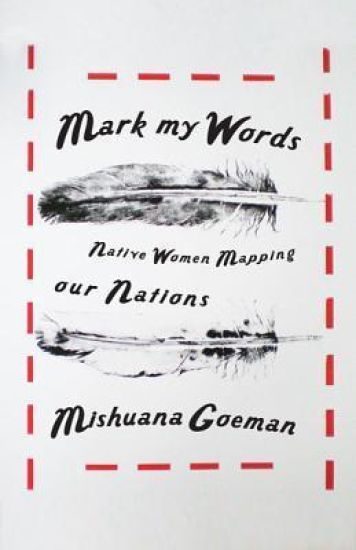
Mark My Words

Mark My Words

Mishuana Goeman

University of Minnesota Press
2013
nidottu
Dominant history would have us believe that colonialism belongs to a previous era that has long come to an end. But as Native people become mobile, reservation lands become overcrowded and the state seeks to enforce means of containment, closing its borders to incoming, often indigenous, immigrants.In Mark My Words, Mishuana Goeman traces settler colonialism as an enduring form of gendered spatial violence, demonstrating how it persists in the contemporary context of neoliberal globalization. The book argues that it is vital to refocus the efforts of Native nations beyond replicating settler models of territory, jurisdiction, and race. Through an examination of twentieth-century Native women’s poetry and prose, Goeman illuminates how these works can serve to remap settler geographies and center Native knowledges. She positions Native women as pivotal to how our nations, both tribal and nontribal, have been imagined and mapped, and how these women play an ongoing role in decolonization.In a strong and lucid voice, Goeman provides close readings of literary texts, including those of E. Pauline Johnson, Esther Belin, Joy Harjo, Leslie Marmon Silko, and Heid Erdrich. In addition, she places these works in the framework of U.S. and Canadian Indian law and policy. Her charting of women’s struggles to define themselves and their communities reveals the significant power in all of our stories.
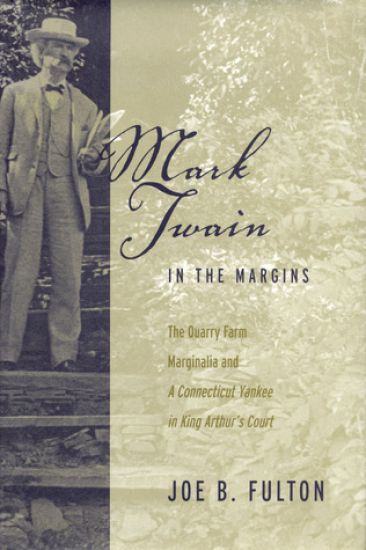
Mark Twain in the Margins

Mark Twain in the Margins

Joe B. Fulton

The University of Alabama Press
2000
nidottu
The common characterization of Mark Twain as an uneducated and improvizational writer took hold largely because of the novelist's own claims about his writing practices. This book argues that Twain approached his work with careful research and calculated design.
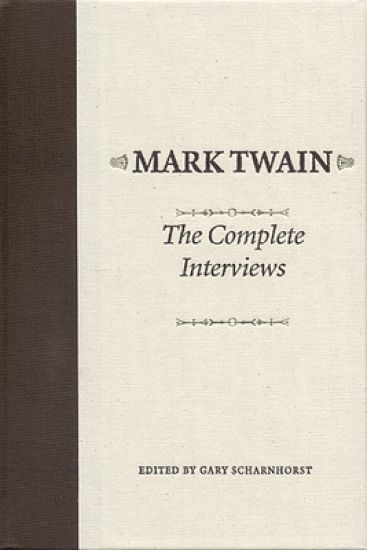
Mark Twain

Mark Twain

The University of Alabama Press
2006
sidottu
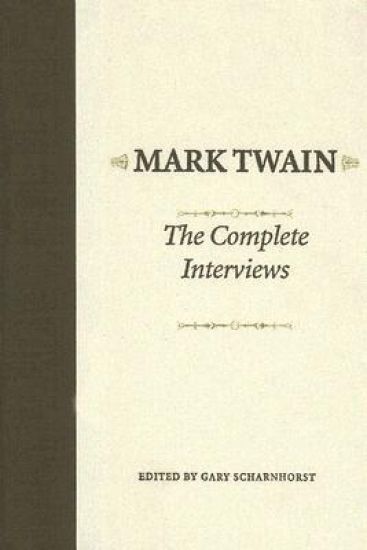
This volume is an annotated and indexed scholarly edition of every known interview with Mark Twain spanning his entire career. In these interviews, Twain discusses such topical issues as his lecture style, his writings, and his bankruptcy, while holding forth on such timeless issues as human nature, politics, war and peace, government corruption, humor, race relations, imperialism, international copyright, the elite, and his impressions of other writers (Howells, Gorky, George Bernard Shaw, Tennyson, Longfellow, Kipling, Hawthorne, Dickens, Bret Harte, among others). These interviews are both oral performances in their own right and a new basis for evaluating contemporary responses to Twain's writings. Some of the parameters Gary Scharnhorst has followed in assembling the collection is to omit self-interviews, humorous sketches written by Twain in interview form, interviews judged by Twain scholars to be spurious, purported interviews that contain no direct quotations, and interviews that exist only in versions translated from the English, as there is no way to verify the accuracy of their retranslations back into English. Because the interviews are records of verbal conversations rather than texts written in Twain's hand, Scharnhorst has corrected errors in spelling and regularized punctuation. Four interviews here are new to scholarship; fewer than a fifth have ever been reprinted. Because ""Mark Twain: The Complete Interviews"" makes accessible, in one volume, source documents of immeasurable value to understanding one of America's most consequential writers, it will be valued by both academic and public libraries, Twain scholars and enthusiasts, and general readers of humor.
Mark Twain at Home

Mark Twain at Home

Michael J. Kiskis; Laura Skandera Trombley; Gary Scharnhorst

The University of Alabama Press
2016
sidottu
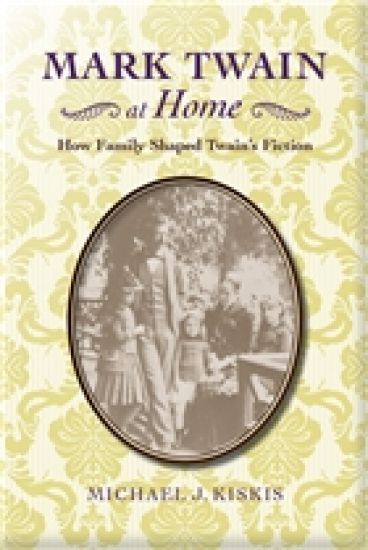
Twain scholar Michael Kiskis opens this fascinating new exploration of Twain with the observation that most readers have no idea that Samuel Clemens was the father of four and that he lived through the deaths of three of his children as well as his wife. In Mark Twain at Home: How Family Shaped Twain’s Fiction, Kiskis persuasively argues that not only was Mark Twain not, as many believe, “antidomestic,” but rather the home and family were the muse and core message of his writing.Mark Twain was the child of a loveless marriage and a homelife over which hovered the constant specter of violence. Informed by his difficult childhood, orthodox readings of The Adventures of Tom Sawyer and Adventures of Huckleberry Finn frame these canonical literary figures as nostalgic—autobiographical fables of heroic individualists slipping the bonds of domestic life.Kiskis, however, presents a wealth of biographical details about Samuel Clemens and his family that reinterpret Twain’s work as a robust affirmation of domestic spheres of life. Among Kiskis’s themes are that, as the nineteenth century witnessed high rates of orphanhood and childhood mortality, Clemens’s work often depicted unmoored children seeking not escape from home but rather seeking the redemption and safety available only in familial structures. Similarly, Mark Twain at Home demonstrates that, following the birth of his first daughter, Twain began to exhibit in his writing an anxiety with social ills, notably those that affected children.In vigorous and accessible descriptions of Twain’s life as it became reflected in his prose, Kiskis offers a compelling and fresh understanding of this work of this iconic American author.
Mark Twain and Money

Mark Twain and Money

The University of Alabama Press
2017
sidottu
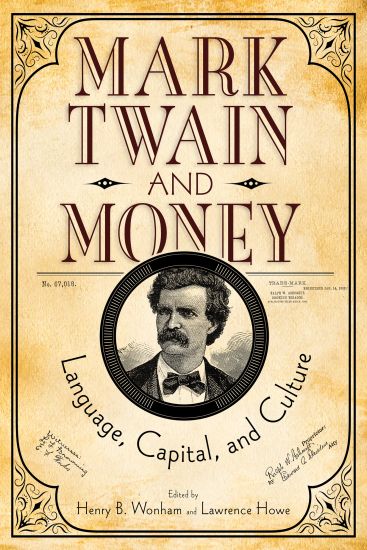
This groundbreaking volume explores the importance of economics and prosperity throughout Samuel Clemens’s writing and personal life.Mark Twain and Money: Language, Capital, and Culture focuses on an overlooked feature of the story of one of America’s most celebrated writers. Investigating Samuel Clemens’s often conflicting but insightful views on the roles of money in American culture and identity, this collection of essays shows how his fascination with the complexity of nineteenth-century economics informs much of Mark Twain’s writing. While most readers are familiar with Mark Twain the worldly wise writer, fewer are acquainted with Samuel Clemens the avid businessman. Throughout his life, he sought to strike it rich, whether mining for silver in Nevada, founding his own publishing company, or staking out ownership in the Paige typesetting machine. He was ever on the lookout for investment schemes and was intrigued by inventions, his own and those of others, that he imagined would net a windfall. Conventional wisdom has held that Clemens’s obsession with business and material wealth hindered his ability to write more and better books. However, this perspective fails to recognize how his interest in economics served as a rich source of inspiration for his literary creativity and is inseparable from his achievements as a writer. In fact, without this preoccupation with monetary success, Henry B. Wonham and Lawrence Howe argue, Twain’s writing would lack an important connection to a cornerstone of American culture. The contributors to this volume examine a variety of topics, such as a Clemens family myth of vast landholdings, Clemens’s strategies for protecting the Mark Twain brand, his insights into rapidly evolving nineteenth-century financial practices, the persistence of patronage in the literary marketplace, the association of manhood and monetary success, Clemens’s attitude and actions toward poverty, his response to the pains of bankruptcy through writing, and the intersection of racial identity and economics in American culture. These illuminating essays show how pecuniary matters invigorate a wide range of Twain’s writing from The Gilded Age, Roughing It,The Adventures of Tom Sawyer, The Prince and the Pauper, and A Connecticut Yankee in King Arthur’s Court, to later stories like “The £1,000,000 Banknote” and the Autobiography.
Mark Twain in the Margins

Mark Twain in the Margins

Joe B. Fulton

The University of Alabama Press
2007
nidottu
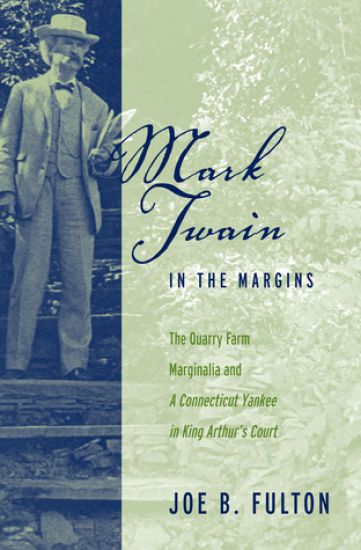
The common characterization of Mark Twain as an uneducated and improvisational writer took hold largely because of the novelist's own frequent claims about his writing practices. But using recently discovered evidence--Twain's marginal notes in books he consulted as he worked on A Connecticut Yankee in King Arthur's Court--Joe Fulton argues for a reconsideration of scholarly views about Twain's writing process, showing that this great American author crafted his novels with careful research and calculated design. Fulton analyzes Twain's voluminous marginalia in the copies of Macaulay's History of England, Carlyle's History of the French Revolution, and Lecky's History of the Rise of Rationalism and England in the Eighteenth Century available to Twain in the library of Quarry Farm, the New York farm where the novelist and his family routinely spent their summers. Comparing these marginal notes to entries in Twain's writing journal, the manuscript of Connecticut Yankee, and the book as published in 1889, Fulton establishes that Twain's research decisively influenced the novel. Fulton reveals Twain to be both the writer from experience he claimed to be and the careful craftsman that he attempted to downplay. By redefining Twain's aesthetic, Fulton reinvigorates current debates about what constitutes literary realism. Fulton's transcriptions of the marginalia appear in an appendix; together with his analysis, they provide a valuable new resource for Twain scholars.
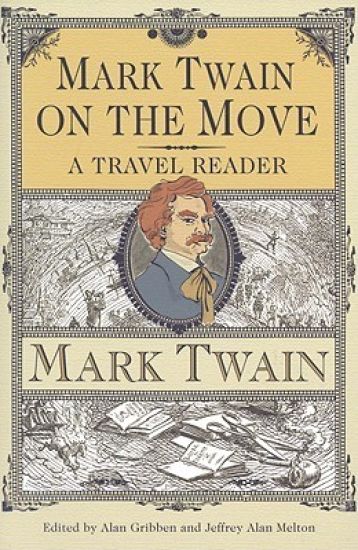
Mark Twain on the Move

Mark Twain on the Move

Mark Twain

The University of Alabama Press
2008
nidottu
Mark Twain on the Move gathers the very best passages from all five of Mark Twain's travel narratives: ""The Innocents Abroad"" (1869), ""Roughing It"" (1872), ""A Tramp Abroad"" (1880), ""Life on the Mississippi"" (1883), and ""Following the Equator"" (1897). Although Twain's travel narratives were his best sellers throughout his career, modern readers are largely unfamiliar with them. Thus, readers are not only missing some of Twain's most hilarious and insightful material, they are also missing a complete understanding of a beloved literary and cultural icon.""Mark Twain on the Move"" presents the best of these works - sometimes respectful, often irreverent and outlandish - at their most lively and captures his renowned experiences as an American tourist. And they demonstrate why Twain's greatest popularity in his lifetime derived from his travel writings rather than from his novels. Twain was always entertaining and provocative while on the move and this collection captures that fabled energy for modern readers.
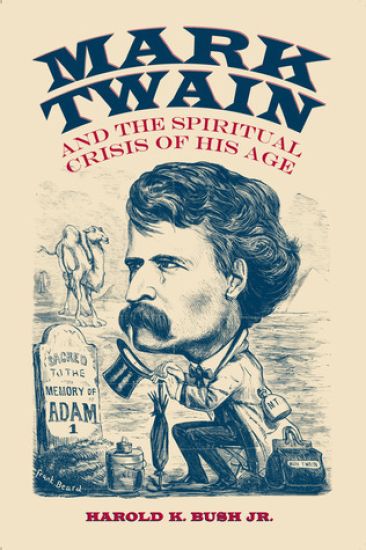
Mark Twain and the Spiritual Crisis of His Age

Mark Twain and the Spiritual Crisis of His Age

Harold K. Bush

The University of Alabama Press
2008
nidottu
Mark Twain and the Spiritual Crisis of His Age recounts Twain's fascination with, and participation in, America's spiritual and religious evolution in the 19th century and demonstrates how his writing is better understood within it. Twain is often pictured as a severe critic of religious piety, shaking his fist at God and mocking the devout. Such a view, however, is only partly correct. It ignores the social realities of Twain's major period as a writer and his own spiritual interests: his participation in church activities, his socially progressive agenda, his reliance on religious themes in his major works, and his friendships with clergymen, especially his pastor and best friend, Joe Twichell. It also betrays a conception of religion that is more contemporary than that of the period in which he lived.Harold K. Bush Jr. highlights Twain's attractions to and engagements with the wide variety of religious phenomena of America in his lifetime, and how these matters affected his writings. Though Twain lived in an era of tremendous religious vigor, it was also a time of upheaval and crisis within the church. The rise of biological and psychological sciences, the criticism of biblical texts as literary documents, the influx of world religions and immigrant communities, and the trauma of the Civil War all had dramatic effects on America's religious life.At the same time mass urban revivalism, the ecumenical movement, Social Christianity, and occultic phenomena like spiritualism and mind sciences, all rushed in to fill the voids. The rapid growth of agnosticism in the 1870s and 1880s is also clearly reflected in Twain's life and writings. Thus Twain's career reflects in an unusually resonant way the vast changes in American belief during his lifetime. Bush's study offers a new and more complicated understanding of Twain and his literary output, and serves as the cultural biography of an era.
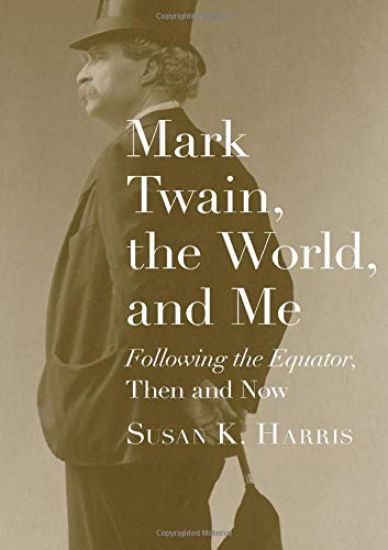
Mark Twain, the World, and Me

Mark Twain, the World, and Me

Susan K. Harris

The University of Alabama Press
2020
nidottu
Winner of the Elizabeth Agee Prize in American LiteratureA scholar accompanies Twain on his journey around the worldIn Mark Twain, the World, and Me: Following the Equator, Then and Now, Susan K. Harris follows Twain's last lecture tour as he wound his way through the British Empire in 1895-1896. Deftly blending history, biography, literary criticism, reportage, and travel memoir, Harris gives readers a unique take on one of America's most widely studied writers. Structured as a series of interlocking essays written in the first person, this book draws on Twain's insights into the histories and cultures of Australia, India, and South Africa and weaves them into timely reflections on the legacies of those countries today. Harris offers meditations on what Twain's travels mean for her as a scholar, a white woman, a Jewish American, a wife, and a mother. By treating topics as varied as colonial rule, the clash between indigenous and settler communities, racial and sexual 'inbetweenness,' and species decimation, Harris reveals how the world we know grew out of the colonial world Twain encountered. Her essays explore issues of identity that still trouble us today: respecting race and gender, preserving nature, honoring indigenous peoples, and respecting religious differences.
Mark Twain

Mark Twain

The University of Alabama Press
2020
nidottu
Mark Twain: The Complete Interviews is an annotated and indexed scholarly edition of every known interview with Mark Twain. In these interviews that span his entire career, Twain discusses matters as varied as his lecture style, his writings, and his bankruptcy, while holding forth on such timeless issues as human nature, politics, war and peace, government corruption, humour, race relations, imperialism, international copyright, the elite, and his impressions of other writers.These interviews are oral performances in their own right and a new basis for evaluating contemporary responses to Twain’s writings. The interviews are records of verbal conversations rather than texts written in Twain’s hand. Four interviews are new to scholarship; fewer than a fifth have ever been reprinted.
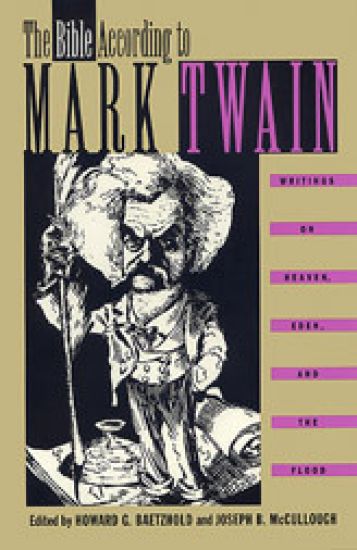
The Bible According to Mark Twain

The Bible According to Mark Twain

Mark Twain

University of Georgia Press
1995
sidottu
This volume collects the most important writings by Mark Twain in which he used biblical settings, themes, and figures. Featuring Twain's singular portrayals of God, Adam, Eve, Satan, Methuselah, Shem, St. Peter, and others, the writings stand among Twain's most imaginative expressions of his views on human nature and humankind's relation to the Creator and the universe.Composed over four decades (1871-1910), the writings range from farce to fantasy to satire, each one bearing the mark of Twain's unmistakable wit and insight. Among the many delights in store for readers are Adam and Eve's divergent accounts of their domestic troubles; Methuselah's discussion of an ancient version of baseball, complete with a parody of baseball jargon; Shem's hand-wringing account of how material shortages and labor troubles were hampering the progress of the ark his father, Noah, was building; a description of the disruptive actions of the fire-and-brimstone evangelist Sam Jones upon arriving in heaven; Captain Stormfield's revelations of what heaven is really like; Satan's musings on our puerile concepts of the afterlife; and Twain's advice on how to dress and tip properly in heaven.Twain's humor, however, is never gratuitous. As readers laugh their way through this volume, they will find ample evidence of Twain's concerns about scriptural fallacies and inconsistencies, the Bible's rather flat portrayal of important characters, and our limited notions about the nature and meaning of our own—and God's—existence. Many of the pieces in this collection, even the most lighthearted, might still be considered controversial; of some of the darker pieces, Twain himself acknowledged that they would be heretical in any age. Moreover, these writings are valuable cultural artifacts of a time when, across the Western world, fundamental religious beliefs were being called into question by the precepts of Darwinism and the rapid advances of science and technology.Several of this volume's selections are previously unpublished; others, like Letters from the Earth, are classics. Virtually all have been newly edited to reflect as closely as possible Twain's final intentions for their form and content. For serious Twain devotees, editors Howard G. Baetzhold and Joseph B. McCullough have supplied an abundance of background material on the writings, including details on the history of their composition, publication, and relevance to the Twain canon.
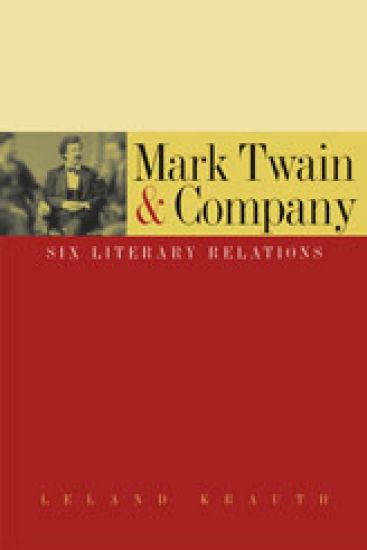
Mark Twain & Company

Mark Twain & Company

Leland Krauth

University of Georgia Press
2003
sidottu
In this comparison of Mark Twain with six of his literary contemporaries, Leland Krauth looks anew at the writer's multifaceted creativity. Twain, a highly lettered man immersed in the literary culture of his time, viewed himself as working within a community of writers. He likened himself to a guild member whose work was the crafted product of a common trade—and sometimes made with borrowed materials.Yet there have been few studies of Twain in relation to his fellow guild members. In Mark Twain & Company, Krauth examines some creative "sparks and smolderings" ignited by Twain's contact with certain writers, all of whom were published, read, and criticized on both sides of the Atlantic: the Americans Bret Harte, William Dean Howells, and Harriet Beecher Stowe and the British writers Matthew Arnold, Robert Louis Stevenson, and Rudyard Kipling.Each chapter explores the nature of Twain's personal relationship with a writer as well as the literary themes and modes they shared. Krauth looks at the sentimentality of Harte and Twain and its influence on their protest fiction; the humor and social criticism of Twain and Howells; the use of the Gothic by Twain and Stowe to explore racial issues; the role of Victorian Sage assumed by Arnold and Twain to critique civilization; the exploitation of adventure fiction by Twain and Stevenson to reveal conceptions of masculinity; and the use of the picaresque in Kipling and Twain to support or subvert imperialism.Mark Twain & Company casts new light on some of the most enduring writers in English. At the same time it refreshes the debate over the transatlantic nature of Victorianism with new insights about nineteenth-century morality, conventionality, race, corporeality, imperialism, manhood, and individual identity.
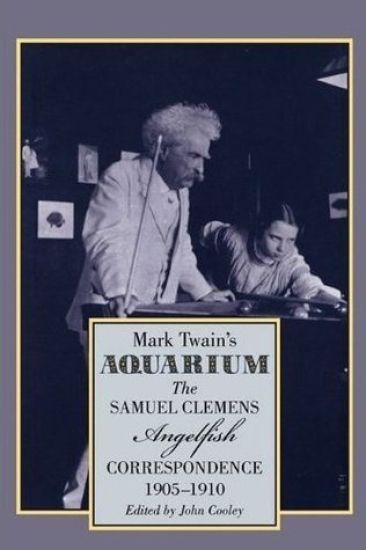
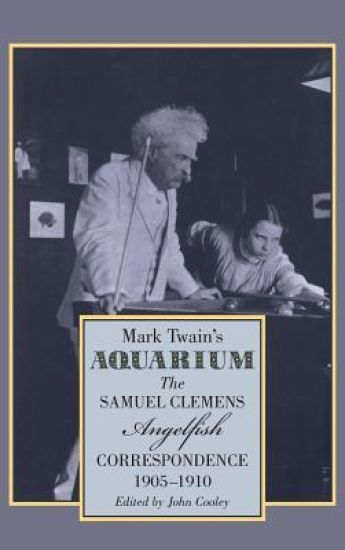
Mark Twain's Aquarium

Mark Twain's Aquarium

Samuel Clemens

University of Georgia Press
2009
pokkari
"What I lacked and what I needed," confessed Samuel Clemens in 1908, "was grandchildren." Near the end of his life, Clemens became the doting friend and correspondent of twelve schoolgirls ranging in age from ten to sixteen. For Clemens, "collecting" these surrogate granddaughters was a way of overcoming his loneliness, a respite from the pessimism, illness, and depression that dominated his later years.In Mark Twain's Aquarium, John Cooley brings together virtually every known communication exchanged between the writer and the girls he called his "angelfish." Cooley also includes a number of Clemens's notebook entries, autobiographical dictations, short manuscripts, and other relevant materials that further illuminate this fascinating story.Clemens relished the attention of these girls, orchestrating chaperoned visits to his homes and creating an elaborate set of rules and emblems for the Aquarium Club. He hung their portraits in his billiard room and invented games and plays for their amusement. For much of 1908, he was sending and receiving a letter a week from his angelfish. Cooley argues that Clemens saw cheerfulness and laughter as his only defenses against the despair of his late years. His enchantment with children, years before, had given birth to such characters as Tom Sawyer, Becky Thatcher, and Huck Finn. In the frivolities of the Aquarium Club, it found its final expression.Cooley finds no evidence of impropriety in Clemens behavior with the girls. Perhaps his greatest crime, the editor suggests, was in idealizing them, in regarding them as precious collectibles. "He tried to trap them in the amber of endless adolescence," Cooley writes. "By pleading that they stay young and innocent, he was perhaps attempting to deny that, as they and the world continued to change, so must he."
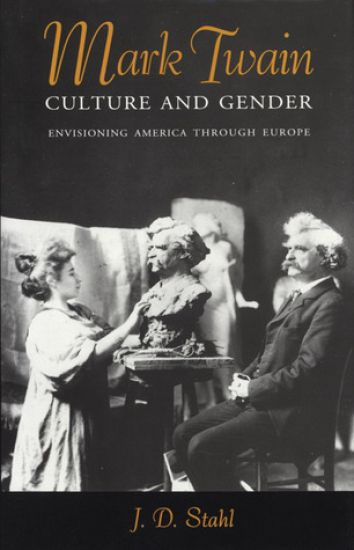
Mark Twain, Culture and Gender

Mark Twain, Culture and Gender

J. D. Stahl

University of Georgia Press
2012
pokkari
Often regarded as the quintessential American author, Mark Twain in fact mined his knowledge and experience of Europe as assiduously as he did his adventures on the Mississippi and in the American West. In this challenging and original study, J. D. Stall looks closely at various Twain works with European settings and traces the manner in which the great writer redefined European notions of class into American concepts of gender, identity, and society.Stahl not only examines such famous writings as The Innocents Abroad, The Prince and the Pauper, A Connecticut Yankee in King Arthur's Court, and the "Mysterious Stranger" manuscripts but also treats a number of neglected works, including 1601, "A Memorable Midnight Experience", and Personal Recollections of Joan of Arc. In these writings, Stahl shows, Twain utilized the terms and symbols of European society and history to express his deepest concerns involving father–son relationships, the legitimation of parentage, female political and sexual power, the victimization of "good" women, and, ultimately, the desire to bridge or even destroy the barriers between the sexes. The "exoticism" of foreign culture—with its kings and queens, priests, and aristocrats—furnished Twain with some especially potent images of power, authority, and tradition. These images, Stahl argues, were "plastic material in Mark Twain's hands", enabling the writer to explore the uncertainties and ambiguities of gender in America: what it meant to be a man in Victorian America; what Twain thought it meant to be a woman; how men and women did, could, and should relate to each other.Stahl's approach yields a wealth of fresh insights into Twain's work. In discussing The Innocents Abroad, for example, he analyzes the emergence of the "Mark Twain" persona as part of a quest for cultural authority that often took the form of sexual role-playing. He also demonstrates that The Prince and the Pauper, even more strikingly than Adventures of Huckleberry Finn, embodies the writer's central myth of orphaned sons searching for surrogate fathers. His reading of A Connecticut Yankee is a tour de force, uncovering the psychological contradictions in Twain's political aspirations toward democratic equality.Stahl's book is an important contribution to literary scholarship, informed by psychology, gender study, cultural theory, and traditional Twain criticism. It confirms Mark Twain's debt to European culture even as it illuminates his re-envisioning of that culture in his own uniquely American way.
Mark Twain's Aquarium

Mark Twain's Aquarium

Samuel Clemens

University of Georgia Press
2018
sidottu
"What I lacked and what I needed," confessed Samuel Clemens in 1908, "was grandchildren." Near the end of his life, Clemens became the doting friend and correspondent of twelve schoolgirls ranging in age from ten to sixteen. For Clemens, "collecting" these surrogate granddaughters was a way of overcoming his loneliness, a respite from the pessimism, illness, and depression that dominated his later years.In Mark Twain's Aquarium, John Cooley brings together virtually every known communication exchanged between the writer and the girls he called his "angelfish." Cooley also includes a number of Clemens's notebook entries, autobiographical dictations, short manuscripts, and other relevant materials that further illuminate this fascinating story.Clemens relished the attention of these girls, orchestrating chaperoned visits to his homes and creating an elaborate set of rules and emblems for the Aquarium Club. He hung their portraits in his billiard room and invented games and plays for their amusement. For much of 1908, he was sending and receiving a letter a week from his angelfish. Cooley argues that Clemens saw cheerfulness and laughter as his only defenses against the despair of his late years. His enchantment with children, years before, had given birth to such characters as Tom Sawyer, Becky Thatcher, and Huck Finn. In the frivolities of the Aquarium Club, it found its final expression.Cooley finds no evidence of impropriety in Clemens behavior with the girls. Perhaps his greatest crime, the editor suggests, was in idealizing them, in regarding them as precious collectibles. "He tried to trap them in the amber of endless adolescence," Cooley writes. "By pleading that they stay young and innocent, he was perhaps attempting to deny that, as they and the world continued to change, so must he."
Mark Twain and Religion

Mark Twain and Religion

John Q Hays

Peter Lang Publishing Inc
1989
sidottu
Literary scholars long have insisted that, because of familial and financial tragedy and a growing feeling of artistic failure, Samuel L. Clemens (Mark Twain) suffered the deterioration of his religious writing into inconsistency and bleak despair. Refuting that critical dogmatism, John Q. Hays's seminal "Mark Twain" "and Religion: A Mirror of American Eclecticism" rejects notions of personal causation and instead attributes the inconsistency and despair to the properties of the materials with which Twain worked. Having rejected religious orthodoxy, Twain successively examines 18th century Rationalism, early 19th century Romanticism, and late 19th and early 20th century Scientific Determinism (all with undercurrents of folkloric supernaturalism he had learned from black slaves of his youth) in a literary eclectic journey similar to that of the corporate national mind and soul and reflective of someone spiritually alive.
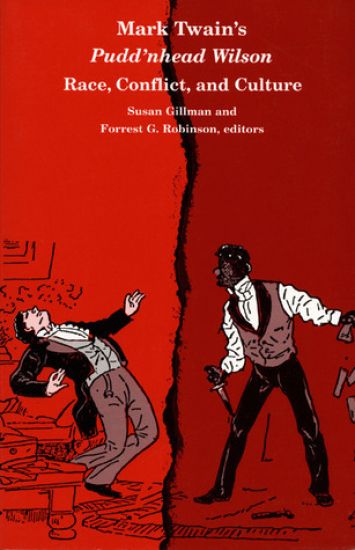
Mark Twain's Pudd'nhead Wilson

Mark Twain's Pudd'nhead Wilson

Duke University Press
1990
pokkari
This collection seeks to place Pudd’nhead Wilson-a neglected, textually fragmented work of Mark Twain’s-in the context of contemporary critical approaches to literary studies. The editors’ introduction argues the virtues of using Pudd’nhead Wilson as a teaching text, a case study in many of the issues presently occupying literary criticism: issues of history and the uses of history, of canon formation, of textual problematics, and finally of race, class, and gender. In a variety of ways the essays build arguments out of, not in spite of, the anomalies, inconsistencies, and dead ends in the text itself. Such wrinkles and gaps, the authors find, are the symptoms of an inconclusive, even evasive, but culturally illuminating struggle to confront and resolve difficult questions bearing on race and sex. Such fresh, intellectually enriching perspectives on the novel arise directly from the broad-based interdisciplinary foundations provided by the participating scholars. Drawing on a wide variety of critical methodologies, the essays place the novel in ways that illuminate the world in which it was produced and that further promise to stimulate further study.Contributors. Michael Cowan, James M. Cox, Susan Gillman, Myra Jehlen, Wilson Carey McWilliams, George E. Marcus, Carolyn Porter, Forrest Robinson, Michael Rogin, John Carlos Rowe, John Schaar, Eric Sundquist
Mark These Men

Mark These Men

Baxter J.Sidlow

KREGEL PUBLICATIONS,U.S.
1993
nidottu
A treasure-house of Bible biographies including Elisha, Elijah, King Saul, Daniel, Gideon, Balaam, the apostle Paul, Lazarus, the rich young ruler, Ananias, and Simon of Cyrene.
Mark Through Old Testament Eyes – A Background and Application Commentary
Mark Through Old Testament Eyes is the first in a new kind of commentary series, Through Old Testament Eyes, which opens the gospel in greater depth to anyone committed to understanding or teaching Scripture. In this volume, the richness of Old Testament allusions and background in Mark clarifies puzzling passages and explains others in fresh ways.The exodus motif structures Mark. Mark also presents Jesus as the true temple of God in contrast to the existing temple, which has been corrupted. These important themes are hidden to modern eyes without the insight of an Old Testament perspective, and this commentary builds on that insight to emphasize how the gospel applies to the daily lives of Christians today.
Mark Twain

Mark Twain

Louis J. Budd

University of Missouri Press
2001
nidottu
A comprehensive study of Mark Twain's social and political attitudes. The author traces the growth of Twain's political and social convictions and thus shows his relationship to the age in which he lived. The work is based on research in the newspapers of the day, personal letters, and other little-known material, as well as intensive analysis of the most relevant works by Twain. The material is presented in a forthright style that moves at a springy pace.