

Kirjahaku
Etsi kirjoja tekijän nimen, kirjan nimen tai ISBN:n perusteella.
1000 tulosta hakusanalla Markus Heitz

"At the Instigation of the Devil": Capital Punishment and the Assize in the early Modern England, 1670-1730
Markus Eder M. a.
Createspace Independent Publishing Platform
2014
nidottu
Drawing on the archival sources of one of early Modern England s largest Assize Circuits, the Western Circuit, Markus Eder unfolds in this second slightly revised and updated edition of his book "At The Instigation of the Devil": Capital Punishment and the Assize in the early Modern England, 1670-1730" before the eyes of the reader the patterns of capital crime and capital punishment during the period 1670-1730.
Der Zerfall k ndigt sich durch Irritationen an. Die Menschen tragen ihren Kopf berall hin. Der deutschen Mentalit t ausweichen. Das gebrochene Handgelenk. Der Beginn des Yakuzzi Kriegs. Alles ist real und nichts ist wahr.


Gewohnte Geschichten entwickeln. Noch mehr Personen, Situationen und Konflikte. Eine beherrschbare Komplexit t anstreben. Nichts, was unbekannt oder unerkl rlich sein k nnte. Das Unbewusste bei der Niederschrift erschaffen, bei der Lesung existent werden lassen. Erst in ihrer Zusammenstellung wird eine ungewohnte Geschichte sichtbar.

Aus kleinen Ideen entstehen gro e Dinge. Eine Fahrt in die Gegenwart mit einer Vergangenheit. Ein zweiter Blick auf ein bereits nicht mehr existierendes Leben. Der Beginn einer Weltreise, die l ngst begonnen hat. Das Bewusstsein, diesen Kontinent f r immer hinter sich zu lassen.

Wie kann ich mein erfolgreiches Sachbuch schreiben?: Buch schreiben
Markus Koeberle
Createspace Independent Publishing Platform
2014
nidottu
K nnen Sie sich vorstellen zu sagen "Ich bin Buchautor", und m chten Sie die Anerkennung, Profit und Reputation eines Buchautors f r Ihr Gesch ft oder Ihre Karriere nutzen? Dann ist diese Buch f r Sie. Content und Education Marketing haben sich als das effizienteste Werbemittel herausgestellt, aber nur wenige nutzen das Content und Education Marketing in Buchform. Viele Menschen haben immer noch eine grosse Angst, ein Buch zu schreiben. Mit der Methode, die ich in diesem Buch beschreibe, ist es aber f r jeden m glich, ein kleines Sachbuch oder einen kleinen Ratgeber in 2 bis 3 Monaten fertigzustellen.

Was ist Social Media?: Warum Social Media für mein Geschäft Wie starte ich Social Media mit kleinstem Aufwand?
Markus Koeberle
Createspace Independent Publishing Platform
2014
nidottu
Welches Ziel verfolgt dieses Buch? Ist es Ihnen vielleicht wie mir ergangen, und Sie versuchten auch einige Male, nun endlich einen Fuss in die Social-Media-Welt zu setzen? Haben auch Sie nach den ersten Versuchen das Vorhaben wieder auf die lange Bank geschoben? So erging es mir, und ich beging viele unn tige Fehler. Daraus entstand dieser Social Media Guide. Dieses Buch richtet sich in erster Linie an Inhaber kleiner und mittlerer Unternehmen, die freiwillig und manchmal auch erzwungenermassen Interesse an der Social-Media- und Content-Marketing-Welt haben und nun einen einfachen und kosteng nstigen Weg in die Social-Media-Welt suchen.
Im Fluss der sich formierenden Geschichten. Alle Zeichen sind vorhanden. Alles ist in Bewegung. Die auftauchenden Fragen sind nicht leicht zu beantworten. Narration bedeutet, geeignete Elemente zu zeigen und ungeeignete Elemente zu verstecken. Was wie Alltag aussieht, k nnte durchaus etwas anderes sein.
Bolder Than A Soldier And Other Poems
Markus Grier
Createspace Independent Publishing Platform
2015
nidottu

The Playbook 2: 23 Sex Positions That Will Have Your Man Screaming and Begging For More
Markus Bach
Createspace Independent Publishing Platform
2015
nidottu
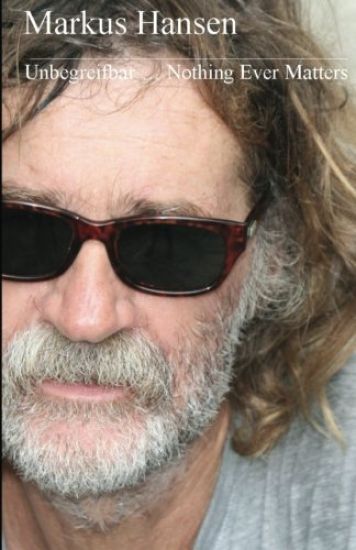
Unbegreifbar ... Nothing Ever Matters
Markus Hansen
Createspace Independent Publishing Platform
2015
nidottu
Der Stoff, aus dem Tr ume entstehen. Die Worte, aus denen Metadaten entstehen. Die Punkte, aus denen ein Profil entsteht. Die Dinge, die sich verselbstst ndigen. Die Fragmente, die sich zusammenf gen lassen. Die Fakten, die ohne Kontext existieren. Die Ideen, die nur isoliert einen Sinn ergeben.

Abenteuermodus: Das Leben ist zwar kurz, aber auch das Längste was du je machen wirst.
Markus Ruzicka
Createspace Independent Publishing Platform
2015
nidottu
Der Tod gilt gemeinhin als die ultimative Grenze. Er l sst sich nur selten aufschieben, jedoch niemals austricksen oder gar aufhalten. Auch f r Menschen, die an die Wiedergeburt glauben, gilt: in diesem Leben ist das Erleben des eigenen Lebens das L ngste, was sie machen werden. F r die anderen gilt: dieses Leben ist das L ngste, was sie JE machen werden. Viel zu viele leben aber so, als ob sie noch drei, vier weitere Leben irgendwo aus dem Hut zaubern k nnten. Wichtiges wird auf morgen verschoben. "Morgen" gilt dabei fast schon als Synonym f r den "Ort, an dem alle Tr ume und Ziele in Erf llung gehen." Am n chsten Tag, also morgen, dann dasselbe Spiel. Es scheint, als w re die Anzahl unserer Tage wie ein magischer Brunnen, der niemals versiegt. Marktforschungsstudien belegen brigens, dass uns zu gro e Auswahl l hmt. Lethargie durch berfluss also. Doch dieser vermeintliche berfluss ist ein Trugschluss. Mithin der gef hrlichste, den wir treffen k nnen. Auch wenn der Tod in unserer Kultur als Tabu gilt, gestorben wird t glich und berall. Jederzeit kann es uns treffen. Egal ob durch Krankheit, Unfall, oder erst nach einem langen Leben. Weil wir es nicht wissen (k nnen), vertr deln wir einen Tag nach dem anderen. Jeder stirbt, aber fast niemand lebt wirklich, es ist, als ob viele vergessen, dass es ein Leben vor dem Tod gibt. (Davon dann aber wirklich nur eines.) Also, wenn das kein Grund ist, das Beste aus unserem einen( ) Leben zu machen.

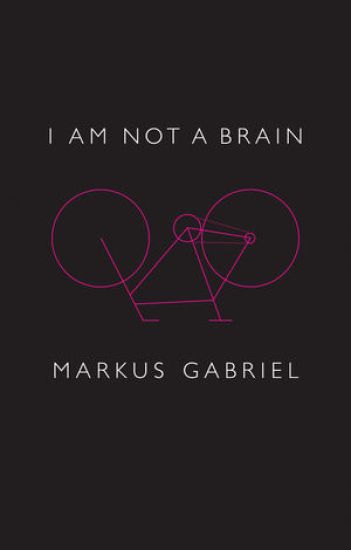
Many consider the nature of human consciousness to be one of the last great unsolved mysteries. Why should the light turn on, so to speak, in human beings at all? And how is the electrical storm of neurons under our skull connected with our consciousness? Is the self only our brain’s user interface, a kind of stage on which a show is performed that we cannot freely direct? In this book, philosopher Markus Gabriel challenges an increasing trend in the sciences towards neurocentrism, a notion which rests on the assumption that the self is identical to the brain. Gabriel raises serious doubts as to whether we can know ourselves in this way. In a sharp critique of this approach, he presents a new defense of the free will and provides a timely introduction to philosophical thought about the self – all with verve, humor, and surprising insights. Gabriel criticizes the scientific image of the world and takes us on an eclectic journey of self-reflection by way of such concepts as self, consciousness, and freedom, with the aid of Kant, Schopenhauer, and Nagel but also Dr. Who, The Walking Dead, and Fargo.
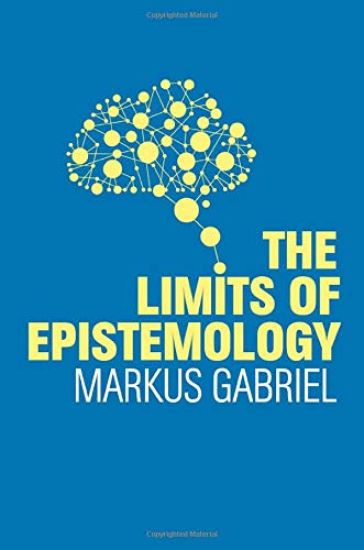
At the centre of modern epistemology lurks the problem of scepticism: how can we know that the forms of our cognition are compatible with the world? How can we state success conditions for knowledge claims without somehow transcending our discursive and fallible nature as knowers? By distinguishing different forms of scepticism, Markus Gabriel shows how all objective knowledge relies on shared discourses and how the essential corrigibility of knowledge claims is a crucial condition of their objectivity. We should understand scepticism not so much as posing a threat, but as offering a vital lesson about the fallibility of discursive thinking. By heeding this lesson, we can begin to reintegrate the solipsistic subject of modern epistemology back into the community of actual knowers. Taking his cue from Hegel, Wittgenstein and Brandom, Gabriel shows how intentionality as such is a public rather than a private phenomenon. He concedes that the sceptic can prove the necessary finitude of objective knowledge, but denies that this has to lead us into an aporia. Instead, it shows us the limits of the modern project of epistemology. Through an examination of different kinds of sceptical paradoxes, Gabriel not only demonstrates their indispensable role within epistemological theorising, but also argues for the necessary failure of all totalizing knowledge claims. In this way, epistemology, as the discipline that claims knowledge about knowledge, begins to grasp its own fallibility and, as a result, the true nature of its objectivity. The Limits of Epistemology will be of great value to students and scholars of philosophy.
At the centre of modern epistemology lurks the problem of scepticism: how can we know that the forms of our cognition are compatible with the world? How can we state success conditions for knowledge claims without somehow transcending our discursive and fallible nature as knowers? By distinguishing different forms of scepticism, Markus Gabriel shows how all objective knowledge relies on shared discourses and how the essential corrigibility of knowledge claims is a crucial condition of their objectivity. We should understand scepticism not so much as posing a threat, but as offering a vital lesson about the fallibility of discursive thinking. By heeding this lesson, we can begin to reintegrate the solipsistic subject of modern epistemology back into the community of actual knowers. Taking his cue from Hegel, Wittgenstein and Brandom, Gabriel shows how intentionality as such is a public rather than a private phenomenon. He concedes that the sceptic can prove the necessary finitude of objective knowledge, but denies that this has to lead us into an aporia. Instead, it shows us the limits of the modern project of epistemology. Through an examination of different kinds of sceptical paradoxes, Gabriel not only demonstrates their indispensable role within epistemological theorising, but also argues for the necessary failure of all totalizing knowledge claims. In this way, epistemology, as the discipline that claims knowledge about knowledge, begins to grasp its own fallibility and, as a result, the true nature of its objectivity. The Limits of Epistemology will be of great value to students and scholars of philosophy.

In this highly original book, Markus Gabriel offers an account of the human self that overcomes the deadlocks inherent in the standard positions of contemporary philosophy of mind. His view, Neo-Existentialism, is thoroughly anti-naturalist in that it repudiates any theory according to which the ensemble of our best natural-scientific knowledge is able to account fully for human mindedness. Instead, he shows that human mindedness consists in an open-ended proliferation of mentalistic vocabularies. Their role in the human life form consists in making sense of the fact that the human being does not merely blend in with inanimate nature and the rest of the animal kingdom. Humans rely on a self-portrait that locates them in the broadest conceivable context of the universe. What distinguishes this self-portrait from our knowledge of natural reality is that we change in light of our true and false beliefs about the human being. Gabriel’s argument is challenged in this volume by Charles Taylor, Andrea Kern and Jocelyn Benoist. In defending his argument against these and other objections and in spelling out his theory of self-constitution, Gabriel refutes naturalism’s metaphysical claim to epistemic exclusiveness and opens up new paths for future self-knowledge beyond the contemporary ideology of the scientific worldview.

In this highly original book, Markus Gabriel offers an account of the human self that overcomes the deadlocks inherent in the standard positions of contemporary philosophy of mind. His view, Neo-Existentialism, is thoroughly anti-naturalist in that it repudiates any theory according to which the ensemble of our best natural-scientific knowledge is able to account fully for human mindedness. Instead, he shows that human mindedness consists in an open-ended proliferation of mentalistic vocabularies. Their role in the human life form consists in making sense of the fact that the human being does not merely blend in with inanimate nature and the rest of the animal kingdom. Humans rely on a self-portrait that locates them in the broadest conceivable context of the universe. What distinguishes this self-portrait from our knowledge of natural reality is that we change in light of our true and false beliefs about the human being. Gabriel’s argument is challenged in this volume by Charles Taylor, Andrea Kern and Jocelyn Benoist. In defending his argument against these and other objections and in spelling out his theory of self-constitution, Gabriel refutes naturalism’s metaphysical claim to epistemic exclusiveness and opens up new paths for future self-knowledge beyond the contemporary ideology of the scientific worldview.