Contrary to what their oppressive design would lead us to believe, might structures of imprisonment actually incite humour? Starting from the most obvious areas of imprisonment (war camps, prison cells) and moving to the less obvious (masks, bodies), Framing Literary Humour demonstrates how 20th-century humour in theory and in fiction cannot be fully understood without a careful look at its connection with the notion of imprisonment. Understanding imprisonment as a concrete spatial setting or a metaphorical image, Jeanne Mathieu-Lessard analyses selected works of Romain Gary, Giovannino Guareschi, Wyndham Lewis, Vladimir Nabokov and Luigi Pirandello to reconfigure confinement as an essential structural condition for the emergence of humour.
Contrary to what their oppressive design would lead us to believe, might structures of imprisonment actually incite humour? Starting from the most obvious areas of imprisonment (war camps, prison cells) and moving to the less obvious (masks, bodies), Framing Literary Humour demonstrates how 20th-century humour in theory and in fiction cannot be fully understood without a careful look at its connection with the notion of imprisonment. Understanding imprisonment as a concrete spatial setting or a metaphorical image, Jeanne Mathieu-Lessard analyses selected works of Romain Gary, Giovannino Guareschi, Wyndham Lewis, Vladimir Nabokov and Luigi Pirandello to reconfigure confinement as an essential structural condition for the emergence of humour.
Pour la premi re fois, un pr tre de village publie les "perles" cit es, volontairement ou non dans le confessionnal, par ses paroissiens dont l'humour n'a d' gal que leur foi... enfin... pour certains d'entre eux, du moins...
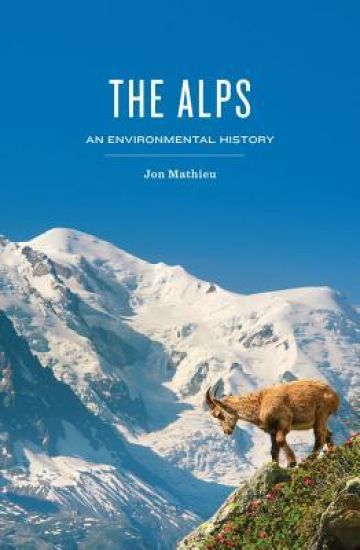
Stretching 1,200 kilometres across six countries, the colossal mountains of the Alps dominate Europe, geographically and historically. Enlightenment thinkers felt the sublime and magisterial peaks were the very embodiment of nature, Romantic poets looked to them for divine inspiration, and Victorian explorers tested their ingenuity and courage against them. Located at the crossroads between powerful states, the Alps have played a crucial role in the formation of European history, a place of intense cultural fusion as well as fierce conflict between warring nations. A diverse range of flora and fauna have made themselves at home in this harsh environment, which today welcomes over 100 million tourists a year. Leading Alpine scholar Jon Mathieu tells the story of the people who have lived in and been inspired by these mountains and valleys, from the ancient peasants of the Neolithic to the cyclists of the Tour de France. Far from being a remote and backward corner of Europe, the Alps are shown by Mathieu to have been a crucible of new ideas and technologies at the heart of the European story.
'[A] page-turner of a novel . . . I couldn't put the book down' - New York Times'A multi-viewpoint panorama of thwarted aspirations, spiced with breathy sex scenes and nostalgic detail.' - Mail on SundayAugust 1992. Fourteen-year-old Anthony and his cousin decide to steal a canoe to fight their all-consuming boredom on a lazy summer afternoon. Their simple act of defiance will lead to Anthony's first love and his first real summer - that one summer that comes to define everything that follows.Over four sultry summers in the 1990s, Anthony and his friends grow up in a France trapped between nostalgia and decline, decency and rage, desperate to escape their small town, the scarred countryside and grey council estates, in search of a more hopeful future.Nicolas Mathieu's eloquent novel gives a pitch-perfect depiction of teenage angst. Winner of the Prix Goncourt, it won praise for its portrayal of people living on the margins and shines a light on the struggles of French society today.'Deeply felt . . . An exceptional portrait of youth' - Irish Times
THE FIRST NOVEL BY NICOLAS MATHIEU, WINNER OF THE 2018 PRIX GONCOURTNicolas Mathieu's gripping first novel is the story of a world that has come to an end. With a girl, a gun and acres of snow.When a factory that employs most of a small town is scheduled to close - to the despair of the workers and disdain of the overlords - things start to fall apart. The disenfranchised factory workers have nothing left to lose. Martel, the trade union rep with innumerable tattoos and Bruce, the body-builder addicted to steroids resort to desperate measures. A bungled kidnapping on the streets of Strasbourg goes horribly wrong and they find themselves falling prey to the machinations of the criminal underworld. "[An] uncompromising portrait of a working class eaten up by the frustration and resentment of having been abandoned, and sinking into alcoholism and racism". -- Paris Match
Le Regard perdu est un roman sombre, dont l'un des principaux personnages, Vincent, est aveugle. Vincent aimait Elsa. Elsa aimait Vincent. Trois ans d'amour partag . Mais pour Elsa, il est trop tard. Elle est morte, assassin e. Son esprit, pourtant, refuse de l cher prise. Elle nous confie ses peurs, ses doutes et ses motions. Avec le fol espoir de faire arr ter son meurtrier, elle parvient p n trer l'esprit de Lucas, cet ex-inspecteur de police reconverti, malgr lui, en d tective de seconde zone. Ensemble, parviendront-ils sauver Vincent et stopper la vague de crimes qui plonge Li ge et ses environs dans la peur ? Le roman s'articule en trois volets savamment imbriqu s. Elsa, d'une part, nous conte sa romance avec Vincent de leur rencontre jusqu'au jour de sa mort et nous fait partager le quotidien des handicap s visuels. Le d tective Lucas Steegens, d'autre part, entame une enqu te peu conventionnelle puisque sa cliente et principale informatrice est morte. Le troisi me volet se pr sente sous la forme de courts interm des entre chaque chapitre. L'esprit d'Elsa nous livre avec un brin d'humour ses sensations, ses motions et ses r flexions philosophiques sur la mort. Ce qui fait l'originalit du roman et le d marque d'autres histoires du genre comme le film "Ghost" ou le livre de Marc Levy "Et si c' tait vrai", c'est la communication d'Elsa et Lucas, faite uniquement d'images et d' motions, brouillonne et erratique, ainsi que sa perception des vivants qui l'entourent sous forme de bulles multicolores avec lesquelles elle tente d'interagir. Un livre difficile classer la fois policier, romantique, documentaire, surnaturel et parfois gore.
Recovering Spirituality guides those in recovery in developing the awareness and skills to deal with life's issues by practicing authentic spirituality and emotional sobriety. Spirituality is a critical aspect of the Twelve Steps and other recovery programs. Yet, for those of us disposed to addiction, it can be easy to get so caught up in the idea of our Higher Power and the abundant joys of a spiritual life that we experience ""spiritual bypass""-the use of spirituality to avoid dealing with ourselves, our emotions, and our unfinished business. In Recovering Spirituality, researcher and clinical psychologist Ingrid Mathieu uses personal stories and practical advice to teach us how to grow up emotionally and take responsibility for ourselves. Without turning away from the true benefits of an active spiritual program, she shows us how to work through life's challenges and periods of pain while evolving and maintaining an authentic relationship with our Higher Power.
From the Prix Goncourt-winning author of And Their Children After Them, a devilishly smart noir novella that finds uncomfortable truths in the everyday about romance, violence, and women's desire and desirability. Nearing fifty, with a divorce and a string of other failed relationships behind her, Rose has given up on the idea of love, if not sex--though that always comes with risks. Determined not to let another man hurt her, she even ordered a .38 caliber handgun after an argument with her latest boyfriend almost turned violent. Now she carries it everywhere, just in case. As if on autopilot, Rose spends her days at work and then at the Royal, a familiar haunt where she knocks back one drink after another, sometimes with her best friend Marie-Jeanne. And then a sudden accident brings Luc into the bar, and Rose decides to give love one last chance.
A breathtaking story of unfulfilled dreams, unexpected second chances, and love in a present-day France turning against itself, from the Goncourt Prize-winning author of And Their Children After Them. H l ne is approaching 40. Born in a small town in the east of France, she worked hard to leave it behind and achieve a life worthy of the glossy magazines she pored over as a teen. But now that she seemingly has it all--a husband and two daughters, a successful career, and a custom-designed house near Nancy--she feels unfulfilled, as though the years have passed her by. Christophe just turned 40 and has never left his little corner of France, where he grew up with H l ne. No longer as handsome as he used to be, he's led an unassuming life, preferring to party with friends than to apply himself. These days, he's selling dog food, dreaming of playing hockey again like he did when he was 16, and living with his father and son--a quiet, indecisive existence, which could be seen as failure. And yet he fully believes that anything is still possible. Through the story of how their two disparate lives intersect once more, Connemara beautifully evokes the complex pain and joy of returning to your roots, and trying to make a relationship last in a rapidly changing, increasingly divided country.
Summer vacation is usually a time to relax and enjoy family. For François and his sons this particular vacation will be their most memorable yet...and also maybe their last.After hours of endless traffic jams, François and his children—Kevin, the withdrawn teenager, and Baptiste who doesn't care for anything but his dog Hermione—finally arrive at their vacation destination in a village located in the South of France. But the tranquility of their stay is quickly compromised, not only by the heated relationship between François and his wife, Clara, but especially by the sudden disappearance of Hermione, who is not the only missing canine in the area... François quickly finds himself under the fire of suspicion, and his relaxing vacation becomes a spell of unrelenting psychological torment.
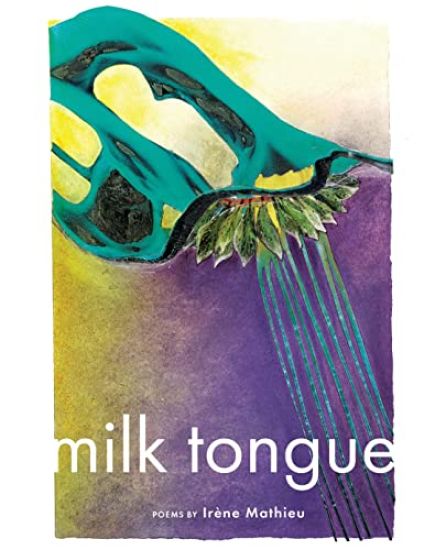
An exploration of what we inherit or pass on, illuminating the gray area between ubiquitous human desires and overconsumption.Irène Mathieu’s third collection, milk tongue, refers to the layer of milk that coats a baby’s tongue, which often is a challenge to distinguish from thrush, the overgrowth of naturally occurring yeast. As poet and pediatrician, Mathieu explores how we diagnose and investigate where normal consumption and overconsumption meet. How do we learn what to desire? What happens when what we want is destructive to our world? How might we reconceive of (be)longing in a way that rejects overconsumption? These poems suggest, “what if, more than place, it’s about sound?” In milk tongue Mathieu uses haibun, long poems, and experimental forms to explore what we inherit or pass on – privilege, oppression, anxiety, “hypnagogic conjure,” and a warming earth – and envisage how, through deep attention to the emotional vibrations under the surface of these phenomena, we might become “both human and an / animal worthy of this speck of dust.”
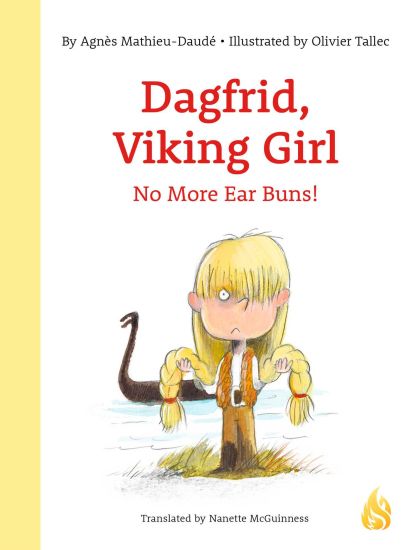
Meet Dagfrid, Viking Girl Many things bother Dagfrid. Her name, for starters. And life as a viking girl isn't exactly a piece of cake: you have rolled-up braids, like buns, on your ears, you wear dresses that are too long to run with, and you dry fish. In fact, fish is all you eat, even when you're not a girl. But girls, they can't even navigate and go explore America. Well, until now. Because Dagfrid is really sick of dried fish.