Matthew of Edessa's Chronicle is a valuable source for the history of the Near East in the 10th-12th centuries. Matthew's work describes the period from 952 to 1129. Appended to it is a continuation by Gregory the Priest, which describes events from 1137 to 1162. Western scholars have used the Chronicle primarily for its unique information on the Crusades. It contains, additionally, invaluable information on Byzantium, the Arabs, Seljuks, Persians, and especially the Armenians, both secular and clerical, both lords and louts. Volume 3 was written in 1136-1137 and covers the period from 1102 to 1129, and includes the continuation by Gregory the Priest.The Sophene Dual Language series places the Classical Armenian text side-by-side with its English translation, making for the most accessible editions of the finest works of Armenian literature.Translated into English by Robert Bedrosian.
“Brannon offers us a different perspective and, just maybe, a higher level of understanding when it comes to this great American disaster story.” –Clive Martin, CNN New York–based artist Matthew Brannon (born 1971) has spent the past five years exhaustively researching the Vietnam/American War, seeking his own understanding of one of the most pivotal confrontations of the 20th century and translating that research into intricate silkscreen works that collage military documents, maps, logos, memoranda and contemporaneous ephemera. Concerning Vietnam distills a picture of the war and its ongoing effects in vivid, densely packed images that employ the bold graphic design for which the artist is known. Alongside these works are Brannon’s notes on the objects and situations they depict, constructing a detailed chronology of the war and a complex overview of the consequences of US intervention in Southeast Asia. Designed by Studio LHOOQ in close collaboration with the artist, Concerning Vietnam collects the entire series of prints and texts, with a new essay on the work by curator Veronica Roberts and a conversation between the artist and Vietnam historian Mark Atwood Lawrence.
Sensual and psychedelic sculpture affirming the primacy of the handmade object, from a leading New York sculptor The vibrant, small-scale wooden sculptures of New York–based artist Matthew Ronay (born 1976) cull from the vocabularies of organic things—flora and fauna from land and sea, human anatomy, and water systems. Fantastical architectures find form, too—gateways and towers—in the artist’s technicolor array of soft-curved and intricately honed formations. Melding vocabularies of modernist abstraction and ritualistic objects, Ronay's sculptures and enigmatic installations express the primacy of the handmade object. His inspirations constitute a zigzagging thread of artists and scientists from the 18th century to the present whose works reflect natural phenomena consciously or unconsciously. Ronay also proposes the possibility that inherited memories of the genesis and evolution of life recapitulate themselves in abstract works of sculpture and painting. Produced in conjunction with the artist’s exhibition at the Nasher Sculpture Center, this monograph presents Ronay's sensual and psychedelic sculptures in extensive detail through photographs and installation views.
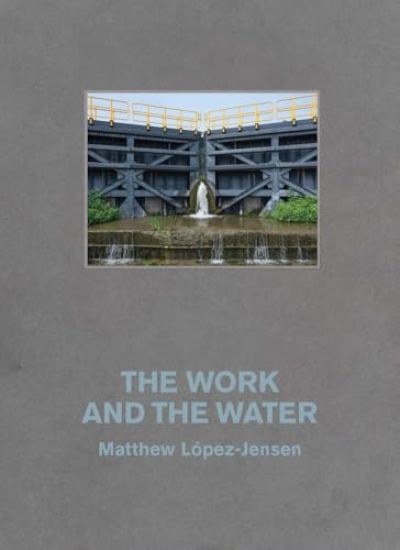
For the Erie Canal’s 200th anniversary, López-Jensen’s series centers the unseen labor that keeps the waterway operational The debut photobook The Work and the Water: Labor and Landscapes along the Erie Canal by Matthew López-Jensen (born 1980) is a work of environmental social practice centering the unseen labor required to keep the Erie Canal, a 524-mile inland waterway in upstate New York, operational. Over 40 photographs are accompanied by commentary from the more than 400 employees who work on the canal year-round, often out of view and in hazardous conditions. As the first artist-in-residence with the canal in its 200-year history, López-Jensen visited every lock in the system from Buffalo to Albany, from Whitehall to Seneca Falls. The archive of images he created helps communicate the potentials of the canal as a site for environmental restoration while also conveying the scale of this colossal piece of infrastructure that transformed the region in ways that are still felt today.
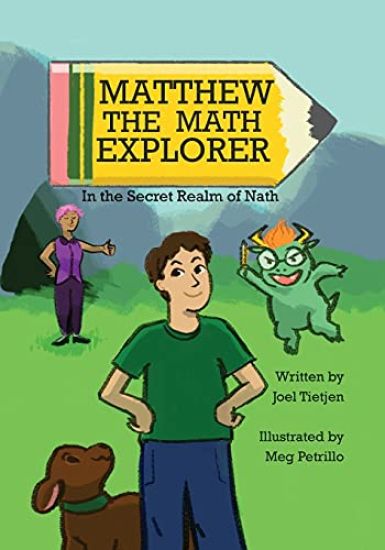
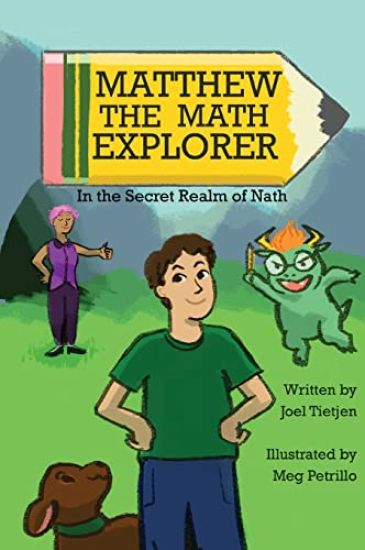
Matthew the adventurer and his trusted side-kick Toby embark on a perilous adventure to the secret realm of Nath. Nath is a mystical world of danger and obstacles that requires math skills, bravery, and a little luck in order to escape. Together, the duo must conquer the realm of Nath and defeat the tricky rhyming troll at all of his games in order to make it back home. Are their math skills sharp enough to be the only ones to ever defeat the troll? Find out, in Matthew the Math Explorer.
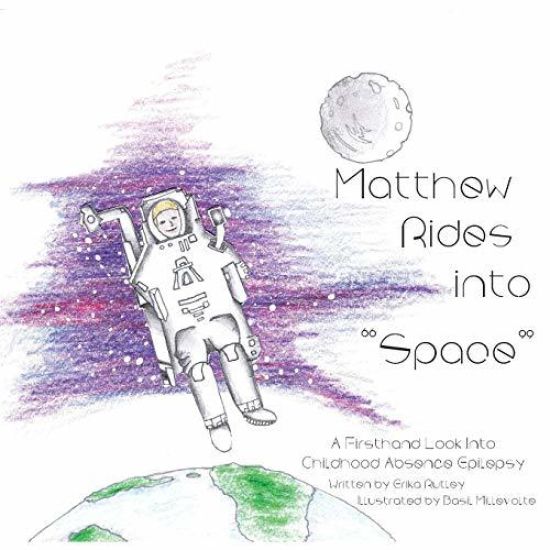
Matthew is a fun, energetic boy who, out of nowhere, began having "space outs" which confused his family and friends. After he was diagnosed with Childhood Absence Epilepsy at age six, he was able to share his story with his friends.
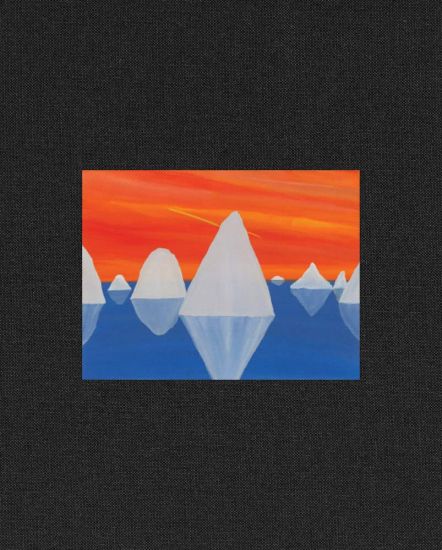
An intimate clothbound volume compiling the exquisite postcard paintings of Matthew Wong This fully illustrated volume collects Matthew Wong’s small-scale postcard paintings made during the last year of his life in 2019. As Winnie Wong writes in her newly commissioned essay for the book, “Art critics have observed that Matthew Wong's landscapes are ‘uncannily familiar,’ and they do prompt viewers to search our own memories, but he almost never titled them as places. Instead, he consistently named them as moments in time: midnight, 5:00am, dawn, daybreak, 12:30am, Autumn, Winter, the first snow, the gloaming, the moon rise … For the postcard is a genre that seems to consciously elude a sense of stable locus, yet marks the times of our lives when we tried to grasp it. Matthew Wong painted at home, on the road, and in the studio. He spoke of the compulsion to finish each of his paintings in a single sitting, and talked of them always as process, rather than subject matter. Standing before paintings he finished years ago, he could recall every stroke and mark as if he had placed them just moments before.” Matthew Wong (1984–2019) was a self-taught Canadian artist whose paintings evoke art historical precedents ranging Soutine and Van Gogh to abstract expressionism. His colorful, dappled vignettes of imaginary landscapes and half-remembered interiors have the uncanny ability to, in his words, “activate nostalgia, both personal and collective.” Wong held his first American solo exhibition at Karma in March 2018, garnering reviews in the New York Times and the New Yorker, among others. His work is in the collection of the Dallas Museum of Art, Texas.
As with the others in this series, this book is set up for private learning by dividing lessons up by days. One day one you spend about ten minutes answering those few questions. One day two, you look up and answer the next few questions, and so on for six days. On day seven, you either rest, or you get with your friends who are doing the same thing and go through the answers in a lively manner, having already looked up the scriptures at home..........This is great for neighborhood studies. (This is how I taught them.) It is divided up into eight lessons. Friends will give you two months, but not eternity. Let them know it's just temporary. Then, at the end, if they want to learn more, there are other books in the series you can use..........Although based on Matthew, events he does not included are brought it from the other three gospels..........WEEK ONE: Jesus' ancestry, birth, childhood, baptism, temptation, & first apostles..........WEEK TWO: Sermon on the Mount & first healings..........WEEK THREE: More healings, recruits Matthew, selects his 12, John the Baptist..........WEEK FOUR: Accusers, parables, John Baptist executed..........WEEK FIVE: Escapes to foreign countries, transfiguration, teachings about getting along..........WEEK SIX: Talks about family and the new kingdom church, triumphal entry into Jerusalem..........WEEK SEVEN: Showdown with religious hierarchy, predicts destruction of temple & world..........WEEK EIGHT: Parables, Lord's Supper, agonizes over death, the crucifixion, resurrection, great commission.
The message of the book of Matthew is that Jesus is the promised Messiah, the King of kings. In Part 1 of Matthew (chapters 1-7) we are introduced to Jesus through his genealogy, his birth narrative, and his teaching. Immediately we see the humble people he calls. His narrative includes the humblest of people. His birth narrative calls the humble shepherds. His teaching calls for people to be "poor in spirit." Throughout we learn that though Jesus is the King of all kings, he invites poor sinners to come to him. The Proclaim Commentary series brings expositional insight and practical application to every day life. It is written not only for pastors, teachers, and leaders, but also for families, students, or anyone desiring to explore the riches of God's Word.
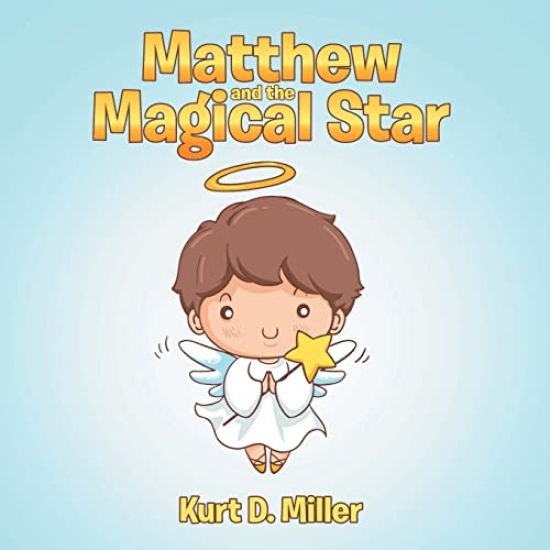
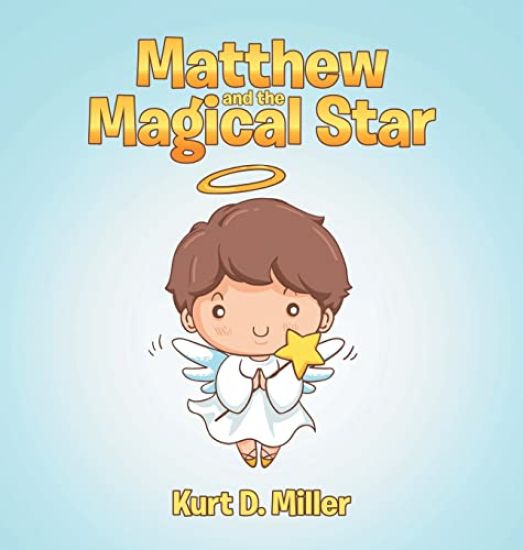
This is a story of a little Angel; Matthew; who has been waiting in Heaven to be born. When he finally makes the list, he gets bumped off for the birth of Jesus. Matthew flies off to be alone and cry until God tells him that he is to be the one to hold up the star of the Magi to lead people to Jesus.
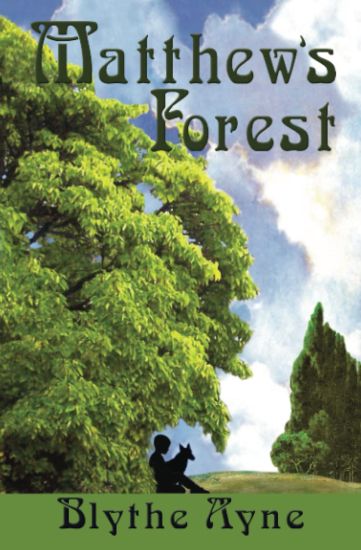
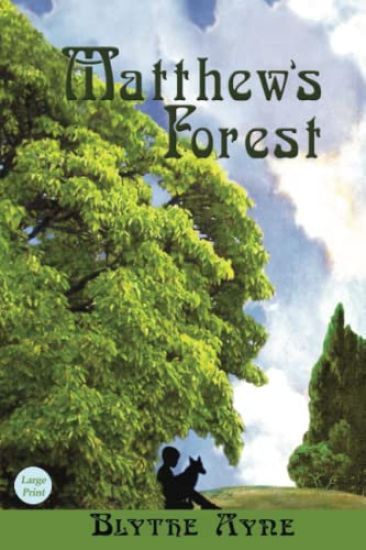
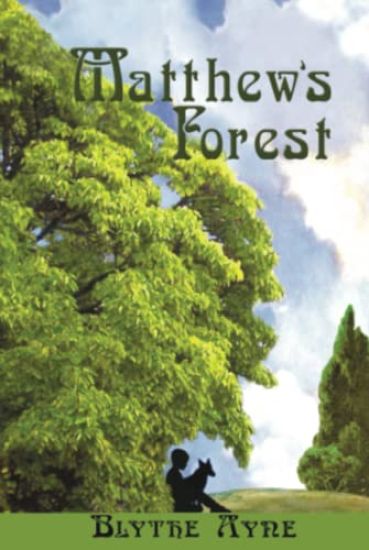
Matthew's ForestMatthew's world-famous scientist parents mysteriously disappear when he is only five, and his Aunt Vesta takes him to live with her in the foothills of the Cascade Mountains of Washington State. Now, eleven-years-old, he has come to love his forest home, even though the mystery surrounding his parents weighs heavily upon his heart.But his quiet world changes the day he encounters Ulima, the strange, toad-not-toad protector of the forest. She tells Matthew he's urgently needed to help fight the evil that intends to destroy the forest. He resists her call until he stumbles upon a little poisoned coyote. Furious, he vows to do anything to protect his beloved forest.Who or what is destroying the forest? And why? Read Matthew's Forest to take an exciting journey into the mysterious world of the forest, and to become acquainted with its magnificent creatures.Read Matthew's Forest - A Thrilling Story
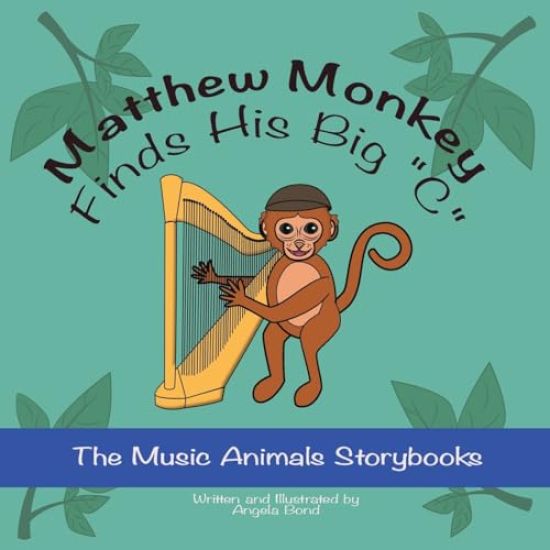
Matthew Monkey is preparing for his music recital, but when he goes to his rehearsal, he feels too nervous to play his harp. Now Matthew Monkey must discover his big "C," courage, before the recital. When he finds a cap on the ground, he believes it will make him brave. Can this new cap give Matthew Monkey the courage he seeks, or is bravery already in his heart? Join Matthew Monkey on an adventure to find his Big "C."
Matthew the Hebrew Gospel is the third volume of Carrolls work in process on the four gospels. Carroll helps you to see why Matthew was written and why it is the first book of the New Testament. Matthews gospel was written in the Hebrew language first and later translated into the Greek. Matthews gospel was also written much earlier than scholars have taught. Carroll brings out many of the Jewish customs, history, geography as well as many personal experiences throughout this amazing work. The Bible will come together as he helps you to connect Old Testament passages to the ministry of Jesus the Messiah. Carroll has put together years of research into an easy-read format for ministers and laypeople alike.