Kirjojen hintavertailu. Mukana 11 717 486 kirjaa ja 12 kauppaa.

Kirjahaku

Etsi kirjoja tekijän nimen, kirjan nimen tai ISBN:n perusteella.

1000 tulosta hakusanalla Max M. Stern; Liselotte Bendix Stern

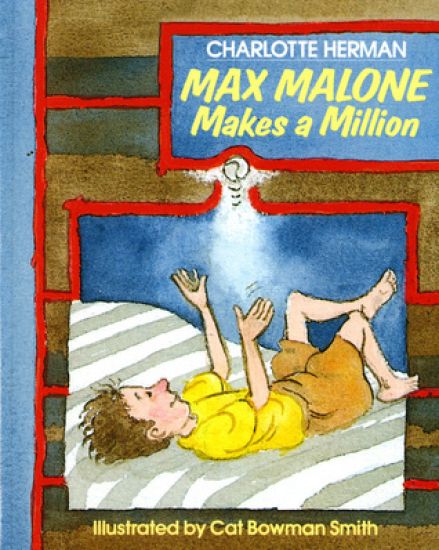
Max Malone Makes a Million

Max Malone Makes a Million

Charlotte Herman

Square Fish
1992
nidottu
Max and his sidekick, Gordy, try various get-rich-quick schemes only to be outdone each time by smart-aleck Austin Healy. Peppy dialogue and a fast-moving plot make this easy chapter book a reassuring choice for newly independent readers. "The characters are likable, the plot moves along smoothly, and there's enough dialogue to draw readers into the story. Smith's humorous line drawings, with washes of gray watercolor, punctuate the text nicely." - School Library Journal
Max Reinhardt

Max Reinhardt

Peter W. Marx

NORTHWESTERN UNIVERSITY PRESS
2024
nidottu
Max Reinhardt was one of the formative directors of modern theater. Starting as an actor, it soon became clear that he wanted more. His vision of a theater "that returns joy to the people" was vast and expansive: It included intimate theatrical arrangement as well as mass production in the circus arena. Reinhardt's aesthetics were not restricted to a single program but indulged in a playful eclecticism. Thus, his career as a director that lasted for almost 40 years comprises a broad variety of artists of various genres as well as many different styles. At the same time, Reinhardt soon longed for an international range: guest performances throughout Europe and to the US soon made him into a global star – and even a brand. He represents a metropolitan culture that roots in the late nineteenth century but comes to an end when Fasicsm in Europe ended any hopes for an international culture. As a Jew, Reinhardt himself had to flee the Nazis but when he eventually arrived in the US, he could not follow up with his earlier successes. Marx provides a broad panorama of Reinhardt's work, portraying not only his work method and some of his best known productions, but also the cultural conditions of his visionary enterprise.
Max Reinhardt

Max Reinhardt

Peter W. Marx

NORTHWESTERN UNIVERSITY PRESS
2024
sidottu
Max Reinhardt was one of the formative directors of modern theater. Starting as an actor, it soon became clear that he wanted more. His vision of a theater "that returns joy to the people" was vast and expansive: It included intimate theatrical arrangement as well as mass production in the circus arena. Reinhardt's aesthetics were not restricted to a single program but indulged in a playful eclecticism. Thus, his career as a director that lasted for almost 40 years comprises a broad variety of artists of various genres as well as many different styles. At the same time, Reinhardt soon longed for an international range: guest performances throughout Europe and to the US soon made him into a global star – and even a brand. He represents a metropolitan culture that roots in the late nineteenth century but comes to an end when Fasicsm in Europe ended any hopes for an international culture. As a Jew, Reinhardt himself had to flee the Nazis but when he eventually arrived in the US, he could not follow up with his earlier successes. Marx provides a broad panorama of Reinhardt's work, portraying not only his work method and some of his best known productions, but also the cultural conditions of his visionary enterprise.
Max Ophuls in the Hollywood Studios

Max Ophuls in the Hollywood Studios

Lutz Bacher

Rutgers University Press
1996
sidottu
Max Ophuls, who is considered one of the greatest film directors of all time, has long been seen as an “auteur”––the artist in complete control of his work. Lutz Bacher’s examination of his American career gives us a unique perspective on the workings of the Hollywood system and the struggle of a visionary to function within it. He thus establishes clear connections between the production contexts of Ophuls' American films and their idiosyncratic style.Drawing on documents in many archives and on interviews with more than sixty of Ophuls' contemporaries, Bacher traces the European director's struggle to find a niche in the U.S. film industry. He describes how Ophuls ran the gamut from ghost writing to substitute directing, to a debilitating association with Preston Sturges and Howard Hughes, to making four films––Letter from an Unknown Woman and Caught among them––in thirty months, and then returning to Europe with a runaway production that was to have starred Greta Garbo. Throughout, Bacher demonstrates that Ophuls' bending of conventional Hollywood methods to his own will through compromise and subversion allowed him to achieve a style that was both uniquely American and a point of departure for his later work. A rare synthesis of production history, stylistic analysis, and biography, this book is essential reading for serious film scholars and fans of the director’s work.
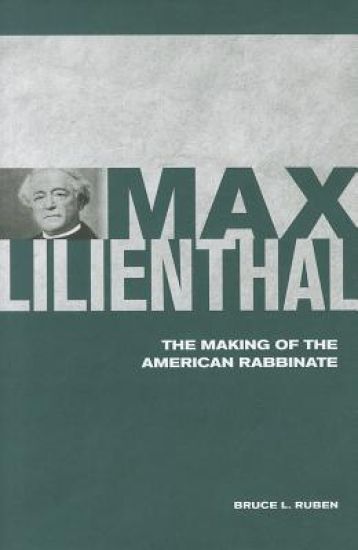
Max Lilienthal

Max Lilienthal

Bruce L. Ruben

Wayne State University Press
2011
sidottu
When Congregation Bene Israel hired him to come to Cincinnati in 1854, Rabbi Max Lilienthal (1814-82) seized the opportunity to work with his friend Isaac M. Wise. Together, Lilienthal and Wise forged the institutional foundations for the American Reform movement: the Union of American Hebrew Congregations and Hebrew Union College. In Max Lilienthal: The Making of the American Rabbinate, author Bruce L. Ruben investigates the central role Lilienthal played in creating new institutions and leadership models to bring his immigrant community into the mainstream of American society. Ruben's biography shines a light on this prominent rabbi and educator who is treated by most American Jewish historians as, at best, Wise's collaborator. Ruben examines Lilienthal's early career, including how his fervent Haskalah ideology was shaped by tensions within early nineteenth-century German Jewish society and how he tried to implement that ideology in his attempt to modernize Russian Jewish education. After he immigrated to America to serve three traditional New York German synagogues, he clashed with lay leadership. Ruben examines this lay-clergy power struggle and how Lilienthal resolved it over his long career. Max Lilienthal: The Making of the American Rabbinate also details the rabbi's many accomplishments, including his creation of a nationally recognized private Jewish school and the founding of the precursor to the Central Conference of American Rabbis. He also was the first rabbi to preach in a Christian church. Even more significantly, Ruben argues that Lilienthal created an unprecedented new American model for the rabbinate, in which the rabbi played a prominent role in civic life. More than a biography, this volume is a case study of the impact of American culture on Judaism and its leadership, as Ruben shows how Lilienthal embraced an increasingly radical Reform ideology influenced by a mixture of American and European ideas. Students of German Haskalah and historians of American Judaism and the Reform movement will appreciate this biography that fills an important gap in the history of American Jewry.
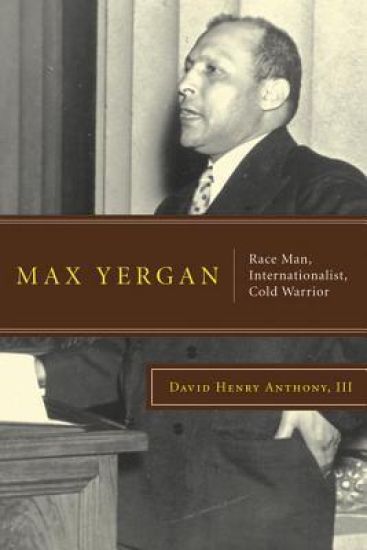
Max Yergan

Max Yergan

III Anthony

New York University Press
2006
sidottu
In his long and fascinating life, black activist and intellectual Max Yergan (1892-1975) traveled on more ground—both literally and figuratively—than any of his impressive contemporaries, which included Adam Clayton Powell, Paul Robeson, W.E.B. Du Bois, and A. Phillip Randolph. Yergan rose through the ranks of the "colored" work department of the YMCA, and was among the first black YMCA missionaries in South Africa. His exposure to the brutality of colonial white rule in South Africa caused him to veer away from mainstream, liberal civil rights organizations, and, by the mid-1930s, into the orbit of the Communist Party. A mere decade later, Cold War hysteria and intimidation pushed Yergan away from progressive politics and increasingly toward conservatism. In his later years he even became an apologist for apartheid. Drawing on personal interviews and extensive archival research, David H. Anthony has written much more than a biography of this enigmatic leader. In following the winding road of Yergan's life, Anthony offers a tour through the complex and interrelated political and institutional movements that have shaped the history of the black world from the United States to South Africa.
Max Jacob

Max Jacob

Anne S. Kimball

Peter Lang Publishing Inc
1988
sidottu
Max Jacob: Lettres a Nino Frank, edited by Anne S. Kimball, contains 85 lettres written by the French poet to author-journalist Nino Frank. The correspondence began in 1923 when the young Italo-Swiss from Naples wrote Jacob, praising the poet's Le Cornet a des. Jacob, always helpful to budding writers, encouraged Frank to pursue a literary career in France. Frank then spent some months at the Saint-Benoit-sur-Loire monastery where Jacob had retreated from Paris after his conversion to Catholicism. Frank never forgot his beginnings in France when Jacob introduced him to major literary and artistic figures; he later described his experiences in Memoire brisee (1967). The two became life-long friends, Jacob visited Frank in Italy, and their correspondence continued until Jacob's death in 1944. The letters, models of the epistolary genre, are full of wit, examples of poems, and gossip about the French literary and artistic scene. Jacob's short story, Illisibles, completes the volume. Nino Frank lives in Paris, and continues to be active in French letters.
Max Brod 1884 - 1984

Max Brod 1884 - 1984

Peter Lang Publishing Inc
1987
nidottu
Israelische, bundesdeutsche und amerikanische Literaturwissenschaftler beleuchten in den Referaten des internationalen Symposiums, das 1984 anlaesslich des 100. Geburtstages von Max Brod an der Hebraeischen Universitaet Jerusalem stattfand, die literarische und zeitgeschichtliche Bedeutung des Mentors und Nestors des Prager Kreises. Die Untersuchungen ueber die wichtigsten Werke des umfangreichen Oeuvres von Max Brod verdeutlichen seine Vielseitigkeit wie auch die ethischen und philosophischen Richtlinien, die sein Werk und Leben leiteten. Den Mittelpunkt der Darstellungen bildet die Wertstellung des Autors und Denkers Brod, die von der des Kafka-Freundes, Herausgebers und Interpreten verdeckt wurde.
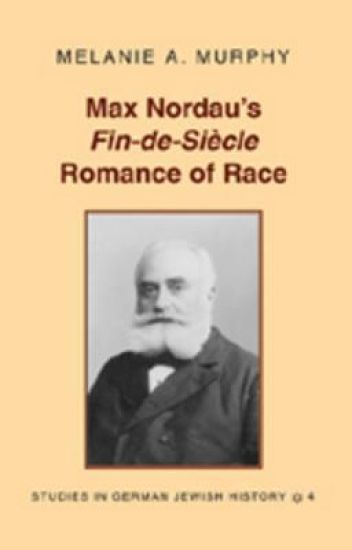
Max Nordau's Fin-de-si Ecle Romance of Race

Max Nordau's Fin-de-si Ecle Romance of Race

Melanie A. Murphy

Peter Lang Publishing Inc
2007
sidottu
Max Nordau (1849-1923) is the author of "Degeneration" and a founding father of Zionism. This Hungarian-born physician wrote fiction in which romantic and personal relations depicted in miniature the social and ethnic tensions of his day. His family stories metaphorically diagnosed the problems of minorities, especially Jewish populations, in European countries. Close analysis of Nordau's literary work opens new perspectives on his cultural and political efforts and thought.
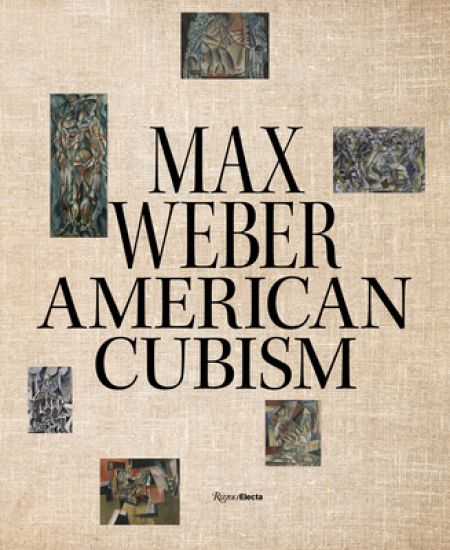
Max Weber and American Cubism

Max Weber and American Cubism

William C. Agee; Pamela N. Koob

RIZZOLI INTERNATIONAL PUBLICATIONS
2023
sidottu
Max Weber studied under Matisse, associated with influential figures including Apollinaire, Picasso, and Delaunay, and is credited with bringing firsthand knowledge of the Parisian avant-garde to Alfred Stieglitz s modernist circle in New York, inspiring a generation of artists. While his works are in important collections, they have not yet received the close study of the artist s peers, such as Picasso, Braque, and Leger. William C. Agee, a veteran museum curator and renowned scholar of twentieth-century American art, and scholar Pamela N. Koob take up the challenge in a lavishly illustrated volume, gathering together a selection of Max Weber s best cubist works. Close readings of Weber s paintings open the most complete survey to date of American cubism, with entries on key cubist works by Marsden Hartley, Stuart Davis, Hans Hofmann, Charles Sheeler, Morgan Russell, Stanton Macdonald-Wright, Alice Trumbull Mason, and David Smith, among many others. Filling in a missing piece of one of the twentieth century s most influential movements, this critical reevaluation is long overdue.
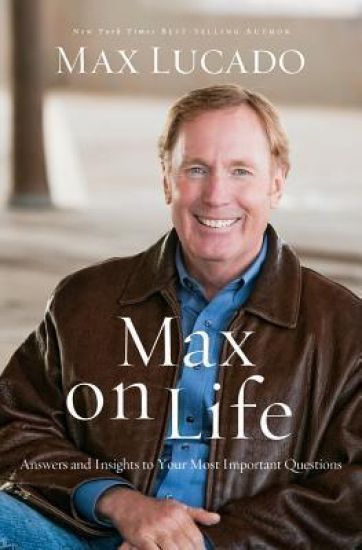
Max on Life

Max on Life

Max Lucado

Thomas Nelson Publishers
2014
nidottu
In more than twenty-five years of writing and ministry, Max Lucado has received thousands of questions. In Max on Life he offers thoughtful answers to more than 170 of the most pressing questions on topics ranging from hope to hurt and from home to the hereafter.We have questions. Child-like inquiries. And deep, heavy ones.In more than twenty-five years of writing and ministry, Max Lucado has received thousands of such questions. They come in letters, e-mails, even on Dunkin Donuts napkins. In Max on Life he offers thoughtful answers to more than 170 of the most pressing questions on topics ranging from hope to hurt and from home to the hereafter.Max writes about the role of prayer, the purpose of pain, and the reason for our ultimate hope. He responds to the day-to-day questions—parenting quandaries, financial challenges, difficult relationships—as well as to the profound: Is God really listening?A special addendum includes Max’s advice on writing and publishing.Including topical and scriptural indexes and filled with classic Lucado encouragement and insight,Max on Life will quickly become a favorite resource for pastors and ministry leaders as well as new and mature believers.
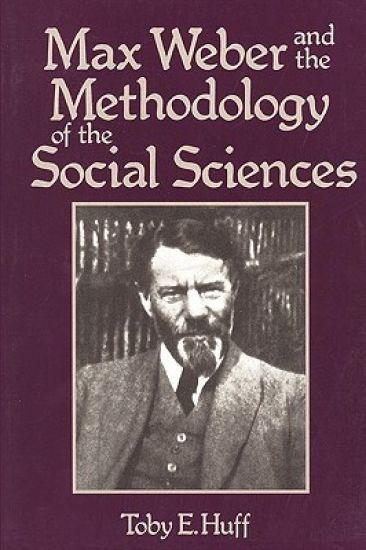
Max Weber and Methodology of Social Science

Max Weber and Methodology of Social Science

T. Huff

Transaction Publishers
1983
nidottu
Huff provides a rare, full-scale study of the origins and development of Max Weber's methodology, which focuses on Weber's neglected early methodological essays that were not translated into English until the 1970s. He explores Weber's writings in light of developments in postempiricist philosophy of science, and shows that Weber was well aware of the epistemological foundations of the descriptive psychology school, whose intellectual heir was Husserl. This volume will help scholars and students understand in the broadest sense the issues central to the logic of social scientifi c explanation, and will appeal to philosophers, sociologists, political scientists, as well as scholars of Weber.
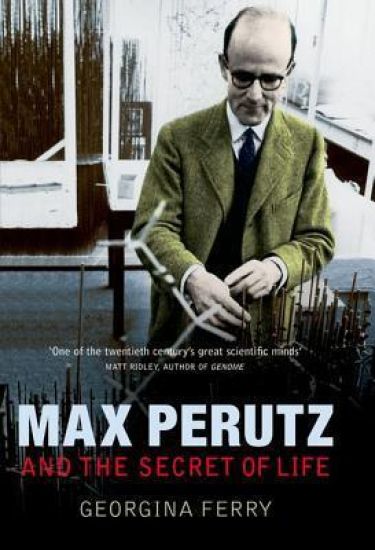
Max Perutz and the Secret of Life

Max Perutz and the Secret of Life

Ferry Georgina

COLD SPRING HARBOR LABORATORY PRESS,U.S.
2007
nidottu
Few scientists have thought more deeply about the nature of their calling and its impact on humanity than Max Perutz (1914-2002). Born in Vienna, Jewish by descent, lapsed Catholic by religion, he came to Cambridge in 1936 to join the lab of the legendary Communist thinker J.D. Bernal. There he began to explore the structures of the molecules that hold the secret of life. In 1940, he was interned and deported to Canada as an enemy alien, only to be brought back and set to work on a bizarre top secret war project. In 1947, he founded the small research group in which Francis Crick and James Watson discovered the structure of DNA: under his leadership it grew to become the world-famous Laboratory for Molecular Biology. Max himself explored the protein hemoglobin and his work, which won him a Nobel Prize in 1962, launched a new era of medicine, heralding today's astonishing advances in the genetic basis of disease. Max Perutz's story, wonderfully told by Georgina Ferry, brims with life. It has the zest of an adventure novel and is full of extraordinary characters. Max was demanding, passionate and driven but also humorous, compassionate and loving. Small in stature, he became a fearless mountain climber; drawing on his own experience as a refugee, he argued fearlessly for human rights; he could be ruthless but had a talent for friendship. An articulate and engaging advocate of science, he found new problems to engage his imagination until weeks before he died aged 88.
Max Brand, Western Giant

Max Brand, Western Giant

William F. Nolan

Bowling Green University Popular Press,US
1985
sidottu
Called the King of the Pulps, Frederick Schiller Faust, aka Max Brand, wrote nearly 400 Westerns from The Untamed to Destry Rides Again-a total of more than 220 books in this genre. Yet Max Brand also created Dr. Kildare (of books, films, and television) and wrote under twenty-one pseudonyms, in another dozen genres. This book removes the mask, with deeply personal memoirs from family, friends and fellow writers, taking us through his orphaned boyhood on the brutal ranches of California, his frustrating decades in Italy, as both a classical poet and a fast-action pulpist, to his heroic death as a war correspondent on the World War II battlefields. Faust's life story is augmented by a complete bibliography of his work-over a thousand books, stories, and films-plus the first listing of works about Faust.
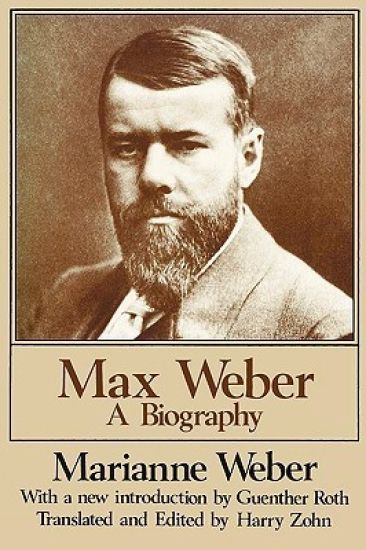
Max Weber

Max Weber

Marianne Weber

Transaction Publishers
1988
nidottu
A founder of contemporary social science, Max Weber was born in Germany in 1864. At his death 56 years later, he was nationally known for his scholarly and political writings, but it was the international reception of his oeuvre over the last forty years that has made him world-famous. "The Protestant Ethic and the Spirit of Capitalism," "The Economic Ethics of the World Religions" and his magnum opus, "Economy and Society," with its treatment of the relations of economics, politics, law and religion, belong to the great achievements of 20th-century social science.The groundwork for the posthumous Weber reception was laid by Weber's widow Marianne, a well-known feminist writer, who followed up her edition of his collected works with one of the greatest biographies in a generation that produced many important accounts of itself. Although unavailable in English until a decade ago, the importance of Marianne Weber's 1926 work had been widely understood. Sociologist Robert A. Nisbet called it "a moving and deeply felt biographical memoir." Historian Gerhard Masur cited the book as "the foundation of all further inquiries into Max Weber's life and influence."Beginning with Max's ancestry and early years, Marianne Weber guides us through his life as student, young lawyer, scholar and political writer, quoting liberally from his voluminous correspondence. Her account of his nervous breakdown after 1897, which curtailed his academic career but ultimately strengthened his creative energies, provides deep insight into some of the personal tensions that troubled him to the end. In addition to her perceptive personal and intellectual life before the First World War, describing many scholars, social reformers, politicians and literary figures within and beyond the famous Heidelberg circle of the Webers. The new introduction by Guenther Roth situates Marianne Weber's own role in the contemporary setting and discusses the current state of Weber research and of the international Weber reception.
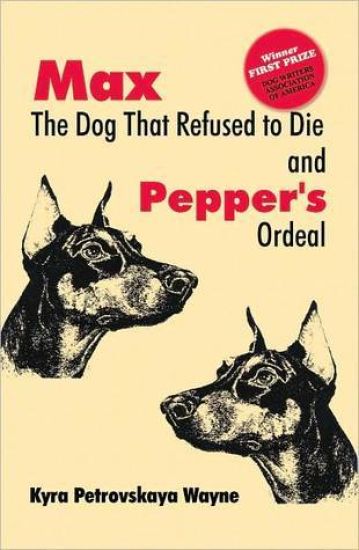
Max - The Dog that Refused to Die

Max - The Dog that Refused to Die

Kyra Petrovskaya Wayne

Hancock House Publishers Ltd ,
2000
pokkari
Retells the true adventure of Max who becomes lost and severely injured but makes his way over rugged terrain reaching a cabin where he is befriended and rushed to a vet. Almost totally emaciated from his ordeal, Max's chances for recovery are slim. Still, his indomitable will bolsters him against all obstacles. A tag with his owner's telephone number allows the kindly strangers to notify the owners of Max's condition. Helped by several specialists and the devotion of his family, Max eventually recovers. Pepper's Ordeal is the true story of another of Kyra Wayne's beloved Dobermans. An open gate leads Pepper to a sinister character and rusty cages full of raging pitbulls. After some shrewd detective work, Kyra and a pair of courageous boys rescue Pepper from a dogfight training farm, but not without an encounter with the woman with 'one long earring'.