Kirjojen hintavertailu. Mukana 12 016 292 kirjaa ja 12 kauppaa.

Kirjahaku

Etsi kirjoja tekijän nimen, kirjan nimen tai ISBN:n perusteella.

1000 tulosta hakusanalla Maya Eisel

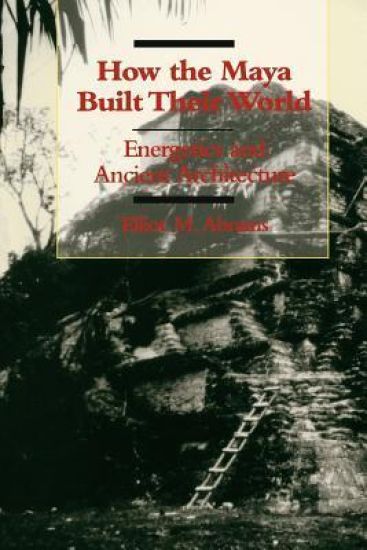
How the Maya Built Their World

How the Maya Built Their World

Elliot M. Abrams

University of Texas Press
1994
pokkari
Maya architecture is often described as "massive" and "monumental," but experiments at Copan, Honduras, convinced Elliot Abrams that 300 people could have built one of the large palaces there in only 100 days.In this groundbreaking work, Abrams explicates his theory of architectural energetics, which involves translating structures into volumes of raw and manufactured materials that are then multiplied by the time required for their production and assembly to determine the labor costs of past construction efforts. Applying this method to residential structures of the Late Classic period (A.D. 700-900) at Copan leads Abrams to posit a six-tiered hierarchic social structure of political decision making, ranging from a stratified elite to low-ranking commoners. By comparing the labor costs of construction and other economic activities, he also prompts a reconsideration of the effects of royal construction demands on commoners.How the Maya Built Their World will interest a wide audience in New and Old World anthropology, archaeology, architecture, and engineering.
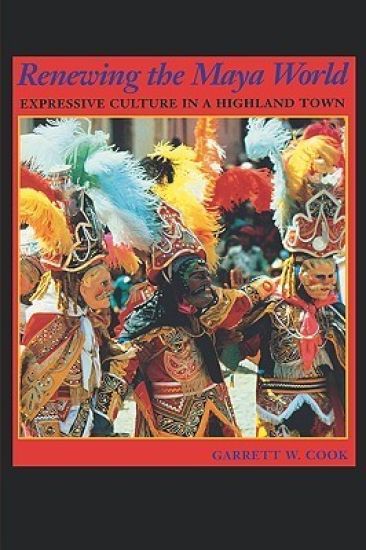
Renewing the Maya World

Renewing the Maya World

Garrett W. Cook

University of Texas Press
2000
pokkari
Each year in the Highland Guatemala town of Santiago Momostenango, Maya religious societies, dance teams, and cofradÍas perform the annual cycle of rituals and festivals prescribed by Costumbre (syncretized Maya Christian religion), which serves to renew the cosmic order. In this richly detailed ethnography, Garrett Cook explores how these festivals of Jesucristo and the saints derive from and reenact three major ancient Maya creation myths, thus revealing patterns of continuity between contemporary expressive culture and the myths, rituals, and iconography of the Classic and Postclassic Maya. Drawing on fieldwork conducted in the 1970s and renewed in the 1990s, Cook describes the expressive culture tradition performed in and by the cofradÍas and their dance teams. He listens as dancers and cofrades explain the meaning of service and of the major ritual symbols in the cults of the saints and Jesucristo. Comparing these symbols to iconographic evidence from Palenque and myths from the Popol Vuh, Cook persuasively argues that the expressive culture of Momostenango enacts major Maya creation myths-the transformative sunrise, the representation of the year as the life cycle of anthropomorphized nature, and the erection of an axis mundi. This research documents specific patterns of continuity and discontinuity in the communal expression of Maya religious and cosmogonic themes. Along with other recent research, it demonstrates the survival of a basic Maya pattern-the world-creating vegetative renewal cycle-in the highland Maya cults of the saints and Jesucristo.
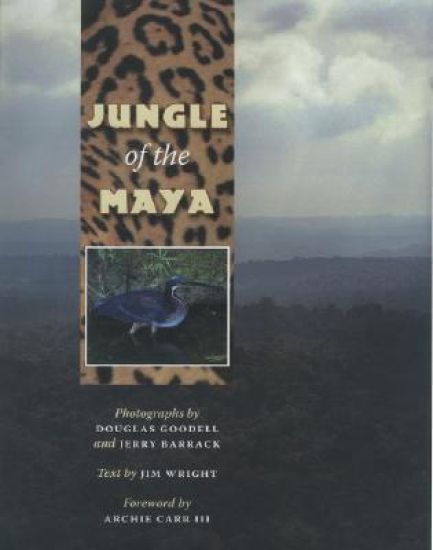
Jungle of the Maya

Jungle of the Maya

Douglas Goodell

University of Texas Press
2006
sidottu
The Selva Maya (Jungle of the Maya) is one of the world's most magical yet least appreciated places-an enormous tropical forest that encompasses much of Belize, Guatemala, and Mexico's Yucatan Peninsula. At 9,000,000 acres, it is the largest contiguous tropical forest north of the Amazon in the Western Hemisphere. Within its borders, the Selva Maya provides habitat for an astonishing diversity of plants and animals-more than 500 species of birds alone. The forest also contains the fascinating ruins of ancient Maya cities, which attract visitors and researchers from all over the globe. Jungle of the Maya presents a stunning photographic portrait of this irreplaceable natural treasure. Nature photographers Douglas Goodell and Jerry Barrack capture the living wonders of the jungle-jaguars and other cats; spider and howler monkeys; hummingbirds and butterflies; and snakes, amphibians, and insects-as well as the region's hallmark Maya sites, including Tikal, Chichen Itza, Uxmal, and Tulum. Environmental writer Jim Wright invitingly describes the Selva Maya's natural and human history, helping visitors and residents appreciate the riches to be found in the forest and the need to protect and preserve them for generations to come. Because human activities are encroaching more and more on the Mayan forest, Jungle of the Maya is a beautiful book with a timely message. As renowned naturalist Archie Carr III sums it up in his foreword, "Today, the Selva Maya is at risk again. As modern beings, can we manage the forest better than we believe the ancient Maya did? We should. We have the archaeological record to draw from. We have modern science. And we still have inspiration whispered to us by spirits in the great plazas of Tikal and beyond. Turn the pages, and witness."
Death and the Classic Maya Kings

Death and the Classic Maya Kings

James L. Fitzsimmons

University of Texas Press
2009
sidottu
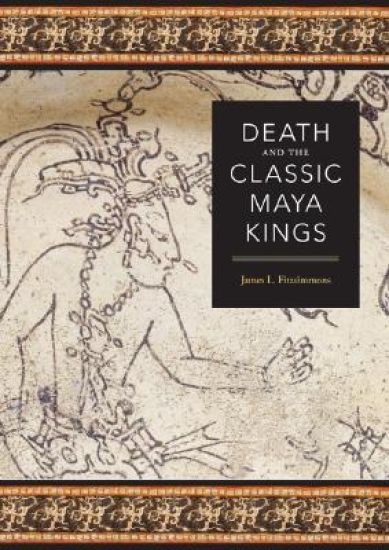
Like their regal counterparts in societies around the globe, ancient Maya rulers departed this world with elaborate burial ceremonies and lavish grave goods, which often included ceramics, red pigments, earflares, stingray spines, jades, pearls, obsidian blades, and mosaics. Archaeological investigation of these burials, as well as the decipherment of inscriptions that record Maya rulers' funerary rites, have opened a fascinating window on how the ancient Maya envisaged the ruler's passage from the world of the living to the realm of the ancestors.Focusing on the Classic Period (AD 250-900), James Fitzsimmons examines and compares textual and archaeological evidence for rites of death and burial in the Maya lowlands, from which he creates models of royal Maya funerary behavior. Exploring ancient Maya attitudes toward death expressed at well-known sites such as Tikal, Guatemala, and Copan, Honduras, as well as less-explored archaeological locations, Fitzsimmons reconstructs royal mortuary rites and expands our understanding of key Maya concepts including the afterlife and ancestor veneration.
Romancing the Maya

Romancing the Maya

R. Tripp Evans

University of Texas Press
2004
pokkari
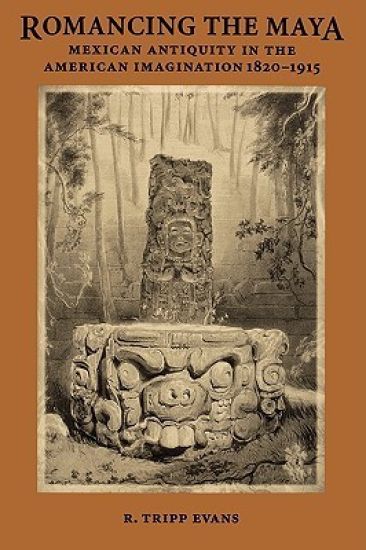
During Mexico's first century of independence, European and American explorers rediscovered its pre-Hispanic past. Finding the jungle-covered ruins of lost cities and artifacts inscribed with unintelligible hieroglyphs-and having no idea of the age, authorship, or purpose of these antiquities-amateur archaeologists, artists, photographers, and religious writers set about claiming Mexico's pre-Hispanic patrimony as a rightful part of the United States' cultural heritage. In this insightful work, Tripp Evans explores why nineteenth-century Americans felt entitled to appropriate Mexico's cultural heritage as the United States' own. He focuses in particular on five well-known figures-American writer and amateur archaeologist John Lloyd Stephens, British architect Frederick Catherwood, Joseph Smith, founder of the Church of Jesus Christ of Latter-Day Saints, and the French ÉmigrÉ photographers DÉsirÉ Charnay and Augustus Le Plongeon. Setting these figures in historical and cultural context, Evans uncovers their varying motives, including the Manifest Destiny-inspired desire to create a national museum of American antiquities in New York City, the attempt to identify the ancient Maya as part of the Lost Tribes of Israel (and so substantiate the Book of Mormon), and the hope of proving that ancient Mesoamerica was the cradle of North American and even Northern European civilization. Fascinating stories in themselves, these accounts of the first explorers also add an important new chapter to the early history of Mesoamerican archaeology.
The Modern Maya

The Modern Maya

Macduff Everton

University of Texas Press
2012
sidottu
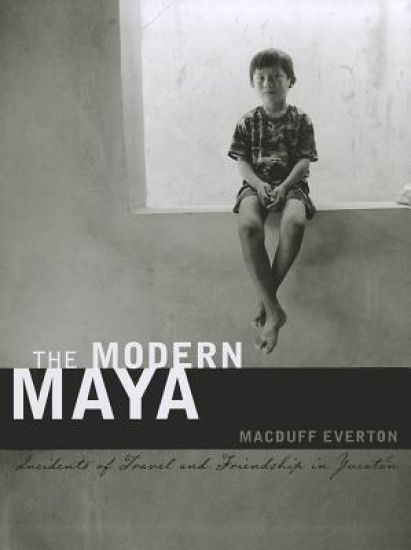
Ancient Maya cities draw travelers from all over the world to Mexico’s Yucatán peninsula. But while tales of the “Maya collapse” give an air of mystery to the ruins, modern Maya still live in communities across the Yucatán, where they strive to maintain their culture and way of life despite centuries of political, social, and environmental disruption. Photographer Macduff Everton has spent more than four decades living and working among the Maya. His 1991 book on the modern Maya provided a superb photo-essay and ethnographic record of the Maya during a time of critical change and globalization. In this book, he masterfully updates his portrait of the modern Maya, while investigating the effects of NAFTA, tourism, the evangelical movement, world trade and maquiladoras, racism, sexism, and drugs on Maya communities.Combining splendid photography of ancient Maya sites and modern Maya communities with an illuminating narrative, Everton takes us into the homes and lives of farmers and chicle gatherers, ranch hands and henequen workers, as well as the Mayan-speaking urbanites who work at the resorts on the Riviera Maya. His long acquaintance with the Maya allows him to tell dramatic stories of how individuals and families have seen a way of life that was centered around the milpa (farm) and the cultivation of tropical forest products transformed by the effects of globalization and the necessity to labor for wages. At the same time, Everton also reveals the amazing adaptability of the Maya, who hold onto the essence of their culture despite all the destructive pressures from the outside world.
The Southeast Maya Periphery

The Southeast Maya Periphery

University of Texas Press
1986
nidottu
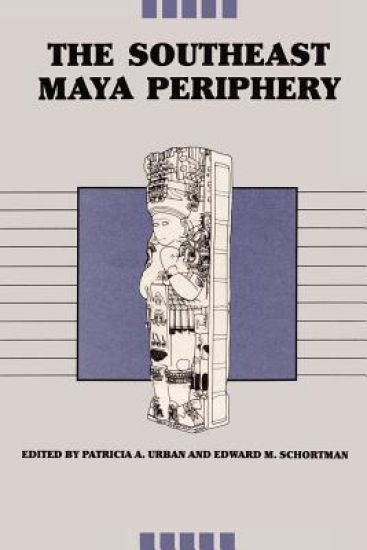
Archaeologists are continually faced with a pervasive problem: How can cultures, and the interactions among cultures, be differentiated in the archaeological record? This issue is especially difficult in peripheral areas, such as El Salvador, Honduras, and southern Guatemala in the New World. Encompassing zones that are clearly Mayan in language and culture, especially during the Classic period, this area also includes zones that seem to be non-Mayan. The Southeast Maya Periphery examines both aspects of this territory. For the Maya, emphasis is on two sites: Quirigua, Guatemala, and Copan, Honduras. For the non-Maya zone, information is presented on a variety of sites and subregions-the Lower Motagua Valley in Guatemala; the Naco, Sula, and Comayagua valleys and the site of Playa de los Muertos in Honduras; and the Zapotitan Valley and the sites of Cihuatan and Santa Leticia in El Salvador. Spanning over two thousand years of prehistory, from the Middle Preclassic through the Classic and the poorly understood Postclassic, the essays in this volume address such topics as epigraphy and iconography, architecture, site planning, settlement patterns, and ceramics and include basic information on chronology. Copan and Quirigua are treated both individually and in comparative perspective. This significant study was the first to attempt to deal with the Periphery as a coherent unit. Unique in its comparative presentation of Copan and Quirigua and in the breadth of information on non-Maya sites in the area, The Southeast Maya Periphery consists largely of previously unpublished data. Offering a variety of approaches to both old and new problems, this volume attempts, among other things, to reassess the relationships between Copan and Quirigua and between Highland and Lowland ceramic traditions, to analyze ceramics by neutron activation, and to define the nature of the apparently non-Mayan cultures in the region. This book will be of major interest not only to Mayanists and Mesoamerican archaeologists but also to others interested in the processes of ethnic group boundary formation and maintenance.
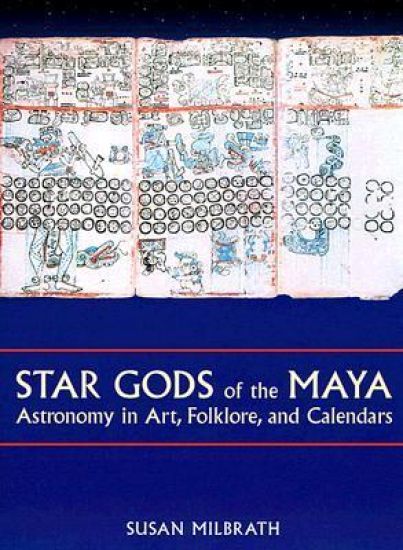
Star Gods of the Maya

Star Gods of the Maya

Susan Milbrath

University of Texas Press
2000
pokkari
Observations of the sun, moon, planets, and stars played a central role in ancient Maya lifeways, as they do today among contemporary Maya who maintain the traditional ways. This pathfinding book reconstructs ancient Maya astronomy and cosmology through the astronomical information encoded in Precolumbian Maya art and confirmed by the current practices of living Maya peoples.Susan Milbrath opens the book with a discussion of modern Maya beliefs about astronomy, along with essential information on naked-eye observation. She devotes subsequent chapters to Precolumbian astronomical imagery, which she traces back through time, starting from the Colonial and Postclassic eras. She delves into many aspects of the Maya astronomical images, including the major astronomical gods and their associated glyphs, astronomical almanacs in the Maya codices [painted books], and changes in the imagery of the heavens over time. This investigation yields new data and a new synthesis of information about the specific astronomical events and cycles recorded in Maya art and architecture. Indeed, it constitutes the first major study of the relationship between art and astronomy in ancient Maya culture.
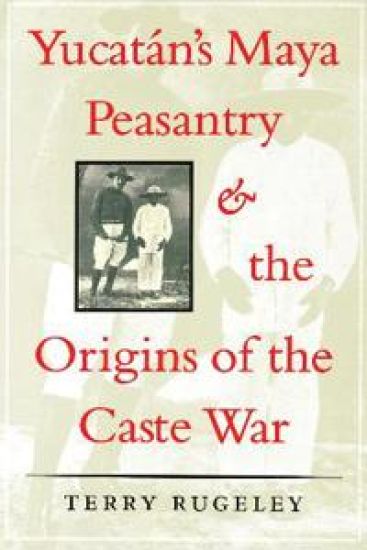
Yucatán's Maya Peasantry and the Origins of the Caste War

Yucatán's Maya Peasantry and the Origins of the Caste War

Terry Rugeley

University of Texas Press
1996
pokkari
Conflicts between native Maya peoples and European-derived governments have punctuated Mexican history from the Conquest in the sixteenth century to the current Zapatista uprising in Chiapas. In this deeply researched study, Terry Rugeley delves into the 1800-1847 origins of the Caste War, the largest and most successful of these peasant rebellions.Rugeley refutes earlier studies that seek to explain the Caste War in terms of a single issue. Instead, he explores the interactions of several major social forces, including the church, the hacienda, and peasant villagers. He uncovers a complex web of issues that led to the outbreak of war, including the loss of communal lands, substandard living conditions, the counterpoise of Catholicism versus traditional Maya beliefs, and an increasingly heavy tax burden.Drawn from a wealth of primary documents, this book represents the first real attempt to reconstruct the history of the pre-Caste War period. In addition to its obvious importance for Mexican history, it will be illuminating background reading for everyone seeking to understand the ongoing conflict in Chiapas.
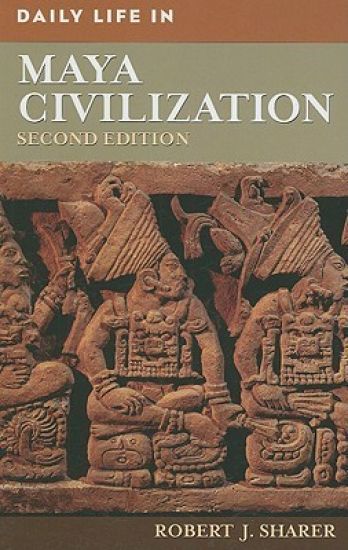
Daily Life in Maya Civilization

Daily Life in Maya Civilization

Robert J. Sharer

Greenwood Press
2009
sidottu
Experience daily life in Maya civilization, from its earliest beginnings to the Spanish conquest in the 16th century. Narrative chapters describe Mayan political life, economy, social structure, religion, writing, warfare, and scientific methods. Readers will explore the Mayan calendar, counting system, hunting and gathering methods, language, and family roles and relationships. A revised and expanded edition based on the latest archaeological research, this volume offers new interpretations and corrects popular misconceptions, and shows how the Maya adapted to their environment and preserved their culture and language over thousands of years. Over 60 photos and illustrations, several of new archaeological sites, enhance the material, and an expanded resource center bibliography includes web sites and DVDs for further study. The closing chapter discusses what Maya civilization means for us today and what we can learn from Maya achievements and failures. A first-stop reference source for any student of Latin American and Native American history and culture.
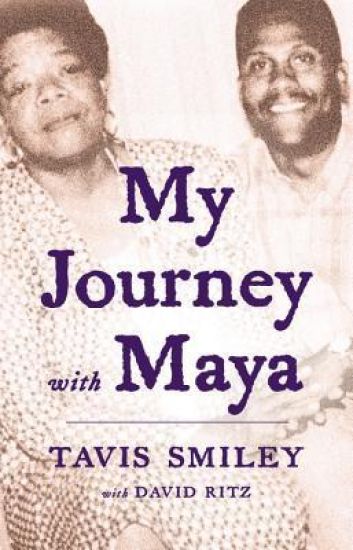
My Journey With Maya

My Journey With Maya

Tavis Smiley

Little, Brown Company
2015
sidottu
Tavis Smiley and Maya Angelou met in 1986, when he was twenty-one and she was fifty-eight. For the next twenty-eight years, Angelou was a teacher and a maternal figure to Smiley, and they talked often of art, politics, history, music, religion, and race. In My Journey with Maya, Smiley beautifully recounts a friendship filled with conversation that began when he, a recent college graduate and a poor kid from a big family in the Midwest, accompanied the revered writer on a sojourn to Ghana. Smiley stumbled into a relationship with her that shaped his future and affected the man he became. Like a mother to him, she was generous, challenging, and inspirational--as she was to so many. Here he shares his portrait of Angelou--a highly complex individual who left an indelible imprint on American culture.
My Journey With Maya

My Journey With Maya

Tavis Smiley

Back Bay Books
2016
pokkari
Tavis Smiley and Maya Angelou met in 1986, when he was twenty-one and she was fifty-eight. For the next twenty-eight years, Angelou was a teacher and a maternal figure to Smiley, and they talked often of art, politics, history, music, religion, and race. In My Journey with Maya, Smiley beautifully recounts a friendship filled with conversation that began when he, a recent college graduate and a poor kid from a big family in the Midwest, accompanied the revered writer on a sojourn to Ghana. Smiley stumbled into a relationship with her that shaped his future and affected the man he became. Like a mother to him, she was generous, challenging, and inspirational--as she was to so many. Here he shares his portrait of Angelou--a highly complex individual who left an indelible imprint on American culture.
The Many Fortunes Of Maya

The Many Fortunes Of Maya

Nicole D. Collier

HARPERCOLLINS PUBLISHERS INC
2023
sidottu
In this lyrical novel that will appeal to fans of Meg Medina, Maya turns to her trusty "wheel of fortunes" for guidance on the toughest questions—like why her best friend suddenly feels far away, or when her Daddy will move back home. But can Maya find the courage to write her own fortune Maya J. Jenkins is bursting with questions:Will she get the MVP award at this year’s soccer banquetWho will win the big grill off between Daddy and Uncle JWhen will she pass the swim test and get a green braceletFor answers and a dose of good luck, 12-year-old Maya turns to her Wheel of Fortunes, a cardboard circle covered with the small slips of wisdom she’s collected from fortune cookies.But can the fortunes answer her deep-down questions The ones she’s too scared to ask out loud Like, where did Mama’s smile go, the real one that lit up everything around her When will Daddy move back home And most of all, does she have enough courage to truly listen to the voice in her heart
A Messiah Among the Maya

A Messiah Among the Maya

David B. Brown

Lulu.com
2019
nidottu
Understanding the sacred belief system of the Maya has historically been complex and confusing. This study reviews the BC Maya murals found at San Bartolo, the prolific inscriptions and bi-reliefs at Palenque and the enigmatic structural design at Teotihuacan to see what they have in common. From the in-depth research performed it is determined that the esoteric aspects that connect them all is...the Judeo-Christian gospel belief system. This tome provides detailed consideration of the imagery provided in artwork and structural design used in architecture to teach the fundamental tenants of the gospel to students who visited these sites anciently. This work is destined to be seminal to major changes that are about to take place in Central American archaeology and a long overdue rewriting of Western Civilization history.
An Essential Introduction to Maya Character Rigging
While some rigging books focus too much on the theory of rigging and provide little instruction, others do the exact opposite and offer no reasoning behind the button-pushing. An Essential Introduction to Maya Character Rigging, 2nd Edition, however, offers a perfect balance. Cheryl Briggs’ text is built for the classroom, with step-by-step tutorials that guide the reader through the rigging process. With vibrant screenshots and a plethora of helpful tips, this book provides a strong foundation in character rigging for anyone who wants to pursue 3D animation or more advanced rigging topics.Features Provides readers with fundamental techniques to give them a firm grasp on Maya character rigging. Thorough step-by-step tutorials, which provides instruction on how to create biped, quadruped, and prop rigs. Continuous updates and further support can be located at www.cherylcreates.com Cheryl Briggs (formerly Cabrera) is an award-winning animated short film director. She has advised and guided aspiring animators, game artists, and visual effects artists for 20 years. Since 2009, Cheryl has taught all aspects of production in the Character Animation specialization in the School of Visual Arts and Design at the University of Central Florida. She also taught as Professor of Animation at the Savannah College of Art and Design from 2001 to 2009. Cheryl is currently on the Board of Directors for the Animation Hall of Fame. She also is a member of the Special Interest Group on Computer Graphics and Interactive Techniques (SIGGRAPH), the International Animated Film Society (ASIFA-Hollywood), Women in Animation, Women in Film and Television, and the Society for Animation Studies.Cheryl is also an Autodesk Certified Professional and an Autodesk Certified Instructor in Maya. She is the author of An Essential Introduction to Maya Character Rigging (Focal Press, 2008), Reel Success: Creating Demo Reels and Animation Portfolios (Focal Press, 2013), and Animating Short Stories: Narrative Techniques and Visual Design (Bloomsbury Academic, 2019).Cheryl holds a B.A. and M.Ed. in Education and an M.F.A. in Computer Art with a specialization in 3D Animation. She is a digital artist and animator that blends the lines between digital imagery and the traditional painting medium. She has participated is numerous group and solo exhibitions in the United States and her work is featured in several private collections. Her award-winning students have been featured in animation festivals worldwide, and many have gone on to work within the entertainment industry.
The Technology of Maya Civilization

The Technology of Maya Civilization

Zachary X. Hruby; Geoffrey E. Braswell; Oswaldo Chinchilla Mazariegos

Routledge
2019
nidottu
The ancient Maya shaped their world with stone tools. Lithic artifacts helped create the cityscape and were central to warfare and hunting, craft activities, cooking, and ritual performance. 'The Technology of Maya Civilization' examines Maya lithic artefacts made of chert, obsidian, silicified limestone, and jade to explore the relationship between ancient civilizations and natural resources. The volume presents case studies of archaeological sites in Guatemala, Mexico, Belize, and Honduras. The analysis draws on innovative anthropological theory to argue that stone artefacts were not merely cultural products but tools that reproduced, modified, and created the fabric of society.