Kirjojen hintavertailu. Mukana 11 699 587 kirjaa ja 12 kauppaa.

Kirjahaku

Etsi kirjoja tekijän nimen, kirjan nimen tai ISBN:n perusteella.

1000 tulosta hakusanalla Michael D. Call

The Evolution of the Flubb

The Evolution of the Flubb

Michael D. Fortescue

Createspace Independent Publishing Platform
2014
nidottu
The Flubb is a strange being who's driven by a restless wanderlust and a ceaseless hunger for storing words in his ample belly. Evolving from a transparent figure that materializes from nothingness, the Flubb somehow manages to rise to the dizzying heights of assistant lexicographer, his naive good nature carrying him through as he learns the wicked ways of the world. Along the way, he passes through a ridiculous variety of jobs-including porridge chef, zookeeper, and a brief stint as the archbishop of Canterbury-for many of which he is particularly unsuited. He embarks on a worldwide cruise, and an infatuation with the woman whose face appears on the ten-pence coin leads to hilarity at Buckingham Palace. These experiences, along with his introduction to the ways in which correct diction can make all the difference, make for an unforgettable novel that will leave readers giggling long after the last page. The first book in the Adventures of the Flubb trilogy, The Evolution of the Flubb is a rollicking journey full of adventure, fun, and delightfully wonderful wordplay.

Fearful Spirits, Reasoned Follies

Fearful Spirits, Reasoned Follies

Michael D. Bailey

Cornell University Press
2017
pokkari
Superstitions are commonplace in the modern world. Mostly, however, they evoke innocuous images of people reading their horoscopes or avoiding black cats. Certain religious practices might also come to mind—praying to St. Christopher or lighting candles for the dead. Benign as they might seem today, such practices were not always perceived that way. In medieval Europe superstitions were considered serious offenses, violations of essential precepts of Christian doctrine or immutable natural laws. But how and why did this come to be? In Fearful Spirits, Reasoned Follies, Michael D. Bailey explores the thorny concept of superstition as it was understood and debated in the Middle Ages. Bailey begins by tracing Christian thinking about superstition from the patristic period through the early and high Middle Ages. He then turns to the later Middle Ages, a period that witnessed an outpouring of writings devoted to superstition—tracts and treatises with titles such as De superstitionibus and Contra vitia superstitionum. Most were written by theologians and other academics based in Europe's universities and courts, men who were increasingly anxious about the proliferation of suspect beliefs and practices, from elite ritual magic to common healing charms, from astrological divination to the observance of signs and omens. As Bailey shows, however, authorities were far more sophisticated in their reasoning than one might suspect, using accusations of superstition in a calculated way to control the boundaries of legitimate religion and acceptable science. This in turn would lay the conceptual groundwork for future discussions of religion, science, and magic in the early modern world. Indeed, by revealing the extent to which early modern thinkers took up old questions about the operation of natural properties and forces using the vocabulary of science rather than of belief, Bailey exposes the powerful but in many ways false dichotomy between the "superstitious" Middle Ages and "rational" European modernity.
Burning Bodies

Burning Bodies

Michael D. Barbezat

Cornell University Press
2018
sidottu
Burning Bodies interrogates the ideas that the authors of historical and theological texts in the medieval West associated with the burning alive of Christian heretics. Michael Barbezat traces these instances from the eleventh century until the advent of the internal crusades of the thirteenth century, depicting the exclusionary fires of hell and judicial execution, the purifying fire of post-mortem purgation, and the unifying fire of God's love that medieval authors used to describe processes of social inclusion and exclusion. Burning Bodies analyses how the accounts of burning heretics alive referenced, affirmed, and elaborated upon wider discourses of community and eschatology. Descriptions of burning supposed heretics alive were profoundly related to ideas of a redemptive Christian community based upon a divine, unifying love, and medieval understandings of what these burnings could have meant to contemporaries cannot be fully appreciated outside of this discourse of communal love. For them, human communities were bodies on fire. Medieval theologians and academics often described the corporate identity of the Christian world as a body joined together by the love of God. This love was like a fire, melting individuals together into one whole. Those who did not spiritually burn with God's love were destined to burn literally in the fires of Hell or Purgatory, and the fires of execution were often described as an earthly extension of these fires. Through this analysis, Barbezat demonstrates how presentations of heresy, and to some extent actual responses to perceived heretics, were shaped by long-standing images of biblical commentary and exegesis. He finds that this imagery is more than a literary curiosity; it is, in fact, a formative historical agent.
The Advent Anthology Omnibus

The Advent Anthology Omnibus

Michael D. Young

Createspace Independent Publishing Platform
2014
nidottu
This Omnibus contains the three volumes of the Advent Anthologies series including: Sing We Now of Christmas (Vol 1) Carol of the Tales (Vol 2) Angels from Their Realms of Story (Vol 3) Each volume contains 25 holiday-themed short stories with each based on a Christmas carol or song.
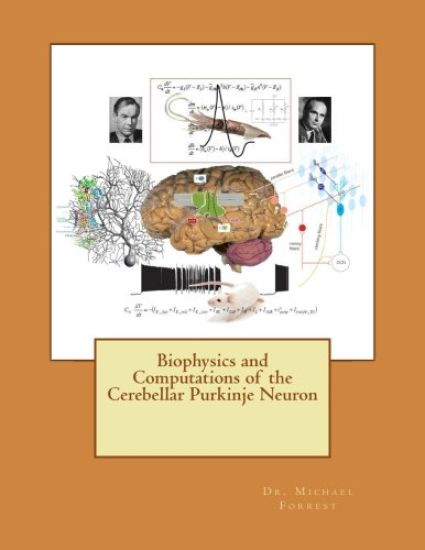
Biophysics and Computations of the Cerebellar Purkinje Neuron

Biophysics and Computations of the Cerebellar Purkinje Neuron

Michael D. Forrest

Createspace Independent Publishing Platform
2014
nidottu
Neuroscience is the scientific study of the nervous system. Its aim is to understand how the nervous system works, discover what goes wrong in its diseased/injured states and to develop treatments to fix these pathological states. Computational Neuroscience is the use of computers to analyse and model electrical recordings from the brain, in order to elucidate how the brain computes. It is instrumental to present efforts to try and crack the "neural code" i.e. to decode the, as yet largely unknown, cipher that specifies how information is encoded in the electrical and chemical signals of the nervous system; a "holy grail" of modern science. This book suggests that the sodium-potassium pump may not simply be a homeostatic, "housekeeping" molecule for ionic gradients; but might be a computation element in the cerebellum and the brain. This concept runs contrary to conventional, entrenched viewpoints on brain function. Artificial Intelligence (AI) research typically builds on the fiction that neurons are simple linear threshold units, and that the immense computational power of the brain comes from having a great many of them. This book challenges this assumption, showing that the non-linear biophysics of synapses, dendrites, ion pumps, ion exchangers, intracellular ion dynamics and voltage-dependent ion currents intersect to permit the cerebellar Purkinje neuron to perform complex computations upon its inputs. This book will please those curious about brain computation, especially the computational capability of single neurons, and presents both computational and experimental approaches to neuroscience. Much of its content is new, primary research.
Everything Bankers have Learned from the Financial Crisis: Collected wisdoms since the Financial Apocalypse
Fiercely frank and brilliantly insightful, 'Everything Bankers Learned from The Financial Crisis' amasses learning's from banking professionals across the globe to bring readers the most extensive source of collective financial wisdom ever accumulated. Global financial markets became dislodged in the summer of 2007, when a number of global financial institutions suspended redemptions in investment vehicles linked to US mortgage debt and derivatives. This was to signal the start of a financial meltdown that would send shockwaves across the globe and cause an estimated financial loss of over $15 trillion... and counting. From mortgage-backed securities and credit default swaps to housing market bubbles and regulatory failures, this book documents and analyses the concentrated knowledge acquired by bankers from the worst financial meltdown to-date. Chapters cover learnings such as: -How to avoid systemic derivatives risk and over-leveraging pitfalls -How to self-regulate and manage miss-selling -How to manage product complexity and 'black swan' scenarios -How to manage term deposits, 'cash isn't trash' -How to learn from and avoid past mistakes You got it This book has 160 empty pages. As history has taught us, the financial markets rarely learn from past mistakes. The pages serve as a solid reminder of this truth, and as such makes for an excellent and amusing gift for any banking professional.
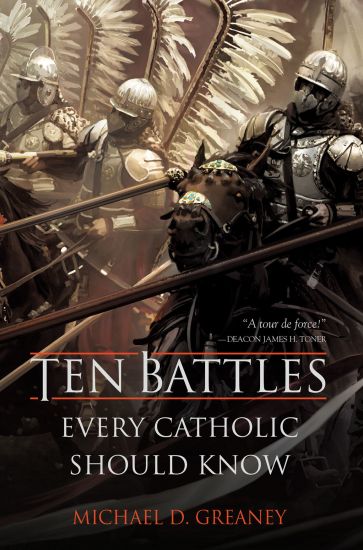
Ten Battles Every Catholic Should Know

Ten Battles Every Catholic Should Know

Michael D. Greaney

Tan Books
2018
sidottu
Ten Battles Every Catholic Should Know offers readers richly detailed accounts of pivotal engagements--many little known in the West--in the centuries-long defense of Christendom against militant Islam. Join military historian Michael D. Greaney as, in gripping prose, he describes the struggle, primarily on Christendom's eastern borders, against the dreaded Ottoman Turks in places such as: - Manzikert, which marked the beginning of the fight, - Wallachia, where Vlad II, the real "Dracula", carried out a personal crusade against the Turks to such good effect that his name strikes terror down to the present day, - Moh cs, "the Tomb of Hungary," - Vienna (the siege of 1529), the first setback experienced by S leym n the Magnificent, perhaps the greatest ruler the Ottoman Turks ever knew, - Szigetv r (known as the "Hungarian Alamo"), - ...and five others. The accounts of battles are enlivened and expanded with historical footnotes and introductions. Though less well known than the struggle to retake Spain and Southern France, the battlefields of Armenia and Eastern and Central Europe were just as crucial to preserve Christendom. Includes 12 battle maps.
Songs of my soul: Poems of Christian faith

Songs of my soul: Poems of Christian faith

Michael D. Carter

Createspace Independent Publishing Platform
2014
nidottu
Songs of my songs are poems that are based upon the Bible and also from my faith journey. These poems were composed between 1983-to the present. These poems are my songs of thanks to God for all of his blessings. My purpose for sharing these poems is to provide encourage and inspiration. There two long poems in the collection. 'The Pilgrim's Journey' tells the story of the search for spiritual renewal. 'The triumph of Christ' is about the death and resurrection of Jesus and his victory over the devil.
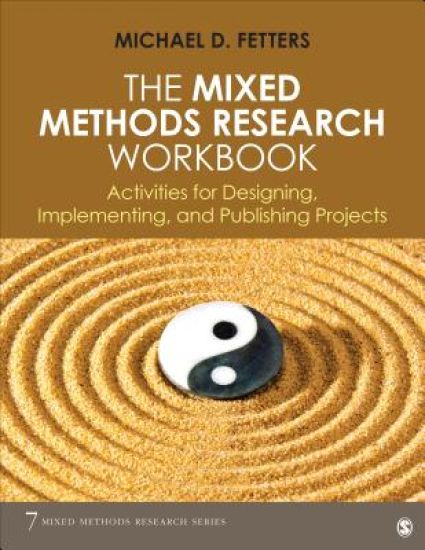
The Mixed Methods Research Workbook

The Mixed Methods Research Workbook

Michael D. Fetters

SAGE Publications Inc
2020
nidottu
Written by Michael D. Fetters, one of the leading scholars in the field and co-editor of the Journal of Mixed Methods Research, The Mixed Methods Research Workbook: Activities for Designing, Implementing, and Publishing Projects is the perfect tool for doctoral students and researchers who want support throughout their research project, as well as a practical way to apply the knowledge they’ve learned. With The Mixed Methods Research Workbook, you’ll be ready to tackle your mixed methods research project with confidence. Each chapter follows a familiar framework, starting with learning objectives for each piece of the mixed methods process. Readers have ample space in this text to write notes, fill out activities, and begin their process of actively designing and writing up a mixed methods study. This easy-to follow process gives readers an immediate structure to their projects. Exemplar boxes provide a starting framework, with the text encouraging deeper reflection on mixed methods challenges and opportunities. Stories from the field illuminate struggles and suggestions with the benefit of hindsight. Checklists at the end of each chapter help readers stay organized and key resources provide up-to-date lists of material for further study. From start to finish, readers can follow along with this text as they work on their projects. The text begins by assisting readers in identifying topics and conducting literature reviews in the context of mixed methods, zeroing in to address mixed-methods-specific challenges like integration, leveraging advantages of both qualitative and quantitative methods, and incorporating theory and personal backgrounds. Identifying data sources helps readers organize their data collection. Two chapters on research designs structure the data collection process with procedural diagrams. A unique chapter on mixed methods sampling offers application through basic and advanced designs. The book illustrates integrating and implementing mixed methods designs with practical advice for each of stage of the process. Ethics in a mixed methods context readies readers for the research protocol stage. Several chapters fully explicate the data analysis process, including developing a joint display, a state-of-the-art procedure for analysis and presentation of findings. Closing out the process, the text tackles quality and evaluation in mixed methods studies, preparing your study for publication, and writing up your article.