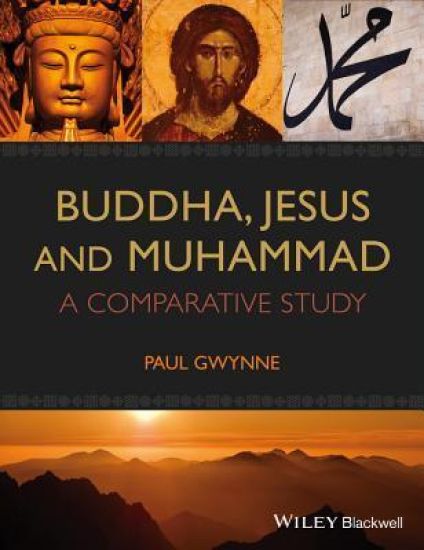
This cool, clear-sighted comparative study has no theological axe to grind. It offers a trusty thematic guide to the figureheads of three of the largest religions in the world. The comparative approach is descriptive and even-handed, highlighting both similarities and differences across a range of major areas.The thematic chapters cover: early life, followers, the core message, political attitudes, relations with women, and death.The engaging writing and descriptive approach make this an ideal text for students, instructors and general readers.
Near Eastern Cities from Alexander to the Successors of Muhammad compares the evolution of several cities in the Near East from the time of Alexander the Great until the beginning of the Islamic 'Abbasid Dynasty. This volume examines both archaeological remains and literary sources to explain the diversity of imperial, cultural, and religious influences on urban life. It offers several case studies chosen from different regions of the Roman Near East, demonstrating that Greco-Roman and Islamic culture spread unevenly through these various cities, and that it is impossible to make broad generalizations. It argues instead that there were different patterns of urbanism that demonstrate a continued vitality of civic life up to the 'Abbasid revolution.Near Eastern Cities from Alexander to the Successors of Muhammad will be of particular interest to students of this period in the Ancient Near East, as well as those studying ancient cities and everyday life.
Biografi Sejarah Kehidupan Siti Aminah Binti Wahab Ibunda Nabi Muhammad SAW Utusan Tuhan Semesta Alam Yang Terakhir Edisi Bahasa Indonesia Bersumberkan Dari Kitab Suci Al-Quran Dan Al-Hadist. Ibunda Aminah binti Wahab adalah ibu yang melahirkan Nabi Muhammad SAW, Nabi umat Islam. Aminah menikah dengan Abdullah. Tidak terdapat keterangan mengenai lahirnya beliau, dan menurut sejarah ia meninggal pada tahun 577 ketika dalam perjalanan menuju Yatsrib untuk mengajak Nabi Muhammad SAW mengunjungi pamannya dan melihat kuburan ayahnya. Siti Aminah dilahirkan di Mekkah. Ayah Ibunda Aminah adalah pemimpin Bani Zuhrah, yang bernama Wahab bin Abdul Manaf bin Zuhrah bin Kilab. Sedangkan ibu Aminah adalah Barrah binti Abdul Uzza bin Utsman bin Abduddar bin Qushay. Siti Aminah adalah pemimpin para ibu, karena ia ibu Nabi Muhammad SAW yang dipilih Allah SWT sebagai Rasul pembawa risalah untuk umat manusia hingga akhir zaman. Baginda Muhammadlah penyeru kebenaran dan keadilan serta kebaikan berupa agama Islam. "Dan barangsiapa memilih agama selain Islam, maka tiadalah diterima (agama itu) darinya. Dan di akhirat termasuk orang-orang yang rugi." (QS. Ali Imran: 85) Tak banyak sejarawan yang mengupas masa hidupnya, namun nama ini senantiasa semerbak bersama hembusan angin keindahan. Perjalanannya yang indah nan suci telah mengukir perubahan besar perputaran zaman. Siapa yang tak kenal Bani Hasyim; karena dari kabilah inilah Nabi Muhammad SAW dilahirkan. Siapa pula yang tak kenal Bani Zuhrah; sebuah kabilah yang pernah menyimpan wanita suci dan mulia, karena dari rahimnya lahir sebuah cahaya agung yang membawa pembaharuan besar di dunia ini, Aminah binti Wahab Ibunda Rasululllah SAW Utusan Allah SWT Sang Pencipta Alam Semesta Yang Terakhir.
The Life of Hazrat Aminah bint Wahb The Mother of Prophet Muhammad SAW Last Messenger of Allah SWT (God) English Edition Hardcover Version Based from The Holy Quran and Al-Hadith. Allah SWT (God) Almighty created the father of mankind, Prophet Adam (Pbuh). When Adam raised his head, he saw that some name was written with an enormous Nur (heavenly light) at the Great Throne: "Ahmad." He asked wondering: "O my Lord, what is that light?" God Almighty replied: "It is the light of a prophet who is going to come from your offspring. His name is Ahmad up in the heaven and Muhammad on earth. If it hadn't been for him, I wouldn't have created you as well " The enormous truth that we faithfully adhere was also proclaimed by the owner of the light after billions of years. One day, one of the Companions, Abdullah bin Jabir (may Allah be pleased with him) asked, "Oh Allah's Messenger, will you explain what Allah created before everything else"? He replied: "Before everything, He created your Messenger's noor (light) from His own light. The light would travel with Allah's power and as it wished. At that time, there was no lawh mahfuz (preserved tablet), no pen, no Heaven, no Hell, no angel, no sky, no land, no sun, no moon, no person, and no jinn. Firstly, the Light that enlightened the heavens with all its grandeur secondly shone in the forehead of Adam (PBUH). Then, from one prophet to another, It came to Abraham (PBUH) and through him to his son Ismael (PBUH). Firstly, the Light that enlightened the heavens with all its grandeur secondly shone in the forehead of Adam (PBUH). Then, from one prophet to another, It came to Abraham (PBUH) and through him to his son Ismael (PBUH).
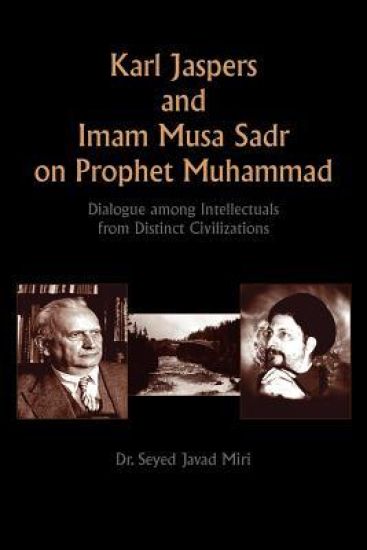
The underlying question in this work is related to the paradigmatic role of Prophet Muhammad and how this paradigm has been understood by both Jaspers and Sadr and why they have come to two different conclusions on this very pivotal issue and furthermore how these differences affected the dialogue among civilizations or more importantly the dialogue among elite intellectuals in Iran (and those intellectuals who work within the paradigm of Sacred Intellectual Tradition in general) and Germany (and those intellectuals who work within the paradigm of the Secular Tradition in general). It is of profound interest to go beyond the journalistic approaches to the questions of 'difference', 'otherness', 'traditions', 'dialogue', 'possibilities of dialogue', and all that which make up the very backbone of contemporary incomprehensibilities across various civilizations, cultures, societies, nations, ethnicities and systems and instead construct common grounds and grounds of commonalities which could touch the hearts of men and women in a meaningful fashion and fashions which are of meaningful depths, i.e. inspired by Revelation (in religious sense), Intellection (in metaphysical sense), and Beautiful (in aesthetical sense). We cannot leave these issues in the hands of politicians or spin doctors who design the relations between human beings based on geostrategical interests of multinational companies rather than interaction between souls which could elevate the quality of human condition by overcoming the boundaries of ignorance or surpassing the predicament of ignoring the suffering of the others based on any illusory justifications.
""The Tarikh I Jadid: Or New History Of Mirza Ali Muhammad The Bab"" is a book written by Mirza Huseyn of Hamadan. It is a comprehensive account of the life and teachings of Mirza Ali Muhammad, also known as The Bab, who was the founder of the Babi faith. The book covers the period from the Bab's birth in 1819 to his execution in 1850. It provides an in-depth analysis of the Bab's teachings and the events that led to the emergence of the Babi faith. The author has used a variety of sources, including historical documents, eyewitness accounts, and personal narratives, to present a detailed and accurate account of the Bab's life. The book is an important resource for scholars and researchers interested in the history of the Babi faith and the life of its founder. It is also a valuable read for anyone interested in the history of religion and spirituality in the Middle East.This Is A New Release Of The Original 1893 Edition.This scarce antiquarian book is a facsimile reprint of the old original and may contain some imperfections such as library marks and notations. Because we believe this work is culturally important, we have made it available as part of our commitment for protecting, preserving, and promoting the world's literature in affordable, high quality, modern editions, that are true to their original work.