All Merinda wants in life is to be accepted and loved. Life in the ocean has not treated her so kindly just because having birthmarks is not normal for mermaids. With her best friend, Flipa the dolphin, she swims across the world to seek a new home for herself. She never imagined finding her new home on land where mermaids are forbidden to go. On land she is free to be herself, builds wonderful friendships, and falls in love. But can you really be yourself if you hide your true identity? Keeping secrets can be dangerous, especially when someone takes advantage of it for their own personal gain. In the end, Merinda will have to decide if it is safer to hide or be truly seen.
Not for Sale: In Defense of Public Goods contains a variety of essays aimed at developing a timely philosophical defense of public goods against neo-liberal criticisms. The defense proceeds on both a conceptual level with essays treating such concepts as collective action, collective provision, common property, intellectual property and a substanti
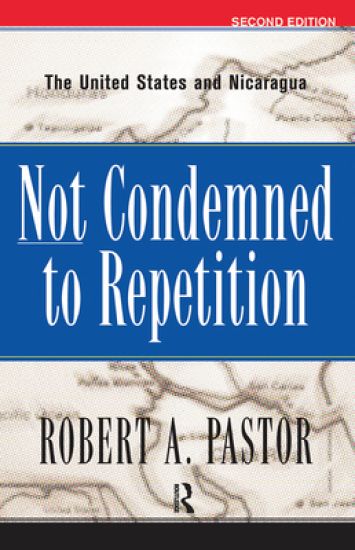
Through the fall of Anastasio Somoza, the rise of the Sandinistas, and the contra war, the United States and Nicaragua seemed destined to repeat the mistakes made by the U.S. and Cuba forty years before. The 1990 election in Nicaragua broke the pattern. Robert Pastor was a major US policymaker in the critical period leading up to and following the Sandinista Revolution of 1979. A decade later after writing the first edition of this book, he organized the International Mission led by Jimmy Carter that mediated the first free election in Nicaragua's history. From his unique vantage point, and utilizing a wealth of original material from classified government documents and from personal interviews with U.S. and Nicaraguan leaders, Pastor shows how Nicaragua and the United States were prisoners of a tragic history and how they finally escaped. This revised and updated edition covers the events of the democratic transition, and it extracts the lessons to be learned from the past.
For well over half a century, since the first credible warnings of petroleum depletion were raised in the 1950s, contemporary industrial civilization has been caught in a remarkable paradox: a culture more focused on problem solving than any other has repeatedly failed to deal with, or even consider, the problem most likely to bring its own history to a full stop. The coming of peak oil-the peaking and irreversible decline of world petroleum production-poses an existential threat to societies in which every sector of the economy depends on petroleum-based transport, and no known energy source can scale up extensively or quickly enough to replace dwindling oil supplies. Not The Future We Ordered is the first study of the psychological dimensions of that decision and its consequences, as a case study in the social psychology of collective failure, and as an issue with which psychologists and therapists will be confronted repeatedly in the years ahead.
Not for Sale: In Defense of Public Goods contains a variety of essays aimed at developing a timely philosophical defense of public goods against neo-liberal criticisms. The defense proceeds on both a conceptual level with essays treating such concepts as collective action, collective provision, common property, intellectual property and a substanti
Good relationships depend, above all, on our skills in conversation. Harvey Sacks' method, Conversational Analysis, was the springboard for The author's research into psychotherapy as a social activity that depends for its success on the quality of the therapeutic dialogue. The author wrote this book not only for therapists, but
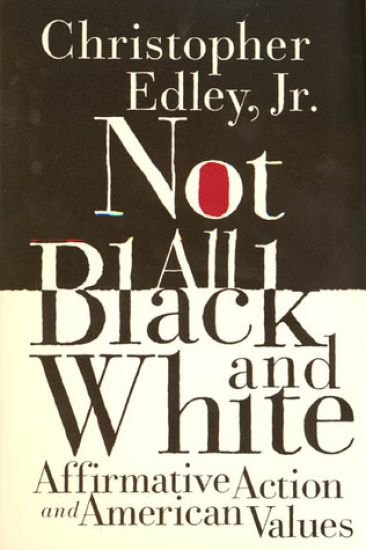
Rejecting simplistic left-right arguments, Christopher Edley, Jr., offers a cogent and persuasive analysis of one of the most contended issues in politics today. He makes the powerful argument that affirmative-action laws are essential to social justice in this country, though they have flaws and drawbacks (for both of which he suggests precise and sensible remedies). He shows us what is at stake in the positions our elected officials take and in the arguments we make about fairness, justice, and progress.
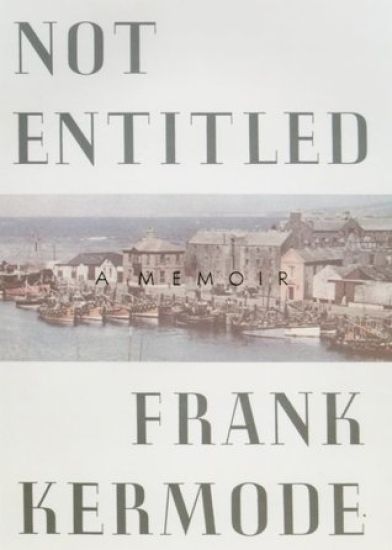
From a great critic of english literature, a different kind of text: a luminous account of his own life. Throughout this uniquely personal work, Frank Kermode touches on the deeper, lighter, ineffable issues of autobiography, and he does so with his characteristic grace, precision, and amused wisdom. Tracing his life from his childhood through his six years in the Royal Navy during World War II, from his student days in Liverpool to his battles at Cambridge over the literature curriculum and faculty, he shows us the miraculous connections between life and literature, between the world and the word; more, he transforms and ennobles both.
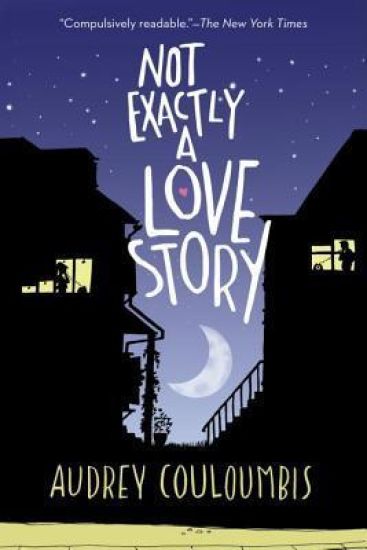
"A fifteen-year-old creates an alter ego to woo his dream girl. Compulsively readable." --The New York Times This quirky, flirty, and smart story will appeal to fans of Frank Portman's King Dork, John Green's An Abundance of Katherines, and Rainbow Rowell's Eleanor and Park. It's not exactly a love story . . . but it's pretty close. It's 1977. Fifteen-year-old Vinnie is recovering from the worst case of acne his dermatologist's ever seen. His girl moved to California without saying good-bye. And the ink on his parents' divorce papers is barely dry when his mom announces they're moving from Queens to Long Island. The silver lining? Moving next door to Patsy, everyone's dream girl. Not that she'd ever notice him. But when Vinnie calls Patsy one night, it leads to a chain of anonymous midnight conversations, and the two develop a surprisingly strong connection despite the lies it's built on. But as Vinnie gets to know Patsy in real life, it's clear that both identities can't survive. . . .
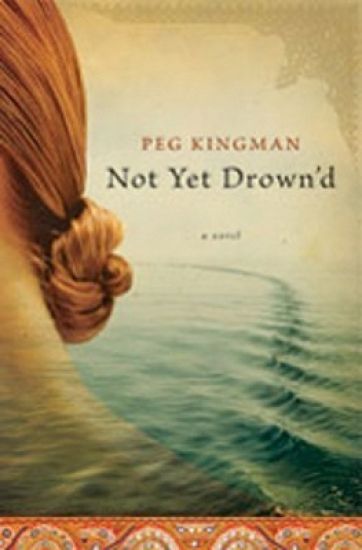
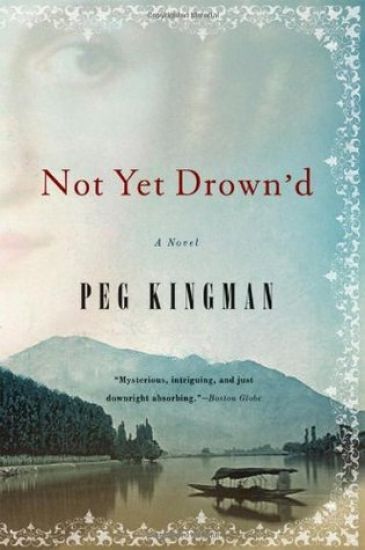
Catherine MacDonald is astonished to receive from her twin brother—who had reportedly drowned a year earlier, in the monsoon floods of 1821—a kashmiri shawl, a caddy of unusual tea, and a sheaf of traditional bagpipe music in his handwriting. When had he sent it? And why had he retitled a certain tune "Not Yet Drown'd"?Irresistibly, Catherine is drawn to India to search for answers. With her stepdaughter and their two maids—one an enigmatic Hindu, the other a runaway American slave—she follows an obscure trail of tea, opium, and bagpipe music. In the course of their journey they meet botanists, smugglers, engineers, soldiers, and artists—as well as love and betrayal. And as they copy, translate, and finally understand certain Scottish and Indian paintings and music, they discover unsuspected truths about the man they are seeking.This luminous and accomplished romance is the author's first novel.
Being the daughter of the owner of a successful candy factory and living in a house with its own beach, Maggie should be living a sweet life. But after an explosive incident at school with her teacher, this spirited, funny, and troubled adolescent is just trying to make it through a long summer at home--while feeling a long hidden secret make its way to the surface.
Catherine MacDonald is astonished to receive from her twin brother—who had apparently drowned a year earlier—a kashmiri shawl, a caddy of unusual tea, and a sheaf of traditional bagpipe music in his handwriting. When had he sent it? And why had he retitled a certain tune "Not Yet Drown'd"? Irresistibly, she is drawn to India to search for answers. With her stepdaughter and their two maids she follows an obscure trail of clues, and in the course of their journey they meet botanists, smugglers, engineers, soldiers, and artists—as well as love and betrayal. As they grow to understand certain Scottish and Indian paintings and music, they discover unsuspected truths about the man they are seeking.
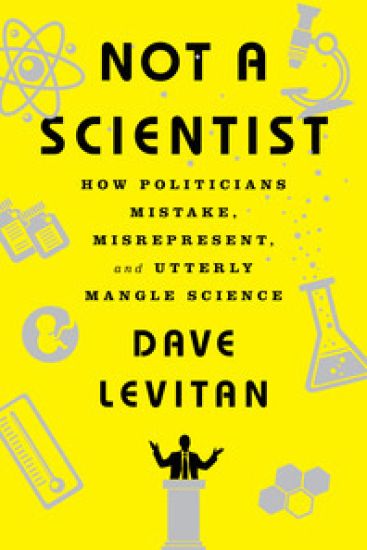
In 1980, Ronald Reagan created one of the most stupid talking points of all time: "I’m not a scientist, but...". Since then, politicians have repeatedly committed egregious transgressions against scientific knowledge prefaced by this seemingly innocuous phrase. Yet, as science journalist Dave Levitan reveals, that line is just the tip of the melting iceberg when it comes to rhetorical tools wielded to attack scientific findings that don’t cooperate with political agendas. Just listen to Mike Huckabee dismiss climate change as "a sunburn", Donald Trump suggest that vaccines cause autism or Todd Akin’s infamous invention of "legitimate rape". With a taxonomer’s eye, Levitan captures and categorises these deceptions by chapter, assigning delightful names like "The Butter-Up and Undercut", "The Literal Nitpick", "The Straight-Up Fabrication" and many more. His sharp humour dismantles America’s leaders’ deceptive arguments while illuminating the real science behind the worst soundbites from these elected non-scientists.
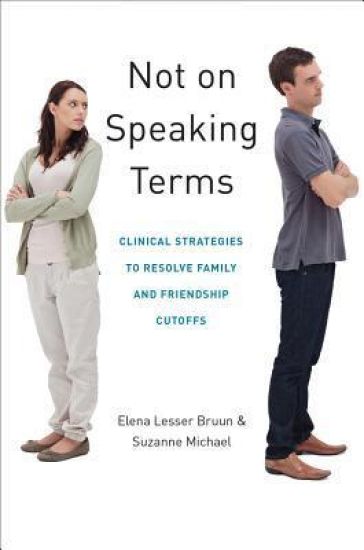
Whether the result of miscommunication, betrayal, abandonment, or matters of principle, relationship breaks—children from parents, friends from one another and intergenerational—are common gut-wrenching experiences that often go unrecognised in therapy. Here, therapists learn how to pinpoint the causes of cutoffs, guide reconciliation and help clients who cannot find resolution heal without reconnection.
A pediatric neuropsychologist presents strategies to help parents of special-needs children navigate the emotional challenges they face. As diagnosis rates continue to rise for autism, ADHD, learning disabilities, and other developmental differences, parents face a maze of medical, psychological, and educational choices - and a great deal of emotional stress. Many books address children's learning or behavior problems and advise parents what they can do to help their kids, but until Not What I Expected: Help and Hope for Parents of Atypical Children there were no books that explain what the parents are going through - and how they can cope with their own emotional upheaval - for their own sake, and for the wellbeing of the whole family. With compassion, clarity, and an emphasis on practical solutions, Dr. Rita Eichenstein's Not What I Expected: Help and Hope for Parents of Atypical Children walks readers through the five stages of acceptance (similar to the stages of grief, but modified for parents of special-needs kids). Using vivid anecdotes and suggestions, she helps readers understand their own emotional experience, nurture themselves in addition to their kids, identify and address relationship wounds including tension in a marriage and struggles with children (special-needs and neurotypical), and embrace their child with acceptance, compassion and joy.
Not in Front of the Audience is a pioneering and important study of a neglected terrain, examining the way in which the theatres of London and New York have reflected contemporary social and cultural attitudes to 'gay men' and homosexuality. In the 1920s and 1930s the theatre represented homosexuals as either corrupt, or morally pitiful. During the Cold War, under the influence of McCarthyism, homosexuality was perceived as not only morally reprehensible but also politically dangerous and the theatre dutifully reflected such perceptions. Until 1958, direct discussion or depiction of homosexuality was banned from the stage in Britain. But by the late 1960s the theatres of London and New York had begun to confront the issue of heterosexual prejudice and its devastating impact upon the lives of gay men and lesbians. In the wake of the AIDS epidemic, the author concludes, the representation of homosexuality in the theatre has again become an urgent and highly charged issue.
How is an individual to lead a comfortable, productive existence when he or she was never taught the skills necessary for effective living? Adult survivors of child abuse often face this dilemma. Instead of being nurtured as children and taught life-skills by their caregivers, child abuse survivors were subjected to a daily regimen of coercive control, contempt, rejection and emotional unresponsiveness. It is not surprising, therefore, that many survivors encounter difficulty adjusting from this type of damaging childhood atmosphere to one in which they have autonomy. This book addresses the particular problems associated with treating adult survivors of child abuse. Until now, psychotherapy for child abuse survivors often centered on the trauma of their abuse experiences. However, survivors frequently reveal a history suggesting it was not abuse trauma alone that created their difficulties, but growing up essentially alone - without the consistent emotional support and guidance needed for development of effective functioning. This book presents an alternative to trauma-focused treatment that, though effective for treatment of other forms of trauma, can induce deteriorated rather than improved functioning in survivors of prolonged childhood maltreatment. The contextual therapy presented in Not Trauma Alone delineates a psychotherapeutic approach that emphasizes helping survivors develop the capacities for effective functioning that were never transmitted to them during their formative years. Detailed descriptions of the methods and interventions comprising contextual therapy are included in this critical book for all mental health professionals, clinicians, academics, and students in the field.