Kirjojen hintavertailu. Mukana 11 627 670 kirjaa ja 12 kauppaa.

Kirjahaku

Etsi kirjoja tekijän nimen, kirjan nimen tai ISBN:n perusteella.

1000 tulosta hakusanalla Napolean Hill

Napoleon III and the Rebuilding of Paris

Napoleon III and the Rebuilding of Paris

David H. Pinkney

PRINCETON UNIVERSITY PRESS
2019
sidottu
In the two decades between 1850 and 1870 Napoleon III and his Prefect of the Seine, Baron Haussmann, created the modern city of Paris out of the congested and ill-equipped capital of the 18th century. They gave Paris many of its present major streets, its great municipal parks, the Central Markets, the Opera House and other well-known buildings, as well as a water supply system and a network of sewers that still serve the city. The various factors of the venture: the city's rapidly increasing population, the challenging engineering problems, the political complications, and the clash of personalities involved are here considered. The author presents the whole undertaking in the perspective of French political and economic history, shows its relation to the public health movement of the mid-nineteenth century, and explains its significance in the history of city planning.Originally published in 1958.The Princeton Legacy Library uses the latest print-on-demand technology to again make available previously out-of-print books from the distinguished backlist of Princeton University Press. These editions preserve the original texts of these important books while presenting them in durable paperback and hardcover editions. The goal of the Princeton Legacy Library is to vastly increase access to the rich scholarly heritage found in the thousands of books published by Princeton University Press since its founding in 1905.
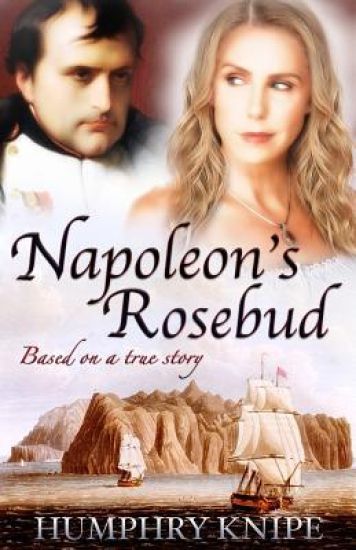
Napoleon's Rosebud

Napoleon's Rosebud

Humphry Knipe

Sulby Hall Publishers
2017
nidottu
You are the high spirited 19-year-old daughter of a penniless widow, born and brought up on an isolated, windswept South Atlantic island, a girl with virtually no prospects, when out of the blue the most famous man on earth falls into your lap.Still smarting from his defeat at Waterloo, still the hero of Liberals everywhere, Napoleon has been exiled to tiny Saint Helena because it is the remotest and most easily defended island in the British Empire. But far from being broken by defeat, Napoleon's fertile imagination seethes with escape schemes. He meets you on his first evening on the island and instantly knows he has found what he is looking for: someone to set him free.This clandestine affair between an imprisoned emperor and the island girl he calls Rosebud has a very personal backstory, writes the author. When he was a child back home in South Africa his grandfather, who emigrated from Saint Helena in the late 1880's, often spoke about his family's acquaintance with the great man. A big print of Napoleon hung on his living room wall. "Remember that we have been touched by greatness," were his enigmatic last words.When he researched this claim many years later and discovered the Rosebud legend Humphry Knipe realized why his grandfather, a Victorian gentleman, hadn't gone into detail. Charlotte Knipe, said to be the most beautiful girl on Saint Helena at the time, is on record as having been a frequent guest of the emperor and rumored to have been his lover. Rosebud is the author's great-great-grandaunt. The "touch of greatness" was Napoleon's.
Napoleon's Last Victory and the Emergence of Modern War

Napoleon's Last Victory and the Emergence of Modern War

Robert M. Epstein

University Press of Kansas
1994
nidottu
Presenting a significant new interpretation of Napoleonic warfare, Robert M. Epstein argues persuasively that the true origins of modern war can be found in the Franco-Austrian War of 1809.Epstein contends that the 1809 war - with its massive and evenly matched armies, multiple theaters of operation, new command-and-control schemes, increased firepower, frequent stalemates, and large-scale slaughter - had more in common with the American Civil War and subsequent conflicts than with the decisive Napoleonic campaigns that preceded it.Epstein examines 1809 in terms of the evolving new systems of recruitment, organization, and command used by both sides. As he shows, this was the first time that two states confronted each other on the battlefield with armies created by large-scale conscription, organized in corps, and coordinated along two major theaters of operation (Danubian and Italian). As a result, the opponents were forced into ""distributed maneuvers"" that produced broad operational fronts in which battles became both sequential and simultaneous, but ultimately indecisive.Ironically, as Epstein points out, neither Napoleon nor the opposing commander Archduke Charles ever fully understood that a paradigm shift had occurred in the conduct of war. Regardless, after 1809, warfare would never be the same.
Napoleon's 1796 Italian Campaign

Napoleon's 1796 Italian Campaign

Carl von Clausewitz

University Press of Kansas
2018
sidottu
Carl von Clausewitz (1780–1831) is best known for his masterpiece of military theory On War, yet that work formed only the first three of ten volumes of his published writings. The others, historical analyses of the wars that roiled Europe from 1789 through 1815, informed and shaped Clausewitz’s military thought, so they offer invaluable insight into his dialectical, often difficult theoretical masterwork.Among these historical works, perhaps the most important is Napoleon’s 1796 Italian Campaign, which covers a crucial period in the French Revolutionary Wars. During this campaign the young, largely unknown Corsican, in his first command, led the French Army to triumph over the superior forces of the Austrian and Sardinian Armies. Moving from strategy to battle scene to analysis, this first English translation nimbly conveys the character of Clausewitz’s writing in all its registers: the brisk, often powerful description of events as they unfolded; the critical reflections on strategic theory and its implications; and, most bracing, the dissection and sharp judgment of the actions of the French and Austrian commanders.From the thrill of the Battle of Montenotte—the youthful Bonaparte’s first offensive—to the remorseless logic of Clausewitz’s assessments, Napoleon’s 1796 Italian Campaign will expand readers’ experience and understanding of not only this critical moment in European history but also the thought and writings of the modern master of military philosophy.
Napoleon's 1796 Italian Campaign

Napoleon's 1796 Italian Campaign

Carl von Clausewitz

University Press of Kansas
2018
nidottu
Carl von Clausewitz (1780–1831) is best known for his masterpiece of military theory On War, yet that work formed only the first three of ten volumes of his published writings. The others, historical analyses of the wars that roiled Europe from 1789 through 1815, informed and shaped Clausewitz’s military thought, so they offer invaluable insight into his dialectical, often difficult theoretical masterwork.Among these historical works, perhaps the most important is Napoleon’s 1796 Italian Campaign, which covers a crucial period in the French Revolutionary Wars. During this campaign the young, largely unknown Corsican, in his first command, led the French Army to triumph over the superior forces of the Austrian and Sardinian Armies. Moving from strategy to battle scene to analysis, this first English translation nimbly conveys the character of Clausewitz’s writing in all its registers: the brisk, often powerful description of events as they unfolded; the critical reflections on strategic theory and its implications; and, most bracing, the dissection and sharp judgment of the actions of the French and Austrian commanders.From the thrill of the Battle of Montenotte—the youthful Bonaparte’s first offensive—to the remorseless logic of Clausewitz’s assessments, Napoleon’s 1796 Italian Campaign will expand readers’ experience and understanding of not only this critical moment in European history but also the thought and writings of the modern master of military philosophy.
Napoleon Absent, Coalition Ascendant

Napoleon Absent, Coalition Ascendant

Carl von Clausewitz; Christopher Pringle

University Press of Kansas
2020
sidottu
Carl von Clausewitz (1780-1831) is best known for his masterpiece of military theory On War, yet that work formed only the first three of his ten-volume published writings. The others, historical analyses of the wars that roiled Europe from 1789 through 1815, informed and shaped Clausewitz's military thought, so they offer invaluable insight into his dialectical, often difficult theoretical masterwork.Among these historical works, one of the most important is Der Feldzug von 1799 in Italien und der Schweiz, which covers an important phase of the French Revolutionary Wars. Napoleon Absent, Coalition Ascendant covers the period of Napoleon's invasion of Egypt and focuses on the Second Coalition's campaign in Italy and their victories under Suvorov's dynamic leadership that carried the tide of battle up against the French frontier.Moving from strategy to battle scene to analysis, this first English translation of volume 5 of Clausewitz's collected works nimbly conveys the character of Clausewitz's writing in all its registers: the brisk, often powerful description of events as they unfolded and the critical reflections on strategic theory and its implications. Napoleon Absent, Coalition Ascendant includes the major battles of Trebbia and Novi and will expand readers' experience and understanding of not only this critical moment in European history but also the thought and writings of the modern master of military philosophy.
Napoleon Absent, Coalition Ascendant

Napoleon Absent, Coalition Ascendant

Carl von Clausewitz

University Press of Kansas
2020
nidottu
Carl von Clausewitz (1780-1831) is best known for his masterpiece of military theory On War, yet that work formed only the first three of his ten-volume published writings. The others, historical analyses of the wars that roiled Europe from 1789 through 1815, informed and shaped Clausewitz's military thought, so they offer invaluable insight into his dialectical, often difficult theoretical masterwork.Among these historical works, one of the most important is Der Feldzug von 1799 in Italien und der Schweiz, which covers an important phase of the French Revolutionary Wars. Napoleon Absent, Coalition Ascendant covers the period of Napoleon's invasion of Egypt and focuses on the Second Coalition's campaign in Italy and their victories under Suvorov's dynamic leadership that carried the tide of battle up against the French frontier.Moving from strategy to battle scene to analysis, this first English translation of volume 5 of Clausewitz's collected works nimbly conveys the character of Clausewitz's writing in all its registers: the brisk, often powerful description of events as they unfolded and the critical reflections on strategic theory and its implications. Napoleon Absent, Coalition Ascendant includes the major battles of Trebbia and Novi and will expand readers' experience and understanding of not only this critical moment in European history but also the thought and writings of the modern master of military philosophy.
Napoleon Comes to Power

Napoleon Comes to Power

Malcolm Crook

University of Wales Press
1998
nidottu
This latest addition to the Past in Perspective Series traces the rise to power of Napoleon and also examines the events before and after the coup d'etat of 1799. Recent research has suggested that the Bonapartist dictatorship was by no means a foregone conclusion, the inevitable outcome of a corrupt and discredited revolutionary regime. There is now greater awareness of the difficulties faced by the Directory (as the constitutional system was called after 1795) in steering a middle course between Royalism and Jacobinism and also a greater recognition of its achievements. By the time that Napoleon crowned himself Emperor in 1804, the Revolution was effectively over. An ingenious balance had been struck between democracy and authority, between hierarchy and equality, in short between the old order and the new, a synthesis which disarmed radicals and attracted conservatives. This hybrid of revolution and tradition only lasted for a further decade in France, but it exerted a profound influence over nineteenth-century political culture. The Napoleonic episode thus requires careful attention at a deeper level than the personal and military heroics that usually predominate, as this study will demonstrate.
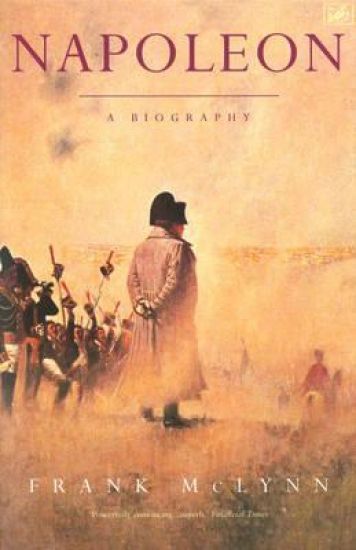
Napoleon

Napoleon

Frank McLynn

Vintage
1998
pokkari
Napoleon the man emerges as an even more fascinating character than previously imagined, and McLynn brilliantly reveals the extent to which he was both existential hero and plaything of Fate;
Napoleon and the World War of 1813
This analysis of the world war between Napoleon and the 6th coalition in 1813 covers operations in Europe, Spain and North America. It examines the differences between alliances and coalitions, comparing the long-term international relationships in alliances and the short-term union of coalitions.
Napoleon and the World War of 1813
This analysis of the world war between Napoleon and the 6th coalition in 1813 covers operations in Europe, Spain and North America. It examines the differences between alliances and coalitions, comparing the long-term international relationships in alliances and the short-term union of coalitions.
Napoleon the Novelist

Napoleon the Novelist

Andy Martin

Polity Press
2000
sidottu
This brilliantly original study uncovers a side to Napoleon Bonaparte which has hitherto been ignored by biographers - that of the aspiring novelist and man of letters. In this illuminating, witty and elegantly written book, Andy Martin reveals how this neglected aspect of Napoleon's remarkable life actually provides the key to understanding it. The French Revolution, Austerlitz and Waterloo all came second in Napoleon's life to a Discourse on Happiness, a Dialogue on Love and repeated attempts at a novel. Napoleon began as a would-be Rousseau and ended up on Saint Helena dictating his own confessions. The colossal rise and catastrophic fall of his empire are, Martin argues, anticipated in the obsessive and tragicomic pages of his voluminous writings. Napoleon emerges as an idealist, romantic, visionary, critic, a thinker with an epic imagination and an underdeveloped sense of reality, pushing his 'portable library' across Europe, Asia and the Orient, and always wrestling with the intricacies of language and literature. And, although Napoleon was denounced as a failure in an essay competition, Martin shows that he did indeed succeed in imposing himself as the archetype and inspiration of modern European culture. This provocative book will appeal to a wide general readership. It will also be of interest to students of literature, modern languages and European history.
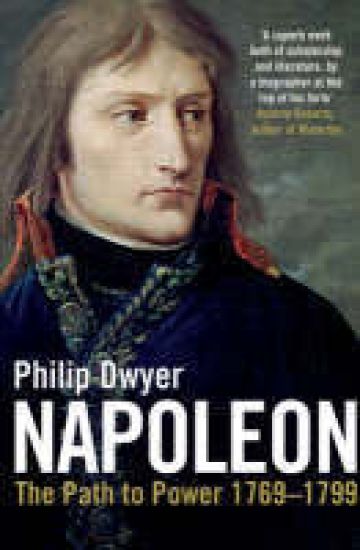
Napoleon

Napoleon

Philip Dwyer

Bloomsbury Publishing PLC
2008
nidottu
Napoleon Bonaparte's rise to power was neither inevitable nor smooth; it was full of mistakes, wrong turns and pitfalls. During his formative years his identity was constantly shifting, his character ambiguous and his intentions often ill-defined. He was, however, highly ambitious, and it was this ruthless drive that advanced his career. This book examines the extraordinary evolution of Napoleon's character and the means by which at the age of thirty he became head of the most powerful country in Europe and skilfully fashioned the image of himself that laid the foundation of the legend that endures to this day.
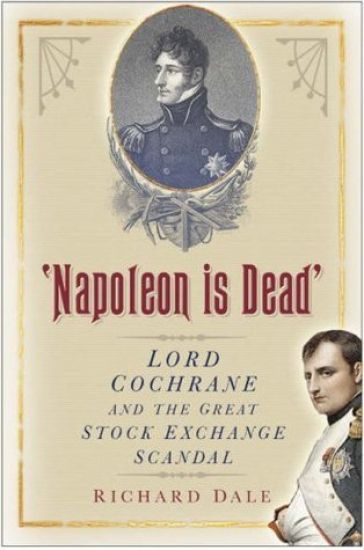
'Napoleon is Dead'

'Napoleon is Dead'

Richard Dale

The History Press Ltd
2007
sidottu
Early on 21 February 1814, an army officer revealed that the French had been defeated and Napoleon killed. When the London Stock Exchange opened at 10.00 am, the City was full of rumours of an allied victory. This work offers a tale of one of the earliest stock market scams; a tale of greed, deceit and the public humiliation of Lord Cochrane.
Napoleon Bonaparte: pocket GIANTS

Napoleon Bonaparte: pocket GIANTS

William Doyle

The History Press Ltd
2015
nidottu
In the space of less than twenty years, Napoleon turned Europe upside down. Rising from obscure origins to supreme power by a mixture of luck, audacity and military genius, he was able to harness the energies released by the French Revolution to resolve the internal problems which it had created, before turning his restless ambition to remodeling the political structure of the whole continent in a series of brilliant military victories. He was never able to finally subdue all his foreign enemies, and in the end they came together to bring him down; but by then it was impossible to restore what he had destroyed, or, in France, to destroy much of what he had created. The memory of his epic exploits, carefully refashioned during his last years in exile, haunted Europe for over a century, while the more distant effects of his career changed the whole destiny of the Americas and of the world.
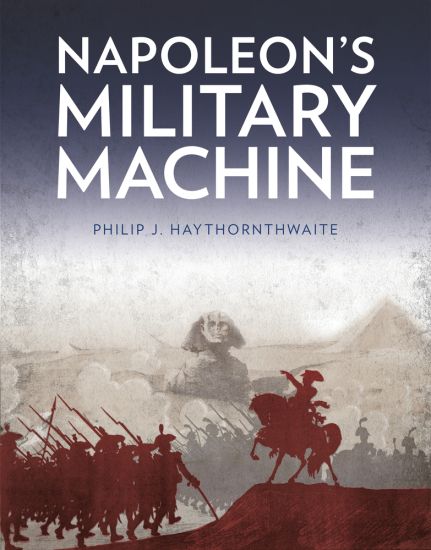
Napoleon's Military Machine

Napoleon's Military Machine

Philip J Haythornthwaite

The History Press Ltd
2017
nidottu
That Napoleon Bonaparte was one of the greatest military commanders in history is never in doubt. His rise was meteoric, and his successes awesome; and they were founded almost entirely upon military prowess. But the reasons for his successes were many and complex, and did not solely rely on a magnetic personality with a genius for strategy, but on a combination of factors some within and others outside of Napoleon’s control. Napoleon’s Military Machine presents a compelling analysis of these factors: ultimately, how Napoleon turned the ragged armies of the French Revolutionary Wars into the most efficient and professional military body in Europe at the time. All aspects of his forces are covered: their composition, appearance, weaponry and capabilities, how they marched, fought and died for their Emperor. Haythornthwaite brings his reputation as a leading Napoleonic historian to bear on the examination of all parts of the French army: the cavalry, infantry, artillery, Imperial Guard, staff and supporting services. Napoleon’s innovations and tactics are described, from Austerlitz to Waterloo, demonstrating the reasons for his success and for his later decline.
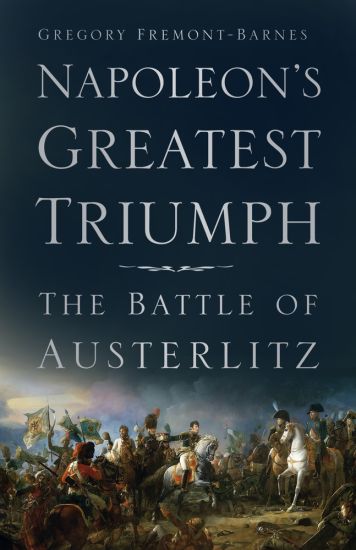
Napoleon's Greatest Triumph

Napoleon's Greatest Triumph

Gregory Fremont-Barnes

The History Press Ltd
2019
nidottu
In August 1805, Napoleon abandoned his plans for the invasion of Britain and diverted his army to the Danube Valley to confront Austrian and Russian forces in a bid for control of central Europe. The campaign culminated with the Battle of Austerlitz, regarded by many as Napoleon’s greatest triumph, whose far-reaching effects paved the way for French hegemony on the Continent for the next decade.In this concise volume, acclaimed military historian Gregory Fremont-Barnes uses detailed profiles to explore the leaders, tactics and weaponry of the clashing French, Austrian and Russian forces. Packed with fact boxes, maps and more, Napoleon’s Greatest Triumph is the perfect way to explore this important battle and the rise of Napoleon’s reputation as a supreme military leader.
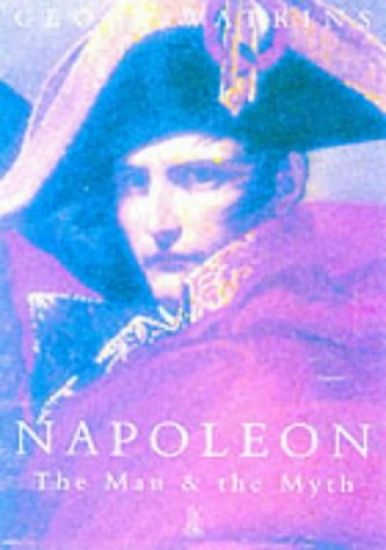
Napoleon

Napoleon

Geoffrey Watkins

NPI Media Group
2006
nidottu
Revisits Napoleon's unique achievements as a military leader and the founder of modern France and reveals the emperor's talent as a self publicist and propagandist.
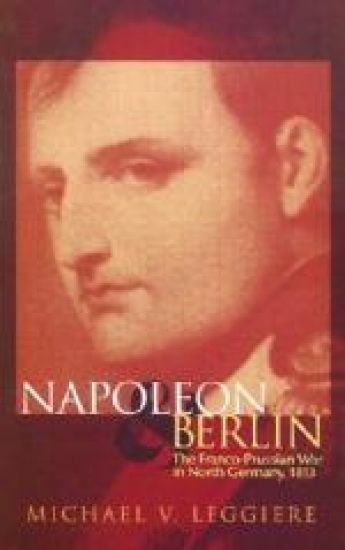
Napoleon and Berlin

Napoleon and Berlin

Michael V. Leggiere

NPI Media Group
2002
nidottu
The Napoleonic Wars in Prussia, 1813. Based on research in archives throughout in France and Germany, this book is the first English-language history of this much neglected campaign of the Napoleonic Wars.