Kirjojen hintavertailu. Mukana 11 610 869 kirjaa ja 12 kauppaa.

Kirjahaku

Etsi kirjoja tekijän nimen, kirjan nimen tai ISBN:n perusteella.

1000 tulosta hakusanalla PAUL MASON

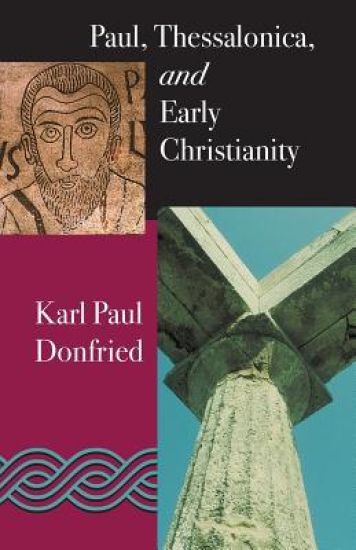
Paul: Thessalonica and Early Christianity

Paul: Thessalonica and Early Christianity

Karl P. Donfried

Continuum International Publishing Group Ltd.
2002
nidottu
Concentrating on major Pauline themes and on I Thessalonians in its cultural and religious context, this book explores other major issues, especially with reference to chronology and Judaism. The question of Paul's Jewishness is therefore raised with a new urgency. What kind of a Jew was Paul? Why do we find so many coherences between his language and thought with that of the Community of the Renewed Covenant (the Essenes)? One of the essays, "Paul and Qumran", suggests that the Dead Sea Scrolls offer valuable clues to understanding Pauline language and thought. If, in fact, there was contact between Paul and the Essenes, where would it have taken place? If such meetings were held, possibly, in the Essene Quarter of Jerusalem, is there a connection between that area and the location of the earliest Christians in Jerusalem? And what kind of Christians were they and how did they impact on the Apostle's missionary activity? In connection with this discussion of Paul and Judaism, a number of challenges are offered to the so-called "New Perspective on Paul", especially in the work of E.P. Sanders and James D. G. Dunn, to suggest that a closer study of the Dead Sea Scrolls raises serious questions about the appropriateness of their interpretation of both Judaism and Paul, as well as opening new perspectives.
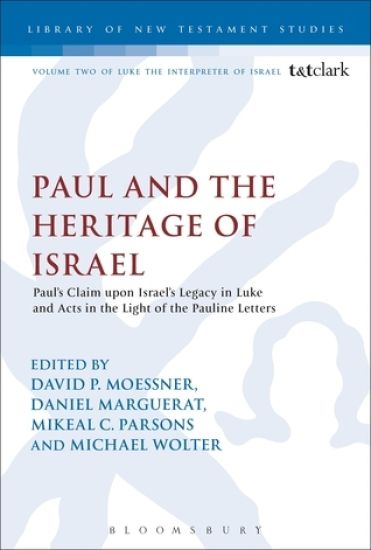
Paul and the Heritage of Israel
As a sequel to the hugely successful Jesus and the Heritage of Israel, this book brings together fourteen internationally acclaimed scholars in antiquities studies and experts on Paul and Luke. The contributors provoke new approaches to the troubled relation of the Lukan Paul by re-configuring the figure and impact of Paul upon nascent Christianity, with the two leading questions as a driving force. First, ‘Who is "Israel" and the "church" for Luke and Luke's Paul' and secondly ‘Who is Jesus of Nazareth and who is Paul in relation to both?' The contributors provide challenging new perspectives on approaches to the figure of Paul in recent scholarship as well as in the scholarship of previous generations, ‘re-figuring' Paul by examining both how he is portrayed in Acts, and how the Pauline figure of Acts may be envisioned within Paul's own writings. Paul and the Heritage of Israel thus accomplishes what no other single volume has done: combining both the ‘Paul of Paul' and the ‘Paul of Luke' in one seminal volume.
Paul and the Second Century
This volume looks at the imprint and influence that the writings of the Apostle Paul had in the second century, examining the Pauline corpus in conjunction with key second century figures and texts such as Ignatius, Polycarp, and the Epistle of Diognetus . It investigates the impact of Paul's legacy and examines how this legacy shaped the Christianity that emerged in the second century as represented by the Apostolic Fathers, the early Christian Apologists, and among Gnostic and Judeo Christian groups.
Paul and Judaism

Paul and Judaism

T. T.Clark Ltd
2013
nidottu
The ‘New Perspective on Paul' cleared Judaism contemporary to Paul of the accusation that it was a religion based on works of righteousness. Reactions to the New Perspective, both positive and critical, and sometimes even strongly negative, reflect a more fundamental problem in the reception of this paradigm: the question of continuity and discontinuity between Judaism and Christianity and its assumed implications for Jewish-Christian dialogue. A second key problem revolves around Paul's understanding of salvation as exclusive, inclusive or pluralist. The contributions in the present volume represent at least six approaches that can be plotted along this axis, considering Paul's theology in its Jewish context. William S. Campbell and Thomas R. Blanton consider Paul's Covenantal Theology, Michael Bachman provides an exegetical study of Paul, Israel and the Gentiles, and Mark D. Nanos considers Paul and Torah. After this chapters by Philip A. Cunningham, John T. Pawlikowski, Hans-Joachim Sander, and Hans-Herman Henrix give particular weight to questions of Jewish-Christian dialogue. The book finishes with an epilogue by pioneer of the New Perspective James D.G. Dunn.
Paul and the Second Century
This is an examination of the apostle Paul within the Second Century, focused upon the writings of the Apostolic Fathers. This volume looks at the imprint and influence that the writings of the Apostle Paul had in the second century examining the Pauline corpus in conjunction with key second century figures and texts, such as "Ignatius", "Polycarp", and the "Epistle of Diognetus". As such this volume is an exercise in the Wirkungsgeschichte or 'effective-history' of Paul. It investigates the impact of Paul's legacy and examines how this legacy shaped the Christianity that emerged in the second century as represented by the Apostolic Fathers, the early Christian Apologists, and among Gnostic and Judeo Christian groups. The contributors are experts in their respective areas. Each contributor in turn examines how a given document or group reflects the influence of Paul's life, letters, and theology and the various and even competing ways in which Paul's legacy may be seen to have been appropriated. As such this is the first volume to present an extended juxtaposition of Paul's thought with such a wide selection of writings from the second century. Formerly the "Journal for the Study of the New Testament Supplement", a book series that explores the many aspects of New Testament study including historical perspectives, social-scientific and literary theory, and theological, cultural and contextual approaches, "The Early Christianity in Context" series, a part of "JSNTS", examines the birth and development of early Christianity up to the end of the third century CE. The series places Christianity in its social, cultural, political and economic context. "European Seminar on Christian Origins" and "Journal for the Study of the Historical Jesus Supplement" are also part of "JSNTS".
Paul's Utilization of Preformed Traditions in 1 Timothy
Mark Yarbrough assesses the question of whether traditional ‘preformed' material contributes to the message and understanding of Paul's first letter to Timothy. The issue is addressed in three sections. Part one evaluates previous works interacting with ‘traditional' material in the New Testament. Through a critique of historically proposed criteria, Yarbrough identifies eight criteria as the primary tools by which to discern units of preformed material. In the second part of the book Yarbrough evaluates nineteen passages in 1 Timothy according to the criteria previously determined. From this base he embraces twelve of the nineteen passages as preformed material. These passages are subsequently examined in depth according to the author's distinct methodology. Part three demonstrates four functions of the preformed traditions in 1 Timothy. Firstly, that they may be seen as strengthening the literary cohesion of the letter. Secondly, that the traditional units afford the author rhetorical leverage which may be best identified as the provision of authority, the establishment of an instant rapport with the primary audience, and the assistance conferred in addressing this implied audience. Thirdly, they present theological directives that confront the character and belief of the false teachers. Finally, Yarbrough asserts that the preformed traditions exist as a combatant against counter-mission doctrine. In conclusion, this study displays that the traditional material which may be discerned within the letter contributes significantly to the overall message and understanding of 1 Timothy.
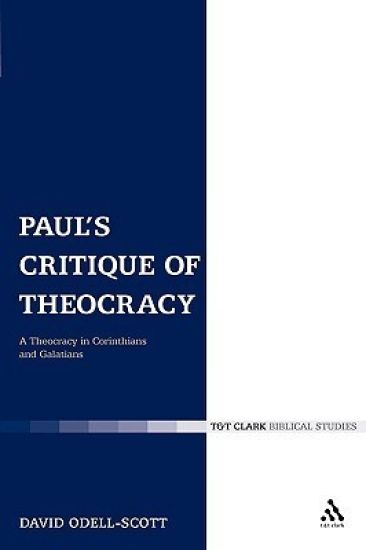
Paul's Critique of Theocracy

Paul's Critique of Theocracy

David Odell-Scott

Continuum International Publishing Group Ltd.
2009
nidottu
Paul's Critique of Theocracy offers an interpretation of select texts in Corinthians and Galatians concerned with the establishment of legitimate authority in the Christian community. Odell-Scott argues that for Paul, no one may boast that they are selected by God, and no one has the authority to rule as God's representative. Paul also criticizes those who exhibit a superior "sacredness" over other community members. Contrary to most scholarly views, Odell-Scott argues that Paul is not taking sides in a debate about the proper authority structure. Rather, he criticizes any notion of such a structure, opposing it with his metaphor of the Church as the body of Christ and the "sacred family" of God. The exegesis is also sketched out in a postmodern framework criticizing hierarchy through differentiation.
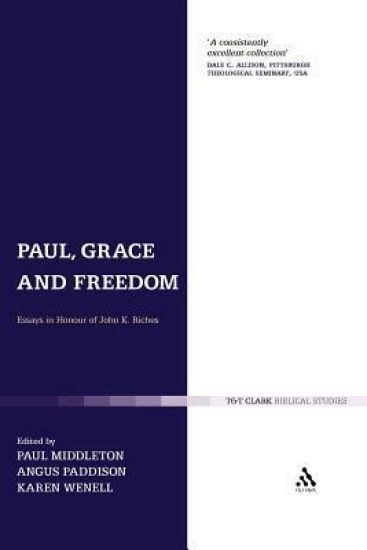
Paul, Grace and Freedom
This collection of twelve essays will celebrate the distinguished contribution of Professor John Kenneth Riches to biblical interpretation. The international selection of contributors are all either former students or colleagues of Professor Riches and the focus of the essays all reflect (and extend) Professor Riches' particular research interests and contribution to biblical and theological studies. The essays in this volume are clustered around two closely related topics: historical and theological contributions to understanding the nature of Christian freedom and agency, and studies which investigate how Paul's thought has been interpreted in diverse settings. All the contributors have been asked to centre their thinking around the following issues: how does the grace of being 'in Christ' transform and restore those who receive it in faith; how far they are, as it were, responsible for that transformation; how far their is identity changed by their union with Christ; and how are they to make ethical decisions, are they to be guided (and goaded?) by the law, or are to be led by the Spirit and called to discern what is right and good in the law?There are four parts to this book. Part I explores grace and human agency by looking at texts both within and outside of the New Testament, highlighting the themes of ethical responsibility and freedom. Part II turns to look at how Pauline themes of grace and the Christian life have been interpreted at various points of Christian history. Part III reflects John Riches' substantial interest in and contribution to African biblical interpretation and includes essays that investigate how Paul is appropriated in African contexts. Part IV reflects John Riches' interest in the mutual engagement between theology and Scripture and includes contributions investigating the theological aspects of the Law and the Spirit, and transformation in Christ in the theology and ethics of P.T. Forsyth.
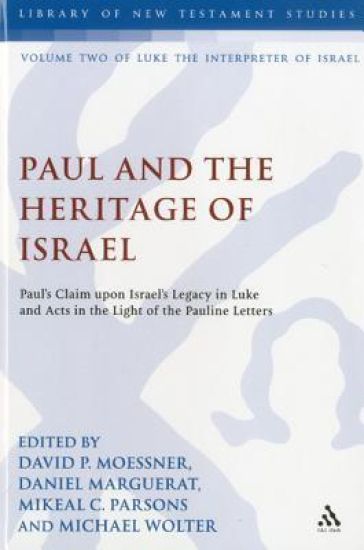
Paul and the Heritage of Israel
As a sequel to the hugely successful Jesus and the Heritage of Israel this book brings together fourteen internationally acclaimed scholars in antiquities studies and experts on Paul and Luke. The contributors provoke new approaches to the troubled relation of the Lukan Paul by re-configuring the figure and impact of Paul upon nascent Christianity, with the two leading questions as a driving force. First, 'Who is "Israel" and the "church" for Luke and Luke's Paul' and secondly 'Who is Jesus of Nazareth and who is Paul in relation to both?' The contributors provide challenging new perspectives on approaches to the figure of Paul in recent scholarship as well as in the scholarship of previous generations, 're-figuring' Paul by examining both how he is portrayed in Acts, and how the Pauline figure of Acts may be envisioned within Paul's own writings. Paul and the Heritage of Israel thus accomplishes what no other single volume has done: combining both the 'Paul of Paul' and the 'Paul of Luke' in one seminal volume.
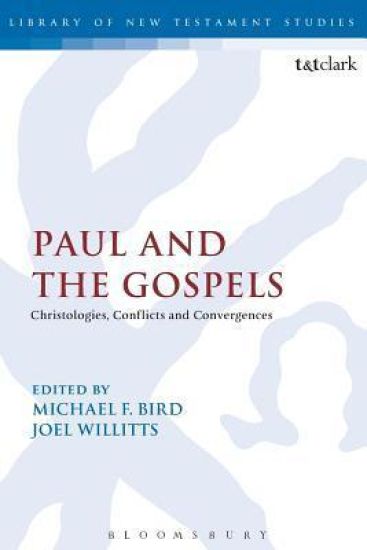
Paul and the Gospels

Paul and the Gospels

T. T.Clark Ltd
2012
nidottu
This volume, which collects together the work of several established scholars attempts to situate the Apostle Paul, the Pauline writings, and the earliest Christian Gospels together in the context of early Christianity. It addresses the issue of how the Christianity depicted in and represented by the individual Gospels relates to the vision of Christianity represented by Paul and the Pauline writings.This raises such questions as to what extent did Paul influence the canonical and non-canonical Gospels? In what way are the Gospels reactions to Paul and his legacy? A comparison of the Gospels and Paul on topics such as Old Testament Law, Gentile mission, Christology, and early church leadership structures represents a fruitful area of study. While a number of volumes have appeared that attempt to assess the relationship between the historical Jesus and the Apostle Paul relatively few studies on Paul and the Gospels have been published. This volume excellently fills this gap in New Testament Studies and makes a valuable contribution to studies on Christian Origins, Pauline research, and the Gospels.
Paul’s Use of the Old Testament in Romans 9:19-24

Paul’s Use of the Old Testament in Romans 9:19-24

Brian J. Abasciano

Continuum International Publishing Group Ltd.
2022
sidottu
Brian Abasciano continues his project examining the use of the Old Testament in Romans 9, building upon his previous two volumes and their intertextual methodology. This method incorporates into a thorough traditional exegesis a comprehensive analysis of Paul's use of Scripture against the background of interpretive traditions surrounding the texts alluded to, with great emphasis placed on analyzing the original contexts of Paul's citations and allusions. Such an intertextual exegesis is conducted in Romans 9:19-24 with an awareness of the broader unit of chapters 9-11 especially, and also the epistle as a whole. Conclusions for the meaning of these passages and their theological significance are drawn.
Paul as Missionary

Paul as Missionary

T. T.Clark Ltd
2012
nidottu
Paul as Missionary: Identity, Activity, Theology and Practice takes the view that before anything else Paul must first and foremost be identified as a missionary. Using the entire Pauline corpus the contributors to this volume assess what Paul's correspondence can tell us about how he perceived his role and identity. The work comprises four parts: in section one, Paul's identity as priest, eschatological herald, and missionary-pastor are explored while in part two topics such as the apostle's activity among pagans, his suffering, and Paul's missionary message; to the church at Rome are considered. Section three comprises essays on the Spirit as the governing dynamic, the glory of God as the apostles missionary goal, and the importance of Paul's Christology in shaping his mission to the Gentiles. Finally, part four addresses Paul's missionary praxis, including his support of his missionary enterprise.
Paul as Missionary

Paul as Missionary

T. T.Clark Ltd
2011
sidottu
Paul as Missionary: Identity, Activity, Theology and Practice takes the view that before anything else Paul must first and foremost be identified as a missionary. Using the entire Pauline corpus the contributors to this volume assess what Paul's correspondence can tell us about how he perceived his role and identity. The work comprises four parts: in section one, Pauls identity as priest, eschatological herald, and missionary-pastor are explored while in part two topics such as the apostle's activity among pagans, his suffering, and Pauls missionary message; to the church at Rome are considered. Section three comprises essays on the Spirit as the governing dynamic, the glory of God as the apostles missionary goal, and the importance of Pauls Christology in shaping his mission to the Gentiles. Finally, part four addresses Pauls missionary praxis, including his support of his missionary enterprise.
Paul and the Dynamics of Power

Paul and the Dynamics of Power

Kathy Ehrensperger

T. T.Clark Ltd
2009
nidottu
In this illuminating study Kathy Ehrensperger looks at the question of Paul's use of power and authority as an apostle who understands himself as called to proclaim the Gospel among the gentiles. Ehrensperger examines the broad range of perspectives on how this use of power should be evaluated. These range from the traditional interpretation of unquestioned, taken for granted for a church leader, to a feminist interpretation. She examines whether or not Paul's use of power presents an open or hidden re-inscription of hierarchical structures in what was previously a discipleship of equals. Paul and the Dynamics of Power questions whether such hierarchical tendencies are rightly identified within Paul's discourse of power. Furthermore it considers whether these are inherently and necessarily expressions of domination and control and are thus in opposition to a 'discipleship of equals'? In her careful analysis Ehrensperger draws on such wide-ranging figures as Derrida, Michel Foucault and James Scott. This enables fresh insights into Paul's use of authority and power in its first century context.
Paul and the Gospels

Paul and the Gospels

T. T.Clark Ltd
2011
sidottu
This volume, which collects together the work of several established scholars attempts to situate the Apostle Paul, the Pauline writings, and the earliest Christian Gospels together in the context of early Christianity. It addresses the issue of how the Christianity depicted in and represented by the individual Gospels relates to the vision of Christianity represented by Paul and the Pauline writings.This raises such questions as to what extent did Paul influence the canonical and non-canonical Gospels? In what way are the Gospels reactions to Paul and his legacy? A comparison of the Gospels and Paul on topics such as Old Testament Law, Gentile mission, Christology, and early church leadership structures represents a fruitful area of study. While a number of volumes have appeared that attempt to assess the relationship between the historical Jesus and the Apostle Paul relatively few studies on Paul and the Gospels have been published. This volume excellently fills this gap in New Testament Studies and makes a valuable contribution to studies on Christian Origins, Pauline research, and the Gospels.
Paul's Financial Policy

Paul's Financial Policy

David E. Briones

T. T.Clark Ltd
2013
sidottu
This book attempts to prove the consistent nature of Paul's financial policy by drawing from his social environment and theological convictions to tease out a three-way relational pattern with God as the source of all possessions. This three-way relational framework not only dictates Paul's decision to accept or reject finances from his churches but also directly challenges long-standing claims made about Paul's financial policy. After outlining the various approaches that scholars have taken to make sense of Paul's seemingly inconsistent financial policy, this book provides a close exegetical analysis of relevant passages in Philippians, 1 Corinthians, and 2 Corinthians in order to unearth a three-way relational pattern found in Philippians but that is absent from the Corinthian Correspondence. In Paul's positive gift-exchange relationship with the Philippians, God is acknowledged as the source of all possessions, whereas the Corinthians are criticized for striving after two-way exchanges that result in honor, power, and prestige.After this is demonstrated, a socio-theological reason for Paul's refusal of Corinthian gifts is propounded. Paul refused Corinthian support, not because they desired to patronise him as a dependent client, but because they sought to be under Paul as their superior, an act that neglected God as the superior source of all gifts in the divine economy. Paul therefore refuses their support to avoid two-way relationships of gift so prevalent in ancient society and to underscore the source of the gift of the gospel, the one from whom and through whom and to whom are all things - God.
Paul's Use of the Old Testament in Romans 9.10-18

Paul's Use of the Old Testament in Romans 9.10-18

Brian J. Abasciano

T. T.Clark Ltd
2012
nidottu
Abasciano builds upon his previous LNTS volume, Paul's Use of the Old Testament in Romans 9.1-9, continuing the project begun in that volume and its intertextual methodology. This method incorporates a thorough traditional exegesis into a comprehensive analysis of Paul's use of Scripture, set against the background of interpretive traditions which surround the texts alluded to. Great emphasis is placed on analyzing the original contexts of Paul's citations and allusions. Such an intertextual exegesis is conducted in Romans 9:10-18, with an awareness of the broader unit of chapters 9-11 especially, and the epistle as a whole. Conclusions for the meaning of these passages and their theological significance are thence drawn.
Paul and the Creation of a Counter-Cultural Community
This study offers a new interpretation of 1 Corinthians 5—11:1. Taking a social identity approach, Ho investigates the inner logic of Paul from the ears of the Corinthian correspondence. Ho argues that Paul consistently indoctrinates new values for the audience to uphold which are against the mainstream of social values in the surrounding society. It is shown that Paul does not engage in issues of internal schism per se, but rather in the question of the distinctive values insiders should uphold so as to be recognisable to outsiders. While church is neither a sectarian nor an accommodating community, it should maintain constant social contact with outsiders so as to bring the gospel of Christ to them. In addition, insiders should practice radical values that could challenge the existing shared social values prevalent in the urban city of Corinth. These new values are based mainly on Scripture, ancient Jewish literature and the new social identity of the church defined by Jesus Christ. This fresh interpretation renders the logical flow, unitary design and coherence of 1 Cor 5 -11.1 more apparent.
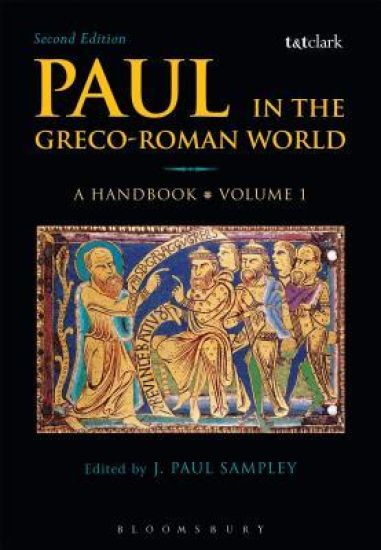
Paul in the Greco-Roman World: A Handbook
This landmark handbook, written by distinguished Pauline scholars, and first published in 2003, remains the first and only work to offer lucid and insightful examinations of Paul and his world in such depth. Together the two volumes that constitute the handbook in its much revised form provide a comprehensive reference resource for new testament scholars looking to understand the classical world in which Paul lived and work. Each chapter provides an overview of a particular social convention, literary of rhetorical topos, social practice, or cultural mores of the world in which Paul and his audiences were at home. In addition, the sections use carefully chosen examples to demonstrate how particularly features of Greco-Roman culture shed light on Paul's letters and on his readers' possible perception of them. For the new edition all the contributions have been fully revised to take into account the last ten years of methodological change and the helpful chapter bibliographies fully updated. Wholly new chapters cover such issues as Paul and Memory, Paul's Economics, honor and shame in Paul's writings and the Greek novel.
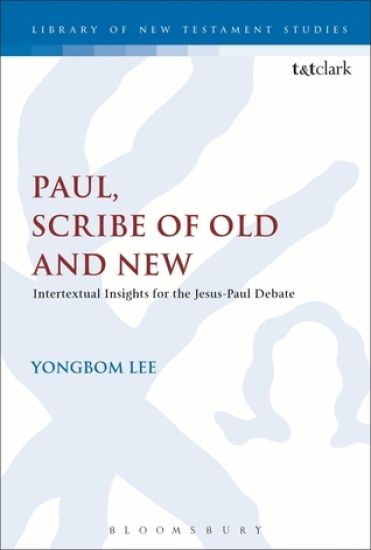
Paul, Scribe of Old and New

Paul, Scribe of Old and New

Yongbom Lee

T. T.Clark Ltd
2015
sidottu
In this study Yongbom Lee re-examines the old Jesus-Paul debate with insights from current studies on intertextuality in Paul. Lee identifies Paul’s typical ways of handling authoritative traditions in a number of cases providing a set of expectations as to how his use of them elsewhere might look. Lee begins by investigating the use of the Scriptures in the Rule of the Community and the Damascus Document. He then examines five cases of Paul’s use of the Scriptures and contemporary Jewish exegetical traditions and three cases of his use of the Jesus tradition. Despite the skepticism concerning Paul’s knowledge and appreciation of the Jesus tradition, the fact that his use of the Jesus tradition is similar to that of the Scriptures and contemporary Jewish exegetical traditions—with respect to its presumption of authority, various citation methods, and its creative application to the situation of his readers—provides the evidence for its importance to him.