Kirjojen hintavertailu. Mukana 11 342 296 kirjaa ja 12 kauppaa.

Kirjahaku

Etsi kirjoja tekijän nimen, kirjan nimen tai ISBN:n perusteella.

1000 tulosta hakusanalla Pascal Paul Piazza

Who Was Maurice Sendak?

Who Was Maurice Sendak?

Pascal Janet B.

G P Putnam's Sons
2013
pokkari
It seems entirely fitting that Maurice Sendak was born on the same day that Mickey Mouse first made his cartoon debut--June 10, 1928. Sendak was crazy about cartoons and comic books, and at twelve, after seeing Disney's Fantasia, he decided that he was going to become an illustrator. His love of childrens books began early: often sick and confined to bed, little Maurice read and read and read. Though many of his own stories were light and funny, the most important ones--Where the Wild Things Are, In the Night Kitchen, Outside Over There--dealt with anger, jealousy, abandonment, content that had never before been the subject of picture books. As well as covering career highlights, this easy to read, illustrated biography also describes the personal life of this genius. Who Was Maurice Sendak is perfect for kids wild about one of the most influential children's book artists of the twentieth century
What Is the Panama Canal?

What Is the Panama Canal?

Pascal Janet B.

G P Putnam's Sons
2014
pokkari
Before 1914, traveling from the East Coast to the West Coast meant going by land across the entire United States. To go by sea involved a long journey around South America and north along the Pacific Coast. But then, in a dangerous and amazing feat of engineering, a 48-mile-long channel was dug through Panama, creating the world's most famous shortcut: the Panama Canal
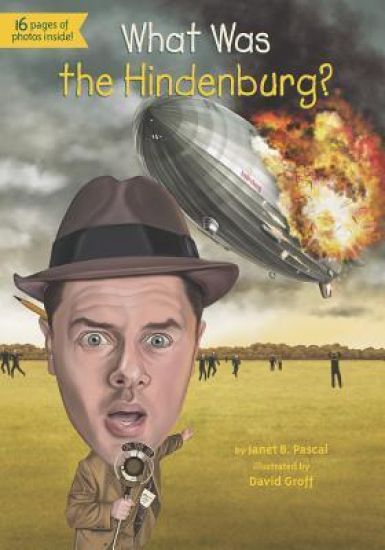
What Was the Hindenburg?

What Was the Hindenburg?

Pascal Janet B.

Penguin Workshop
2014
pokkari
At 800-feet long, the Hindenburg was the largest airship ever built--just slightly smaller than the Titanic! Also of a disastrous end, the zeppelin burst into flame as spectators watched it attempt to land in Lakehurst, New Jersey on May 6, 1937. In under a minute, the Hindenburg was gone, people jumping from windows to escape. However, only 62 of the 97 crew members and passengers onboard survived. The exact cause of the disaster is still unknown and remains a fascinating historical mystery perfect for this series.
What Was the Great Depression?

What Was the Great Depression?

Pascal Janet B.

G P Putnam's Sons
2015
pokkari
On October 29, 1929, life in the United States took a turn for the worst. The stock market - the system that controls money in America - plunged to a record low. But this event was only the beginning of many bad years to come. By the early 1930s, one out of three people was not working. People lost their jobs, their houses, or both and ended up in shantytowns called "Hoovervilles" named for the president at the time of the crash. By 1933, many banks had gone under. Though the U.S. has seen other times of struggle, the Great Depression remains one of the hardest and most widespread tragedies in American history. Now it is represented clearly and with 80 illustrations in our What Was...? series.
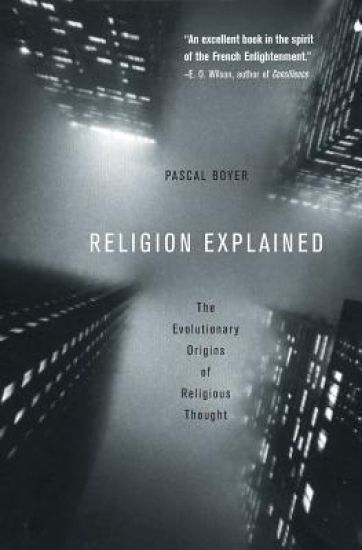
Religion Explained

Religion Explained

Pascal Boyer

Basic Books
2002
pokkari
Many of our questions about religion, says renowned anthropologist Pascal Boyer, are no longer mysteries. We are beginning to know how to answer questions such as "Why do people have religion?" Using findings from anthropology, cognitive science, linguistics, and evolutionary biology, Religion Explained shows how this aspect of human consciousness is increasingly admissible to coherent, naturalistic explanation. This brilliant and controversial book gives readers the first scientific explanation for what religious feeling is really about, what it consists of, and where it comes from.
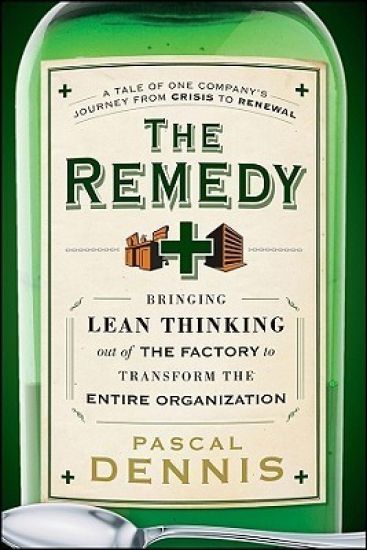
The Remedy

The Remedy

Pascal Dennis

John Wiley Sons Inc
2010
sidottu
Winner of the Shingo Prize for Excellence in Quality Improvement -From the Shingo judges: This work has an extremely widespread application as the tools, techniques, and methods described are at a level that achieves the goals of Lean and operational excellence without tying them down to a specific industry or work stream. The book provides practical knowledge for lean champions, managers, and executives driving toward operational excellence enterprise-wide. The story format, and the presentation of this material was excellent, and the avoidance of lean and operational excellence jargon gives the book a wide appeal…it is a pleasure to read. The Sequel to the Influential “Lean” Business Novel Andy & Me The Remedy is a compelling a business fable that shows how Lean quality improvement business practices—traditionally associated with manufacturing--can dramatically improve the service areas of your business-including design, engineering, sales, marketing and all processes in between. Written by Pascal Dennis, a leading Lean consultant, the story follows Tom Pappas and Rachel Armstrong, senior leaders at a desperate automotive company as they try to implement a Lean management system across an entire platform, the Chloe, a breakthrough "green" car. The future of the company is at stake. Can Tom and Rachel, supported by Andy Saito, a retired, reclusive Toyota executive, regain the trust and respect of the customer? Can a venerable but dying company implement Lean practices to every part of their business and learn a new, more effective way of managing? Shows you how to use the Lean quality improvement method to fix not just a manufacturing system, but an entire company, including management, design, marketing, and supply chainWritten by Pascal Dennis, author of four books on Lean practices and winner of the coveted Shingo Prize for outstanding research contributing to operational excellenceOriginally developed by Toyota, the Lean approach to quality improvement has gained a worldwide following and helped turn around enumerable struggling businesses
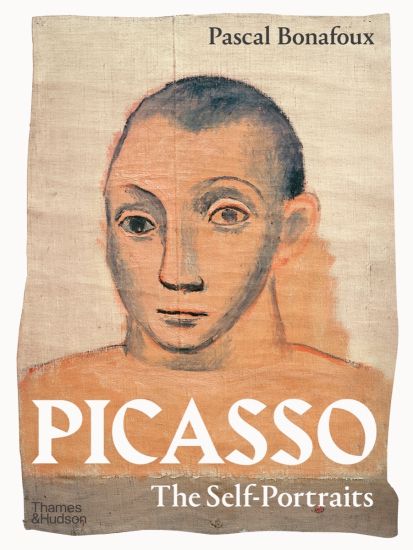
Picasso: The Self-Portraits

Picasso: The Self-Portraits

Pascal Bonafoux

THAMES HUDSON LTD
2022
sidottu
The first book dedicated to Picasso’s self-portraits, many held in private collections and published here for the first time. Much has been said and written about Picasso’s life and art, but until now his self-portraits have never been studied and presented in a single book, perhaps because the artist always left many doubts about his work. However, there is no doubt that Picasso represented himself ceaselessly, whether in a dashed-off pencil sketch, as a flourish at the bottom of a letter, or on a giant canvas. At the suggestion of Picasso’s widow Jacqueline, the distinguished art historian Pascal Bonafoux began researching Picasso’s self-portraits more than forty years ago. This meticulously researched book presents the fruits of his decades-long project. From the first attributed painting in 1894 as a thirteen-year-old boy, until Picasso's final self-portrait in 1972, a year before his death, Bonafoux charts the evolution of the artist's life and art. Here is Picasso as a student; as a young bohemian; an impetuous artist in Paris; as harlequin; as lover, husband and father; and finally, as an old man confronting his mortality. The book comprises about 170 drawings, paintings and photographs, some from private collections and previously unpublished, bringing together for the first time the attributed self-portraits of this genius of 20th-century art.
Human.Kind.

Human.Kind.

Pascal Hufschmid; Renaud de Planta

THAMES HUDSON LTD
2024
sidottu
In this thought-provoking anthology, the International Red Cross and Red Crescent Museum has partnered with the Prix Pictet, the world’s leading prize for photography and sustainability, to show a different side to humanitarian photography. Co-editors William A. Ewing and Elisa Rusca decided to select thirty photographers from the 3,000 or so artists who have been nominated since the award was founded in 2008. Adopting a broad definition of humanitarian photography, they looked for work with a visible humanitarian impulse and attributes such as care, dignity and empathy. The result is a diverse, stimulating and, at times, surprising visual display that is very different from the ‘breaking news’ images we often associate with humanitarian action. What sets these photographs apart? An unerring sense of compassion. This compelling collection underlines the power of contemporary photography to move us and inspire positive change in the world.
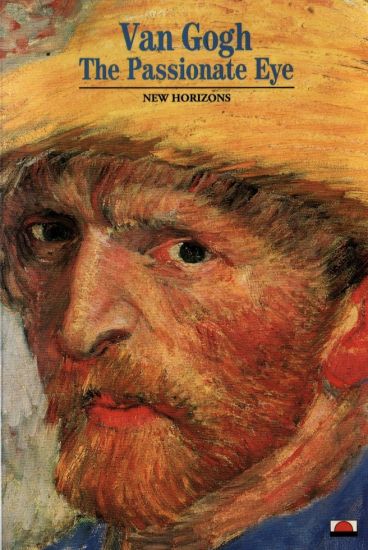
Van Gogh

Van Gogh

Pascal Bonafoux; Anthony Zielonka

Thames Hudson Ltd
1992
nidottu
Through his intense vision Van Gogh was able to create paintings that speak directly to us all, and today this disturbed and rejected misfit is the most universally loved of all artists. The story of his thirty seven years of poverty, loneliness and failure is in fact a triumphant saga of absolute dedication and the final realization of genius. This extravagantly illustrated volume in the hugely popular New Horizons series, includes the story of his life; his relationships with his brother Theo and contemporaries such as Toulouse-Lautrec, Pissarro and Gauguin; his descent into madness and his eventual suicide. As well as the many reproductions of paintings and drawings by Van Gogh and his contemporaries, extensive documentary evidence includes extracts from his letters, critical writings and documentary photographs.
Rembrandt

Rembrandt

Pascal Bonafoux; Alexandra Campbell

Thames Hudson Ltd
1992
nidottu
Supremely successful at the beginning of his life; lonely, bankrupt and virtually ignored at its end, Rembrandt produced some of the most powerful and psychologically penetrating works in the whole of world art.Poverty, illness, the deaths of his wife, children and devoted mistress – nothing deflected him from his inner vision and his unique handling of light: which would change the course of painting for ever.
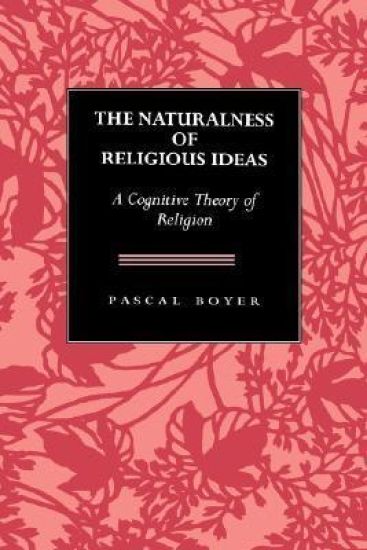
The Naturalness  of Religious Ideas

The Naturalness of Religious Ideas

Pascal Boyer

University of California Press
1994
sidottu
Why do people have religious ideas? And why thosereligious ideas? The main theme of Pascal Boyer's work is that important aspects of religious representations are constrained by universal properties of the human mind-brain. Experimental results from developmental psychology, he says, can explain why certain religious representations are more likely to be acquired, stored, and transmitted by human minds. Considering these universal constraints, Boyer proposes an exciting new answer to the question of why similar religious representations are found in so many different cultures. His work will be widely discussed by cultural anthropologists, psychologists, and students of religion, history, and philosophy.
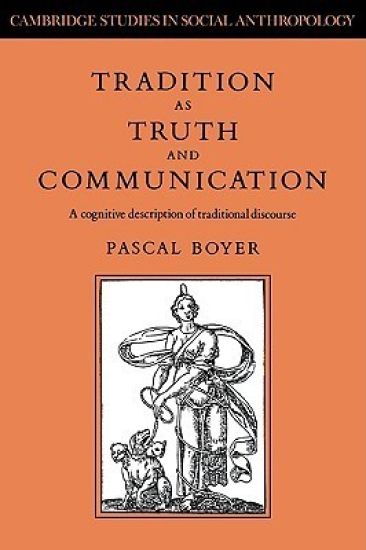
Tradition as Truth and Communication

Tradition as Truth and Communication

Pascal Boyer

Cambridge University Press
2006
pokkari
Tradition is a central concept in the social sciences, but it is commonly treated as unproblematic. Dr Boyer insists that social anthropology requires a theory of tradition, its constitution and transmission. He treats tradition 'as a type of interaction which results in the repetition which results in the repetition of certain communicative events', and therefore as a form of social action. Tradition as Truth and Communication deals particularly with oral communication and focuses on the privileged role of licensed speakers and the ritual contexts in which certain aspects of tradition are characteristically transmitted. Drawing on cognitive psychology, Dr Boyer proposes a set of general hypotheses to be tested by ethnographic field research. He has opened up an important new field for investigation within social anthropology.
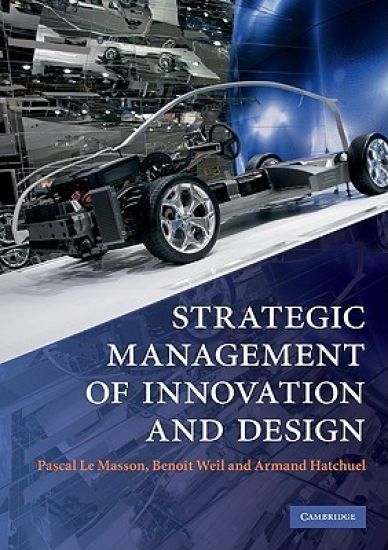
Strategic Management of Innovation and Design

Strategic Management of Innovation and Design

Pascal Le Masson; Benoît Weil; Armand Hatchuel

Cambridge University Press
2010
pokkari
There is now widespread agreement that innovation holds the key to future economic and social prosperity in developed countries. Experts studying contemporary capitalism also agree that the battle against unemployment and relocations can only be won through innovation. But what kind of innovation is required and what is the best way to manage, steer and organize it? Grounded on experiences of innovative firms and based on recent design theories, this book argues that instead of relying on traditional R&D and project management techniques, the strategic management of innovation must be based on innovative design activities. It analyses and explains new management principles and techniques that deal with these activities, including innovation fields, lineages, C-K (Concept-Knowledge) diagrams and design spaces. The book is ideal for advanced courses in innovation management in industrial design schools, business schools, engineering schools, as well as managers looking to improve their practice.
Tradition as Truth and Communication

Tradition as Truth and Communication

Pascal Boyer

Cambridge University Press
1990
sidottu
Tradition is a central concept in the social sciences, but it is commonly treated as unproblematic. Dr Boyer insists that social anthropology requires a theory of tradition, its constitution and transmission. He treats tradition 'as a type of interaction which results in the repetition which results in the repetition of certain communicative events', and therefore as a form of social action. Tradition as Truth and Communication deals particularly with oral communication and focuses on the privileged role of licensed speakers and the ritual contexts in which certain aspects of tradition are characteristically transmitted. Drawing on cognitive psychology, Dr Boyer proposes a set of general hypotheses to be tested by ethnographic field research. He has opened up an important new field for investigation within social anthropology.
Strategic Management of Innovation and Design

Strategic Management of Innovation and Design

Pascal Le Masson; Benoît Weil; Armand Hatchuel

Cambridge University Press
2010
sidottu
There is now widespread agreement that innovation holds the key to future economic and social prosperity in developed countries. Experts studying contemporary capitalism also agree that the battle against unemployment and relocations can only be won through innovation. But what kind of innovation is required and what is the best way to manage, steer and organize it? Grounded on experiences of innovative firms and based on recent design theories, this book argues that instead of relying on traditional R&D and project management techniques, the strategic management of innovation must be based on innovative design activities. It analyses and explains new management principles and techniques that deal with these activities, including innovation fields, lineages, C-K (Concept-Knowledge) diagrams and design spaces. The book is ideal for advanced courses in innovation management in industrial design schools, business schools, engineering schools, as well as managers looking to improve their practice.