Kirjojen hintavertailu. Mukana 11 244 527 kirjaa ja 12 kauppaa.

Kirjahaku

Etsi kirjoja tekijän nimen, kirjan nimen tai ISBN:n perusteella.

1000 tulosta hakusanalla Pascal Throne

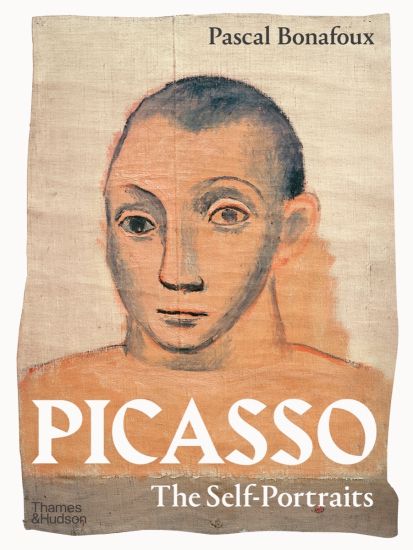
Picasso: The Self-Portraits

Picasso: The Self-Portraits

Pascal Bonafoux

THAMES HUDSON LTD
2022
sidottu
The first book dedicated to Picasso’s self-portraits, many held in private collections and published here for the first time. Much has been said and written about Picasso’s life and art, but until now his self-portraits have never been studied and presented in a single book, perhaps because the artist always left many doubts about his work. However, there is no doubt that Picasso represented himself ceaselessly, whether in a dashed-off pencil sketch, as a flourish at the bottom of a letter, or on a giant canvas. At the suggestion of Picasso’s widow Jacqueline, the distinguished art historian Pascal Bonafoux began researching Picasso’s self-portraits more than forty years ago. This meticulously researched book presents the fruits of his decades-long project. From the first attributed painting in 1894 as a thirteen-year-old boy, until Picasso's final self-portrait in 1972, a year before his death, Bonafoux charts the evolution of the artist's life and art. Here is Picasso as a student; as a young bohemian; an impetuous artist in Paris; as harlequin; as lover, husband and father; and finally, as an old man confronting his mortality. The book comprises about 170 drawings, paintings and photographs, some from private collections and previously unpublished, bringing together for the first time the attributed self-portraits of this genius of 20th-century art.

Human.Kind.

Human.Kind.

Pascal Hufschmid; Renaud de Planta

THAMES HUDSON LTD
2024
sidottu
In this thought-provoking anthology, the International Red Cross and Red Crescent Museum has partnered with the Prix Pictet, the world’s leading prize for photography and sustainability, to show a different side to humanitarian photography. Co-editors William A. Ewing and Elisa Rusca decided to select thirty photographers from the 3,000 or so artists who have been nominated since the award was founded in 2008. Adopting a broad definition of humanitarian photography, they looked for work with a visible humanitarian impulse and attributes such as care, dignity and empathy. The result is a diverse, stimulating and, at times, surprising visual display that is very different from the ‘breaking news’ images we often associate with humanitarian action. What sets these photographs apart? An unerring sense of compassion. This compelling collection underlines the power of contemporary photography to move us and inspire positive change in the world.
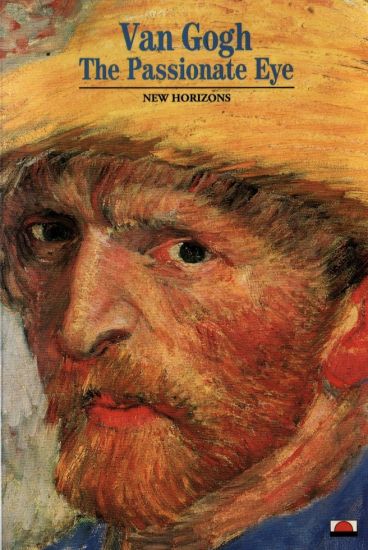
Van Gogh

Van Gogh

Pascal Bonafoux; Anthony Zielonka

Thames Hudson Ltd
1992
nidottu
Through his intense vision Van Gogh was able to create paintings that speak directly to us all, and today this disturbed and rejected misfit is the most universally loved of all artists. The story of his thirty seven years of poverty, loneliness and failure is in fact a triumphant saga of absolute dedication and the final realization of genius. This extravagantly illustrated volume in the hugely popular New Horizons series, includes the story of his life; his relationships with his brother Theo and contemporaries such as Toulouse-Lautrec, Pissarro and Gauguin; his descent into madness and his eventual suicide. As well as the many reproductions of paintings and drawings by Van Gogh and his contemporaries, extensive documentary evidence includes extracts from his letters, critical writings and documentary photographs.
Rembrandt

Rembrandt

Pascal Bonafoux; Alexandra Campbell

Thames Hudson Ltd
1992
nidottu
Supremely successful at the beginning of his life; lonely, bankrupt and virtually ignored at its end, Rembrandt produced some of the most powerful and psychologically penetrating works in the whole of world art.Poverty, illness, the deaths of his wife, children and devoted mistress – nothing deflected him from his inner vision and his unique handling of light: which would change the course of painting for ever.
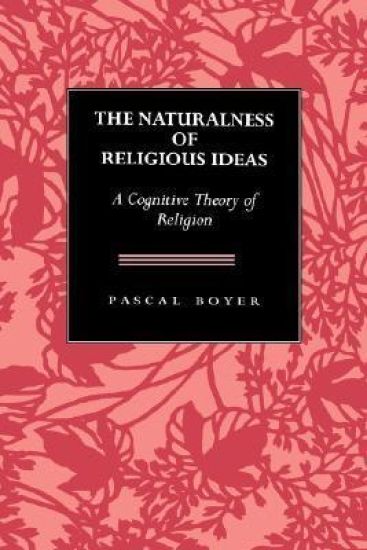
The Naturalness  of Religious Ideas

The Naturalness of Religious Ideas

Pascal Boyer

University of California Press
1994
sidottu
Why do people have religious ideas? And why thosereligious ideas? The main theme of Pascal Boyer's work is that important aspects of religious representations are constrained by universal properties of the human mind-brain. Experimental results from developmental psychology, he says, can explain why certain religious representations are more likely to be acquired, stored, and transmitted by human minds. Considering these universal constraints, Boyer proposes an exciting new answer to the question of why similar religious representations are found in so many different cultures. His work will be widely discussed by cultural anthropologists, psychologists, and students of religion, history, and philosophy.
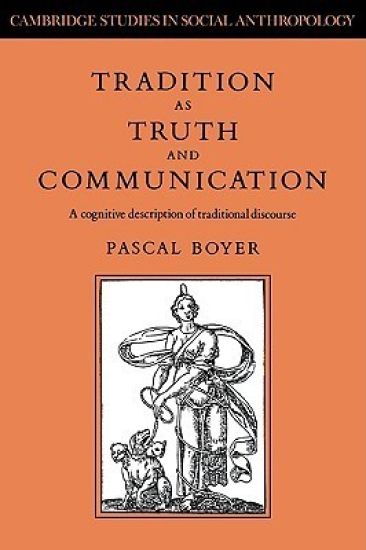
Tradition as Truth and Communication

Tradition as Truth and Communication

Pascal Boyer

Cambridge University Press
2006
pokkari
Tradition is a central concept in the social sciences, but it is commonly treated as unproblematic. Dr Boyer insists that social anthropology requires a theory of tradition, its constitution and transmission. He treats tradition 'as a type of interaction which results in the repetition which results in the repetition of certain communicative events', and therefore as a form of social action. Tradition as Truth and Communication deals particularly with oral communication and focuses on the privileged role of licensed speakers and the ritual contexts in which certain aspects of tradition are characteristically transmitted. Drawing on cognitive psychology, Dr Boyer proposes a set of general hypotheses to be tested by ethnographic field research. He has opened up an important new field for investigation within social anthropology.
Strategic Management of Innovation and Design

Strategic Management of Innovation and Design

Pascal Le Masson; Benoît Weil; Armand Hatchuel

Cambridge University Press
2010
pokkari
There is now widespread agreement that innovation holds the key to future economic and social prosperity in developed countries. Experts studying contemporary capitalism also agree that the battle against unemployment and relocations can only be won through innovation. But what kind of innovation is required and what is the best way to manage, steer and organize it? Grounded on experiences of innovative firms and based on recent design theories, this book argues that instead of relying on traditional R&D and project management techniques, the strategic management of innovation must be based on innovative design activities. It analyses and explains new management principles and techniques that deal with these activities, including innovation fields, lineages, C-K (Concept-Knowledge) diagrams and design spaces. The book is ideal for advanced courses in innovation management in industrial design schools, business schools, engineering schools, as well as managers looking to improve their practice.
Tradition as Truth and Communication

Tradition as Truth and Communication

Pascal Boyer

Cambridge University Press
1990
sidottu
Tradition is a central concept in the social sciences, but it is commonly treated as unproblematic. Dr Boyer insists that social anthropology requires a theory of tradition, its constitution and transmission. He treats tradition 'as a type of interaction which results in the repetition which results in the repetition of certain communicative events', and therefore as a form of social action. Tradition as Truth and Communication deals particularly with oral communication and focuses on the privileged role of licensed speakers and the ritual contexts in which certain aspects of tradition are characteristically transmitted. Drawing on cognitive psychology, Dr Boyer proposes a set of general hypotheses to be tested by ethnographic field research. He has opened up an important new field for investigation within social anthropology.
Strategic Management of Innovation and Design

Strategic Management of Innovation and Design

Pascal Le Masson; Benoît Weil; Armand Hatchuel

Cambridge University Press
2010
sidottu
There is now widespread agreement that innovation holds the key to future economic and social prosperity in developed countries. Experts studying contemporary capitalism also agree that the battle against unemployment and relocations can only be won through innovation. But what kind of innovation is required and what is the best way to manage, steer and organize it? Grounded on experiences of innovative firms and based on recent design theories, this book argues that instead of relying on traditional R&D and project management techniques, the strategic management of innovation must be based on innovative design activities. It analyses and explains new management principles and techniques that deal with these activities, including innovation fields, lineages, C-K (Concept-Knowledge) diagrams and design spaces. The book is ideal for advanced courses in innovation management in industrial design schools, business schools, engineering schools, as well as managers looking to improve their practice.
Urban Ecclesiology

Urban Ecclesiology

Pascal D. Bazzell

T. T.Clark Ltd
2015
sidottu
Pascal D. Bazzell brings the marginal ecclesiology of a Filipino ecclesial community facing homelessness (FECH) into contemporary ecclesiological conversation in order to deepen the ecumenical understanding of today’s ecclesial reality. He contributes relevant data to support a theory of an ecclesial-oriented paradigm that fosters ecclesial communities within homeless populations. There is an extensive dialogue occurring between ecclesiologies, church planting theories or urban missions and the urban poor. Yet the situation with the homeless population is almost entirely overlooked. The majority of urban mission textbooks do not acknowledge an ecclesial-oriented state of being and suggest that the street-level environment is a place where no discipleship can occur and no church should exist. By presenting the FECH's case study Bazzell emphasizes that it is possible to live on the streets and to grow in the faith of God as an ecclesial community. To be able to describe the FECH’s ecclesial narrative, Bazzell develops a local ecclesiological methodology that aims to bridge the gap between more traditional systematic and theoretical (ideal) ecclesiology and practical oriented ecclesiology (e.g. congregational studies) in order to hold together theological and social understandings of the church in its local reality. He articulates a theological framework for the FECH to reflect on who they are (the essence of identity studies), who they are in relationship to God (the essence of theological studies), and what that means for believers in that community as they relate to God and to each other in ways that are true to who they are and to who God intends them to be (the essence of ecclesial studies). The research provides a seldom-heard empirical tour into the FECH’s social world and communal identity. The theological findings from the FECH’s hermeneutical work on the Gospel of Mark reveal an understanding of church being developed as gathering around Jesus that creates a space for God’s presence to be embodied in their ordinary relationships and activities and to invite others to participate in that gathering. Moreover, it addresses ecclesial issues of the supernatural world; honor/shame values; and further develop the neglected image of the familia Dei in classical ecclesiology that encapsulates well the FECH’s nature, mission and place.
Urban Ecclesiology

Urban Ecclesiology

Pascal D. Bazzell

T. T.Clark Ltd
2018
nidottu
Pascal D. Bazzell brings the marginal ecclesiology of a Filipino ecclesial community facing homelessness (FECH) into contemporary ecclesiological conversation in order to deepen the ecumenical understanding of today’s ecclesial reality. He contributes relevant data to support a theory of an ecclesial-oriented paradigm that fosters ecclesial communities within homeless populations. There is an extensive dialogue occurring between ecclesiologies, church planting theories or urban missions and the urban poor. Yet the situation with the homeless population is almost entirely overlooked. The majority of urban mission textbooks do not acknowledge an ecclesial-oriented state of being and suggest that the street-level environment is a place where no discipleship can occur and no church should exist. By presenting the FECH's case study Bazzell emphasizes that it is possible to live on the streets and to grow in the faith of God as an ecclesial community. To be able to describe the FECH’s ecclesial narrative, Bazzell develops a local ecclesiological methodology that aims to bridge the gap between more traditional systematic and theoretical (ideal) ecclesiology and practical oriented ecclesiology (e.g. congregational studies) in order to hold together theological and social understandings of the church in its local reality. He articulates a theological framework for the FECH to reflect on who they are (the essence of identity studies), who they are in relationship to God (the essence of theological studies), and what that means for believers in that community as they relate to God and to each other in ways that are true to who they are and to who God intends them to be (the essence of ecclesial studies). The research provides a seldom-heard empirical tour into the FECH’s social world and communal identity. The theological findings from the FECH’s hermeneutical work on the Gospel of Mark reveal an understanding of church being developed as gathering around Jesus that creates a space for God’s presence to be embodied in their ordinary relationships and activities and to invite others to participate in that gathering. Moreover, it addresses ecclesial issues of the supernatural world; honor/shame values; and further develop the neglected image of the familia Dei in classical ecclesiology that encapsulates well the FECH’s nature, mission and place.
Pumpkin Dad

Pumpkin Dad

Pascal Lemaître

PENGUIN USA
2025
sidottu
Halloween hijinks are the spotlight of this delightfully silly autumn tale, perfect for fans of Stumpkin and the How to Catch series Whether just a trick or a bit of magic, prepare to be floored. Ellis has turned Dad into a GOURD Full of slapstick humor and autumnal festivities, there's no better way to celebrate Halloween than with Pumpkin Dad
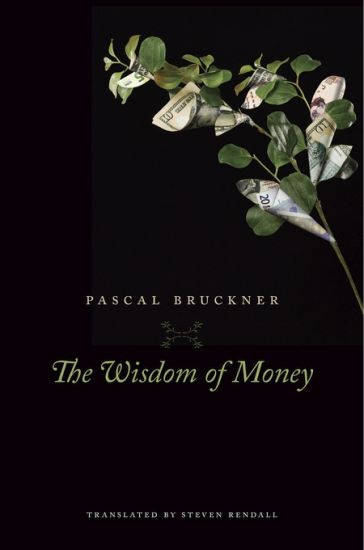
The Wisdom of Money

The Wisdom of Money

Pascal Bruckner

Harvard University Press
2017
sidottu
Money is an evil that does good, and a good that does evil. It inspires hymns to the prosperity it enables, manifestos about the poor it leaves behind, and diatribes for its corrosion of morality. In The Wisdom of Money, one of the world’s great essayists guides us through the rich commentary that money has generated since ancient times—both the passions and the resentments—as he builds an unfashionable defense of the worldly wisdom of the bourgeoisie.Bruckner begins with the worshippers and the despisers. Sometimes they are the same people—priests, for example, who venerate the poor from within churches of opulence and splendor. This hypocrisy endures in our secular world, he says, not least in his own France, where it is de rigueur even among the rich to feign indifference to money. It is better to speak plainly about money in the old American fashion, in Bruckner’s view. A little more honesty would allow us to see through the myths of money’s omnipotence but also the dangers of the aristocratic, ideological, and religious systems of thought that try to put money in its place. This does not mean we should emulate the mega-rich with their pathologies of consumption, competition, and narcissistic philanthropy. But we could do worse than defy three hundred years of derision from novelists and poets to embrace the unromantic bourgeois virtues of work, security, and moderate comfort. It is wise to have money, Bruckner tells us, and wise to think about it critically.
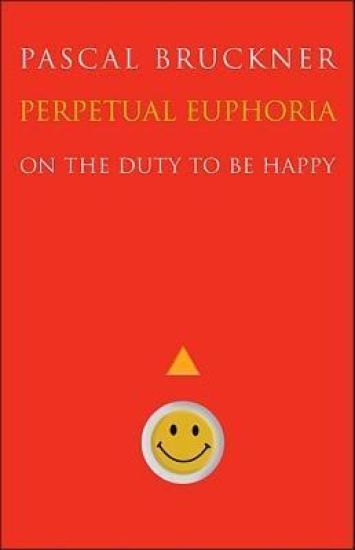
Perpetual Euphoria

Perpetual Euphoria

Pascal Bruckner

PRINCETON UNIVERSITY PRESS
2011
sidottu
Happiness today is not just a possibility or an option but a requirement and a duty. To fail to be happy is to fail utterly. Happiness has become a religion--one whose smiley-faced god looks down in rebuke upon everyone who hasn't yet attained the blessed state of perpetual euphoria. How has a liberating principle of the Enlightenment--the right to pursue happiness--become the unavoidable and burdensome responsibility to be happy? How did we become unhappy about not being happy--and what might we do to escape this predicament? In Perpetual Euphoria, Pascal Bruckner takes up these questions with all his unconventional wit, force, and brilliance, arguing that we might be happier if we simply abandoned our mad pursuit of happiness. Gripped by the twin illusions that we are responsible for being happy or unhappy and that happiness can be produced by effort, many of us are now martyring ourselves--sacrificing our time, fortunes, health, and peace of mind--in the hope of entering an earthly paradise. Much better, Bruckner argues, would be to accept that happiness is an unbidden and fragile gift that arrives only by grace and luck. A stimulating and entertaining meditation on the unhappiness at the heart of the modern cult of happiness, Perpetual Euphoria is a book for everyone who has ever bristled at the command to "be happy."
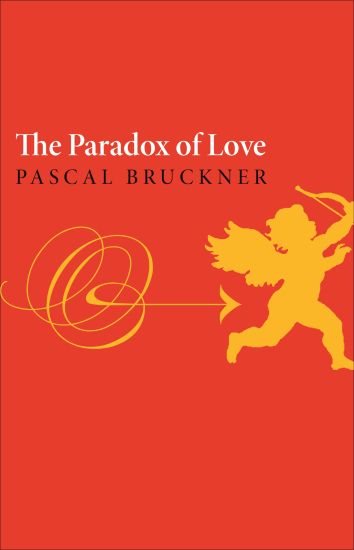
The Paradox of Love

The Paradox of Love

Pascal Bruckner; Richard Golsan

Princeton University Press
2012
sidottu
The sexual revolution is justly celebrated for the freedoms it brought--birth control, the decriminalization of abortion, the liberalization of divorce, greater equality between the sexes, women's massive entry into the workforce, and more tolerance of homosexuality. But as Pascal Bruckner, one of France's leading writers, argues in this lively and provocative reflection on the contradictions of modern love, our new freedoms have also brought new burdens and rules--without, however, wiping out the old rules, emotions, desires, and arrangements: the couple, marriage, jealousy, the demand for fidelity, the war between constancy and inconstancy. It is no wonder that love, sex, and relationships today are so confusing, so difficult, and so paradoxical. Drawing on history, politics, psychology, literature, pop culture, and current events, this book--a best seller in France--exposes and dissects these paradoxes. With his customary brilliance and wit, Bruckner traces the roots of sexual liberation back to the Enlightenment in order to explain love's supreme paradox, epitomized by the 1960s oxymoron of "free love": the tension between freedom, which separates, and love, which attaches. Ashamed that our sex lives fail to live up to such liberated ideals, we have traded neuroses of repression for neuroses of inadequacy, and we overcompensate: "Our parents lied about their morality," Bruckner writes, but "we lie about our immorality." Mixing irony and optimism, Bruckner argues that, when it comes to love, we should side neither with the revolutionaries nor the reactionaries. Rather, taking love and ourselves as we are, we should realize that love makes no progress and that its messiness, surprises, and paradoxes are not merely the sources of its pain--but also of its pleasure and glory.
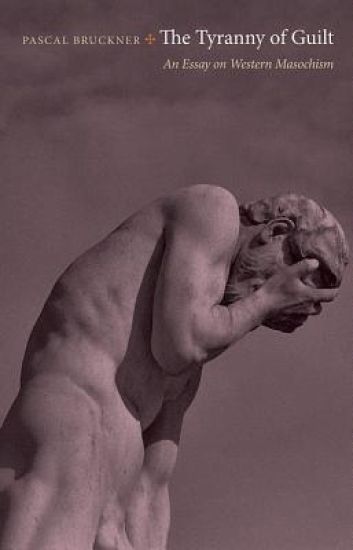
The Tyranny of Guilt

The Tyranny of Guilt

Pascal Bruckner

Princeton University Press
2012
pokkari
Fascism, communism, genocide, slavery, racism, imperialism--the West has no shortage of reasons for guilt. And, indeed, since the Holocaust and the end of World War II, Europeans in particular have been consumed by remorse. But Pascal Bruckner argues that guilt has now gone too far. It has become a pathology, and even an obstacle to fighting today's atrocities. Bruckner, one of France's leading writers and public intellectuals, argues that obsessive guilt has obscured important realities. The West has no monopoly on evil, and has destroyed monsters as well as created them--leading in the abolition of slavery, renouncing colonialism, building peaceful and prosperous communities, and establishing rules and institutions that are models for the world. The West should be proud--and ready to defend itself and its values. In this, Europeans should learn from Americans, who still have sufficient self-esteem to act decisively in a world of chaos and violence. Lamenting the vice of anti-Americanism that grips so many European intellectuals, Bruckner urges a renewed transatlantic alliance, and advises Americans not to let recent foreign-policy misadventures sap their own confidence. This is a searing, provocative, and psychologically penetrating account of the crude thought and bad politics that arise from excessive bad conscience.