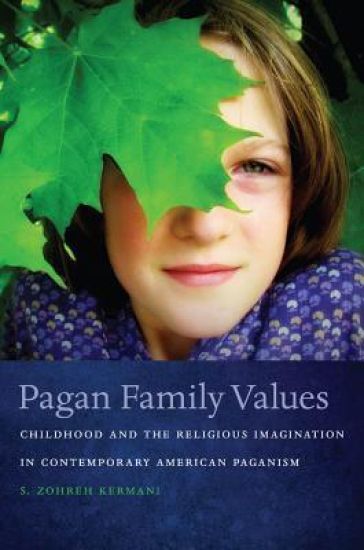
For most of its history, contemporary Paganism has been a religion of converts. Yet as it enters its fifth decade, it is incorporating growing numbers of second-generation Pagans for whom Paganism is a family tradition, not a religious worldview arrived at via a spiritual quest. In Pagan Family Values, S. Zohreh Kermani explores the ways in which North American Pagan families pass on their beliefs to their children, and how the effort to socialize children influences this new religious movement. The first ethnographic study of the everyday lives of contemporary Pagan families, this volume brings their experiences into conversation with contemporary issues in American religion. Through formal interviews with Pagan families, participant observation at various pagan events, and data collected via online surveys, Kermani traces the ways in which Pagan parents transmit their religious values to their children. Rather than seeking to pass along specific religious beliefs, Pagan parents tend to seek to instill values, such as religious tolerance and spiritual independence, that will remain with their children throughout their lives, regardless of these children's ultimate religious identifications. Pagan parents tend to construct an idealized, magical childhood for their children that mirrors their ideal childhoods. The socialization of children thus becomes a means by which adults construct and make meaningful their own identities as Pagans. Kermani's meticulous fieldwork and clear, engaging writing provide an illuminating look at parenting and religious expression in Pagan households and at how new religions pass on their beliefs to a new generation.
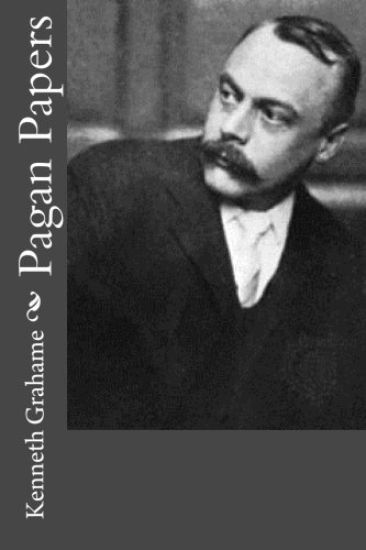
Kenneth Grahame (8 March 1859 - 6 July 1932) was a Scottish writer, most famous for The Wind in the Willows (1908), one of the classics of children's literature. He also wrote The Reluctant Dragon; both books were later adapted into Disney films. While still a young man in his 20s, Grahame began to publish light stories in London periodicals such as the St. James Gazette. Some of these stories were collected and published as Pagan Papers in 1893. The Pagan Papers contains 18 stories by Grahame including among many others: "The Romance of the Road", "Marginalia", "Deus Terminus" and "The White Poppy".
La realidad del paso de los d as no siempre nos gratifica e incluso hay ocasiones en que nos hiere dolorosamente. Frecuentemente el deseo pasa de lejos y el hombre se adapta, con m s o menos pasi n, a la concurrencia de circunstancias que le invitan a la reflexi n o le conducen a manifestar alguna forma de sentimiento. As , coge pluma y papel y trata de modular la experiencia vivida o la b squeda de la experiencia por vivir. De este modo, como gotas de lluvia, van surgiendo breves textos que preguntan unas veces y que otras responden. Los hay tambi n que quedan en el aire como si de una mirada se tratara o, m s exactamente, de un hallazgo en el hueco c ncavo de una respiraci n. Es esto y no otra cosa lo que nos dice este peque o conjunto de ramilletes, no hay por parte del autor ning n af n moralizador ni testimonial; m s que filosof a, poes a.
"Estamos ante un bello y valiente poemario. Un poemario que es expresi n de la diferencia, y que se atreve a mostrar, por encima de toda convenci n cultural dominante, una sexualidad exclusivamente femenina." extracto del pr logo de Juan Hospital
Pagan Christs: Studies in Comparative Hierology is a book written by John M. Robertson that explores the similarities and differences between ancient pagan religions and Christianity. The book delves into the idea that many aspects of Christianity, such as the birth story of Jesus, the concept of the Trinity, and the crucifixion and resurrection, were influenced by earlier pagan religions. Robertson examines the evidence for these claims, drawing on historical and archaeological sources, as well as comparative analysis of myths and religious practices. The book also explores the role of symbolism and ritual in both pagan and Christian religions, and how these elements have been adapted and transformed over time. Overall, Pagan Christs offers a fascinating and thought-provoking exploration of the historical and cultural roots of Christianity.This Is A New Release Of The Original 1911 Edition.This scarce antiquarian book is a facsimile reprint of the old original and may contain some imperfections such as library marks and notations. Because we believe this work is culturally important, we have made it available as part of our commitment for protecting, preserving, and promoting the world's literature in affordable, high quality, modern editions, that are true to their original work.
The history of Pentecostalism starts in Africa, home of Voodoo (vodou), the traditional religion of the motherland and the traditional religion of the diaspora. Here, the Damballa snake worshiping people were sadly shackled and sent abroad as human slaves. Coincidentally, the West and Central coast of Africa was also exporting slave religion, Orissa spirits and the spiritual culture of the homeland, including glossolalia.African slaves made their way to the Americas, particularly to Louisiana, which is a continuum to this narrative.Why? One hundred miles southwest of New Orleans, in Hoodoo country, William J. Seymour, child of slaves, was born. William J. Seymour had early life experiences with spirits and parallel manifestations like unto his forefathers who practiced pagan Voodoo religion. Unlike them though he was tainted with Protestantism and in his early thirties, around 1903, he became associated with the Church of God Evening Light Saints. This white, but racially inclusive group of holiness people, became his home. Here he was saved, filled with the Spirit and had a ministerial position.Seymour's story continues as he changes denominations, doctrines, spirits and locales. In 1906 he is found in Houston, where he is schooled by Charles Fox Parham concerning a spiritual work needed by humanity, above what Seymour received while part of the Evening Light Saints. According to Parham, there was a third work which was evidenced by xeno glossolalia. It was a miracle, like Pentecost, whereby ministers and missionaries could speak in the native languages (tongues) of foreigners. Seymour bought in.In 1906, after arriving in Los Angeles, Seymour "got the Holy Ghost and tongues" and became the Father of Pentecostalism. Under his leadership multitudes of people received this glossolalia at the Azusa Revival and a world-wide missionary effort began. But the Devil is in the details, for understandable language did not take root as promised by Parham and Seymour. The whole concept was ill-fated and nothing more than the unintelligible gibberish, like African witch doctors practice, was the result.Not only were the missionaries disillusioned with their Shaman-like tongues, but the entire outgrowth of Azusa was thrown into a series of exact and parallel manifestations, those seen in Voodoo and in African traditional religion. Early on, numbers of denominations and ministers took the snake oil of Damballa and experienced his pagan-based reactions, from illicit sex to glossolalia.But Pentecostal Paganism is an energizer bunny, for the initial 1906 pagan manifestations pale in comparison to what the so-called "Holy Ghost" is doing in post-Azusa. It seems that the Damballa Spirit of Paganism has camouflaged himself as the real Holy Spirit - and created Pentecostal Paganism. His cunning methodology has allowed Pentecostals to "pray in tongues" while at the same time hiss like snakes, practice gay sex, steal widows money through false pretense, talk to dead people, laugh uncontrollably and indulge in witchcraft. These, among many other Pentecostal Pagan manifestations have been used to paint the picture. Now that the final colors have been placed on this rendering, take time to study its hues and composition - then contemplate the interpretation of its pagan shades, 50 shades of Pagan Pentecostalism.