
Kirjahaku
Etsi kirjoja tekijän nimen, kirjan nimen tai ISBN:n perusteella.
1000 tulosta hakusanalla R.P. Dore

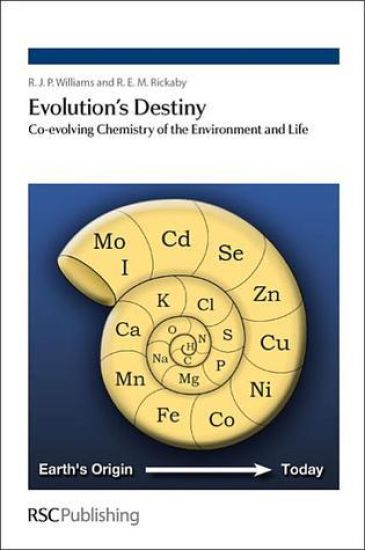
This book is written as an addition to Darwin's work and that of molecular biologists on evolution so as to include views of it from the point of view of chemistry rather than just from our knowledge of the biology and genes of organisms. By concentrating on a wide range of chemical elements, not just those in traditional organic compounds, we show that there is a close relationship between the geological or environmental chemical changes from the formation of Earth and those of organisms from the time of their origin. These are considerations which Darwin or other scientists could not have explored until very recent times since sufficient analytical data were not available. They lead us to suggest that there is a combined geo- and bio-chemical evolution, that of an ecosystem, which has had a systematic chemical development. In this development the arrival of new very similar species is shown to be by random Darwinian competitive selection processes such that a huge variety of species coexist with only minor differences in chemistry and advantages. This is in agreement with previous studies. On the large scale of evolution of very different organisms, and over greater timescales, by way of contrast, we observe that groups of species have special, different, chemical features and function. It is more difficult to understand how they evolved and therefore we examine their chemical development in detail. Overall there is a cooperative evolution of a chemical system driven by capture of energy, mainly from the sun, and its degradation in which the chemistry of both the environment and organisms are facilitating intermediates. We shall suggest that the overall drive of the whole joint system is to optimise the rate of this energy degradation. Since the environmental changes are inorganic and relatively fast they move inevitably to equilibrium. The living part of the system, the organisms, under the influence of this inevitable environmental change are forced to follow but as they are increasingly energised and their reactions are slow, they move further away from equilibrium. We are able to explore the ways in which this chemical system evolved, recognising that as complexity of the chemistry of organisms increased, they had to be formed from more and more compartments and to become part of a chemically cooperative overall activity. They could not remain as isolated species. Only in the last chapter do we attempt to make a connection between the changing chemistry of organisms with the coded molecules of each cell which have to exist to explain reproduction.

Catalogue d'Estampes Japonaises Anciennes de la Collection d'Un Amateur
R W P De Vries
Hachette Livre - BNF
2021
pokkari


The Desert Mounted Corps An Account Of The Cavalry Operations In Palestine And Syria 1917 - 1918
R M P Preston
ALPHA EDITION
2021
pokkari
This book has been considered important throughout the human history, and so that this work is never forgotten we have made efforts in its preservation by republishing this book in a modern format for present and future generations. This whole book has been reformatted, retyped and designed. These books are not made of scanned copies of their original work and hence the text is clear and readable.
Mechanical Design: Theory and Applications, Third Edition introduces the design and selection of common mechanical engineering components and machine elements, hence providing the foundational "building blocks" engineers needs to practice their art. In this book, readers will learn how to develop detailed mechanical design skills in the areas of bearings, shafts, gears, seals, belt and chain drives, clutches and brakes, and springs and fasteners. Where standard components are available from manufacturers, the steps necessary for their specification and selection are thoroughly developed. Descriptive and illustrative information is used to introduce principles, individual components, and the detailed methods and calculations that are necessary to specify and design or select a component. As well as thorough descriptions of methodologies, this book also provides a wealth of valuable reference information on codes and regulations.

A distinct voice in the nature/nurture debate, Rose's series of essays are a response to the biological reductionism of Richard Dawkins's book, The Selfish Gene (OUP, 1990), which insists that all aspects of human life are in our genes, and everything arises as a consequence of natural selection. Rose argues that life depends on the elaborate web of interactions that occur within cells, organisms, and ecosystems, and in which DNA has but one part to play.
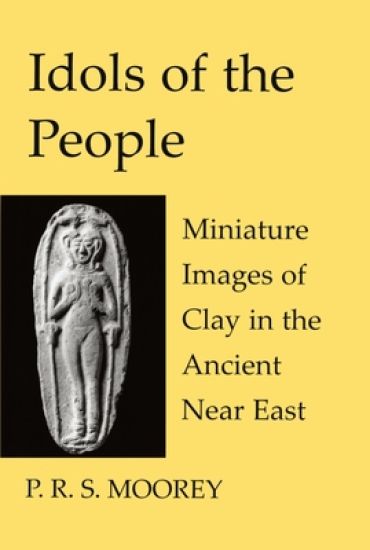
These lectures investigate the numerous miniature baked clay images from Canaan, Israel and Judah (c. 1600-600 BC). They constitute vital evidence for the imagery and domestic rituals of ordinary people, but significantly are not explicitly mentioned in the Old Testament. These terracottas are treated as a distinctive phenomenon with roots deep in prehistory and recurrent characteristics across millennia. Attention is focused on whether or not the female representations are worshippers of unknown deities or images of known goddesses, particularly in Early Israelite religion.
This work is an original and pioneering exploration of not only the social history of the subcontinent but also of performance and popular culture. The domain of analysis is entirely novel and opens up a bolder approach of laying a new field of historical enquiry of South Asia. Trawling through an extraordinary set of sources such as colonial and postcolonial records, newspaper reports, unpublished autobiographies, private papers, photographs and oral interviews the author brings out a fascinating account of the transnational landscape of physical cultures, human and animal performers and the circus industry.

P.R. Cavill offers a major reinterpretation of early Tudor constitutional history. In the grand 'Whig' tradition, the parliaments of Henry VII were a disappointing retreat from the onward march towards parliamentary democracy. The king was at best indifferent and at worst hostile to parliament; its meetings were cowed and quiescent, subservient to the royal will. Yet little research has tested these assumptions. Drawing on extensive archival research, Cavill challenges existing accounts and revises our understanding of the period. Neither to the king nor to his subjects did parliament appear to be a waning institution, fading before the waxing power of the crown. For a ruler in Henry's vulnerable position, parliament helped to restore royal authority by securing the good governance that legitimated his regime. For his subjects, parliament served as a medium through which to communicate with the government and to shape - and, on occasion, criticize - its policies. Because of the demands parliament made, its impact was felt throughout the kingdom, among ordinary people as well as among the elite. Cooperation between subjects and the crown, rather than conflict, characterized these parliaments. While for many scholars parliament did not truly come of age until the 1530s, when - freed from its medieval shackles - the modern institution came to embody the sovereign nation state, in this study Henry's reign emerges as a constitutionally innovative period. Ideas of parliamentary sovereignty were already beginning to be articulated. It was here that the foundations of the 'Tudor revolution in government' were being laid.

An in-depth study of recent developments in the field of sex therapy presents detailed descriptions of the diverse techniques used to enhance sexual experiences and to treat sexual problems.

Eagle Rock. Summer. 2016. Two very different lives intertwine to meet a remarkable destiny. Nicky is an old man beaten by age. He spends his days in Eagle Rock indulging his vices and trying to forget his losses. However, when he meets a mysterious kid in a fox mask, his relatively peaceful life comes to an end and a surreal odyssey to save their lives begins. Featuring Cover Art by Kim Jung Gi and Illustrated Maps by Tom Lamb. **Contains Excessive Language and Mature Content** "P.R. August puts us right in the heart of Eagle Rock, one of LA's iconic neighborhoods, to savor its grit, diversity and atmosphere. This book has great originality, memorable characters, well-crafted suspense, touches of whimsy and layers of meaning around every corner." -S. Cha "Fans of literary fiction blended with magic realism will enjoy this book." -Chrome Oxide "Pretentious sex pulp, but the good kind." -Di Roach
Power electronic converters can be broadly classified as AC to DC, DC to AC, DC to DC and AC to AC converters. AC to AC converters can be further classified as AC Controllers or AC regulators, Cycloconverters and Matrix converters. AC controllers and cycloconverters are fabricated using Silicon Controlled Rectifiers (SCR) whereas matrix converters are built using semiconductor bidirectional switches. This text book provides a summary of AC to AC Converter modelling excluding AC controllers. The software Simulink® by Mathworks Inc., USA is used to develop the models of AC to AC Converters presented in this text book. The term model in this text book refers to SIMULINK model. This text book is mostly suitable for researchers and practising professional engineers in the industry working in the area of AC to AC converters. Features Provides a summary of AC to AC Converter modelling excluding AC controllersIncludes models for three phase AC to three phase AC matrix converters using direct and indirect space vector modulation algorithmPresents new applications such as single and dual programmable AC to DC rectifier with derivations for output voltageDisplays Hardware-in-the Loop simulation of a three phase AC to single phase AC matrix converterProvides models for three phase multilevel matrix converters, Z-source Direct and Quasi Z-source Indirect matrix converters; a model for speed control and brake by plugging of three phase induction motor and separately excited DC motors using matrix converter; a model for a new single phase and three phase sine wave direct AC to AC Converter without a DC link using three winding transformers and that for a square wave AC to square wave AC converter using a DC link; models for variable frequency, variable voltage AC to AC power supply; models for Solid State Transformers using Dual Active Bridge topology and a new direct AC to AC Converter topology; and models for cycloconverters and indirect matrix converters
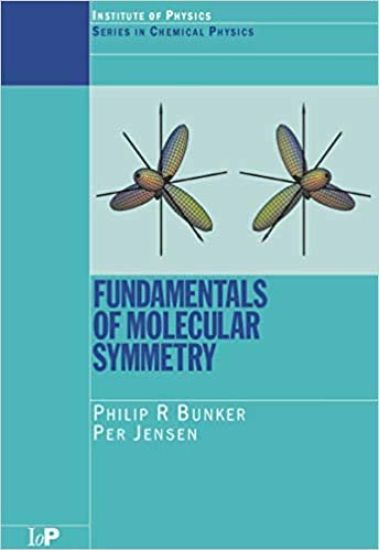
Fundamentals of Molecular Symmetry shows how to set up symmetry groups for molecules using more fundamental ideas. The book provides an introductory description of MS and quantum mechanics to show how MS is to be understood and used. The approach taken gives a balanced account of both types of symmetry group. Point group symmetry is derived by approximation from MS group symmetry. Usually the point group is only useful for isolated, nonrotating molecules, executing small amplitude vibrations in isolated electronic states. However, for the chemical physicist or physical chemist who wishes to go beyond these limitations,
The centrality of the book is Gandhi's disposition and orientation towards the idea of Jewish homeland. When it comes to Jews, Jewish nationalism and their aspirations in Palestine, even Mahatma Gandhi was not infallible. His abiding empathy for the Jews was negated by his limited understanding of Judaism and Jewish history. His perception of the Palestine issue and his support for the Arabs was rooted in the domestic Indian context. The conventional understanding that Gandhi was ‘consistently’ opposed to Zionism and the Jewish aspirations for a national home in Palestine does not correspond with his later remarks. While demanding Jewish non-violence both against Hitler and in Palestine, Mahatma was prepared to understand, the ‘excesses’ of the Arabs who were facing ‘overwhelming odds.’ His position on the domestic situation largely influenced his stand viz-à-viz Palestine and hence his demand for Jews to abandon their collaboration with imperialism and follow the path of negotiation should be read within the Indian context. So long as India pursued a recognition-without-relations policy toward Israel, one could rest on Gandhi’s shoulders and adopt a self-righteous attitude. However, can one rely on the Gandhian paradigm to explain India’s new-found bonhomie toward Israel without sounding selective, hypocritical or both?The primary focus of this book is the explication of political constraints and oversensitivity towards the religious minority for political gains, which shaped Gandhi's notion about the Jewish homeland. The author has conducted an empirical survey of the political, religious and strategic constraints behind Gandhi's idea of the Jewish homeland that in common parlance is seen as an ardent disapproval of Zionism by Gandhi.Please note: This title is co-published with KW Publishers, New Delhi. Taylor & Francis does not sell or distribute the Hardback in India, Pakistan, Nepal, Bhutan, Bangladesh and Sri Lanka

Originally published in 1985 the English Civil War is a subject which continues to excite enormous interest throughout the world. This atlas consists of over fifty maps illustrating all the major - and many of the minor - bloody campaigns and battles of the War, including the campaigns of Montrose, the battle of Edgehill and Langport.Providing a complete introductory history to the turbulent period, it also includes maps giving essential background information; detailed accompanying explanations; a useful context to events.
From the Preface: "This book was written for the active reader. The first part consists of problems, frequently preceded by definitions and motivation, and sometimes followed by corollaries and historical remarks... The second part, a very short one, consists of hints... The third part, the longest, consists of solutions: proofs, answers, or contructions, depending on the nature of the problem.... This is not an introduction to Hilbert space theory. Some knowledge of that subject is a prerequisite: at the very least, a study of the elements of Hilbert space theory should proceed concurrently with the reading of this book."