Kirjojen hintavertailu. Mukana 11 342 296 kirjaa ja 12 kauppaa.

Kirjahaku

Etsi kirjoja tekijän nimen, kirjan nimen tai ISBN:n perusteella.

1000 tulosta hakusanalla ROB SCOTTON

Newton

Newton

Rob Iliffe

Oxford University Press
2007
nidottu
This Very Short Introduction uses Newton's own unpublished writings to provide fascinating insight into the man who kept the Royal Society under his thumb, was Head of the Mint, and whose contributions to our understanding of the heavens and the earth are considered by many to be unparalleled. The author begins with the legends surrounding Newton before next exploring the forces that shaped his life, introducing, along the way, many of the key thinkers and politicians of the time. Although Newton's science was largely revered (his reputation reached near-immortal status with the publication of the Principia), theologically, his beliefs were very controversial. He was a fanatical Protestant, and claimed that tribes like the Goths, Vandals, and Huns had tried to save the planet from the corruption of the Catholics. He was also convinced that he was specially chosen by God to protect the original, pure form of Christianity, and viewed any criticisms directed at him as a form of persecution. Resisting the urge to show how Newton's views on alchemy, mathematics, physics, and religion complemented one another, the author instead emphasises that these were the very different obsessions of an extremely complex man whose beliefs at the time dominated England's political, religious, and intellectual landscape. ABOUT THE SERIES: The Very Short Introductions series from Oxford University Press contains hundreds of titles in almost every subject area. These pocket-sized books are the perfect way to get ahead in a new subject quickly. Our expert authors combine facts, analysis, perspective, new ideas, and enthusiasm to make interesting and challenging topics highly readable.
Insurance and the Law of Obligations

Insurance and the Law of Obligations

Rob Merkin; Jenny Steele

Oxford University Press
2013
sidottu
It is widely acknowledged that insurance has a major impact on the operation of tort and contract law regimes in practice, yet there is little sustained analysis of their interaction. The majority of academic private lawyers have little knowledge of insurance law in its own right, and the amount of discussion directed to insurance in private law theory is disproportionately small in relation to its practical importance. Filling this substantial gap in the literature, this book explores the multiple influences of insurance in the law of obligations, and the nature and impact of insurance law as an inherent and significant aspect of private law. It combines conceptual and doctrinal analysis, informing the theoretical discussion of the nature of private law, including the role of judicial and public purpose, and the place of formalism and of contextualism in normative theories of private law. Arguing for the wider recognition of the multiple impacts of insurance, the book claims that recognition of the presence of insurance necessarily marks a departure from the two-party framework sometimes described as definitive of private law. The structured exploration and interpretation of the contemporary role of insurance in the law of obligations, and of its implications, illuminates this under-explored area of private law, and equips the reader for further enquiry and debate.
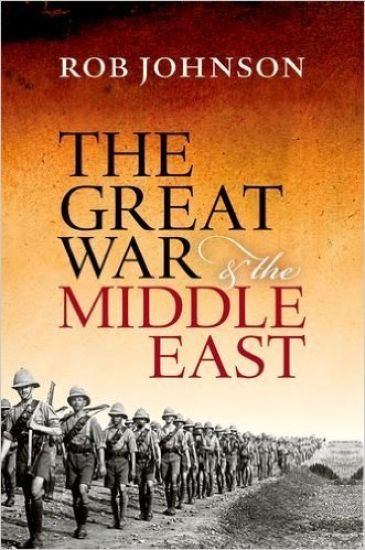
The Great War and the Middle East

The Great War and the Middle East

Rob Johnson

Oxford University Press
2016
sidottu
The First World War in the Middle East swept away five hundred years of Ottoman domination. It ushered in new ideologies and radicalised old ones - from Arab nationalism and revolutionary socialism to impassioned forms of atavistic Islamism. It created heroic icons, like the enigmatic Lawrence of Arabia or the modernizing Atatürk, and destroyed others. And it completely re-drew the map of the region, forging a host of new nation states, including Turkey, Iraq, Syria, Jordan, Lebanon, and Saudi Arabia - all of them (with the exception of Turkey) under the 'protection' of the victor powers, Britain and France. For many, the self-serving intervention of these powers in the region between 1914 and 1919 is the major reason for the conflicts that have raged there on and off ever since. Yet many of the most commonly accepted assertions about the First World War in the Middle East are more often stated than they are truly tested. Rob Johnson, military historian and former soldier, now seeks to put this right by examining in detail the strategic and operational course of the war in the Middle East. Johnson argues that, far from being a sideshow to the war in Europe, the Middle Eastern conflict was in fact the centre of gravity in a war for imperial domination and prestige. Moreover, contrary to another persistent myth of the First World War in the Middle East, local leaders and their forces were not simply the puppets of the Great Powers in any straightforward sense. The way in which these local forces embraced, resisted, succumbed to, disrupted, or on occasion overturned the plans of the imperialist powers for their own interests in fact played an important role in shaping the immediate aftermath of the conflict - and in laying the foundations for the troubled Middle East that we know today.
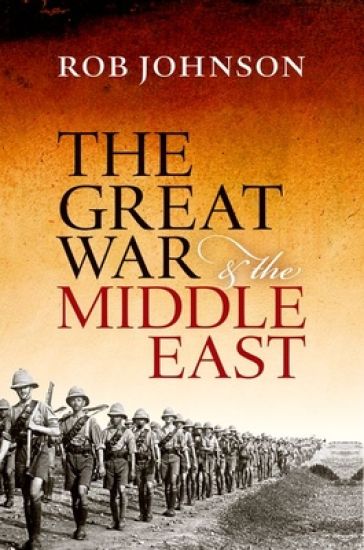
The Great War and the Middle East

The Great War and the Middle East

Rob Johnson

Oxford University Press
2021
nidottu
The First World War in the Middle East swept away five hundred years of Ottoman domination. It ushered in new ideologies and radicalised old ones - from Arab nationalism and revolutionary socialism to impassioned forms of atavistic Islamism. It created heroic icons, like the enigmatic Lawrence of Arabia or the modernizing Atatürk, and destroyed others. And it completely re-drew the map of the region, forging a host of new nation states, including Turkey, Iraq, Syria, Jordan, Lebanon, and Saudi Arabia - all of them (with the exception of Turkey) under the 'protection' of the victor powers, Britain and France. For many, the self-serving intervention of these powers in the region between 1914 and 1919 is the major reason for the conflicts that have raged there on and off ever since. Yet many of the most commonly accepted assertions about the First World War in the Middle East are more often stated than they are truly tested. Rob Johnson, military historian and former soldier, now seeks to put this right by examining in detail the strategic and operational course of the war in the Middle East. Johnson argues that, far from being a sideshow to the war in Europe, the Middle Eastern conflict was in fact the centre of gravity in a war for imperial domination and prestige. Moreover, contrary to another persistent myth of the First World War in the Middle East, local leaders and their forces were not simply the puppets of the Great Powers in any straightforward sense. The way in which these local forces embraced, resisted, succumbed to, disrupted, or on occasion overturned the plans of the imperialist powers for their own interests in fact played an important role in shaping the immediate aftermath of the conflict - and in laying the foundations for the troubled Middle East that we know today.
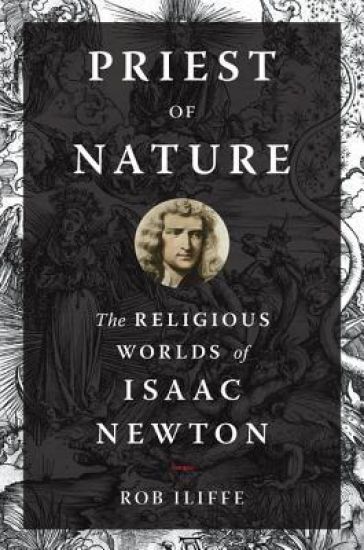
Priest of Nature

Priest of Nature

Rob Iliffe

Oxford University Press Inc
2017
sidottu
Newton's unusual -- or even downright heretical -- religious opinions were well known to a number of his contemporaries. For over two centuries the exact nature of his religious beliefs was a matter of intense debate, but by the middle of the nineteenth century it was public knowledge that he had held highly unorthodox conceptions of the Trinity. Until the early 1970s, very few of Newton's private theological researches had been made publicly available, and scholars did not determine his views with any precision. However, in the last few years millions of words from his previously unpublished religious writings have become publicly available, making it possible to offer a considered account of their content, and to assess what they tell us about the man. In Priest of Nature, Newton scholar Rob Iliffe does just that. Tracing Newton's life from his birth though his years as a Cambridge don, his tenure as Warden and Master of the Mint, and his twenty-four years as President of the Royal Society, up to his death in 1727, Iliffe examines how Newton managed the complex boundaries between private and public professions of belief. While previous scholars and biographers have attempted to find coherence in his intellectual pursuits, Iliffe shows how wide-ranging and catholic Newton's views and interests in fact were, and in that takes issue with those who have attempted to underestimate their range and complexity. Arguing that there is no simplistic coherence between Newton's philosophical and religious views, Priest of Nature delves into the religious writings Newton produced during his life, from his account of the sexually depraved lives of the early monks to his views about the creation of the world and the Apocalypse, and his commitment to a simple (anti-Trinitarian) doctrine that he believed had been corrupted in the first centuries of Christianity. Iliffe argues that religious commitments lay at the heart of Newton's earliest scientific research, and shows how his analysis of the techniques he used to prosecute corrupters of Christian doctrine were identical to those he used when dealing with his scientific enemies. Ultimately, Priest of Nature asserts, Newton's ambitious engagement with a tradition central to Western thought displays the same creative energy visible in his mathematical and scientific work, and despite his reluctance to follow any specific sect, he should be seen as a devout layman who made independence of thought a core virtue. Offering novel insights into the spiritual life of Newton, Priest of Nature is both a scholarly work and a vibrant biography of one of the most influential scientists in history.
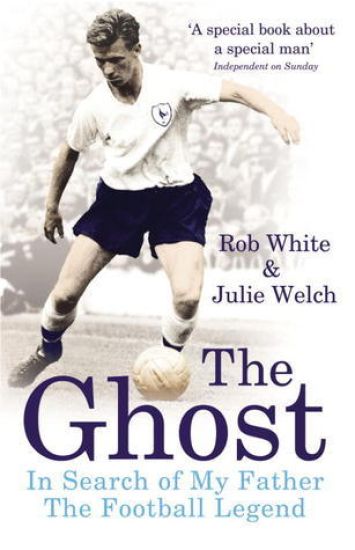
Ghost

Ghost

Rob White; Julie Welch

Vintage
2012
pokkari
When Spurs legend John White was killed by a bolt of lightning in 1964, the football world was rocked by the tragedy. To find answers he set out to speak to White's former teammates, his family and followers, and built up a touching portrait of a gifted young footballer and of a lost era.
Wasted World

Wasted World

Rob Hengeveld

University of Chicago Press
2012
sidottu
All systems produce waste as part of a cycle - bacteria, humans, combustion engines, even one as large and complex as a city. To some extent, this waste can be absorbed, processed, or recycled - though never completely. In "Wasted World", Rob Hengeveld reveals how a long history of human consumption has left our world drowning in waste. This is a compelling and urgent work that traces the related histories of population growth and resource consumption. As Hengeveld explains, human life (and population growth) depends not only on mineral resources but also on energy. People first obtained energy from food and later supplemented this with energy from water, wind, and animals as one source after another fell short of our ever-growing needs. Finally, we turned to fossil energy, which generates atmospheric waste that is the key driver of global climate change. The effects of this climate change are already leading to food shortages and social collapse in some parts of the world. Because all of these problems are interconnected, Hengeveld argues strenuously that measures to counter individual problems cannot work. Instead, we need to tackle their common cause-our staggering population growth. While many scientists agree that population growth is one of the most critical issues pressuring the environment, Hengeveld is unique in his insistence on turning our attention to the waste such growth leaves in its wake and to the increasing demands of our global society. A practical look at the sustainability of our planet from the perspective of a biologist whose expertise is in the abundances and distributions of species, Wasted World presents a fascinating picture of the whole process of using, wasting, and exhausting energy and material resources. And by elucidating the complexity of the causes of our current global state, Hengeveld offers us a way forward.
Common Ground: Encounters with Nature at the Edges of Life
All too often, we think of nature as something distinct from ourselves, something to go and see, a place that's separate from the ordinary modern world in which we live and work. But if we take the time to look, we soon find that's not how nature works. Even in our parceled-out, paved-over urban environs, nature is all around us; it is in us. It is us. That's what Rob Cowen discovered after moving to a new home in northern England. After ten years in London he was suddenly adrift, searching for a sense of connection. He found himself drawn to a square-mile patch of waste ground at the edge of town. Scrappy, weed-filled, this heart-shaped tangle of land was the very definition of overlooked--a thoroughly in-between place that capitalism no longer had any use for, leaving nature to take its course. Wandering its meadows, woods, hedges, and fields, Cowen found it was also a magical, mysterious place, haunted and haunting, abandoned but wildly alive--and he fell in fascinated love. Common Ground is a true account of that place and Cowen's transformative journey through its layers and lives, but it's much more too. As the land's stories intertwine with events in his own life--and he learns he is to become a father for the first time--the divisions between human and nature begin to blur and shift. The place turns out to be a mirror, revealing what we are, what we're not and how those two things are ultimately inseparable. This is a book about discovering a new world, a forgotten world on the fringes of our daily lives, and the richness that comes from uncovering the stories and lives--animal and human--contained within. It is an unforgettable piece of nature writing, part of a brilliant tradition that stretches from Gilbert White to Robert Macfarlane and Helen Macdonald. "I am dreaming of the edge-land again," Cowen writes. Read Common Ground, and you, too, will be dreaming of the spaces in between, and what--including us--thrives there.
Bridging Liberalism and Multiculturalism in American Education
What should the civic purposes of education be in a liberal and diverse society? Is there a tension between cultivating citizenship and respecting social diversity? What are the boundaries of parental and state authority over education? Linking political theory with educational history and policy, Rob Reich offers provocative new answers to these questions. He develops a liberal theory of multicultural education in which the leading goal is the cultivation of individual autonomy in children. Reich draws out the policy implications of his theory through one of the first sustained considerations of homeschooling in American education. He also evaluates three of the most prominent trends in contemporary school reform - vouchers, charter schools, and the small school movement - and provides pedagogical recommendations that sharply challenge the reigning wisdom of many multicultural educators. Written in clear and accessible language, this book will be of interest to political theorists, philosophers, educators, educational policymakers, and teachers.
Bridging Liberalism and Multiculturalism in American Education
What should the civic purposes of education be in a liberal and diverse society? Is there a tension between cultivating citizenship and respecting social diversity? What are the boundaries of parental and state authority over education? Linking political theory with educational history and policy, Rob Reich offers provocative new answers to these questions. He develops a liberal theory of multicultural education in which the leading goal is the cultivation of individual autonomy in children. Reich draws out the policy implications of his theory through one of the first sustained considerations of homeschooling in American education. He also evaluates three of the most prominent trends in contemporary school reform - vouchers, charter schools, and the small school movement - and provides pedagogical recommendations that sharply challenge the reigning wisdom of many multicultural educators. Written in clear and accessible language, this book will be of interest to political theorists, philosophers, educators, educational policymakers, and teachers.
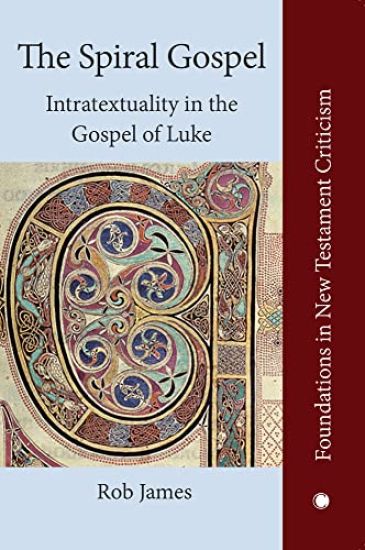
The Spiral Gospel

The Spiral Gospel

Rob James

JAMES CLARKE CO LTD
2023
nidottu
How did the author of the Gospel of Luke intend it to be read? In The Spiral Gospel, Rob James shows that the assumptions many modern readers bring to the text - that it claims to be historically factual, or merely regurgitates existing stories - are not those of antiquity. Building on the central insight that it was written for a community who would have used it as their pre-eminent text, James argues convincingly for a continuous, cyclical reading of Luke's narrative. The evidence for this view, and also its consequences, can be seen in the gospel's intratextuality. Context is given at the end of the gospel that informs the beginning, and there are countless other intratextual elements throughout the text that are most readily noticeable on a second or subsequent reading. This deliberate, creative interweaving on the author's part opens up new levels of appreciation and faith for those who read in the way Luke's first audience received his work.
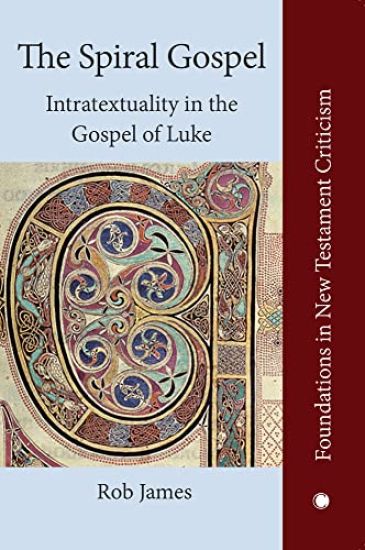
The Spiral Gospel

The Spiral Gospel

Rob James

JAMES CLARKE CO LTD
2022
sidottu
How did the author of the Gospel of Luke intend it to be read? In The Spiral Gospel, Rob James shows that the assumptions many modern readers bring to the text - that it claims to be historically factual, or merely regurgitates existing stories - are not those of antiquity. Building on the central insight that it was written for a community who would have used it as their pre-eminent text, James argues convincingly for a continuous, cyclical reading of Luke's narrative. The evidence for this view, and also its consequences, can be seen in the gospel's intratextuality. Context is given at the end of the gospel that informs the beginning, and there are countless other intratextual elements throughout the text that are most readily noticeable on a second or subsequent reading. This deliberate, creative interweaving on the author's part opens up new levels of appreciation and faith for those who read in the way Luke's first audience received his work.
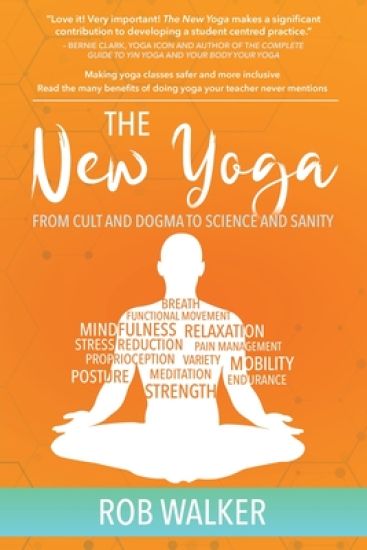
The New Yoga

The New Yoga

Rob Walker

Tellwell Talent
2020
pokkari
The New Yoga: From Cults and Dogma to Science and Sanity Where did most of your yoga moves come from? A guru from the annals of Indian folklore? Or are those "thousand-year-old poses" really a twentieth century invention hidden behind a veil of tall stories? Were they based on movement science-or cooked-up creations with a big pinch of folklore? The New Yoga takes a brutally hard look at these critical questions. It proposes six radical steps to strip away the nonsense and provide common-sense yoga for the future, based on movement science: - Stretching is not the primary goal. Really? Yes. More important are ten other benefits including two new buzzwords, proprioception and interoception.- Mobility tops flexibility. Focus on better control over a safe range of movement. - "Practice and all is coming." Not so Despite the famous guru's oft quotes words, we may never achieve certain poses. Trying will lead to injury.- Avoid repetitive stress and encourage brain health with frequent and varying moves on and off the mat.- 'Pretzels' pushing extreme flexibility lead to injury and misplaced envy. Hyper-mobility is not something to envy; it's sad.- Don't throw the baby out with the bath water. Maintain what works but question all for good evidence.Rob Walker quotes a wide range of experts and speaks from his own 20-year yoga teacher-training experience. He dumps accepted dogma behind much current teaching and brings a fresh sparkle of evidence and science to twenty-first century yoga.
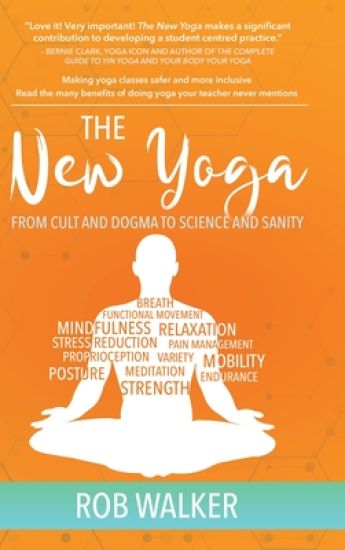
The New Yoga

The New Yoga

Rob Walker

Tellwell Talent
2020
sidottu
The New Yoga: From Cults and Dogma to Science and Sanity Where did most of your yoga moves come from? A guru from the annals of Indian folklore? Or are those "thousand-year-old poses" really a twentieth century invention hidden behind a veil of tall stories? Were they based on movement science-or cooked-up creations with a big pinch of folklore? The New Yoga takes a brutally hard look at these critical questions. It proposes six radical steps to strip away the nonsense and provide common-sense yoga for the future, based on movement science: - Stretching is not the primary goal. Really? Yes. More important are ten other benefits including two new buzzwords, proprioception and interoception.- Mobility tops flexibility. Focus on better control over a safe range of movement. - "Practice and all is coming." Not so Despite the famous guru's oft quotes words, we may never achieve certain poses. Trying will lead to injury.- Avoid repetitive stress and encourage brain health with frequent and varying moves on and off the mat.- 'Pretzels' pushing extreme flexibility lead to injury and misplaced envy. Hyper-mobility is not something to envy; it's sad.- Don't throw the baby out with the bath water. Maintain what works but question all for good evidence.Rob Walker quotes a wide range of experts and speaks from his own 20-year yoga teacher-training experience. He dumps accepted dogma behind much current teaching and brings a fresh sparkle of evidence and science to twenty-first century yoga.
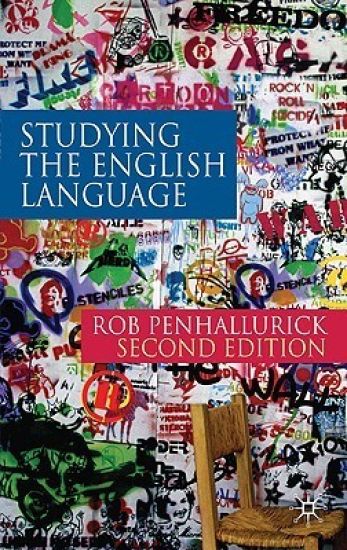
Studying the English Language

Studying the English Language

Rob Penhallurick

Red Globe Press
2010
sidottu
In this lively and engaging textbook, Rob Penhallurick introduces readers to the diversity and history of the English language, and to relevant contemporary and classic work in linguistics. Organised into eighteen thematic chapters, each of which can be read in one sitting, it covers topics such as the effects of dialect and accent on identity, swearing and offensive names in English, language and gender, language planning and theories about the origin of language. Chapters are full of entertaining examples, illustrations and suggestions for further reading. This is an ideal companion for all those new to the study of the English language, and essential reading for anyone with a general interest in the subject.
Studying the English Language

Studying the English Language

Rob Penhallurick

Red Globe Press
2010
nidottu
In this lively and engaging textbook, Rob Penhallurick introduces readers to the diversity and history of the English language, and to relevant contemporary and classic work in linguistics. Organised into eighteen thematic chapters, each of which can be read in one sitting, it covers topics such as the effects of dialect and accent on identity, swearing and offensive names in English, language and gender, language planning and theories about the origin of language. Chapters are full of entertaining examples, illustrations and suggestions for further reading. This is an ideal companion for all those new to the study of the English language, and essential reading for anyone with a general interest in the subject.
Nature, Social Relations and Human Needs

Nature, Social Relations and Human Needs

Rob Stones; Sandra Moog

Palgrave Macmillan
2008
sidottu
Bringing together some of the most eminent thinkers in the field, this book celebrates the seminal contribution of Ted Benton to such pressing themes as: realism, naturalism and the philosophy of the social sciences; the continuing relevance of Marxism; philosophical anthropology and human needs; and ecology, society and natural limits.