Kirjojen hintavertailu. Mukana 12 290 406 kirjaa ja 12 kauppaa.

Kirjahaku

Etsi kirjoja tekijän nimen, kirjan nimen tai ISBN:n perusteella.

1000 tulosta hakusanalla RUSSELL B

The Collected Papers of Bertrand Russell, Volume 26

The Collected Papers of Bertrand Russell, Volume 26

Bertrand Russell

TAYLOR FRANCIS LTD
2025
nidottu
The Collected Papers of Bertrand Russell, Volume 26 covers a period of transition in Russell's political life between his orthodox and sometimes pugnacious defence of the West in the early post-war, and the dissenting advocacy of nuclear disarmament and détente that started in earnest in the mid-1950s.While some of the assembled writings echo harsh prior criticism of Soviet expansionism and dictatorship, others register growing qualms about the recklessness of American foreign policy and the baneful effects on civil liberties of anti-communist hysteria inside the United States. Whether continuing to push for western rearmament, or highlighting in a more placatory vein the folly of the Cold War's divisions and rival fanaticisms, Russell's paramount objective was avoiding a war that threatened global catastrophe. Suspended between fear and hope, he expounded his evolving political concerns–and much else besides, including autobiographical reflections and typically common-sense guidance for living well–in a constant flow of newspaper and magazine articles, letters to editors, radio broadcasts and discussions and, of special note, a Nobel Prize acceptance speech. Russell also completed two lecture tours of the United States (the last of many), as well as a landmark such visit to Australia. All three of these journeys, and the textual record they left, are examined in depth using manuscript material and unpublished correspondence from the Bertrand Russell Archives at McMaster University, which is mined extensively throughout the volume.
Bertrand Russell and the Nature of Propositions
Bertrand Russell and the Nature of Propositions offers the first book-length defence of the Multiple Relation Theory of Judgement (MRTJ). Although the theory was much maligned by Wittgenstein and ultimately rejected by Russell himself, Lebens shows that it provides a rich and insightful way to understand the nature of propositional content.In Part I, Lebens charts the trajectory of Russell’s thought before he adopted the MRTJ. Part II reviews the historical story of the theory: What led Russell to deny the existence of propositions altogether? Why did the theory keep evolving throughout its short life? What role did G. F. Stout play in the evolution of the theory? What was Wittgenstein’s concern with the theory, and, if we can’t know what his concern was exactly, then what are the best contending hypotheses? And why did Russell give the theory up? In Part III, Lebens makes the case that Russell’s concerns with the theory weren’t worth its rejection. Moreover, he argues that the MRTJ does most of what we could want from an account of propositions at little philosophical cost.This book bridges the history of early analytic philosophy with work in contemporary philosophy of language. It advances a bold reading of the theory of descriptions and offers a new understanding of the role of Stout and the representation concern in the evolution of the MRTJ. It also makes a decisive contribution to philosophy of language by demonstrating the viability of a no-proposition theory of propositions.
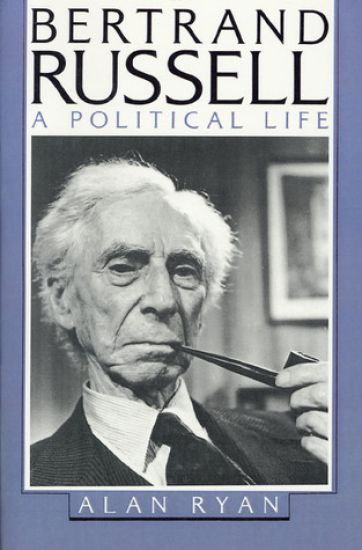
Bertrand Russell: A Political Life

Bertrand Russell: A Political Life

Alan Ryan

Farrar, Straus and Giroux
1981
nidottu
Bertrand Russell was one of the greatest logicians since Aristotle, and one of the most important philosophers of the past two hundred years. In this thorough examination, Alan Ryan tells the story of Russell's "other life" as social critic, polemical journalist, antiwar activist, sage and gadfly, dissenting from Russell's insistence that there was no connection between his philosophical interests and his political allegiances. Taking readers on an entertaining journey through a career that included two spells in jail, Ryan discusses Russell's most visible campaigns-against traditional religion, against the First World War, against nuclear weapons, and against the Vietnam War, as well as his lifelong defence of liberalism in education, politics, and relations between the sexes. Throughout he emphasizes the high spirits, the aristocratic fearlessness, and the wonderful combination of wit and intelligence that Russell brought to his political writing and actions. The result is a stimulating reconsideration of one of the great intellectual radicals of our time, a remarkable man who refused to grow old, calm down, and become respectable.
The Collected Papers of Bertrand Russell, Volume 11
This volume collects together Russell's philosophical writings during the period from 1947-68. For about half of this period Russell worked steadily at philosophy but after the publication of My Philosophical Development in 1959 he retired from academic philosophy for the second time. After that date, only the occasional philosophical piece appeared, as he was preoccupied with political writings. In this volume there are a handful of papers dated later than 1959, and all of these were certainly written by Russell himself.This volume contains Russell's writings on diverse philosophical interests, including autobiographical and self-critical papers, critiques of other philosophers and his controversial opinions on Christianity.
The Collected Papers of Bertrand Russell, Volume 14
During the First World War, Bertrand Russell was political commentator for The Tribunal, the official weekly publication of the No-Conscription Fellowship, of which Russell was Action Chairman.This volume contains many short papers from that period, which reflect Russell's immediate reponses to developments in the conflict. These documents bear witness to Russell's growing commitment to pacifism, and reveal the development of the patterns of political argument, rhetoric and activism which were to characterise his work throughout his life.
The Collected Papers of Bertrand Russell Volume 21
In Collected Papers 21 Bertrand Russell grapples with the dilemma that confronted all opponents of militarism and war in the 1930s—namely, what was the most politically and morally appropriate response to international aggression. How to Keep the Peace contains some of Russell’s best-known essays, such as the famous Auto-obituary and his treatment of The Superior Virtue of the Oppressed. Like the sixteen previous volumes in Routledge’s critical edition of Russell’s shorter writings, however, Collected Papers 21 also includes a number of unpublished manuscripts from the Bertrand Russell Archives at McMaster University. Moreover, it recovers for Russell scholars and general readers alike a rich vein of material that has previously appeared in print only in obscure or long-defunct newspaper and periodical publications.
The Collected Papers of Bertrand Russell (Volume 28)
The Collected Papers 28 signals reinvigoration of Russell the public campaigner. The title of the volume is taken from one of his most famous and eloquent short essays and probably the best known of his many broadcasts for the BBC. Man's Peril, 1954-55 not only captures the essence of Russell's thinking about nuclear weapons and the Cold War in the mid-1950s, its extraordinary impact served to jolt him into political protest once again. The activism of which we glimpse the initial stirrings in this volume continued in various guises more or less without interruption until his death. In the writings assembled in this volume, however, he is looking towards the non-aligned states and world scientific opinion as possible brokers of détente. (The volume includes Russell's famous public statement, the declaration of scientists known as 'The Russell Einstein Manifesto'.) Although Russell was becoming increasingly immersed in work for peace, this was not to the exclusion of all other interests. For example, here we find also him reminiscing about his peace campaigning during the First World War, defending 'History as an Art', and attacking the obscurantism of obscenity legislation and the opponents of birth control.
Bertrand Russell
This set offers the reader a way into the critical writings on Russell's work on Logic, Mathematics, Language, Knowledge, the World, History of Philosophy, Ethics, Education, Religion and Politics, and on his life and influence.
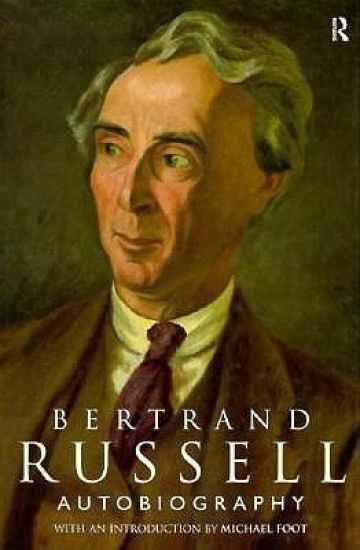
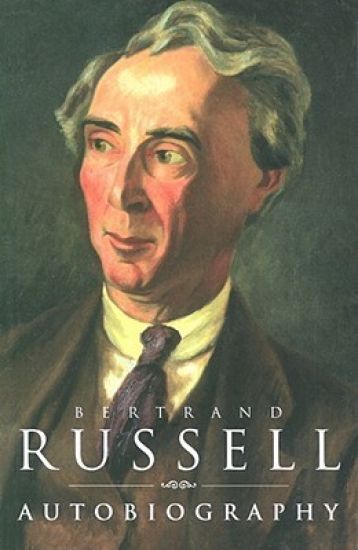
The Autobiography of Bertrand Russell

The Autobiography of Bertrand Russell

Bertrand Russell

Routledge
1998
sidottu
Bertrand Russell was born in 1872 and died in 1970. One of the most influential figures of the twentieth century, he transformed philosophy and can lay claim to being one of the greatest philosophers of all time. He was a Nobel Prize winner for Literature and was imprisoned several times as a result of his pacifism. His views on religion, education, sex, politics and many other topics, made him one of the most read and revered writers of the age. This, his autobiography, is one of the most compelling and vivid ever written. This one-volume, compact paperback edition contains an introduction by the politician and scholar, Michael Foot, which explores the status of this classic nearly 30 years after the publication of the final volume.
Bertrand Russell's Construction of the External World
First published in 2000. This is Volume III of six in the International Library of Philosophy looking at the area of Nineteenth and Twentieth Century Anglo-American Philosophy. Written in 1952, it focuses on Bertrand Russell’s Construction of the External World, which covers a wide variety of topics, attempts to answer many of the problems traditionally associated with philosophy.
The Autobiography of Bertrand Russell

The Autobiography of Bertrand Russell

Bertrand Russell

Routledge
2000
nidottu
Bertrand Russell was born in 1872 and died in 1970. One of the most influential figures of the twentieth century, he transformed philosophy and can lay claim to being one of the greatest philosophers of all time. He was a Nobel Prize winner for Literature and was imprisoned several times as a result of his pacifism. His views on religion, education, sex, politics and many other topics, made him one of the most read and revered writers of the age. This, his autobiography, is one of the most compelling and vivid ever written. This one-volume, compact paperback edition contains an introduction by the politician and scholar, Michael Foot, which explores the status of this classic nearly 30 years after the publication of the final volume.
Bertrand Russell Memorial Volume

Bertrand Russell Memorial Volume

George W Roberts

Routledge
2002
sidottu
This is Volume XXII of twenty-two in a collection on 20th Century Philosophy. Originally published in 1979, this volume attempts to assess some of the achievements of Bertrand Russell in philosophy, logic and mathematics, ethics and politics.
The Collected Papers of Bertrand Russell Volume 29
Détente or Destruction, 1955-57 continues publication of Routledge's multi-volume critical edition of Bertrand Russell's shorter writings. Between September 1955 and November 1957 Russell published some sixty-one articles, reviews, statements, contributions to books and letters to editors, over fifty of which are contained in this volume. The texts, several of them hitherto unpublished, reveal the deepening of Russell's commitment to the anti-nuclear struggle, upon which he embarked in the previous volume of Collected Papers (Man's Peril, 1954-55). Continuing with the theme of nuclear peril, this volume contains discussion of nuclear weapons, world peace, prospects for disarmament and British-Soviet friendship against the backdrop of the Cold War. One of the key papers in this volume is Russell's message to the inaugural conference of the Pugwash movement, which Russell was instrumental in launching and which became an influential, independent forum of East-West scientific cooperation and counsel on issues as an internationally agreed nuclear test-ban.In addition to the issues of war and peace, Russell, now in his eighties, continued to take an interest in a wide variety of themes. Russell not only addresses older controversies over nationalism and empire, religious belief and American civil liberties, he also confronts head-on the new and pressing matters of armed intervention in Hungary and Suez, and of the manufacture and testing of the British hydrogen bomb. This volume includes seven interviews ranging from East-West Relations after the Geneva conference to a Meeting with Russell.
Bertrand Russell Memorial Volume

Bertrand Russell Memorial Volume

George W Roberts

Routledge
2011
nidottu
This is Volume XXII of twenty-two in a collection on 20th Century Philosophy. Originally published in 1979, this volume attempts to assess some of the achievements of Bertrand Russell in philosophy, logic and mathematics, ethics and politics.
Bertrand Russell's Construction of the External World
First published in 2000. This is Volume III of six in the International Library of Philosophy looking at the area of Nineteenth and Twentieth Century Anglo-American Philosophy. Written in 1952, it focuses on Bertrand Russell’s Construction of the External World, which covers a wide variety of topics, attempts to answer many of the problems traditionally associated with philosophy.
Bertrand Russell: A Life

Bertrand Russell: A Life

Herbert Gottschalk

Routledge
2012
sidottu
Bertrand Russell’s eminence of intellect and person has long been unassailable. Besides his distinction as mathematician and philosopher, and a vast output of books, articles, lectures and talks on most aspects of the human condition, there is his continuing concern for day-to-day political issues, his championing of individual freedom and his readiness to stand for a cause to the point of imprisonment. To have distilled the essence of his ninety-odd years into this little book is itself quite an achievement. Originally published in 1962, it has been called a ‘pocket guide to greatness’ and forms a useful complement to the longer and slightly earlier study by Alan Wood’s The Passionate Sceptic.
Bertrand Russell's Theory of Knowledge

Bertrand Russell's Theory of Knowledge

Elizabeth Ramsden Eames

Routledge
2012
sidottu
When future generations come to analyze and survey twentieth-century philosophy as a whole, Bertrand Russell’s logic and theory of knowledge is assured a place of prime importance. Yet until this book was first published in 1969 no comprehensive treatment of his epistemology had appeared. Commentators on twentieth-century philosophy at the time assumed that Russell’s important contributions to the theory of knowledge were made before 1921. This book challenges that assumption and draws attention to features of Russell’s later work which were overlooked.The analysis starts with Russell’s earliest views and moves from book to book and article to article through his enormous span of writing on the problems and theory of knowledge. The changes in ideas as he developed the theory are traced, and the study culminates in a statement of his latest views. His work is seen in a continuity in which the changes were part of the development of his mature thought, and the total evaluation and interpretation clarify many of the common misunderstandings of his philosophy.This is naturally of interest to all philosophers, and for students this is the answer to inevitable questions on the nature of Russell’s ideas and their evolution.
Bertrand Russell On Education
Although scholars from many disciplines have turned their attention to Russell’s work and appraised its significance for a number of fields, and an extensive literature on him emerged, until this book, first published in 1963, no thorough study on Russell’s contribution to education – an area to which he devoted no small part of his energies – had yet appeared. The book is based on interviews with Russell as well as diligent research in his writings and the sources of his thought and will enlighten all who think seriously about education. It addresses specifically the usefulness of Russell’s thought for American educators, which was challenging as Russell dared to question traditional ends and means of education at the time.