Kirjojen hintavertailu. Mukana 11 342 296 kirjaa ja 12 kauppaa.

Kirjahaku

Etsi kirjoja tekijän nimen, kirjan nimen tai ISBN:n perusteella.

1000 tulosta hakusanalla Randall Calhoun

Asian Religions

Asian Religions

Randall L. Nadeau

John Wiley Sons Inc
2014
nidottu
ASIAN RELIGIONS “A unique introduction to Asian religions, combining the scholarly rigor of an established historian of Asian religions with the willingness to engage empathetically with the traditions and to suggest that readers do the same.”Joseph A. Adler, Kenyon College “Randall L. Nadeau has accomplished what only a few have tried, but which has been much needed in the study of religions. He has written a genuinely novel approach to the religions of Asia… This is a work that should find its way into Asian humanities, history, religion, and civilization courses.”Ronnie Littlejohn, Belmont University This all-embracing introduction to Asian religious practices and beliefs takes a unique approach; not only does it provide a complete overview of the basic tenets of the major Asian religions, but it also demonstrates how Asian spiritualities are lived and practiced, exploring the meaning and significance they hold for believers. In a series of engaging and lively chapters, the book explores the beliefs and practices of Confucianism, Taoism, Hinduism, Buddhism, and Japanese religions, including Shinto. Using a comparative approach, it highlights the contrasts between Asian and Western modes of thinking and living, and debates the influence of religion on real-world issues including work, economic growth, the environment, human rights, and gender relations. Nadeau, a leading figure in this field, takes an empathetic approach to Asian religious and cultural traditions, and considers Asian spiritualities to be viable systems of belief for today’s global citizens. Integrating exercises, activities, and an appealing mixture of examples, such as novels and biographies, this refreshing book leads readers to an enhanced understanding of the ideas and practice of Asian religions, and of their continuing relevance today.
Asian Religions

Asian Religions

Randall L. Nadeau

John Wiley Sons Inc
2014
sidottu
ASIAN RELIGIONS “A unique introduction to Asian religions, combining the scholarly rigor of an established historian of Asian religions with the willingness to engage empathetically with the traditions and to suggest that readers do the same.”Joseph A. Adler, Kenyon College “Randall L. Nadeau has accomplished what only a few have tried, but which has been much needed in the study of religions. He has written a genuinely novel approach to the religions of Asia… This is a work that should find its way into Asian humanities, history, religion, and civilization courses.”Ronnie Littlejohn, Belmont University This all-embracing introduction to Asian religious practices and beliefs takes a unique approach; not only does it provide a complete overview of the basic tenets of the major Asian religions, but it also demonstrates how Asian spiritualities are lived and practiced, exploring the meaning and significance they hold for believers. In a series of engaging and lively chapters, the book explores the beliefs and practices of Confucianism, Taoism, Hinduism, Buddhism, and Japanese religions, including Shinto. Using a comparative approach, it highlights the contrasts between Asian and Western modes of thinking and living, and debates the influence of religion on real-world issues including work, economic growth, the environment, human rights, and gender relations. Nadeau, a leading figure in this field, takes an empathetic approach to Asian religious and cultural traditions, and considers Asian spiritualities to be viable systems of belief for today’s global citizens. Integrating exercises, activities, and an appealing mixture of examples, such as novels and biographies, this refreshing book leads readers to an enhanced understanding of the ideas and practice of Asian religions, and of their continuing relevance today.
Discipline in the Secondary Classroom

Discipline in the Secondary Classroom

Randall S. Sprick; Jessica Sprick; Cristy Coughlin; Jacob Edwards

Jossey-Bass Inc.,U.S.
2021
nidottu
Improve student behavior and motivation with this comprehensive resource Discipline in the Secondary Classroom: A Positive Approach to Behavior Management, 4th Edition is an insightful treatment of the always-challenging topic of discipline in the high school classroom. The newly revised edition of the book incorporates a renewed focus on classroom management plans, handling the use and misuse of electronic devices in the classroom, and adapting instruction for a virtual classroom setting. Discipline in the Secondary Classroom discusses other issues crucial to the successful management of secondary classrooms and include: • How behavior is learned • Managing student work • Managing the use of technology and electronic devices in the classroom • Active engagement strategies for teacher-directed instruction (both the physical classroom and the virtual classroom) • Corrective strategies for misbehavior and inattention • Maintaining a Cycle of Continuous Improvement to be a better teacher each year Perfect for grade 9 to 12 classroom teachers and educational administrators—including principals, assistant principals, staff development professionals, and consultants— Discipline in the Secondary Classroom constitutes an indispensable resource for anyone aiming to achieve a civil, safe, and fair classroom environment.
R Programming for Mass Spectrometry

R Programming for Mass Spectrometry

Randall K. Julian

JOHN WILEY SONS INC
2025
sidottu
A practical guide to reproducible and high impact mass spectrometry data analysis R Programming for Mass Spectrometry teaches a rigorous and detailed approach to analyzing mass spectrometry data using the R programming language. It emphasizes reproducible research practices and transparent data workflows and is designed for analytical chemists, biostatisticians, and data scientists working with mass spectrometry. Readers will find specific algorithms and reproducible examples that address common challenges in mass spectrometry alongside example code and outputs. Each chapter provides practical guidance on statistical summaries, spectral search, chromatographic data processing, and machine learning for mass spectrometry. Key topics include: Comprehensive data analysis using the Tidyverse in combination with Bioconductor, a widely used software project for the analysis of biological dataProcessing chromatographic peaks, peak detection, and quality control in mass spectrometry dataApplying machine learning techniques, using Tidymodels for supervised and unsupervised learning, as well as for feature engineering and selection, providing modern approaches to data-driven insightsMethods for producing reproducible, publication-ready reports and web pages using RMarkdown R Programming for Mass Spectrometry is an indispensable guide for researchers, instructors, and students. It provides modern tools and methodologies for comprehensive data analysis. With a companion website that includes code and example datasets, it serves as both a practical guide and a valuable resource for promoting reproducible research in mass spectrometry.
Youth Gangs in American Society

Youth Gangs in American Society

Randall Shelden; Sharon Tracy; William Brown

Wadsworth Publishing Co Inc
2012
nidottu
This comprehensive and widely respected survey of the literature on gangs and gang activities in America includes theoretical perspectives on why gangs exist, gang typologies, descriptions of gang activities, and various intervention strategies for dealing with gangs.
The Writing Center as Cultural and Interdisciplinary Contact Zone
Writing centers are complex. They are places of scholarly work, spaces of interdisciplinary interaction, and programs of service, among other things. With this complexity in mind, this book theorizes writing center studies as a function of its own rhetorical and discursive practices. In other words, the things we do and make define who we are and what we value. Through a comprehensive methodological framework grounded in critical discourse analysis, this book takes a closer look at prominent writing center discourses by temporarily shifting attention away from the stakeholders, work, locations, and scholarship of the discipline, and onto things—the artifacts and networks that make up the discipline. Through this approach, we can see the ways the discipline reinforces, challenges, reproduces, and subverts structures of institutional power. As a result, writing center studies can be seen a vast ecosystem of interconnectivity and intertextuality.
Environmental Science in Building

Environmental Science in Building

Randall McMullan

Red Globe Press
2017
nidottu
This popular textbook covers how the built environment and the management of energy relate to the quality of human living-conditions and the environmental performance of buildings. It is the key introductory text for understanding the principles and theories of the environmental science behind construction, and the only text on the market to provide the basic scientific principles of such a broad range of topics. The text covers a range of areas in the field, including climate change, energy management, and sustainability in construction, with an important focus on contemporary environmental topics such as carbon, lifetime performance and rating schemes. The author is known for his extremely clear, finely crafted text, and the book offers a wealth of excellent worked examples. This text is designed to be useful, at all levels, to students and practitioners of architecture, construction studies, building services, surveying, and environmental science. New to this Edition: - Expansion upon the environmental narrative with coverage of contemporary topics such as carbon, lifetime performance and rating schemes - Additional figures, images and sub-topics in chapters - An updated section on building services to give a broader understanding of modern building services equipment options, specifications and performance implications - Inclusion of a new section which offers commentary on the future of environmental science in building
Minding Spirituality

Minding Spirituality

Randall Lehmann Sorenson

Routledge
2014
nidottu
In Minding Spirituality, Randall Sorenson, a clinical psychoanalyst, "invites us to take an interest in our patients' spirituality that is respectful but not diffident, curious but not reductionistic, welcoming but not indoctrinating." Out of this invitation emerges a fascinating and broadening investigation of how contemporary psychoanalysis can "mind" spirituality in the threefold sense of being bothered by it, of attending to it, and of cultivating it. Both the questions Sorenson asks, and the answers he begins to formulate, reflect progressive changes in the psychoanalytic understanding of spirituality. Sorenson begins by quantitatively analyzing 75 years of journal literature and documenting how psychoanalytic approaches to religious and spiritual experiences have evolved far beyond the "wholesale pathologizing of religion" prevalent during Freud's lifetime. Then, in successive chapters, he explores and illustrates the kind of clinical technique appropriate to the modern treatment of religious issues. And the issue of technique is consequential in more than one way -- Sorenson presents evidence that how analysts work clinically has a greater impact on their patients' spirituality than the patients' own parents have. Sorenson brings an array of disciplinary perspectives to bear in examining the multiple relationships among psychoanalysis, religion, and spirituality. Empirical analysis, psychoanalytic history, sociology of religion, comparative theory, and sustained clinical interpretation all enter into his effort to open a dialogue that is clinically relevant. Turning traditional critiques of psychoanalytic training on their head, he argues that psychoanalytic education has much to learn from models of contemporary theological education. Beautifully crafted and engagingly written, Minding Spirituality not only invites interdisciplinary dialogue but, via Sorenson's wide-ranging and passionately open-minded scholarship, exemplifies it.
Women Writers in Renaissance England
Of all the new developments in literary theory, feminism has proved to be the most widely influential, leading to an expansion of the traditional English canon in all periods of study. This book aims to make the work of Renaissance women writers in English better known to general and academic readers so as to strengthen the case for their future inclusion in the Renaissance literary canon. This lively book surveys women writers in the sixteenth century and early seventeenth centuries. Its selection is vast, historically representative, and original, taking examples from twenty different, relatively unknown authors in all genres of writing, including poetry, fiction, religious works, letters and journals, translation, and books on childcare. It establishes new contexts for the debate about women as writers within the period and suggests potential intertextual connections with works by well-known male authors of the same time. Individual authors and works are given concise introductions, with both modern and historical critical analysis, setting them in a theoretical and historicised context. All texts are made readily accessible through modern spelling and punctuation, on-the-page annotation and headnotes. The substantial, up-to-date bibliography provides a source for further study and research.
Music and Medieval Manuscripts

Music and Medieval Manuscripts

Randall Rosenfeld

Routledge
2016
nidottu
The interdisciplinary approach of Music and Medieval Manuscripts is modeled on the work of the scholar to whom the book is dedicated. Professor Andrew Hughes is recognized internationally for his work on medieval manuscripts, combining the areas of paleography, performance, liturgy and music. All these areas of research are represented in this collection with an emphasis on the continuity between the physical characteristics of medieval manuscripts and their different uses. Albert Derolez provides a landmark and controversial essay on the origins of pre-humanistic script, while Margaret Bent proposes a new interpretation of a famous passage from a fifteenth-century poem by Martin Le Franc. Timothy McGee contributes an innovative essay on late-medieval music, text and rhetoric. David Hiley discusses musical changes and variation in the offices of a major saint’s feast, and Craig Wright presents an original study of Guillaume Dufay. Jan Ziolkowski treats the topic of neumed classics, an under-explored aspect of the history of medieval pedagogy and the transmission of texts. The essays that comprise this volume offer a unique focus on medieval manuscripts from a wide range of perspectives, and will appeal to musicologists and medievalists alike.
Understanding Statistical Concepts Using S-plus

Understanding Statistical Concepts Using S-plus

Randall E. Schumacker; Allen Akers

TAYLOR FRANCIS LTD
2023
sidottu
Written as a supplemental text for an introductory or intermediate statistics course, this book is organized along the lines of many popular statistics texts. The chapters provide a good conceptual understanding of basic statistics and include exercises that use S-PLUS simulation programs. Each chapter lists a set of objectives and a summary. The book offers a rich insight into how probability has shaped statistical procedures in the behavioral sciences, as well as a brief history behind the creation of various statistics. Computational skills are kept to a minimum by including S-PLUS programs that run the exercises in the chapters. Students are not required to master the writing of S-PLUS programs, but explanations of how the programs work and program output are included in each chapter. S-PLUS is an advanced statistical package that has an extensive library of functions, which offer flexibility in writing customized routines. The S-PLUS functions provide the capability of programming object and dialog windows, which are commonly used in Windows software applications. The S-PLUS program also contains pull-down menus for the statistical analysis of data. A ZIP file containing programs that work in S-PLUS 6.2 for use with this book is available for download from http://www.psypress.com/resources/9780805836233.zip - please note that these scripts will only run in S-PLUS 6.2 and not later versions due to changes in the programming language syntax.
German Façade Design

German Façade Design

Randall Ott

Routledge
2017
nidottu
German architecture prior to the modern period has received less systemic, analytical study than that of Italy, France, and Britain. Scholarly discussion of broad traditions or continuities within Germanic or Central European façade design is even sparser. Baroque era studies of the region mostly devote themselves to isolated architects, monuments, or movements. Modernism's advent decisively changed this: Germanic architecture enjoyed sudden ascendancy. Yet, even so, study specifically of that region's façades still lagged – nothing compares to the dozens of treatments of Le Corbusier's façade systems, for example, and how these juxtapose with French neoclassical or Italian Renaissance methods. Given the paucity of multi-period studies, one can be forgiven for believing Germany's effervescence of radical, modern works seems unprecedented. This book takes up these multiple quandaries. It identifies and documents a previously unrecognized compositional tradition - characterized here as the 'screen façade' – and posits it as a counter-narrative critiquing the essentialist, 'authentic' canon currently dominant in Western architectural history. By crossing evenly over the dividing line between the historical and modern periods, it offers valuable insights on indigenous roots underlying some aspects of Germany's invigorating early twentieth-century architectural developments. The book chronologically examines 400 years of closely related facades, concentrated in Germany but also found in Austria, the Czech Republic, German-speaking Switzerland, and nearby areas of Central Europe. While nearly 75 buildings are mentioned and illustrated, a dozen are given extensive analysis and the book focuses on the works of three architects – Schinkel, Behrens and Mies. Relationships between examples of these three architects' façades far transcend mere homage amongst masters. Glimmers of the system they eventually codify are apparent as early as at Heidelberg Castle in 1559 and Nürnberg's Rathaus in 1622. The book argues that in Germany, northern Gothic affinities for bisection, intense repetition and rote aggregation intersected with southern Classical affinities for symmetry, hierarchy and centrality, thereby spawning a unique hybrid product – the screen. Instead of graphic formality, this study is guided by on-site perceptions, propositional contrasts, means of approach, interpretive conflicts and emotion and it relates the design of these façades to concepts proposed by contemporary philosophers including Novalis, Hegel, Nietzsche, Freud, Adorno, and, most importantly, Gadamer on hermeneutics.
The Quantum of Explanation

The Quantum of Explanation

Randall E. Auxier; Gary L. Herstein

Routledge
2017
sidottu
The Quantum of Explanation advances a bold new theory of how explanation ought to be understood in philosophical and cosmological inquiries. Using a complete interpretation of Alfred North Whitehead’s philosophical and mathematical writings and an interpretive structure that is essentially new, Auxier and Herstein argue that Whitehead has never been properly understood, nor has the depth and breadth of his contribution to the human search for knowledge been assimilated by his successors. This important book effectively applies Whitehead’s philosophy to problems in the interpretation of science, empirical knowledge, and nature. It develops a new account of philosophical naturalism that will contribute to the current naturalism debate in both Analytic and Continental philosophy. Auxier and Herstein also draw attention to some of the most important differences between the process theology tradition and Whitehead’s thought, arguing in favor of a Whiteheadian naturalism that is more or less independent of theological concerns. This book offers a clear and comprehensive introduction to Whitehead’s philosophy and is an essential resource for students and scholars interested in American philosophy, the philosophy of mathematics and physics, and issues associated with naturalism, explanation and radical empiricism.
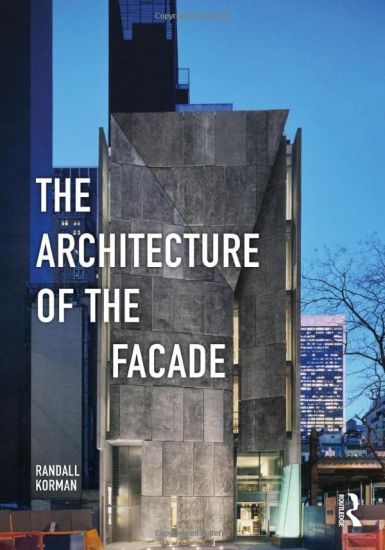
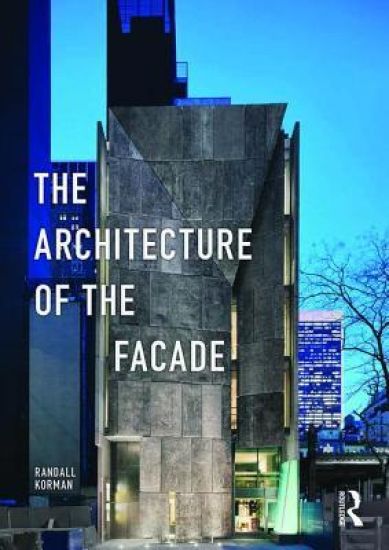
The Architecture of the Facade

The Architecture of the Facade

Randall Korman

Routledge
2022
sidottu
The Architecture of the Facade provides a comprehensive study of the facade as both a physical and cultural artifact, highlighting its significance as a critical component of the civic realm and arguing for the restoration of the art of the facade as both a subject of study within academia and an aspiration within the profession at large.As the principal surface of mediation, contextualization, and representation, the facade carries the lion’s share of responsibility for containing the internal environment and confronting the outer world. And yet, in recent decades, the very question of what exactly a facade is has been raised by the dramatic changes in building technology, advances of parametric design, and the ubiquity of autonomous buildings. The Architecture of the Facade addresses these and other related issues. The book is organized into 12 chapters, with each chapter focusing on a particular aspect of the phenomenon of the facade such as those of wall, the frame, transparency, and the role of the facade in civic space. Korman also discusses proportional systems, the language of composition, the role of precedent, the importance of context, and much more. Over 350 photos and diagrams provide readers with a variety of examples of artful facades throughout history. Online teaching resources that accompany this book include a course syllabus, a glossary, and a Pinterest tack board of facades.This book will be of great interest to students in architecture studios as well as instructors and professional architects interested in facade design.
The Architecture of the Facade

The Architecture of the Facade

Randall Korman

Routledge
2022
nidottu
The Architecture of the Facade provides a comprehensive study of the facade as both a physical and cultural artifact, highlighting its significance as a critical component of the civic realm and arguing for the restoration of the art of the facade as both a subject of study within academia and an aspiration within the profession at large.As the principal surface of mediation, contextualization, and representation, the facade carries the lion’s share of responsibility for containing the internal environment and confronting the outer world. And yet, in recent decades, the very question of what exactly a facade is has been raised by the dramatic changes in building technology, advances of parametric design, and the ubiquity of autonomous buildings. The Architecture of the Facade addresses these and other related issues. The book is organized into 12 chapters, with each chapter focusing on a particular aspect of the phenomenon of the facade such as those of wall, the frame, transparency, and the role of the facade in civic space. Korman also discusses proportional systems, the language of composition, the role of precedent, the importance of context, and much more. Over 350 photos and diagrams provide readers with a variety of examples of artful facades throughout history. Online teaching resources that accompany this book include a course syllabus, a glossary, and a Pinterest tack board of facades.This book will be of great interest to students in architecture studios as well as instructors and professional architects interested in facade design.
Producing Prosperity

Producing Prosperity

Randall Holcombe

Routledge
2015
nidottu
The substantial prosperity that characterizes market economies at the beginning of the twenty-first century is relatively recent in human history. Prior to the Industrial Revolution, economic progress was so slow that people would not have been able to recognize it in their lifetimes, whereas today, economic progress is so much a part of people’s lives that they take it for granted. In this new volume, Randall G. Holcombe argues that economic analysis, as it developed through the twentieth century, relies heavily on concepts of economic equilibrium, and is not descriptive of the dynamic real-world economy that is characterized by economic progress. Even in dynamic settings, economic models focus on income growth, leaving out the entrepreneurial forces that generate economic progress, resulting in the introduction of new goods and services and new production processes. Economic analysis focuses on the forces that lead to an economic equilibrium, not the forces that produce prosperity.This characterization of economic analysis describes a substantial component of economics as it has developed over the past century. However, there are also economists who have analyzed the factors that lead to an entrepreneurial and innovative economy, generating progress rather than equilibrium. This volume does not question the value of past research, but argues that, looking ahead, economics should build on its past to focus on factors that create an entrepreneurial and innovative economy that is characterized by progress and prosperity. This would make economic analysis more consistent with the remarkable progress and prosperity that characterizes the modern economy. This volume lays out a framework for economic analysis that consistently incorporates the real-world factors that produce prosperity.
Case Analyses for Abnormal Psychology

Case Analyses for Abnormal Psychology

Randall E. Osborne; Joan Esterline Lafuze; David V. Perkins

Routledge
2016
sidottu
Case Analyses for Abnormal Psychology, Second Edition uses case studies to explore the etiology, biology, and dynamics of psychiatric disorders in the DSM-5. Readers will learn about the new classifications and treatments for disorders while simultaneously reading the personal history of each consumer both before and during the development of each case. Every case ends with a section on the particular disorder presented, as viewed from a biological perspective. This updated edition bridges advances in abnormal psychology and neuroscience in understanding mental illness.
Case Analyses for Abnormal Psychology

Case Analyses for Abnormal Psychology

Randall E. Osborne; Joan Esterline Lafuze; David V. Perkins

Routledge
2016
nidottu
Case Analyses for Abnormal Psychology, Second Edition uses case studies to explore the etiology, biology, and dynamics of psychiatric disorders in the DSM-5. Readers will learn about the new classifications and treatments for disorders while simultaneously reading the personal history of each consumer both before and during the development of each case. Every case ends with a section on the particular disorder presented, as viewed from a biological perspective. This updated edition bridges advances in abnormal psychology and neuroscience in understanding mental illness.
At a Theater or Drive-in Near You

At a Theater or Drive-in Near You

Randall Clark

Routledge
2016
nidottu
Millions of Americans have been thrilled, scared, titillated, and shocked by exploitation movies, low budget films with many scenes of sex, violence, and other potentially lurid elements. The term derives from the fact that promoters of such films exploit the contents in advertising that plays up the sexual or violent aspects of the films. This is the first comprehensive study of the American exploitation film to be published. It discusses five distinct genres: the teen movie, the sexploitation film, the martial arts movie, the blaxploitation film and the lawbreaker picture. Contained within these genres are many popular American film types, including beach movies, biker pictures, and women's prison movies. The study provides a history and sociopolitical analysis of each genre, focusing on significant films in those genres. It also discusses the economics of exploitation films and their place in the motion picture industry, the development of drive-in theaters, the significance of the teenage audience, and the effect of the videocassette. Finally, the book applies major film and cultural theories to establish an aesthetic for evaluating the exploitation film and to explore the relationship between film and audience.