Kirjojen hintavertailu. Mukana 11 244 527 kirjaa ja 12 kauppaa.

Kirjahaku

Etsi kirjoja tekijän nimen, kirjan nimen tai ISBN:n perusteella.

1000 tulosta hakusanalla Robert Cornforth

Robert Lowell - American Writers 92

Robert Lowell - American Writers 92

Martin Jay

UNIVERSITY OF MINNESOTA PRESS
1970
nidottu
Robert Lowell - American Writers 92 was first published in 1970. Minnesota Archive Editions uses digital technology to make long-unavailable books once again accessible, and are published unaltered from the original University of Minnesota Press editions.
Robert Altman's Subliminal Reality

Robert Altman's Subliminal Reality

Robert T. Self

University of Minnesota Press
2002
nidottu
The most complete and compelling analysis available of Altman’s filmsWith his complex and unconventional films, Robert Altman often draws an impassioned response from critics but bafflement and indifference from the general public. Some audiences have dismissed his movies as insignificant, unsatisfying, and unreadable. Ironically, Altman might agree: he makes films in order to challenge filmgoers’s expectations of straightforward narratives and easily understood endings. In Robert Altman’s Subliminal Reality, Robert T. Self sheds light on Altman’s work and provides the most comprehensive analysis of his films to date. With close readings of classics like MASH, McCabe and Mrs. Miller, and Nashville, as well as more recent films like The Player, Short Cuts, and Cookie’s Fortune, Self asserts the value of Altman’s work not only to film theory and the entertainment industry but to American culture itself. In his analysis, Self identifies Altman’s films particularly as they address issues of form, identity, and industry. He explains how Altman critiques moviemaking forms by using an open, fragmented mode of storytelling and by turning conventional Hollywood genres inside out. He examines Altman’s characterization of social and individual identity as fragile and fragmentary and his depiction of antiheroic characters debilitated by their socially constructed gender roles. Finally, Self shows how Altman challenges the entertainment industry itself, questioning its methods and motives and critiquing its role in our cultural alienation. Self frames his study of Altman’s work with a discussion of the director’s efforts to create a "subliminal reality" in his narratives-to touch audiences on an unconscious level and to recognize the unspoken, and unspeakable, dimensions in human interactions. According to Self, this striving for "subliminal reality" makes Altman’s films not only exemplary of the potential of art cinema narration but instrumental in keeping such narrative alive.
Robert Bly in This World

Robert Bly in This World

University of Minnesota Press
2011
sidottu
In 1958, a powerful new voice in American poetry emerged from the windswept prairie farmland of western Minnesota. Beginning with publication of The Fifties, “a magazine of poetry, translation and general opinion,” Robert Bly’s transformative poetry, translations, essays, and poetry readings rolled across the country like an invigorating prairie storm. In his eighty-third year, to celebrate acquisition of his archives, the Elmer L. Andersen Library at the University of Minnesota sponsored a major conference, Robert Bly in This World. This is the record of that historic event. Scholars and authors from America and England presented papers on Bly’s poetry, translations, criticism, mythopoetic storytelling, and other major achievements, including his annual Great Mother and Minnesota Men’s conferences. A trip to Madison, Minnesota, where Bly’s writing studio has been restored and preserved on the Lac Qui Parle County fairgrounds, is also chronicled here, plus intimate appreciations by Bly’s friends and admirers Coleman Barks, Donald Hall, Jane Hirshfield, Lewis Hyde, and others. A vintage documentary on Bly, A Man Writes to a Part of Himself, screened at the conference, is included as a DVD in a supplement to the book. In Robert Bly’s long career as a poet and translator, he has authored more than forty volumes. His pioneering prose explorations of ancient stories include the international bestseller Iron John. His latest collection of poems, Talking into the Ear of a Donkey, was released in 2011.
Major Robert Farmar of Mobile

Major Robert Farmar of Mobile

Robert Rea

THE UNIVERSITY OF ALABAMA PRESS
2005
nidottu
This book is about the flamboyant military career of a colonist loyal to the British crown before the Revolution. An engaging biography [and] a colourful tale...Robert Farmar, a son of New Jersey, used his position among that colony's elite to secure a commission as a captain in the British Army during the War of Jenkins' Ear and King George's War, serving in the unsuccessful assaults at Cartegena, Cuba, and Panama and then in the disaster at Fontenoy in Flanders and in the reversals at Rocoux and Laffeldt...During the Seven Years' War he participated in the capture of Havana.
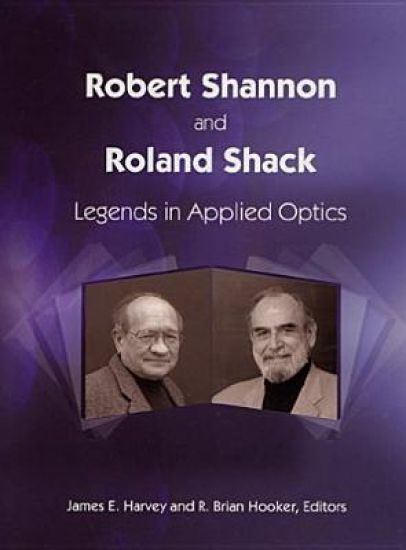
Robert Shannon and Roland Shack
This tribute volume honors Robert Shannon and Roland Shack, two icons in the world of applied optics. It contains technical and nontechnical papers by the honorees' former students and colleagues and also a collection of previously published milestone papers authored by them or their former students.
Robert Stafford of Cumberland Island

Robert Stafford of Cumberland Island

Mary R. Bullard

University of Georgia Press
1995
pokkari
Robert Stafford of Cumberland Island offers a rare glimpse into the life and times of a nineteenth-century planter on one of Georgia's Sea Islands. Born poor, Robert Stafford (1790-1877) became the leading planter on his native Cumberland Island. Specializing in the highly valued long staple variety of cotton, he claimed among his assets more than 8,000 acres and 350 slaves.Mary R. Bullard recounts Stafford's life in the context of how events from the Federalist period to the Civil War to Reconstruction affected Sea Island planters. As she discusses Stafford's associations with other planters, his business dealings (which included banking and railroad investments), and the day-to-day operation of his plantation, Bullard also imparts a wealth of information about cotton farming methods, plantation life and material culture, and the geography and natural history of Cumberland Island.Stafford's career was fairly typical for his time and place; his personal life was not. He never married, but fathered six children by Elizabeth Bernardey, a mulatto slave nurse. Bullard's discussion of Stafford's decision to move his family to Groton, Connecticut—and freedom—before the Civil War illuminates the complex interplay between southern notions of personal honor, the staunch independent-mindedness of Sea Island planters, and the practice and theory of racial separation.In her afterword to the Brown Thrasher edition, Bullard presents recently uncovered information about a second extralegal family of Robert Stafford as well as additional information about Elizabeth Bernardey's children and the trust funds Stafford provided for them.
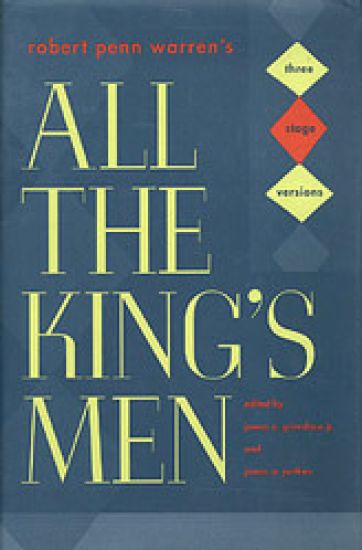
Robert Penn Warren's ""All the King's Men

Robert Penn Warren's ""All the King's Men

Robert Penn Warren; James A. Grimshaw Jr

University of Georgia Press
2000
sidottu
Robert Penn Warren's 1946 Pulitzer Prize-winning novel All the King's Men is one of the undisputed classics of American literature. Fifty years after the novel's publication, Warren's characters still stand as powerful representations of the moral dilemmas faced by individuals in positions of power. All the King's Men had its genesis in Warren's stage play Proud Flesh, unpublished in his lifetime. He also wrote a subsequent unpublished play titled Willie Stark: His Rise and Fall and a later dramatic version of the novel that shared the title All the King's Men. This volume is the first to collect all three dramatic texts and to publish Proud Flesh and Willie Stark. Proud Flesh is particularly fascinating for what it reveals about the development of All the King's Men and Warren's changing perceptions of its characters and themes. The other plays, as post-novel writings, provide a forum for Warren to clarify his intentions in the novel. The editors' introduction to this collection reviews the composition history of the works and their relationship to the novel and to each other. The new perspectives on Warren's writing presented in Robert Penn Warren's "All the King's Men": Three Stage Versions provide a glimpse into a creative mind struggling with a compelling story and offer readers another way of looking at this American classic. This book is an essential reference in Warren studies that will give students of All the King's Men another context from which to consider Warren's novel.
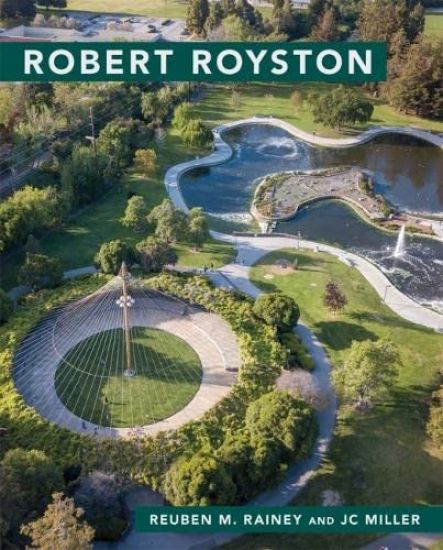
Robert Royston

Robert Royston

Reuben M. Rainey; JC Miller

University of Georgia Press
2020
nidottu
Over nearly six decades of practice, Robert Royston (1918–2008) shaped the postwar Bay Area landscape with visionary designs for public spaces. Early in his career, Royston conceived of the "landscape matrix," a system of interconnected parks, plazas, and parkways that he hoped could bring order and amenity to rapidly developing suburbs. The idea would inform his work on more than two thousand projects as diverse as school grounds, new towns, transit corridors, and housing tracts.As an apprentice of Thomas Church, Royston gained experience with residential gardens that influenced his early designs for public parks. At a time when neighborhood parks were typically limited to playing fields and stock playground equipment, Royston created imaginative facilities for the American family, offering activities for people of all ages.Royston, Hanamoto & Mayes, founded in 1958, grew to become one of the nation's most influential corporate firms. With his collaborative approach, Royston designed landscapes that set a high standard of inclusivity and environmental awareness. In addition to the many beloved places he created, his perceptive humanism, which passed down to his students, is Royston's enduring legacy.
The Prose Alexander of Robert Thornton

The Prose Alexander of Robert Thornton

Robert Thornton

Peter Lang Publishing Inc
1992
sidottu
Medieval scribes often treated the works that they copied as -living works- which could not be ascribed to a single author and were, therefore, static. These scribal editors appropriated and, in rewriting, dismembered the original textual body. They reshaped these texts in their own image. In an attempt to avoid the perpetuation of such 'Frankentexts, ' Dr. Chappell's edition of Robert Thornton's prose "Alexander" regenerates the scribal artifact with little emendation, modernization, or other imposition on the manuscript text. At the same time, this edition offers an interpretation in the form of a Modern English translation so that Robert Thornton's text might be accessible to a more diverse audience."
The Complete Works of Robert Browning, Volume I

The Complete Works of Robert Browning, Volume I

Robert Browning

Ohio University Press
1969
sidottu
In seventeen volumes, copublished with Baylor University, this acclaimed series features annotated texts of all of Robert Browning's known writing. The series encompasses autobiography as well as influences bearing on Browning's life and career and aspects of Victorian thought and culture. Volume I contains two dramatic poems, Pauline; A Fragment of a Confession and Paracelsus, along with a sonnet, "Eyes Calm Beside Thee." Pauline was written in 1832 and published in March 1833, London: Saunders and Otley, Conduit Street. Browning's principal source material for Paracelsus was Frederick Bitiskius's edition of the works of Paracelsus, the early Renaissance alchemist, mystic, and physician; as well as the article on Paracelsus in the Biographie Universelle. E. D. H. Johnson wrote that in Paracelsus, "Browning first attacks the problem of communication, while still insisting on the primacy of the intuitions over the rational intellect. Paracelsus is a study of intellectual pride and its humbling." As always in this acclaimed series, a complete record of textual variants is provided, as well as extensive explanatory notes.
The Complete Works of Robert Browning, Volume II

The Complete Works of Robert Browning, Volume II

Robert Browning

Ohio University Press
1971
sidottu
In seventeen volumes, copublished with Baylor University, this acclaimed series features annotated texts of all of Robert Browning's known writing. The series encompasses autobiography as well as influences bearing on Browning's life and career and aspects of Victorian thought and culture. Volume II contains Browning's play, Strafford: An Historical Tragedy (1837), and the long poem, Sordello (1840). Strafford was Browning's first play, based on the tragic life of Thomas Wentworth, Earl of Strafford. The editors note that the play had only four performances, "undoubtedly due… to its esoteric subject and bad acting." Sordello is a fictionalized version of the life of Sordello da Goito, a 13th century Italian troubadour. The poem itself was famously known for being "difficult." As always in this acclaimed series, a complete record of textual variants is provided, as well as extensive explanatory notes.
The Complete Works of Robert Browning, Volume III

The Complete Works of Robert Browning, Volume III

Robert Browning

Ohio University Press
1972
sidottu
In seventeen volumes, copublished with Baylor University, this acclaimed series features annotated texts of all of Robert Browning's known writing. The series encompasses autobiography as well as influences bearing on Browning's life and career and aspects of Victorian thought and culture. Volume III contains Browning's dramatic piece, Pippa Passes (1841), which Arthur Symons said was "Browning's most perfect work"; another play King Victor and King Charles; A Tragedy, which Browning described as "the first artistic consequence of what Voltaire termed 'a terrible event without consequences'"; the "Essay on Chatterton," which appeared anonymously in the Foreign Quarterly Review in July, 1842; the play The Return of the Druses: A Tragedy (1843); and the short pieces of Dramatic Lyrics, which contain some of Browning's finest and most popular works such as "My Last Duchess," "The Soliloquy of the Spanish Cloister," and "The Pied Piper of Hamelin." As always in this acclaimed series, a complete record of textual variants is provided, as well as extensive explanatory notes.
The Complete Works of Robert Browning, Volume VII

The Complete Works of Robert Browning, Volume VII

Robert Browning

Ohio University Press
1985
sidottu
The first complete edition of the works of Robert Browning with variant readings and annotations contains: 1. The entire contents of the first editions of Browning's work; 2. All prefaces and dedications which Browning wrote for his own works and for those of Elizabeth Barrett Browning and others; 3. The two prose essays: The Essay on Chatterton and The Essay on Shelley; 4. The front matter and tables of contents of each of the collected editions (1849, 1863, 1865, 1868, 1888–1889) which Browning himself saw through the press; 5 Poems by Browning published during his lifetime but not collected by him; 9. Poems not published during Browning's lifetime which have come to light since his death; 7. John Forster's Thomas Wentworth, Earl of Strafford to which Browning contributed significantly, though to what precise extent has not been determined. The edition provides a full apparatus, including variant readings and annotations.
Robert Browning's Rondures Brave

Robert Browning's Rondures Brave

Michael Bright

Ohio University Press
1995
sidottu
Browning's Fra Lippo Lippi says that we may pass things a hundred times and never see them. One thing that Browning's readers have passed without seeing, or at least without remarking upon, is the circular conclusion in so many of his poems. Some sixty poems (almost a third of them) have such conclusions. These sixty span his entire career and include both well-known and neglected poems. The circular conclusion is so called because it returns to the introduction — circles back round to it — by repeating something from the introduction. Although in principle this rhetorical device is quite simple, in practice Browning works many and complex variations on it. Also, by incorporating this repeated words or phrases within the body of the poems, he uses them to make structural divisions. And above all, by selecting for repetition key words or phrases, he indicates central themes in the poems. An analysis of repetition in the poems allows us to see more clearly their circularity, the divisions of the circles, and their themes. It also brings to light thematic dynamism of the poems, some of them concluding with a restatement of the theme set forth in the repetition to trend at a point beyond the original idea, some reversing in their conclusions the statement made in the introduction, and some restating at the end the introductory statement after two reversals. Finally, by focusing on the introductions and conclusions of the poems, we clarify the dramatic situations, which are ordinarily established in these two places, and come to see their relationships with the monologues they encircle. All this we see, not with the optics of modern literary theory, but simply by looking at Browning's work with the same careful attention Fra Lippo Lippi pays to God's creation.
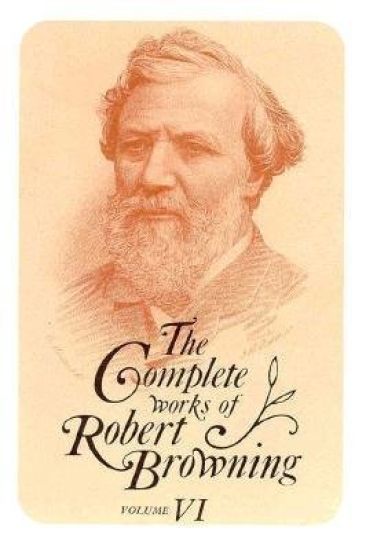
The Complete Works of Robert Browning, Volume VI

The Complete Works of Robert Browning, Volume VI

Robert Browning

Ohio University Press
1996
sidottu
In seventeen volumes, copublished with Baylor University, this acclaimed series features annotated texts of all of Robert Browning's known writing. The series encompasses autobiography as well as influences bearing on Browning's life and career and aspects of Victorian thought and culture. The sixth in the projected seventeen-volume work, this volume covers the second half of Men and Women (1855), perhaps Browning's most famous collection, and the entirety of Dramatis Personae (1864), the first book Browning produced after the death of Elizabeth Barrett Browning in 1861. Men and Women II contains several great dramatic poems on which Browning's reputation still depends, including "Andrea del Sarto," "Saul," and "Cleon." It also includes the more intimate and personal works "The Guardian Angel" and "One Word More," as well as the mysterious "Women and Roses." The Brownings' shared interests in Renaissance art and nineteenth-century Italian politics inform the challenging "Old Pictures in Florence." The publication of Dramatis Personae was a key event in the rapid rise of Browning's fame in the 1860s, though the collection is marked by a welter of conflicting impulses that arose after the poet left Italy and his married life behind. The classic monologues "Rabbi Ben Ezra" and "Abt Vogler" are here, but beside them Browning placed the nearly surreal "Caliban upon Setebos" and the achingly self-regarding "James Lee's Wife," one of the volume's handful of dramatic lyrics about betrayed or failed relationships. Also included are "A Death in the Desert," which contributed to the intense Victorian debate about scriptural validity and religious authority; and "Mr Sludge, 'The Medium,'" Browning's ferocious, pyrotechnic exposé of a spiritualist fraud. As always in this acclaimed series, a complete record of textual variants is provided, as well as extensive explanatory notes.