The God of the Left Hemisphere explores the remarkable connections between the activities and functions of the human brain that writer William Blake termed 'Urizen' and the powerful complex of rationalising and ordering processes which modern neuroscience identifies as 'left hemisphere' brain activity. The book argues that Blake's profound understanding of the human brain is finding surprising corroboration in recent neuroscientific discoveries, such as those of the influential Harvard neuro-anatomist Jill Bolte Taylor, and it explores Blake's provocative supposition that the emergence of these rationalising, law-making, and 'limiting' activities within the human brain has been recorded in the earliest Creation texts, such as the Hebrew Bible, Plato's Timaeus, and the Norse sagas. Blake's prescient insight into the nature and origins of this dominant force within the brain allows him to radically reinterpret the psychological basis of the entity usually referred to in these texts as 'God'. The book draws in particular on the work of Bolte Taylor, whose study in this area is having a profound impact on how we understand mental activity and processes.
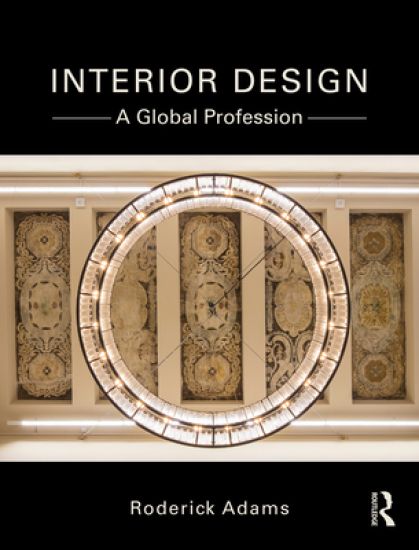
As the globe shrinks and the concept of distance diminishes, this text challenges the current status quo by identifying the cohesions and specialisations of design communities across the continents. It sets out an international spatial design landscape, identifying and contouring global design practice and design hotspots from a range of case studies, interviews and design practice perspectives. Using a range of interior environments, the chapters link the origins, trends and perceptions of the interior to create new insight into trans-global design. The book expands, but also coheres the interior design discipline to ensure the subject continues to grow, develop and influence the inhabitations of the world. The book features a wealth of pedagogical elements including: Beautifully designed with over 100 full colour illustrations, photographs and examples of design work Maps and diagrams which highlight hotspots of design across the globe, providing strong graphic information Interview panels featuring professional insights from designers across the globe ‘Employability’ boxes, providing a good tips guide for students gaining employment across the globe ‘International Dimension’ boxes which strengthen the scholarship of studying interior design in a globalised way ‘Design Oddities’ box which brings into focus any new or contextual facts that help contextualise the global interior.
As the globe shrinks and the concept of distance diminishes, this text challenges the current status quo by identifying the cohesions and specialisations of design communities across the continents. It sets out an international spatial design landscape, identifying and contouring global design practice and design hotspots from a range of case studies, interviews and design practice perspectives. Using a range of interior environments, the chapters link the origins, trends and perceptions of the interior to create new insight into trans-global design. The book expands, but also coheres the interior design discipline to ensure the subject continues to grow, develop and influence the inhabitations of the world. The book features a wealth of pedagogical elements including: Beautifully designed with over 100 full colour illustrations, photographs and examples of design work Maps and diagrams which highlight hotspots of design across the globe, providing strong graphic information Interview panels featuring professional insights from designers across the globe ‘Employability’ boxes, providing a good tips guide for students gaining employment across the globe ‘International Dimension’ boxes which strengthen the scholarship of studying interior design in a globalised way ‘Design Oddities’ box which brings into focus any new or contextual facts that help contextualise the global interior.
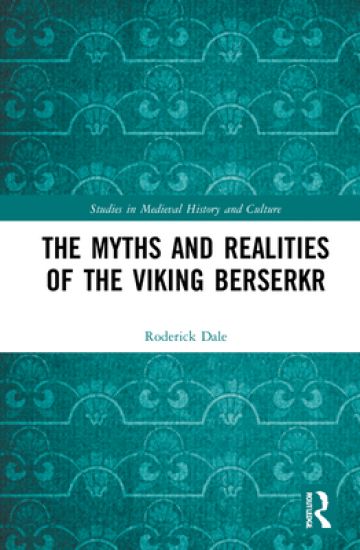
The viking berserkr is an iconic warrior normally associated with violent fits of temper and the notorious berserksgangr or berserker frenzy. This book challenges the orthodox view that these men went ‘berserk’ in the modern English sense of the word. It examines all the evidence for medieval perceptions of berserkir and builds a model of how the medieval audience would have viewed them. Then, it extrapolates a Viking Age model of berserkir from this model, and supports the analysis with anthropological and archaeological evidence, to create a new and more accurate paradigm of the Viking Age berserkr and his place in society. This shows that berserkir were the champions of lords and kings, members of the social elite, and that much of what is believed about them is based on 17th-century and later scholarship and mythologizing: the medieval audience would have had a very different understanding of the Old Norse berserkr from that which people have now. The book sets out a challenge to rethink and reframe our perceptions of the past in a way that is less influenced by our own modern ideas.The Myths and Realities of the Viking berserkr will appeal to researchers and students alike studying the Viking Age, Medieval History and Old Norse Literature.
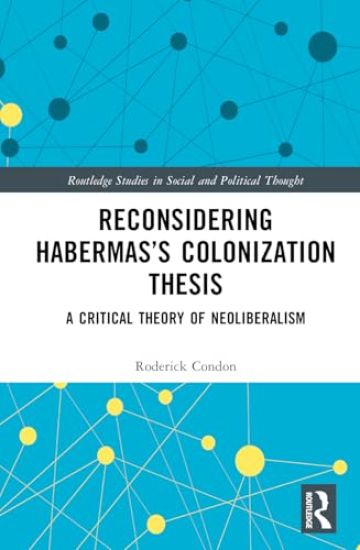
This book reconsiders Habermas’s critique of capitalism as a foundation for a critical theory of neoliberalism. Taking criticisms into account, the author refines and redevelops Habermas’s system-lifeworld paradigm in three parts, focusing on system, lifeworld, and communication. The exposition unfolds through a new synthesis and convergence, from within Habermas’s frame, of Axel Honneth, Niklas Luhmann, Talcott Parsons, and Karl Marx. This synthesis is interwoven with an account of the neoliberal turn, such that social theory is historically contextualized and neoliberalism theoretically explained at one and the same time. The end result is a reconstruction of the colonization thesis in a new theory of relinguistification, advancing a communicative, dialectical, and reflexive theory of reification.Reconsidering Habermas’s Colonization Thesis will appeal to scholars of critical theory, social theory, sociology, and cultural studies, as well as readers interested in neoliberalism and the critique of capitalism.
Extremely diverse and complicated bacterial and protozoan populations inhabit the rumen and intestinal tract of animals, and there is a delicate balance among the individual populations within this complex microbial community. This authoritative edited volume, the first in a two-volume set, reviews the gut environment and the fermentations taking place in animal digestive tracts. It is an essential source of reference for microbial ecologists and physiologists, medical microbiologists and gastroenterologists, biochemists, nutritionists, veterinarians and animal scientists, and wildlife ecologists.
First published by CUP in 1989, The Medieval Greek Romance provides basic information for the non-specialist about Greek fiction during the period 1071-1453, as well as proposing new solutions to problems that have vexed previous generations of scholars. Roderick Beaton applies sophisticated methods of literary analysis to the material, and the bridges of the artificial gap which has separated `Byzantine'literature, in a form of ancient Greek as both homogenous and of a high level of literary sophistication.Throughout, consideration is given to relations and interconnections with similar literature in western Europe. As most of the texts discussed are not available in English translation, the argument is illustrated by lucid plot summaries and extensive quotation (accompanied by literal English renderings).For this edition, The Medieval Greek Romance has been revised throughout and expanded with the addition of an `Afterword' which assesses and responds to recent work on the subject.
First published in 2002. This is Volume V of seventeen in the Library of Philosophy series on Metaphysics. Written in 1976, this book includes amongst others, the three Carus Lectures constituting the nucleus of this book were presented before the Pacific Division of the American Philosophical Association in December 1967 and look at the topic of Person and Object. The aim of this study is further the concept that by considering certain obvious facts about ourselves, we can arrive at an understanding of the general principles of metaphysics.
The Routledge Companion to Nazi Germany combines a concise narrative overview with chronological, bibliographical and tabular information to cover all major aspects of Nazi Germany. This user-friendly guide provides a comprehensive survey of key topics such as the origins and consolidation of the Nazi regime, the Nazi dictatorship in action, Nazi foreign policy, the Second World War, the Holocaust, the opposition to the regime and the legacy of Nazism. Features include: detailed chronologiesa discussion of Nazi ideologysuccinct historiographical overview with more detailed information on more than sixty major historians of Nazism biographies of 150 leading figures of Nazi Germany a glossary of terms, concepts and acronyms maps and tablesa concise thematic bibliography of works on the Third Reich. This indispensable reference guide to the history and historiography of Nazi Germany will appeal to students, teachers and general readers alike.
The Routledge Companion to Nazi Germany combines a concise narrative overview with chronological, bibliographical and tabular information to cover all major aspects of Nazi Germany. This user-friendly guide provides a comprehensive survey of key topics such as the origins and consolidation of the Nazi regime, the Nazi dictatorship in action, Nazi foreign policy, the Second World War, the Holocaust, the opposition to the regime and the legacy of Nazism. Features include: detailed chronologiesa discussion of Nazi ideologysuccinct historiographical overview with more detailed information on more than sixty major historians of Nazism biographies of 150 leading figures of Nazi Germany a glossary of terms, concepts and acronyms maps and tablesa concise thematic bibliography of works on the Third Reich. This indispensable reference guide to the history and historiography of Nazi Germany will appeal to students, teachers and general readers alike.
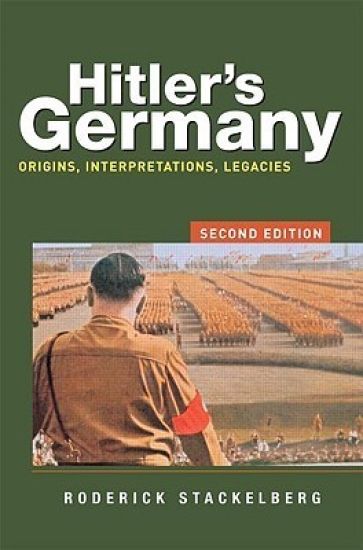
Praise for the first edition:'This is an important new textbook on the Nazi period which is geared to intermediate and advanced undergraduates and will also interest general audiences ... this book is a real winner and deserves wide use.' - Bruce Campbell, German Studies Review 'An excellent job... provides a comprehensive and sophisticated analysis of the origins of National Socialism in Germany, Hitler's rise to power, and the nature of the Nazi regime after 1933... no small achievement.' - David Crew, University of Texas, AustinHitler’s Germany provides a comprehensive narrative history of Nazi Germany and sets it in the wider context of nineteenth- and twentieth-century German history. Roderick Stackelberg analyzes how it was possible that a national culture of such creativity and achievement could generate such barbarism and destructiveness. This second edition has been updated throughout to incorporate recent historical research and engage with current debates in the field. It includes an expanded introduction focusing on the hazards of writing about Nazi Germany an extended analysis of fascism, totalitarianism, imperialism, and ideology a broadened contextualisation of antisemitism discussion of the Holocaust including the euthanasia program and the role of eugenics new chapters on Nazi social and economic policies and the structure of government as well as on the role of culture, the arts, education and religion additional maps, tables, and a chronology a fully updated bibliography. Exploring the controversies surrounding Nazism and its afterlife in historiography and historical memory, Hitler’s Germany provides students with an interpretive framework for understanding this extraordinary episode in German and European history.
Praise for the first edition:'This is an important new textbook on the Nazi period which is geared to intermediate and advanced undergraduates and will also interest general audiences ... this book is a real winner and deserves wide use.' - Bruce Campbell, German Studies Review 'An excellent job... provides a comprehensive and sophisticated analysis of the origins of National Socialism in Germany, Hitler's rise to power, and the nature of the Nazi regime after 1933... no small achievement.' - David Crew, University of Texas, AustinHitler’s Germany provides a comprehensive narrative history of Nazi Germany and sets it in the wider context of nineteenth- and twentieth-century German history. Roderick Stackelberg analyzes how it was possible that a national culture of such creativity and achievement could generate such barbarism and destructiveness. This second edition has been updated throughout to incorporate recent historical research and engage with current debates in the field. It includes an expanded introduction focusing on the hazards of writing about Nazi Germany an extended analysis of fascism, totalitarianism, imperialism, and ideology a broadened contextualisation of antisemitism discussion of the Holocaust including the euthanasia program and the role of eugenics new chapters on Nazi social and economic policies and the structure of government as well as on the role of culture, the arts, education and religion additional maps, tables, and a chronology a fully updated bibliography. Exploring the controversies surrounding Nazism and its afterlife in historiography and historical memory, Hitler’s Germany provides students with an interpretive framework for understanding this extraordinary episode in German and European history.
Many statements made by historians are quantitative statements, involving the use of measurable historical evidence. The historian who uses quantitative methods to analyse and interpret such information needs to be well acquainted with the particular methods and techniques of analysis and to be able to make the best use of the data that are available. There is an increasing need for training in such methods and in the interpretation of the large volume of literature now using quantitative techniques. Dr Floud’s text, which is relevant to all branches of historical inquiry, provides a straightforward and intelligible introduction for all students and research workers.The simpler and more useful techniques of descriptive and analytical statistics are described, up to the level of simple linear regression. Historical examples are used throughout, and great attention is paid to the need to ensure that the techniques are consistent with the quality of the data and with the historical problems they are intended to solve. Attention is paid to problems of the analysis of time series, which are of particular use to historians. No previous knowledge of statistics is assumed, and the simple mathematical techniques that are used are fully and clearly explained, without the use of more mathematical knowledge than is provided by an O-level course. A bibliography is provided to guide historians towards the most useful further reading. This student friendly text was first published in 1973.
The dwelling is the most fundamental building type, nowhere more so than in the open landscape. This book can be read in a number of ways. It is first a book about houses and particularly the theme ‘dwelling and the land’. It examines the poetic and prosaic issues inherent in claiming a piece of the landscape to live on. It could also be seen as a kind of road map, full of both warnings and encouragements for all those involved with, or just interested in, the making of houses. That the domestic realm and the landscape can be vehicles for significant architectural insights is hardly an original observation. However this book seeks to bring the two topics together in a unique way. In exploring a building type that lies on the cusp of what is commonly understood as ‘building’ and ‘architecture’, it asks fundamental questions about what the very nature of architecture is. Who indeed is the architect and what is their role in the process of creating meaningful buildings?
Many statements made by historians are quantitative statements, involving the use of measurable historical evidence. The historian who uses quantitative methods to analyse and interpret such information needs to be well acquainted with the particular methods and techniques of analysis and to be able to make the best use of the data that are available. There is an increasing need for training in such methods and in the interpretation of the large volume of literature now using quantitative techniques. Dr Floud’s text, which is relevant to all branches of historical inquiry, provides a straightforward and intelligible introduction for all students and research workers.The simpler and more useful techniques of descriptive and analytical statistics are described, up to the level of simple linear regression. Historical examples are used throughout, and great attention is paid to the need to ensure that the techniques are consistent with the quality of the data and with the historical problems they are intended to solve. Attention is paid to problems of the analysis of time series, which are of particular use to historians. No previous knowledge of statistics is assumed, and the simple mathematical techniques that are used are fully and clearly explained, without the use of more mathematical knowledge than is provided by an O-level course. A bibliography is provided to guide historians towards the most useful further reading. This student friendly text was first published in 1973.
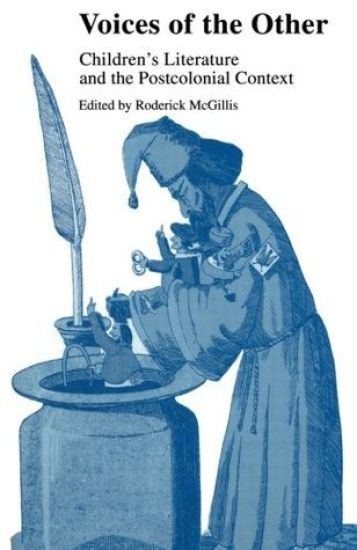
This book offers a variety of approaches to children's literature from a postcolonial perspective that includes discussions of cultural appropriation, race theory, pedagogy as a colonialist activity, and multiculturalism.The eighteen essays divide into three sections: Theory, Colonialism, Postcolonialism. The first section sets the theoretical framework for postcolonial studies; essays here deal with issues of "otherness" and cultural difference, as well as the colonialist implications of pedagogic practice. These essays confront our relationships with the child and childhood as sites for the exertion of our authority and control. Section 2 presents discussions of the colonialist mind-set in children's and young adult texts from the turn of the century. Here works by writers of animal stories in Canada, the U.S. and Britain, works of early Australian colonialist literature, and Frances Hodgson Burnett's A Little Princess come under the scrutiny of our postmodern reading practices. Section 3 deals directly with contemporary texts for children that manifest both a postcolonial and a neo-colonial content. In this section, the longest in the book, we have studies of children's literature from Canada, Australia, Africa, the Caribbean, and the United States.
Authoritative coverage on the first Linux+ exam revision in more than five years The Linux+ exam is an entry-level Linux certification exam administered by CompTIA that covers your knowledge of basic Linux system administration skills. With this being the first update to the exam in more than five years, you'll need to be prepared on the most up-to-date information on all Linux administration topics. Boasting clear and concise material, practical examples, and insights drawn from real-world experience, this study guide is an indispensable resource. Completely updated for the newest Linux+ exam-the first exam revision in more than five years Thorough coverage on key exam topics, including installation and configuration, system maintenance and operations, application and services, networking, and security Packed with chapter review questions, real-world scenarios, hands-on exercises, and a glossary of the most important terms you need to know CD features two practice exams, electronic flashcards, interactive chapter review questions, and the book in a searchable PDF Written by a highly respected and recognized author in the field of Linux, this study guide prepares you for the completely new Linux+ exam.
An up-to-date, comprehensive treatment of a classic text on missing data in statisticsThe topic of missing data has gained considerable attention in recent decades. This new edition by two acknowledged experts on the subject offers an up-to-date account of practical methodology for handling missing data problems. Blending theory and application, authors Roderick Little and Donald Rubin review historical approaches to the subject and describe simple methods for multivariate analysis with missing values. They then provide a coherent theory for analysis of problems based on likelihoods derived from statistical models for the data and the missing data mechanism, and then they apply the theory to a wide range of important missing data problems.Statistical Analysis with Missing Data, Third Edition starts by introducing readers to the subject and approaches toward solving it. It looks at the patterns and mechanisms that create the missing data, as well as a taxonomy of missing data. It then goes on to examine missing data in experiments, before discussing complete-case and available-case analysis, including weighting methods. The new edition expands its coverage to include recent work on topics such as nonresponse in sample surveys, causal inference, diagnostic methods, and sensitivity analysis, among a host of other topics. An updated “classic” written by renowned authorities on the subjectFeatures over 150 exercises (including many new ones)Covers recent work on important methods like multiple imputation, robust alternatives to weighting, and Bayesian methodsRevises previous topics based on past student feedback and class experienceContains an updated and expanded bibliography The authors were awarded The Karl Pearson Prize in 2017 by the International Statistical Institute, for a research contribution that has had profound influence on statistical theory, methodology or applications. Their work "has been no less than defining and transforming." (ISI)Statistical Analysis with Missing Data, Third Edition is an ideal textbook for upper undergraduate and/or beginning graduate level students of the subject. It is also an excellent source of information for applied statisticians and practitioners in government and industry.
NMR OF QUADRUPOLAR NUCLEI IN SOLID MATERIALS Over the past 20 years technical developments in superconducting magnet technology and instrumentation have increased the potential of NMR spectroscopy so that it is now possible to study a wide range of solid materials. In addition, one can probe the nuclear environments of many other additional atoms that possess the property of spin. In particular, it is possible to carry out NMR experiments on isotopes that have nuclear spin greater that ½ (i.e. quadrupolar nuclei). Since more that two-thirds of all NMR active isotopes are quadrupolar nuclei, applications of NMR spectroscopy with quadrupolar nuclei are increasing rapidly. The purpose of this handbook is to provide under a single cover the fundamental principles, techniques and applications of quadrupolar NMR as it pertains to solid materials. Each chapter has been prepared by an expert who has made significant contributions to out understanding and appreciation of the importance of NMR studies of quadrupolar nuclei in solids. The text is divided into three sections: The first provides the reader with the background necessary to appreciate the challenges in acquiring and interpreting NMR spectra of quadrupolar neclei in solids. The second presents cutting-edge techniques and methodology for employing these techniques to investigate quadrupolar nuclei in solids. The final section explores applications of solid-state NMR studies of solids ranging from investigations of dynamics, characterizations of biological samples, organic and inorganic materials, porous materials, glasses, catalysts, semiconductors and high-temperature superconductors. About EMR Handbooks The Encyclopedia of Magnetic Resonance (EMR) publishes a wide range of online articles on all aspects of magnetic resonance in physics, chemistry, biology and medicine. The existence-of this large number of articles, written by experts in various fields, is enabling the publication of a series of EMR Handbooks on specific areas of NMR and MRI. The chapters of each of these handbooks will comprise a carefully chosen selection of Encyclopedia articles. In consultation with the EMR Editorial Board, the EMR Handbooks are coherently planned in advance by specially-selected Editors, and new articles, are written (together with updates of some already existing articles) to give appropriate complete coverage. The handbooks are intended to be of value and interest to research students, postdoctoral fellows and other researchers learning about the scientific area in question and undertaking relevant experiments, whether in academia or industry. Have the content of this handbook and the complete content of the Encyclopedia of Magnetic Resonance at your fingertips! Visit: www.wileyonlinelibrary.com/ref/emr