Kirjojen hintavertailu. Mukana 12 016 292 kirjaa ja 12 kauppaa.

Kirjahaku

Etsi kirjoja tekijän nimen, kirjan nimen tai ISBN:n perusteella.

1000 tulosta hakusanalla Rohan Candappa

Roman Epic

Roman Epic

Routledge
1996
nidottu
Roman epic is both index and critique of the foundational culture of the western world. It is one of Europe's most persistent and determinant poetic modes. In this book distinguished Latinists examine the formation and evolution of Roman epic from its beginnings in the third century BC to the high Italian Renaissance. Featuring a variety of methodologies and approaches, it clarifies the literary importance and political and moral meaning of Roman epic.
Roman Political Institutions

Roman Political Institutions

Leon Homo

Routledge
1997
sidottu
Originally published between 1920-70,The History of Civilization was a landmark in early twentieth century publishing. It was published at a formative time within the social sciences, and during a period of decisive historical discovery. The aim of the general editor, C.K. Ogden, was to summarize the most up to date findings and theories of historians, anthropologists, archaeologists and sociologists. This reprinted material is available as a set or in the following groupings: * Prehistory and Historical Ethnography Set of 12: 0-415-15611-4: £800.00 * Greek Civilization Set of 7: 0-415-15612-2: £450.00 * Roman Civilization Set of 6: 0-415-15613-0: £400.00 * Eastern Civilizations Set of 10: 0-415-15614-9: £650.00 * Judaeo-Christian Civilization Set of 4: 0-415-15615-7: £250.00 * European Civilization Set of 11: 0-415-15616-5: £700.00
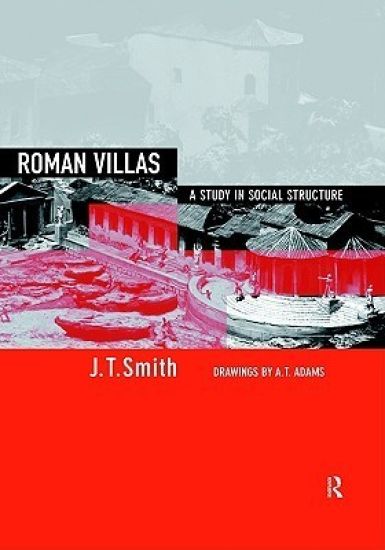
Roman Villas

Roman Villas

J.T. Smith

Routledge
1998
sidottu
Roman Villas explores the social structures of the Roman world by analysing the plans of buildings of all sizes from slightly Romanized farms to palaces. The ways in which the rooms are grouped together; how they intercommunicate; and the ways in which individual rooms and the house are approached, reveal various social patterns, which question traditional ideas about the Roman family and household. J. T. Smith argues that virtually all houses were occupied by groups of varying composition, challenging the received wisdom that they were single family houses whose size reflected only the owner's wealth and number of servants.Roman Villas provides a meticulously documented and scholarly examination of the relationship between the living quarters of the Roman and their social and economic development which introduces a new area in Roman studies and a corpus of material for further analysis. The inclusion of almost 500 ground plans, drawn to a uniform scale, allows the reader to compare the similarities and differences between house structure as well as effectively illustrating the arguments.
Roman Edessa

Roman Edessa

Steven K. Ross

Routledge
2000
sidottu
Roman Edessa offers a comprehensive and erudite analysis of the ancient city of Edessa (modern day Urfa, Turkey), which constituted a remarkable amalgam of the East and the West. Among the areas explored are:* the cultural life and antecedents of Edessa* Edessene religion* the extent of the Hellenization at Edessa before the advent of Christianity* the myth of an exchange of letters between a King Abgar and Jesus.
Roman Philosophers

Roman Philosophers

Mark Morford

Routledge
2002
sidottu
The philosophers of the Roman world were asking questions whose answers had practical effects on people's lives in antiquity, and which still influence our thinking to this day. In spite of being neglected in the modern era, this important age of philosophical thought is now undergoing a revival of interest. Mark Morford's lively survey makes these recent scholarly developments accessible to a wide audience, examining the writings and ideas of both famous and lesser known figures - from Cato the Censor in 155 BCE to Marcus Aurelius in 180 CE. Based around extensive and fully translated quotations from the philosophical texts of the era, full consideration is given throughout to historical, political and cultural context.
Roman Philosophers

Roman Philosophers

Mark Morford

Routledge
2002
nidottu
The philosophers of the Roman world were asking questions whose answers had practical effects on people's lives in antiquity, and which still influence our thinking to this day. In spite of being neglected in the modern era, this important age of philosophical thought is now undergoing a revival of interest. Mark Morford's lively survey makes these recent scholarly developments accessible to a wide audience, examining the writings and ideas of both famous and lesser known figures - from Cato the Censor in 155 BCE to Marcus Aurelius in 180 CE. Based around extensive and fully translated quotations from the philosophical texts of the era, full consideration is given throughout to historical, political and cultural context.
Roman Social History

Roman Social History

Susan Treggiari

Routledge
2001
nidottu
This lively and original guidebook is the first to show students new to the subject exactly what Roman social history involves, and how they can study it for themselves. After presenting a short history of the development and current position of the discipline, the author discusses the kinds of evidence that can be used, and the full range of resources available. Two case-studies provide practical examples of how to approach sources, and what we can learn from them. Clear, concise and accessible, with all text extracts translated into English, this is the ideal introduction to an increasingly popular subject.
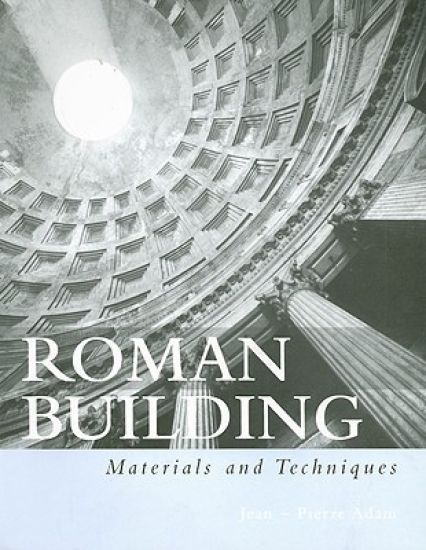
Roman Building

Roman Building

Jean-Pierre Adam

Routledge
1999
nidottu
Now in paperback, Roman Buildings is a thorough and systematic examination of Roman architecture and building practice, with over 750 illustrations . It looks at large- scale public buildings as well as more modest homes and shops. Placing emphasis on the technical aspects of the subject, it follows the process of building through each stage -- from quarry to standing wall, from tree to roof timbers -- and how these materials were obtained or manufactured. The author also discusses interior decoration and looks at the practical aspects of water supply, heating and roads.
Roman Officers and English Gentlemen

Roman Officers and English Gentlemen

Richard Hingley

Routledge
2000
sidottu
This landmark book shows how much Victorian and Edwardian Roman archaeologists were influenced by their own experience of empire in their interpretation of archaeological evidence. This distortion of the facts became accepted truth and its legacy is still felt in archaeology today. While tracing the development of these ideas, the author also gives the reader a throrough grounding in the history of Roman archaeology itself.
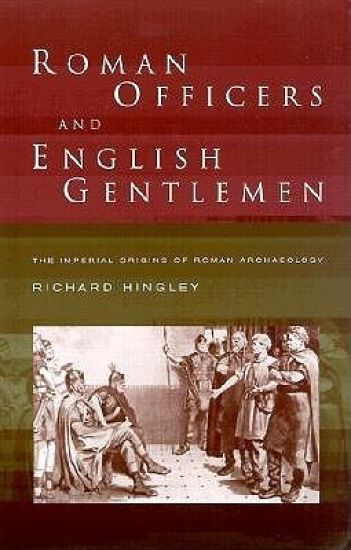
Roman Officers and English Gentlemen

Roman Officers and English Gentlemen

Richard Hingley

Routledge
2000
nidottu
This landmark book shows how much Victorian and Edwardian Roman archaeologists were influenced by their own experience of empire in their interpretation of archaeological evidence. This distortion of the facts became accepted truth and its legacy is still felt in archaeology today. While tracing the development of these ideas, the author also gives the reader a throrough grounding in the history of Roman archaeology itself.
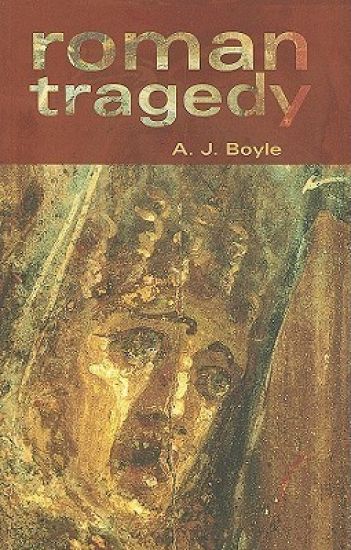
Roman Tragedy

Roman Tragedy

Anthony J. Boyle

Routledge
2005
sidottu
The first detailed cultural and theatrical history of a major literary form, this landmark introduction examines Roman tragedy and its place at the centre of Rome’s cultural and political life.Analyzing the work of such names as Ennius, Pacuvius and Accius, as well as Seneca and his post-Neronian successors, Anthony J. Boyle delves into detailed discussion on every Roman tragedian whose work survives in substance today. Roman Tragedy examines:the history of Roman tragic techniques and conventionsthe history of generic form and changethe debt that Rome owes to Greece, and text owes to textthe birth, development and death of Roman tragedy in the context of the cities evolving, institutions, ideologies and political and social practicestragedy proper and the historical drama (fabula praetexta), which the Romans allied to tragedy.With parallel English translations of Latin quotations, this seminal work not only provides an invaluable resource for students of theatre, Roman political history and cultural history, but it is also accessible to all interested in the social dynamics of writing, spectacle, ideology and power.
Roman Tragedy

Roman Tragedy

Anthony J. Boyle

Routledge
2005
nidottu
The first detailed cultural and theatrical history of a major literary form, this landmark introduction examines Roman tragedy and its place at the centre of Rome’s cultural and political life.Analyzing the work of such names as Ennius, Pacuvius and Accius, as well as Seneca and his post-Neronian successors, Anthony J. Boyle delves into detailed discussion on every Roman tragedian whose work survives in substance today. Roman Tragedy examines:the history of Roman tragic techniques and conventionsthe history of generic form and changethe debt that Rome owes to Greece, and text owes to textthe birth, development and death of Roman tragedy in the context of the cities evolving, institutions, ideologies and political and social practicestragedy proper and the historical drama (fabula praetexta), which the Romans allied to tragedy.With parallel English translations of Latin quotations, this seminal work not only provides an invaluable resource for students of theatre, Roman political history and cultural history, but it is also accessible to all interested in the social dynamics of writing, spectacle, ideology and power.
Roman Religion in Valerius Maximus

Roman Religion in Valerius Maximus

Hans-Friedrich Mueller

Routledge
2002
sidottu
DID THE GODS OF ROME CARE ABOUT PERSONAL MORALITY? Valerius Maximus was an indefatigable collector of historical anecdotes illustrating vice and virtue; his Memorable Deeds and Sayings are unparalleled as a source for the opinions of Romans in the early empire on a vast range of subjects. Mueller’s study focuses on what Valerius can tell us about contemporary Roman attitudes to religion, attacking several orthodoxies along the way. He argues that Roman religion could be deeply emotional, that it was possible to believe passionately in the divinity of the emperor – even when, like Tiberius, he was still alive – and that Rome’s gods and religious rituals had an important role in fostering conventional morality. The study further explores elements of ancient rhetoric, Roman historiography, and Tiberian Rome. The fact that Valerius was a contemporary of Jesus means his work is also valuable in reflecting the attitudes and beliefs of the ruling class to which Christ and his followers were politically subject, and which formed the background to the growth and persecution of Christianity.
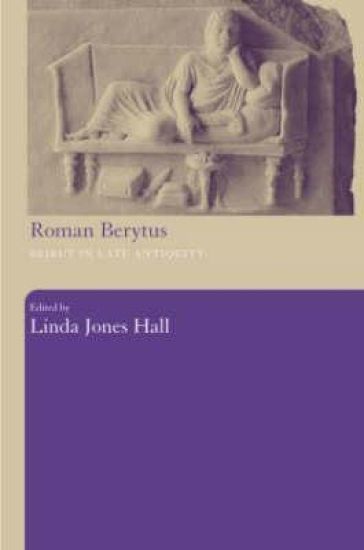
Roman Berytus

Roman Berytus

Linda Jones Hall

Routledge
2004
sidottu
Examining the numerous primary sources, including inscriptions, religions, histories, literary references, legal codes, and archaeological reports, Linda Jones Hall presents a composite history of late antique Berytus - from its founding as a Roman colony in the time of Augustus, to its development into a center of legal study under Justinian.The book examines all aspects of life in the city, including geographical setting, economic base, built environment, political structures, religious transitions from paganism to Christianity, and the self-identity of the inhabitants in terms of ethnicity and occupation.This volume provides:* the first detailed investigation of late antique Phoenicia* a look at religious affiliations are traced among pagans, Jews, and Christians* a study of the bishops and the churches.The full texts of numerous narratives are presented to reveal the aspirations of the law students, the professors, and their fellow citizens such as the artisans. The study also explores the cultural implications of the city's Greek, Roman and then Syro-Phoenician heritage.
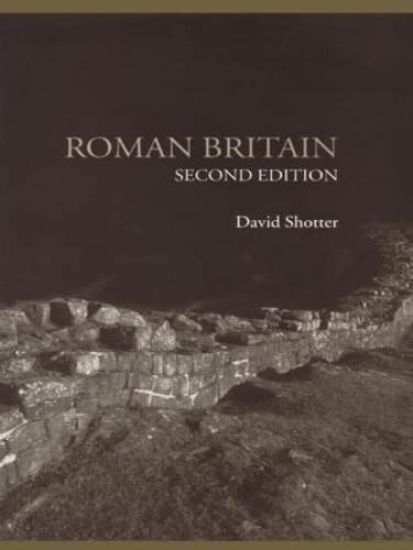
Roman Britain

Roman Britain

David Shotter

Routledge
2004
sidottu
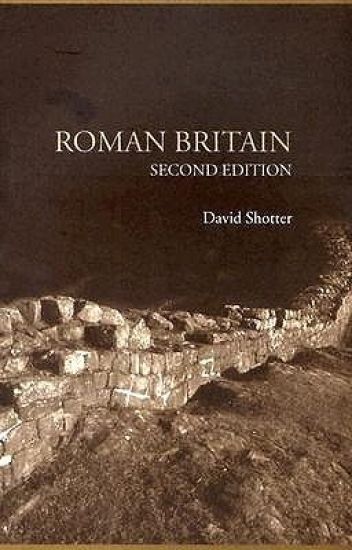
From renowned and respected author David Shotter, this updated and expanded edition of Roman Britain offers a concise introduction to this period, drawing on the wealth of recent scholarship to explain the progress of the Romans and their objectives in conquering Britain.Key topics discussed include:* the Roman conquest of Britain* the evolution of the frontier with Scotland* the infrastructure the Romans put in place* the place of religion in Roman Britain.Taking account of recent research, this second edition includes an expanded bibliography and a number of new plates which illustrate the various aspects of the Roman occupation of Britain.
Roman Britain

Roman Britain

David Shotter

Routledge
2004
nidottu
From renowned and respected author David Shotter, this updated and expanded edition of Roman Britain offers a concise introduction to this period, drawing on the wealth of recent scholarship to explain the progress of the Romans and their objectives in conquering Britain.Key topics discussed include:* the Roman conquest of Britain* the evolution of the frontier with Scotland* the infrastructure the Romans put in place* the place of religion in Roman Britain.Taking account of recent research, this second edition includes an expanded bibliography and a number of new plates which illustrate the various aspects of the Roman occupation of Britain.
Roman Pompeii

Roman Pompeii

Ray Laurence

Routledge
2006
nidottu
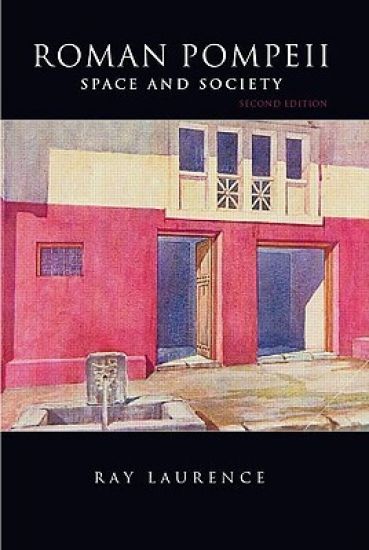
In this fully revised and updated edition of Roman Pompeii, Dr. Laurence looks at the latest archaeological and literary evidence relating to the city of Pompeii from the viewpoint of architect, geographer and social scientist.Enhancing our general understanding of the Roman world, this new edition includes new chapters that reveal how the young learnt the culture of the city and to investigate the role of property development and real estate in Pompeii’s growth. Showing how Pompeii has undergone considerable urban development, Dr. Laurence emphasizes the relationship between the fabric of the city and the society that produced it. Local activities are located in both time and space and Pompeii’s cultural identity is defined. This book is invaluable for students and scholars in the fields of archaeology and ancient history, as well as being rewarding reading for the many people who visit Pompeii.
Roman Pompeii

Roman Pompeii

Ray Laurence

Routledge
2006
sidottu
In this fully revised and updated edition of Roman Pompeii, Dr. Laurence looks at the latest archaeological and literary evidence relating to the city of Pompeii from the viewpoint of architect, geographer and social scientist.Enhancing our general understanding of the Roman world, this new edition includes new chapters that reveal how the young learnt the culture of the city and to investigate the role of property development and real estate in Pompeii’s growth. Showing how Pompeii has undergone considerable urban development, Dr. Laurence emphasizes the relationship between the fabric of the city and the society that produced it. Local activities are located in both time and space and Pompeii’s cultural identity is defined. This book is invaluable for students and scholars in the fields of archaeology and ancient history, as well as being rewarding reading for the many people who visit Pompeii.
Roman Imperial Identities in the Early Christian Era
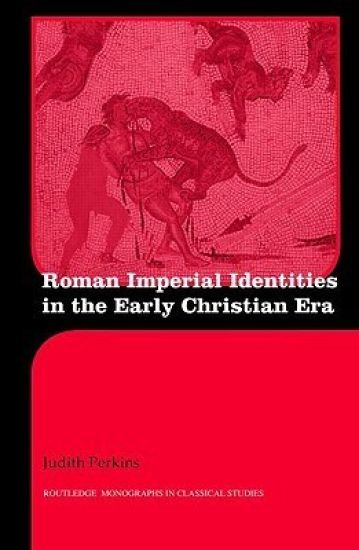
Through the close study of texts, Roman Imperial Identities in the Early Christian Era examines the overlapping emphases and themes of two cosmopolitan and multiethnic cultural identities emerging in the early centuries CE – a trans-empire alliance of the Elite and the "Christians." Exploring the cultural representations of these social identities, Judith Perkins shows that they converge around an array of shared themes: violence, the body, prisons, courts, and time. Locating Christian representations within their historical context and in dialogue with other contemporary representations, it asks why do Christian representations share certain emphases? To what do they respond, and to whom might they appeal? For example, does the increasing Christian emphasis on a fully material human resurrection in the early centuries, respond to the evolution of a harsher and more status based judicial system? Judith Perkins argues that Christians were so successful in suppressing their social identity as inhabitants of the Roman Empire, that historical documents and testimony have been sequestered as "Christian" rather than recognized as evidence for the social dynamics enacted during the period, Her discussion offers a stimulating survey of interest to students of ancient narrative, cultural studies and gender.
Roman Social History
This Sourcebook contains a comprehensive collection of sources on the topic of the social history of the Roman world during the late Republic and the first two centuries AD.Designed to form the basis for courses in Roman social history, this excellent resource covers original translations from sources such as inscriptions, papyri, and legal texts. Topics include:social inequality and class games, gladiators and attitudes to violence the role of slaves in Roman society economy and taxation the Roman legal system the Roman family and gender roles.Including extensive explanatory notes, maps and bibliographies, this Sourcebook is the ideal resource for all students and teachers embarking on a course in Roman social history.