Kirjojen hintavertailu. Mukana 11 420 122 kirjaa ja 12 kauppaa.

Kirjahaku

Etsi kirjoja tekijän nimen, kirjan nimen tai ISBN:n perusteella.

1000 tulosta hakusanalla Rudolf Ehwald

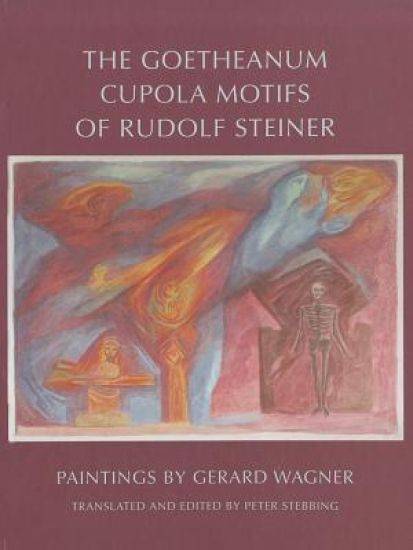
The Goetheanum Cupola Motifs of Rudolf Steiner
Gerard Wagner's paintings of Rudolf Stiener's Goetheanum cupola sketches bring these works to a wide audience that would otherwise have little access to or knowledge of those representations of Steiner's artistic spiritual vision contained in the first Goetheanum and lost to the fire that destroyed that great building. Wagner re-created those archetypal motifs in new ways over a period of decades. They constitute an artistic high point of Wagner's work as a whole, but they cannot be separated from the Goetheanum itself, nor can they be fully understood except in the context of anthroposophic spiritual science. In this sense, The Goetheanum Cupola Motifs of Rudolf Steiner points to the historic and spiritual importance of the first Goetheanum building. Rudolf Steiner's lecture on October 25, 1914, and his lecture on the paintings of the small cupola on January 25, 1920, are published in English here for the first, along with color photographs from 1922. Also included are the little-known colored etchings of the Goetheanum window motifs made by by Assya Turgenieff with Rudolf Steiner, as well as other centrally important contributions to an understanding of this new direction in art. Though the main emphasis is on visual examples, the book achieves something more than simply cataloging these works of art. The book conveys, too, a sense of the artistic process itself. Thus, Gerard Wagner's observations here have a special relevance. In addition to the two lectures by Rudolf Steiner and the paintings by Gerard Wagner--in full color--The Goetheanum Cupola Motifs of Rudolf Steiner presents essays from Peter Stebbing, Louise Clason, Assya Turgenieff, and Gerard Wagner. "Along with the architectural and sculptural forms of the double-domed first Goetheanum, the cupola paintings further epitomized the artistic conception of this unique building. The painting motifs extending over the surface of the two cupolas encompassed the evolution of the world as a whole, from its creation by the biblical Elohim to the great epochs of Lemuria and Atlantis that followed. Traversing the post-Atlantean cultural epochs, the beholder was gradually led to the building's central motif: the Mystery of Golgotha as the mid-point of world evolution, with its implications for the future development of the Earth and humanity." --Sergei O. Prokofieff (from his foreword) CONTENTS: Foreword by Sergei O. Prokofieff Preface The Renewal of the Artistic Principle / Rudolf Steiner Goethe and the Goetheanum / Rudolf Steiner The Artists Who Originally Worked on Painting the Cupolas of the First Goetheanum / Peter Stebbing Recollections of the Years of Painting in the Small Cupola of the First Goetheanum / Louise Clason I. THE MOTIFS OF THE LARGE CUPOLA The Large Cupola Sketch-Motifs of Rudolf Steiner Large Cupola Studies of Gerard Wagner A Further Development of the Large Cupola Motifs / Peter Stebbing II. THE MOTIFS OF THE SMALL CUPOLA The Paintings of the Small Cupola / Rudolf Steiner Small Cupola Studies of Gerard Wagner The Question of the North Side: "Counter Colors" or "Complementary Colors"? / Peter Stebbing III. THE COLORED GLASS WINDOW MOTIFS Indications of Rudolf Steiner for Engraving the Window Motifs / Assya Turgenieff On the Windows of the First Goetheanum / Rudolf Steiner The Red Window Middle Motif Metamorphosed (Paintings of Gerard Wagner) APPENDIX A Path of Practice in Painting / Gerard Wagner Biographical Sketches About the Painter Gerard Wagner / Peter Stebbing Selected Bibliography
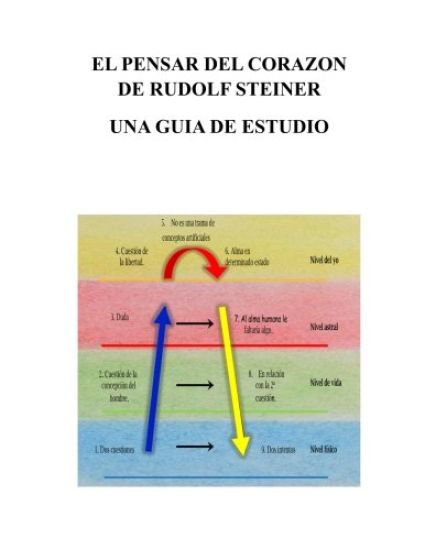
El Pensar Del Corazon De Rudolf Steiner: Una Guia De Estudio

El Pensar Del Corazon De Rudolf Steiner: Una Guia De Estudio

Mark Riccio

Createspace Independent Publishing Platform
2016
nidottu
"Piensen sobre tantos temas que eran realmente fundamentales y como hemos tenido que construir nuestra estructura de pensamiento total una y otra vez a partir del esquema b sico: cuerpo f sico, cuerpo et reo, cuerpo astral y yo... Este es y permanece siendo un hilo fiable en el que engarzar nuestros pensamientos: estos cuatro miembros del ser humano en su entretejido, y luego en un nivel superior, la transformaci n de los tres miembros inferiores: el tercero en el quinto, el segundo en el sexto y el primero en s ptimo miembro de nuestro ser... Est n sentando las bases para su sistema de pensamiento de la misma forma que una vez los dioses hicieron el plan para la Sabidur a del mundo" - Rudolf Steiner
The Development of Anthroposophy Since Rudolf Steiner's Death
This volume begins with Thomas Meyer's assessment of Anthroposophy's evolution since Rudolf Steiner's death and its future prospects. He offers an overview of the eighty-seven years of the development of the anthroposophic movement and the Anthroposophical Society, the worldwide organization headquartered in Dornach, Switzerland, since the death of its founder. The Society went through a very difficult and controversial period in the ten years following Steiner's death, which culminated at its Annual Meeting in 1935. The result was the expulsion from the Society of two members appointed by Rudolf Steiner to its Executive Board (Vorstand)--Ita Wegman and Elizabeth Vreede--as well as the British and Dutch branches of the Society and many important anthroposophists who opposed the expulsions. Meyer--whose many books include Rudolf Steiner's Core Mission--reveals the extraordinary concordance of four November 17 dates highly significant in the development of Anthroposophy. On November 17, 1901, the anniversary of the founding of the Theosophical Society in 1875, Marie von Sivers asked Rudolf Steiner to create an esoteric path suited to the Western mind, which set Steiner on his mission. On November 17, 1923, Ita Wegman urged Steiner to establish a new Society, with Steiner himself joining as both a member and its president. Twelve years later, on November 17, 1935, the remaining three individuals of the Executive Board wrote to Adolf Hitler to plea for the Society's continued existence in Germany after being banned in Germany by the Nazi regime. Profound connections underlie these events.Four appendices supplement the present volume. Appendix 1 presents a Chronology that denotes, by year and day, significant episodes in Steiner's life and in the development of Anthroposophy. The remaining appendices feature, for the first time in English in one volume, significant documents pertinent to the Anthroposophical Society's Easter 1935 Annual Meeting. Appendix 2 contains the "Memorandum," written by supporters of Marie Steiner, setting forth a list of grievances in support of the expulsion motions adopted at the 1935 Annual Meeting. Appendix 3 records Ludwig Polzer-Hoditz's address in response to the 1935 Annual Meeting, counseling against the expulsion measures. Appendix 4 contains the letter (in English and German) written by the Society's Executive Board to Adolf Hitler.This important book offers profound insights into the struggles for individual freedom and voice during the early years of the Anthroposophical Society. Seeing the dynamics of that struggle can help us today to overcome differences to work toward common purpose, both in the context of our everyday lives and within a spiritually oriented community.
The Lord's Prayer and Rudolf Steiner
'Your will be done, on earth as it is in heaven.'Rudolf Steiner once called the Lord's Prayer the 'greatest initiation prayer', and he spoke about it many times, also referring to it as the central prayer of Christian experience.This book is, however, the first time that all of Steiner's comments, accounts and perspectives have been brought together in one place, presenting the full scope and depth of his ideas. Along the way, Peter Selg reveals some surprising insights into the spiritual history and mission of Christianity.
The Life and Times of Rudolf Steiner
Emil Bock lectured widely on Rudolf Steiner after the Second World War, and during the course of his research he uncovered many previously unknown aspects of Steiner's life. The Life and Times of Rudolf Steiner brings together the two volumes of this insightful work, which were previously available separately, in one comprehensive book. Part one introduces the great range of people who surrounded and influenced Steiner. Bock tracked down the mysterious 'Felix the herb gatherer', from Steiner's youth, and describes the Viennese social circles and coffee houses frequented by Steiner in his student days. He also details Steiner's meeting with Friedrich Nietzsche, and the various literary, artistic and eccentric people from Steiner's time in Berlin.Part two reveals some of the themes and ideas in Steiner's work - the early years of Jesus, the Christmas festival and the break from the Theosophical Society to the Anthroposophical Society - as well as exploring the nature of destiny. Bock also examines the circle of people around Steiner at this time and, using Steiner's ideas on karma and reincarnation, draws interesting parallels with Rome, Byzantium, Ephesus and the Grail Castle.
War and Peace in the Worlds of Rudolf H. Sauter
War and Peace in the Worlds of Rudolf H. Sauter is the first book to examine the creative life and worlds of Rudolf H. Sauter (1895–1977), the German-born artist, poet, cultural observer and nephew of the famed novelist John Galsworthy. Revealing him to be a creative figure in his own right, it examines his early life as a German immigrant in Britain, his formative years during the run-up to the Great War, his wartime internment as an “enemy alien,” and the postwar development of his intriguing body of artistic and literary work. Placing Sauter and his creative life in the historical contexts they have long deserved, this life story opens a window onto subjects of war, love, memory, travel and existential concerns of modern times.
Introduction to the Mystery Plays of Rudolf Steiner

Introduction to the Mystery Plays of Rudolf Steiner

Eileen Hutchins

Rudolf Steiner Press
2014
nidottu
'The great importance of these plays is not that we are given many thoughts to further our understanding of anthroposophy, but that we are shown the transforming power of spiritual striving in individual lives, and especially the development in human relationships through an awareness of the forces of destiny. In this respect the Mystery Plays are unique.' - from the Foreword In writing and producing his Mystery Plays, Rudolf Steiner offered his spiritual observations and concepts from a fresh, artistic perspective. The dramas appeared in the context of the movement of 'Theatrical Realism' - during a period when only a handful of dramatists attempted representations of a spiritual world, and these mostly under the guise of fantasy. In introducing spiritual beings to the stage, and showing their connections with human beings, Steiner was pioneering a drama for the future. Eileen Hutchins' classic work on Steiner's Mystery Plays provides a thoughtful commentary that helps us enter the minds and souls of the characters. Through gaining insights into their relationships and inner lives, and the problems and situations with which they are faced, the characters are brought to life. Gradually, we begin to see possible solutions to the complex web of their difficulties.
CARL MENGER’S LECTURES TO CROWN PRINCE RUDOLF OF AUSTRIA
In 1876, Carl Menger, then a young professor at the University of Vienna, was asked to teach the principles of political economy to Crown Prince Rudolf of Austria, the 17 year old only son of Emperor Francis Joseph, who was to die tragically before he could inherit the throne.Rudolf's recently discovered Notebooks of these lectures, corrected by Menger, are a fascinating record of what the founder of the Austrian marginalist school thought worth teaching to the heir presumptive of a great power. Without referring to his own theories, Menger delivered a course on the economics of Adam Smith - as presented in the mainstream German textbooks of the time - in such a way that the Notebooks can be viewed as a key document on classical economic liberalism, pure and unadulterated. They cast new light on Menger's own theoretical discoveries, his view of government and his interpretation of classical economics. In this important volume Rudolf's Notebooks are published for the first time both in German and an English translation. The editor's detailed introduction provides the historical and intellectual background to the Notebooks as well as a thorough analysis of classical economics and its treatment by Menger. The text is fully annotated in German and English with its surprising sources traced passage by passage.