

Kirjahaku
Etsi kirjoja tekijän nimen, kirjan nimen tai ISBN:n perusteella.
1000 tulosta hakusanalla Rudolf Lothar

In 1908, Rudolf Steiner gave a series of lectures about the Book of Revelation. He showed that the messages to the seven churches and the unsealing of the seven seals should be understood as references to initiation. In this light, the great images of the Apocalypse take on new meaning.As well as being a Steiner-Waldorf class teacher, Charles Kovacs was much in demand as an experienced and insightful lecturer for adults. In this book, he helps us make sense of the apocalyptic imagery, including the four beasts, the four riders, the woman clothed with the sun, and the New Jerusalem.The book is illustrated with Kovacs' own colour paintings.
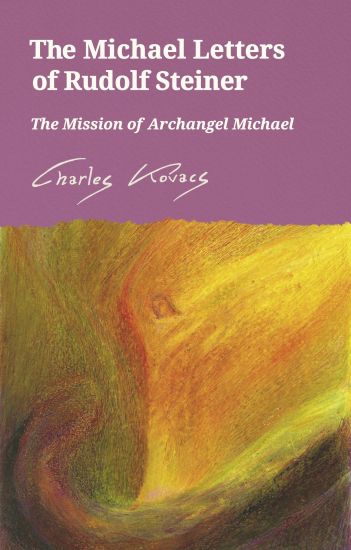
Towards the end of his life, Rudolf Steiner published a series of weekly letters addressed to the members of the Anthroposophical Society. Among them were fourteen letters in which he described the mission of the Archangel Michael, the mighty spiritual being who has accompanied humanity's evolution from primordial times right up to the present day. In this insightful book, Charles Kovacs draws on his knowledge of Steiner's work to provide a deeper understanding of the history and ideas that inform each letter. He shows how the Archangel Michael is the great champion of human freedom in the modern age and how he can help us transcend divisions of national identity to embrace a truly universal view of humanity.

In the autumn of 1912, Rudolf Steiner presented the first eurythmy performance. It marked the revival, in modern form, of the sacred art of dance, which had been used in the ancient Mysteries to express the movements of the stars and the planets. In the years that followed, Steiner and his wife, Marie von Sivers, developed eurythmy further, broadening it beyond the artistic to encompass healing and educational elements as well.One of the pioneers of this new form of movement was the Russian anthroposophist Tatiana Kisseleff, who became a student of Steiner's and later a celebrated eurythmy teacher. In this remarkable book, available for the first time in English, Kisseleff describes the spiritual foundations of eurythmy as they were explored in Steiner's lectures and recounts the instruction she received from him. This is both an eyewitness account of the origins of eurythmy and a record of a deeply personal journey of one person's efforts to master it. The book is illustrated throughout with photographs, drawings, facsimile reproductions from notebooks and posters advertising early eurythmy performances, alongside accounts of performances of various pieces including Goethe's Faust and Rudolf Steiner's own Mystery Dramas. This is a fascinating account for eurythmists and anyone who wants to delve more deeply into eurythmy's history and development.
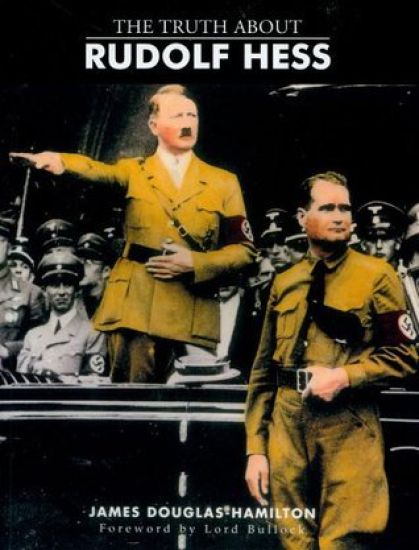
Rudolf Hess's flight to Britain in May 1941 stands out as one of the most intriguing and bizarre episodes of World War II.

'I rang the bell, the door opened, and there stood Rudolf Steiner in person. I was so taken aback that I dropped the basket which burst open and all my clothes and underclothes, together with my other belongings, were lying at the feet of the Doctor. A ball of wool got away and rolled between Dr Steiner's feet into the long corridor. Somewhat surprised, but amused, he said: "I have never been greeted in this way."' Anna Samweber (1884-1969), an active coworker in Berlin with Rudolf Steiner and Marie Steiner-von Sivers, presents a lively, homely, and often moving collection of anecdotes and recollections. Recorded by Jacob Streit during an intensive two-day session, this short work offers a warm, illuminating and intimate picture of Rudolf Steiner, the man and his work, during a critical phase in the development of anthroposophy.

Even within the Anthroposophical Society and movement, people's relationship to Rudolf Steiner is weakening and dissipating. This is problematic, says Prokofieff, as the future of both the Society and movement is dependent on a sufficient number of people aspiring to and realizing a true spiritual connection with anthroposophy's founder, Rudolf Steiner. Prokofieff deals in detail with the issues surrounding this concern, and asks the question, "Can one be an anthroposophist without being Rudolf Steiner's pupil?" In the second part of this book Prokofieff elaborates on the mysteries surrounding the laying of the spiritual Foundation Stone at the Society's Christmas Meeting of 1923-24. This event, he suggests, ensured that a personal relationship to Rudolf Steiner "would not remain within the realm of the generally abstract or intellectual, but would become a real inner deed". Thus Rudolf Steiner gave each of us the possibility of connecting with him by way of free inner work on the Foundation Stone. Both parts of this book are integrally linked in the sense that once a relationship to Rudolf Steiner is established, an inner longing to work with the new Mysteries will inevitably follow. In Prokofieff's words: "...the will to take the foundation of the New Mysteries seriously leads to a real, inner connection with Rudolf Steiner". Also included is an important essay that assesses the difficulties connected with the recent digital publication of Rudolf Steiner's most important esoteric texts, as well as the occult background to the internet and electronic media as a whole. In response to readers' questions as to how one might counteract the damaging consequences of these developments, the author has expanded and developed his original essay on the subject.
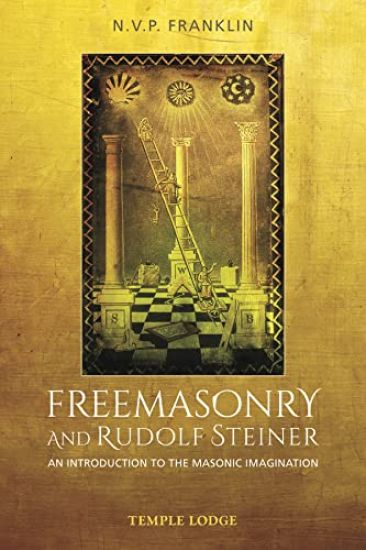
Today some six million Freemasons around the world continue to perform their rituals regularly - an enormous legacy of spiritual endeavour, kept largely in secret. In Britain alone there are over 7,000 Lodges, with a quarter of a million members. What is this wealth, this appeal, and how did the philosopher and spiritual scientist Rudolf Steiner reinterpret or reconstruct Freemasonry's time-worn legacy? Unless one is a Freemason, the masonic world, with its arcane conventions and language, remains largely unknown: an obscurity that is almost impossible to fathom. Yet understanding its traditions and style are invaluable when approaching Goethe, Mozart, Herder, Lessing and Novalis - as well as Rudolf Steiner. Steiner himself renewed the 'Royal Art' of Freemasonry from 1906 to 1914 through his ritual work known as Mystica AEterna. When Steiner invigorated education, medicine, the social order and religion, he fully intended that committed and professional individuals should assume responsibility for the new initiatives. But this was not the case with the Masonic Order he founded, whose leadership he took upon himself. Even the celebration of his passing in 1925, led by Marie Steiner, was entirely Masonic in character. In the context of continuing resistance and misrepresentation, N.V.P. Franklin uncovers the living heart of Freemasonry and reveals why it was - and still is - immensely relevant to anthroposophy. With profound research into its older rituals and teachings, this detailed and conscientious study is a unique contribution to comprehending freemasonry and anthroposophy - both historically and in the present day.
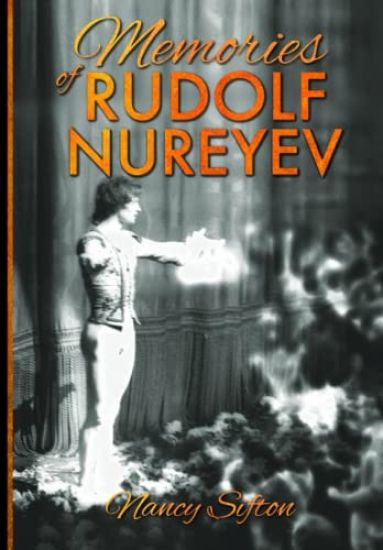
Nancy Sifton's eye witness account of the legendary dancer Rudolf Nureyev's 30-year career provides a "must read" for performing arts and biography buffs. An inside look at the incredible life of legendary dancer Rudolf Nureyev from an eye-witness account by dance enthusiast and writer Nancy Sifton. Having attended more than 1,000 Nureyev performances in her many travels over a 30-year period, the author documented her personal observations of Nureyev, both in rehearsal, onstage and off and his unique relationship with his many supporters who attended rehearsals, celebrated his birthdays, and provided assistance to accommodate his nonstop performing schedule. With humor and respect, her book educates, illuminates, and explains the many facets of this great dancer and the inspiring world of dance.
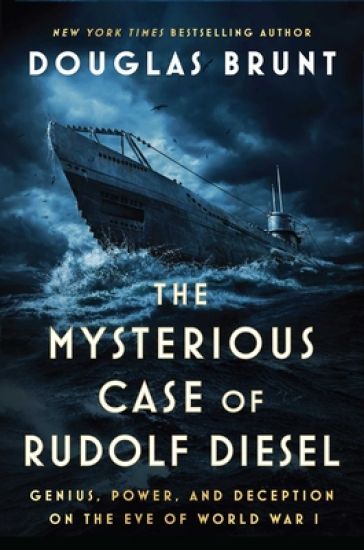
The hidden history of one of the world’s greatest inventors, a man who disrupted the status quo and then disappeared into thin air on the eve of World War I—this book answers the hundred-year-old mystery of what really became of Rudolf Diesel. September 29, 1913: the steamship Dresden is halfway between Belgium and England. On board is one of the most famous men in the world, Rudolf Diesel, whose new internal combustion engine is on the verge of revolutionizing global industry forever. But Diesel never arrives at his destination. He vanishes during the night and headlines around the world wonder if it was an accident, suicide, or murder. After rising from an impoverished European childhood, Diesel had become a multi-millionaire with his powerful engine that does not require expensive petroleum-based fuel. In doing so, he became not only an international celebrity but also the enemy of two extremely powerful men: Kaiser Wilhelm II of Germany and John D. Rockefeller, the founder of Standard Oil and the richest man in the world. The Kaiser wanted the engine to power a fleet of submarines that would finally allow him to challenge Great Britain’s Royal Navy. But Diesel had intended for his engine to be used for the betterment of mankind and refused to keep the technology out of the hands of the British or any other nation. For John D. Rockefeller, the engine was nothing less than an existential threat to his vast and lucrative oil empire. As electric lighting began to replace kerosene lamps, Rockefeller’s bottom line depended on the world’s growing thirst for gasoline to power its automobiles and industries. At the outset of this new age of electricity and oil, Europe stood on the precipice of war. Rudolf Diesel grew increasingly concerned about Germany’s rising nationalism and military spending. The inventor was on his way to London to establish a new company that would help Britain improve its failing submarine program when he disappeared. Now, New York Times bestselling author Douglas Brunt reopens the case and provides an astonishing new conclusion about Diesel’s fate. “Equal parts Walter Isaacson and Sherlock Holmes, The Mysterious Case of Rudolf Diesel yanks back the curtain on the greatest caper of the 20th century in this riveting history” (Jay Winik, New York Times bestselling author).
This instant New York Times bestselling “dynamic detective story” (The New York Times) reveals the hidden history Rudolf Diesel, one of the world’s greatest inventors, and his mysterious disappearance on the eve of World War I.September 29, 1913: the steamship Dresden is halfway between Belgium and England. On board is one of the most famous men in the world, Rudolf Diesel, whose new internal combustion engine is on the verge of revolutionizing global industry forever. But Diesel never arrives at his destination. He vanishes during the night and headlines around the world wonder if it was an accident, suicide, or murder. After rising from an impoverished European childhood, Diesel had become a multi-millionaire with his powerful engine that does not require expensive petroleum-based fuel. In doing so, he became not only an international celebrity but also the enemy of two extremely powerful men: Kaiser Wilhelm II of Germany and John D. Rockefeller, the founder of Standard Oil and the richest man in the world. The Kaiser wanted the engine to power a fleet of submarines that would finally allow him to challenge Great Britain’s Royal Navy. But Diesel had intended for his engine to be used for the betterment of the world. Now, New York Times bestselling author Douglas Brunt reopens the case and provides an “absolutely riveting” (Chris Bohjalian, #1 New York Times bestselling author) new conclusion about Diesel’s fate. Brunt’s book is “equal parts Walter Isaacson and Sherlock Holmes, [and] yanks back the curtain on the greatest caper of the 20th century in this riveting history” (Jay Winik, New York Times bestselling author).

Art and Soul: Rudolf Steiner, Interdisciplinary Art and Education
Springer Nature Switzerland AG
2019
sidottu
This book brings together Steiner's philosophical, biodynamic and cultural contributions to education, where 'spirit' and ‘soul’ are the creative elements in human evolution. His thought is applied to selected examples of innovative artistic practice and pedagogy of the present. This volume is intended for researchers in the arts and education with an interest in Rudolf Steiner's huge influence on educational thought and policy.This is an urgent point in time to reflect on the role of arts in education and what it might mean for our souls. An accessible yet scholarly study of interdisciplinarity, imagination and creativity is of critical widespread interest now, when arts education in many countries is threatened with near-extinction.
Art and Soul: Rudolf Steiner, Interdisciplinary Art and Education
Springer Nature Switzerland AG
2020
nidottu
This book brings together Steiner's philosophical, biodynamic and cultural contributions to education, where 'spirit' and ‘soul’ are the creative elements in human evolution. His thought is applied to selected examples of innovative artistic practice and pedagogy of the present. This volume is intended for researchers in the arts and education with an interest in Rudolf Steiner's huge influence on educational thought and policy.This is an urgent point in time to reflect on the role of arts in education and what it might mean for our souls. An accessible yet scholarly study of interdisciplinarity, imagination and creativity is of critical widespread interest now, when arts education in many countries is threatened with near-extinction.
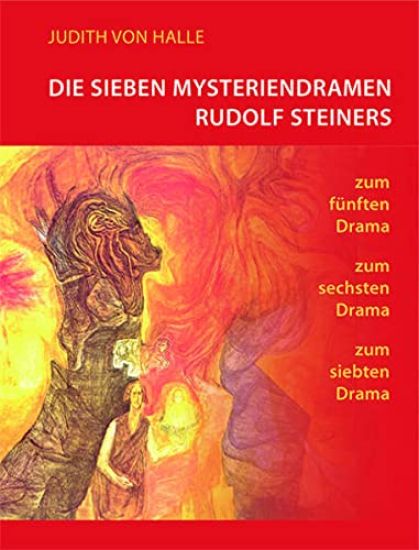

Neutestamentliche Studien für Rudolf Bultmann
de Gruyter
1978
sidottu

Festgabe für Rudolf Stammler zum 70. Geburstage am 19 Febr. 1926
de Gruyter
1926
sidottu

Herz-Kreislauf-Forschung: Rudolf Baumann Zum 70. Geburtstag
De Gruyter
1982
sidottu
Keine ausf hrliche Beschreibung f r "Herz-Kreislauf-Forschung" verf gbar.


Nicolaus August Otto Rudolf Diesel
Springer Vieweg
2014
nidottu