""Eagle Man: Charles L. Broley's Field Adventures With American Eagles"" is a book written by Myrtle Jeanne Broley that chronicles the life and work of Charles L. Broley, a renowned wildlife biologist and expert in American eagles. The book is a collection of stories and anecdotes about Broley's field adventures, including his encounters with eagles in their natural habitats, his efforts to protect the species from extinction, and his collaborations with other eagle researchers and conservationists. Throughout the book, readers will learn about the biology and behavior of American eagles, as well as the challenges they face in the wild. The book also includes photographs and illustrations of eagles and their habitats, as well as maps and diagrams that help to illustrate Broley's research and findings. ""Eagle Man"" is a fascinating read for anyone interested in wildlife biology, conservation, or the natural world.This scarce antiquarian book is a facsimile reprint of the old original and may contain some imperfections such as library marks and notations. Because we believe this work is culturally important, we have made it available as part of our commitment for protecting, preserving, and promoting the world's literature in affordable, high quality, modern editions, that are true to their original work.
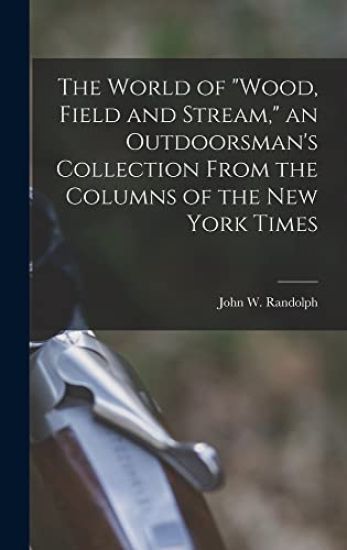
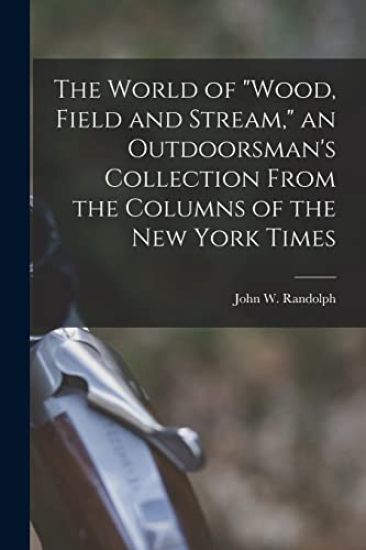
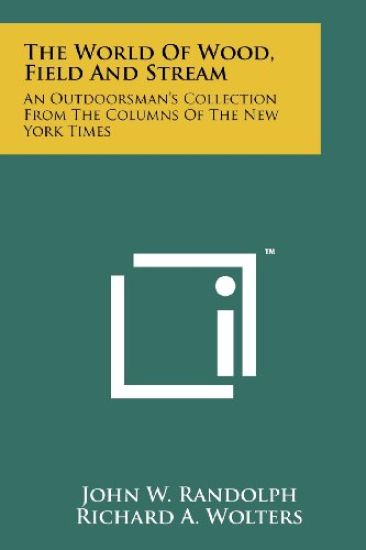
The World of Wood, Field and Stream: An Outdoorsman's Collection from the Columns of The New York Times is a book written by John W. Randolph. The book is a compilation of the author's articles published in The New York Times over the years. The articles are on the subject of outdoor activities such as hunting, fishing, camping, and hiking. The book offers a comprehensive guide to the world of the outdoors, providing readers with tips, tricks, and advice on how to make the most of their time in nature. The book covers a wide range of topics, including the history of hunting and fishing, the best equipment to use, and the best places to go for different types of outdoor activities. The author also shares personal anecdotes and stories from his own experiences in the great outdoors. The book is a must-read for anyone who loves spending time in nature and wants to learn more about the world of wood, field, and stream.Introduction By Red Smith.This scarce antiquarian book is a facsimile reprint of the old original and may contain some imperfections such as library marks and notations. Because we believe this work is culturally important, we have made it available as part of our commitment for protecting, preserving, and promoting the world's literature in affordable, high quality, modern editions, that are true to their original work.
This work has been selected by scholars as being culturally important, and is part of the knowledge base of civilization as we know it. This work was reproduced from the original artifact, and remains as true to the original work as possible. Therefore, you will see the original copyright references, library stamps (as most of these works have been housed in our most important libraries around the world), and other notations in the work.This work is in the public domain in the United States of America, and possibly other nations. Within the United States, you may freely copy and distribute this work, as no entity (individual or corporate) has a copyright on the body of the work.As a reproduction of a historical artifact, this work may contain missing or blurred pages, poor pictures, errant marks, etc. Scholars believe, and we concur, that this work is important enough to be preserved, reproduced, and made generally available to the public. We appreciate your support of the preservation process, and thank you for being an important part of keeping this knowledge alive and relevant.
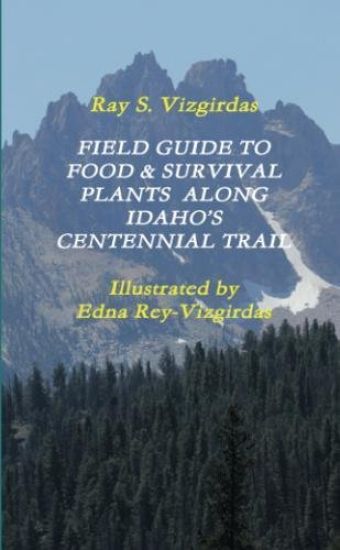
A Field Guide to Food & Survival Plants along Idaho's Centennial Trail was developed to introduce hikers to the abundance of wild and native plants foods along this almost 1,000-mile long trail in Idaho. For those unfamiliar with the Idaho Centennial Trail (ICT), it is a trail that starts at Murphy Hot Springs on the Idaho-Nevada border and proceeds north through the Sawtooth, Frank Church-River of No Return and the Selway-Bitterroot wilderness areas, along the Idaho/Montana border within the Bitterroot Range, and ends at the Canadian border north of Priest Lake in the Idaho Panhandle. Along the way you travel through sagebrush steppe, mountain and subalpine forests, and alpine environments. In short, a diversity of habitats and in many cases, in truly remote backcountry conditions.
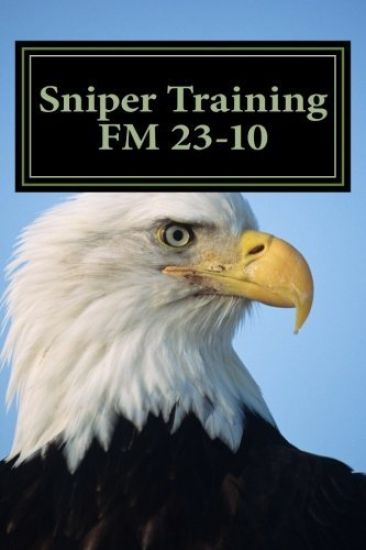
The United States Army sniper is a specially selected volunteer highly trained in advanced marksmanship and Fieldcraft skills. He can support special operations missions and is able to engage selected targets from concealed positions at ranges and under conditions that are not possible for the normal rifleman. The sniper's skill acts as a force multiplier, where the mission is two-fold: (1) to eliminate high-value tactical targets on the battlefield, and (2) act as observer gathering intelligence. Field Manual 23-10 provides doctrinal guidance on the mission, personnel, organization, equipment, training, skills, and employment of the Sniper. This manual is intended for use by commanders, staffs, instructors, and soldiers at training posts, United States Army schools, and units. FM 23-10 addresses three distinct audiences: - Commanders. It provides specific guidance on the nature, role, candidate selection, organization, and employment of sniper personnel. - Trainers. It provides a reference for developing training programs. - Snipers. It contains detailed information on the fundamental knowledge, skills, and employment methods of snipers throughout the entire operational continuum.