Kirjojen hintavertailu. Mukana 11 244 527 kirjaa ja 12 kauppaa.

Kirjahaku

Etsi kirjoja tekijän nimen, kirjan nimen tai ISBN:n perusteella.

1000 tulosta hakusanalla Samuel Hamilton

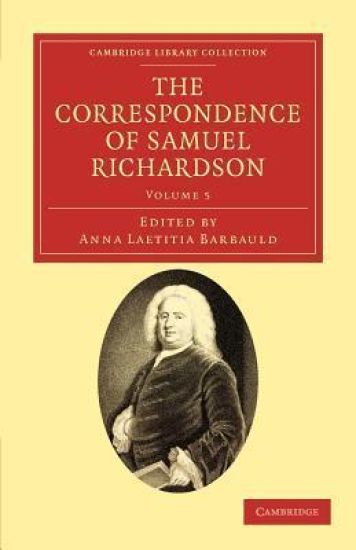
The Correspondence of Samuel Richardson

The Correspondence of Samuel Richardson

Samuel Richardson

Cambridge University Press
2011
pokkari
Samuel Richardson (1689–1761), the English writer and printer best known for his epistolary novels, including Pamela (1740) and Clarissa (1748), had preserved copies of his extensive correspondence with a view to its eventual publication, and these volumes, edited by Anna Laetitia Barbauld and first published in 1804, contain her selection from his papers. Richardson became a printer's apprentice in 1706 and for the rest of his life managed a successful printing business in addition to writing his highly popular and influential novels. After the success of Pamela, Richardson regularly corresponded with leading contemporary literary figures including Henry Fielding and Samuel Johnson. The letters provide fascinating insights into Richardson's life and literary and social activities, as well as discussions of current affairs. Volume 5 contains his correspondence with (among many others) Samuel Johnson.
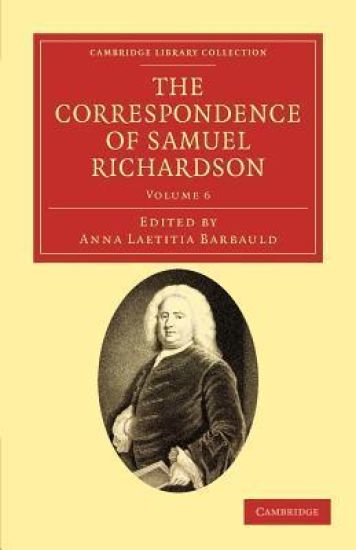
The Correspondence of Samuel Richardson

The Correspondence of Samuel Richardson

Samuel Richardson

Cambridge University Press
2011
pokkari
Samuel Richardson (1689–1761), the English writer and printer best known for his epistolary novels, including Pamela (1740) and Clarissa (1748), had preserved copies of his extensive correspondence with a view to its eventual publication, and these volumes, edited by Anna Laetitia Barbauld and first published in 1804, contain her selection from his papers. Richardson became a printer's apprentice in 1706 and for the rest of his life managed a successful printing business in addition to writing his highly popular and influential novels. After the success of Pamela, Richardson regularly corresponded with leading contemporary literary figures including Henry Fielding and Samuel Johnson. The letters provide fascinating insights into Richardson's life and literary and social activities. Volume 6 is devoted entirely to his lively correspondence with Lady Bradshaigh, discussing literature but also the writers' respective domestic affairs, and contemporary social concerns including the education of women and the behaviour of men.
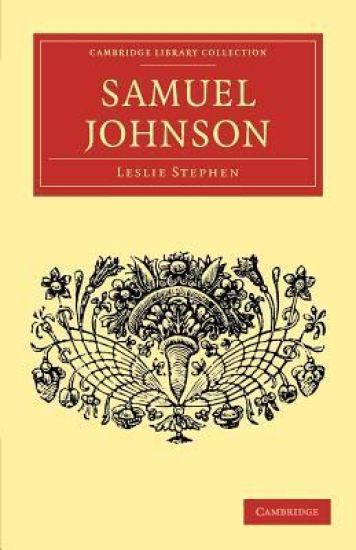
Samuel Johnson

Samuel Johnson

Stephen Leslie

Cambridge University Press
2011
pokkari
The English poet, literary critic, biographer and lexicographer Samuel Johnson (1709–84) is perhaps most famous for his Dictionary of the English Language and the influential Lives of the Most Eminent English Poets, and is often considered the most distinguished man of letters in English history. First published in 1878 in the first series of 'English Men of Letters', this biography by the eminent critic Sir Leslie Stephen traces Johnson's life from his childhood to his career as a writer and literary critic, and concludes with an overview of his works. Stephen describes Johnson's style as one of 'masculine directness', reflecting a life blighted by experiences of poverty and disease, and a desire to escape from pain. Painting a striking portrait of one of the most vigorous intellects of the eighteenth century, this work remains of interest to literary scholars today.
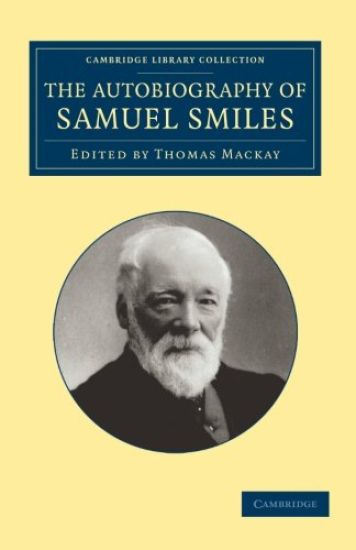
The Autobiography of Samuel Smiles, LL.D.

The Autobiography of Samuel Smiles, LL.D.

Samuel Smiles

Cambridge University Press
2013
pokkari
One of the most popular Victorian writers, Samuel Smiles (1812–1904) made his name in 1859 with the original self-improvement manual Self-Help. His highly successful multi-volume Lives of the Engineers (also reissued in this series) contained biographies of men who had, like him, achieved greatness not through privilege but through hard work. Left incomplete at his death, edited by the social theorist Thomas Mackay (1849–1912) and first published in 1905, his autobiography opens with a vivid description of the Scottish garrison town of his birth during the Napoleonic wars. In his later years he was a vocal supporter of state education, and the value of education was a constant theme throughout his life. He remembers his schooldays here with clarity, writing that 'a good education is equivalent to a good fortune'. Straightforward and unpretentious, this book will be of interest to historians and readers fascinated by the Victorian drive for self-improvement.
Letters to and from the Late Samuel Johnson, LL.D.

Letters to and from the Late Samuel Johnson, LL.D.

Samuel Johnson

Cambridge University Press
2013
pokkari
One of the most celebrated individuals of English literature, Samuel Johnson (1709–84) was a defining figure of his age. In addition to his celebrated labours as a lexicographer, Johnson distinguished himself as a poet, essayist, critic, biographer and editor. The writer and society hostess Hester Lynch Piozzi (1741–1821) was an unconventional woman of great intellectual vivacity. She became a close friend of Johnson, whom she met through her first husband, the brewer Henry Thrale, whose ailing business Johnson did much to support. As well as writing essays, poetry, memoirs and travel diaries, she was one of the first women to produce works on philology and history. First published in 1788 - two years after her groundbreaking Anecdotes of the Late Samuel Johnson, which anticipated Boswell's biography - these letters offer a captivating glimpse into their daily lives and concerns. Volume 1 covers the period 1765 to 1777.
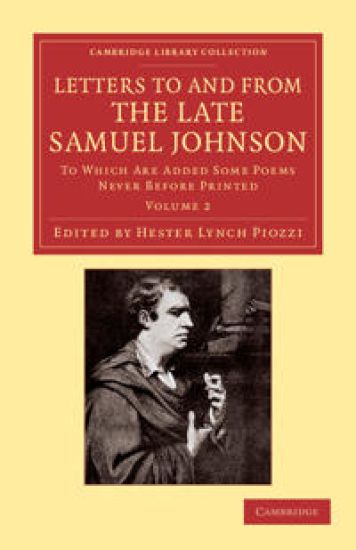
Letters to and from the Late Samuel Johnson, LL.D.

Letters to and from the Late Samuel Johnson, LL.D.

Samuel Johnson

Cambridge University Press
2013
pokkari
One of the most celebrated individuals of English literature, Samuel Johnson (1709–84) was a defining figure of his age. In addition to his celebrated labours as a lexicographer, Johnson distinguished himself as a poet, essayist, critic, biographer and editor. The writer and society hostess Hester Lynch Piozzi (1741–1821) was an unconventional woman of great intellectual vivacity. She became a close friend of Johnson, whom she met through her first husband, the brewer Henry Thrale, whose ailing business Johnson did much to support. As well as writing essays, poetry, memoirs and travel diaries, she was one of the first women to produce works on philology and history. First published in 1788 - two years after her groundbreaking Anecdotes of the Late Samuel Johnson, which anticipated Boswell's biography - these letters offer a captivating glimpse into their daily lives and concerns. Volume 2 covers the period 1777 to 1784.
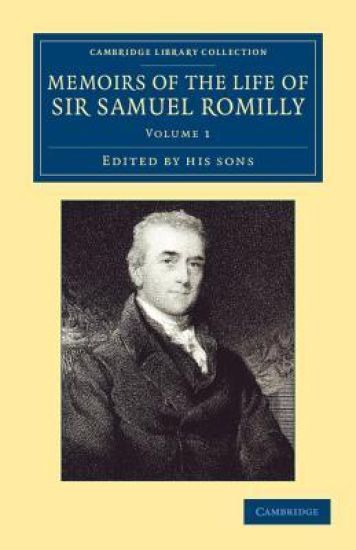
Memoirs of the Life of Sir Samuel Romilly: Volume 1

Memoirs of the Life of Sir Samuel Romilly: Volume 1

Samuel Romilly

Cambridge University Press
2013
pokkari
A friend of Wilberforce and Bentham, Sir Samuel Romilly (1757–1818) combined considerable legal expertise with commitment to progressive political causes such as the abolition of the slave trade. During his time in Parliament - he was Solicitor General in Lord Grenville's 'Ministry of All the Talents' - he sought to lessen the archaic severity of English criminal law regarding corporal and capital punishment. Though he met with resistance, his efforts raised awareness and influenced later reforms. Compiled by his sons and published in 1840, this three-volume collection of autobiographical writings and varied correspondence illuminates the development of his outlook and the principles which guided him. Volume 1 includes Romilly's two-part narrative of his life from 1757 to 1789, letters about English affairs sent to his brother-in-law in Lausanne (1780–3), letters from eminent friends such as the French revolutionary Mirabeau (1783–7), and selected correspondence with the Genevan writer Étienne Dumont and others (1788–91).
Memoirs of the Life of Sir Samuel Romilly: Volume 2

Memoirs of the Life of Sir Samuel Romilly: Volume 2

Samuel Romilly

Cambridge University Press
2013
pokkari
A friend of Wilberforce and Bentham, Sir Samuel Romilly (1757–1818) combined considerable legal expertise with commitment to progressive political causes such as the abolition of the slave trade. During his time in Parliament - he was Solicitor General in Lord Grenville's 'Ministry of All the Talents' - he sought to lessen the archaic severity of English criminal law regarding corporal and capital punishment. Though he met with resistance, his efforts raised awareness and influenced later reforms. Compiled by his sons and published in 1840, this three-volume collection of autobiographical writings and varied correspondence illuminates the development of his outlook and the principles which guided him. Volume 2 comprises selected correspondence for the period 1792–1802, the diary of a visit to Paris in 1802, an unfinished narrative of personal events in 1805, and Romilly's diary of his parliamentary life between 1806 and 1811.
Memoirs of the Life of Sir Samuel Romilly: Volume 3

Memoirs of the Life of Sir Samuel Romilly: Volume 3

Samuel Romilly

Cambridge University Press
2013
pokkari
A friend of Wilberforce and Bentham, Sir Samuel Romilly (1757–1818) combined considerable legal expertise with commitment to progressive political causes such as the abolition of the slave trade. During his time in Parliament - he was Solicitor General in Lord Grenville's 'Ministry of All the Talents' - he sought to lessen the archaic severity of English criminal law regarding corporal and capital punishment. Though he met with resistance, his efforts raised awareness and influenced later reforms. Compiled by his sons and published in 1840, this three-volume collection of autobiographical writings and varied correspondence illuminates the development of his outlook and the principles which guided him. Volume 3 contains the concluding part of Romilly's diary of his parliamentary life, covering the years 1812–18. Also included are private memoranda which Romilly described as observations on his 'situation in life and future prospects'.
Memoirs of the Life of Sir Samuel Romilly 3 Volume Set

Memoirs of the Life of Sir Samuel Romilly 3 Volume Set

Samuel Romilly

Cambridge University Press
2013
muu
A friend of Wilberforce and Bentham, Sir Samuel Romilly (1757–1818) combined considerable legal expertise with commitment to progressive political causes such as the abolition of the slave trade. During his time in Parliament - he was Solicitor General in Lord Grenville's 'Ministry of All the Talents' - he sought to lessen the archaic severity of English criminal law regarding corporal and capital punishment. Though he met with resistance, his efforts raised awareness and influenced later reforms. Compiled by his sons and published in 1840, this three-volume collection of autobiographical writings and varied correspondence illuminates the development of his outlook and the principles which guided him. The volumes include Romilly's two-part narrative of his life from 1757 to 1789, letters from eminent friends such as the French revolutionary Mirabeau, selected correspondence with Genevan writer Étienne Dumont and others, and Romilly's diary of his parliamentary life between 1806 and 1818.
Samuel F. B. Morse

Samuel F. B. Morse

Samuel Finley Breese Morse

Cambridge University Press
2014
pokkari
The American inventor Samuel Morse (1791–1872) spent decades fighting to be recognised for his key role in devising the electromagnetic telegraph. While he will always be remembered in the history of telecommunications, and for co-developing the code which bears his name, Morse started out as a painter and also involved himself in matters of politics over the course of his career. Published in 1914, this two-volume collection of personal papers was edited by his son, who provides helpful commentary throughout, illuminating the struggles and successes of a remarkable life. Volume 1 includes observations made in Europe while Morse studied painting. During the Napoleonic wars, he writes letters home describing the rising level of crime and social unrest in London, mentioning that he sleeps with a pistol. He is in London when Spencer Perceval is assassinated and later writes of meeting Turner, 'the best landscape painter living'.
Samuel F. B. Morse

Samuel F. B. Morse

Samuel Finley Breese Morse

Cambridge University Press
2014
pokkari
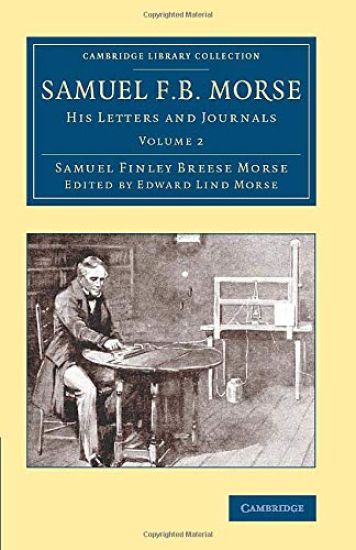
The American inventor Samuel Morse (1791–1872) spent decades fighting to be recognised for his key role in devising the electromagnetic telegraph. While he will always be remembered in the history of telecommunications, and for co-developing the code which bears his name, Morse started out as a painter and also involved himself in matters of politics over the course of his career. Published in 1914, this two-volume collection of personal papers was edited by his son, who provides helpful commentary throughout, illuminating the struggles and successes of a remarkable life. Volume 2 begins with Morse's return voyage to the United States; following a conversation with a fellow passenger regarding electromagnetism, Morse began to develop the concept of the single-wire telegraph. The rest of the volume gives much personal background to the development of the invention and particularly to Morse's efforts to gain the recognition he believed he deserved.
Samuel Beckett and the Visual Arts

Samuel Beckett and the Visual Arts

Conor Carville

Cambridge University Press
2018
sidottu
Samuel Beckett and the Visual Arts is the first book to comprehensively assess Beckett's knowledge of art, art history and art criticism. In his lifetime Beckett thought deeply about visual culture from ancient Egyptian statuary to Dutch realism, from Quattrocento painting to the modernists and after. Drawing on a wide range of published and unpublished sources, this book traces in forensic detail the development of Beckett's understanding of painting in particular, as that understanding developed from the late 1920s to the 1970s. In doing so it demonstrates that Beckett's thinking about art and aesthetics radically changes in the course of his life, often directly responding to the intellectual and historical contexts in which he found himself. Moving fluently between art history, philosophy, literary analysis and historical context, Samuel Beckett and the Visual Arts rethinks the trajectory of Beckett's career, and reorients his relationship to modernism, late modernism and the avant-gardes.
Samuel Beckett and the Visual Arts

Samuel Beckett and the Visual Arts

Conor Carville

Cambridge University Press
2021
pokkari
Samuel Beckett and the Visual Arts is the first book to comprehensively assess Beckett's knowledge of art, art history and art criticism. In his lifetime Beckett thought deeply about visual culture from ancient Egyptian statuary to Dutch realism, from Quattrocento painting to the modernists and after. Drawing on a wide range of published and unpublished sources, this book traces in forensic detail the development of Beckett's understanding of painting in particular, as that understanding developed from the late 1920s to the 1970s. In doing so it demonstrates that Beckett's thinking about art and aesthetics radically changes in the course of his life, often directly responding to the intellectual and historical contexts in which he found himself. Moving fluently between art history, philosophy, literary analysis and historical context, Samuel Beckett and the Visual Arts rethinks the trajectory of Beckett's career, and reorients his relationship to modernism, late modernism and the avant-gardes.
Samuel Beckett and the Language of Subjectivity

Samuel Beckett and the Language of Subjectivity

Derval Tubridy

Cambridge University Press
2018
sidottu
Samuel Beckett and the Language of Subjectivity is the first sustained exploration of aporia as a vital, subversive, and productive figure within Beckett's writing as it moves between prose and theatre. Informed by key developments in analytic and continental philosophies of language, Tubridy's fluent analysis demonstrates how Beckett's translations - between languages, genres, bodies, and genders - offer a way out of the impasse outlined in his early aesthetics. The primary modes of the self's extension into the world are linguistic (speaking, listening) and material (engaging with bodies, spaces and objects). Yet what we mean by language has changed in the twenty-first century. Beckett's concern with words must be read through the information economy in which contemporary identities are forged. Derval Tubridy provides the groundwork for new insights on Beckett in terms of the posthuman: the materialist, vitalist and relational subject cathected within differential mechanisms of power.
Samuel Beckett's Geological Imagination

Samuel Beckett's Geological Imagination

Mark Byron

Cambridge University Press
2020
pokkari
Samuel Beckett's Geological Imagination addresses the ubiquity of earthy objects in Beckett's prose, drama and poetry, exploring how mineral and archaeological objects bear upon the themes, narrative locus, and sensibilities of Beckett's texts in surprisingly varied ways. By deploying figures of ruination and excavation with etymological self-awareness, Beckett's late prose narratives – Company, Ill Seen Ill Said, and Worstward Ho – comprise a late-career meditation on the stratigraphic layerings of language and memory over an extended writing career. These layers comprise an embodied record of writing in their allusions to literary history and to Beckett's own oeuvre.
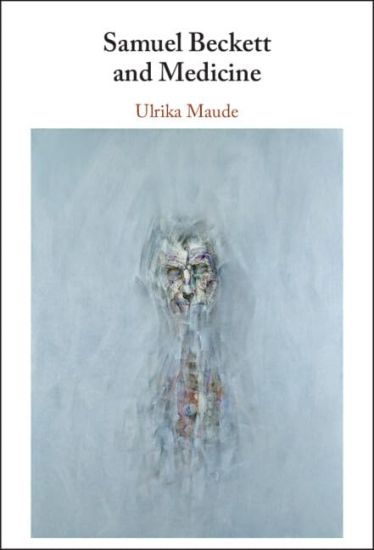
Samuel Beckett and Medicine

Samuel Beckett and Medicine

Ulrika Maude

Cambridge University Press
2025
sidottu
Samuel Beckett and Medicine offers the first sustained analysis of the author's abiding interest in medicine and medical discourses, advancing insights into the representation of illness, neurodiversity, disability, ageing, and dying in his work. It analyses Beckett's representation of the production of language, offering new ways of understanding the often perplexing formal and stylistic experimentation of his work. The book addresses the many automatic and habitual functions staged in his writing and considers the impact of nerve theory, reflexes, affect, and the viscera on his work. It advances new readings of Beckett's poetry, prose, and television and stage plays, drawing on his reading notes on medicine and psychology, and on his correspondence and critical writings. Through its refusal to aestheticize embodied experience or to yield to the metaphysical consolations of literature, Beckett's work challenges us to confront the intricacies of embodied being and to encounter the question of finitude.