Kirjahaku
Etsi kirjoja tekijän nimen, kirjan nimen tai ISBN:n perusteella.
1000 tulosta hakusanalla Stephen D Morrison
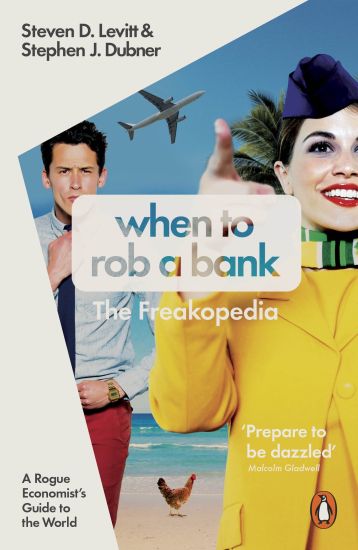
In celebration of the 10th anniversary of the landmark book Freakonomics comes this curated collection from the most readable economics blog in the universe. It's the perfect solution for the millions of readers who love all things Freakonomics. Surprising and erudite, eloquent and witty, When to Rob a Bank demonstrates the brilliance that has made the Freakonomics guys an international sensation, with more than 7 million books sold in 40 languages, and 150 million downloads of their Freakonomics Radio podcast.When Freakonomics was first published, the authors started a blog--and they've kept it up. The writing is more casual, more personal, even more outlandish than in their books. In When to Rob a Bank, they ask a host of typically off-center questions: Why don't flight attendants get tipped? If you were a terrorist, how would you attack? And why does KFC always run out of fried chicken?Over the past decade, Steven D. Levitt and Stephen J. Dubner have published more than 8,000 blog posts on Freakonomics.com. Many of them, they freely admit, were rubbish. But now they've gone through and picked the best of the best. You'll discover what people lie about, and why; the best way to cut gun deaths; why it might be time for a sex tax; and, yes, when to rob a bank. (Short answer: never; the ROI is terrible.) You'll also learn a great deal about Levitt and Dubner's own quirks and passions, from gambling and golf to backgammon and the abolition of the penny. --The A.V. Club
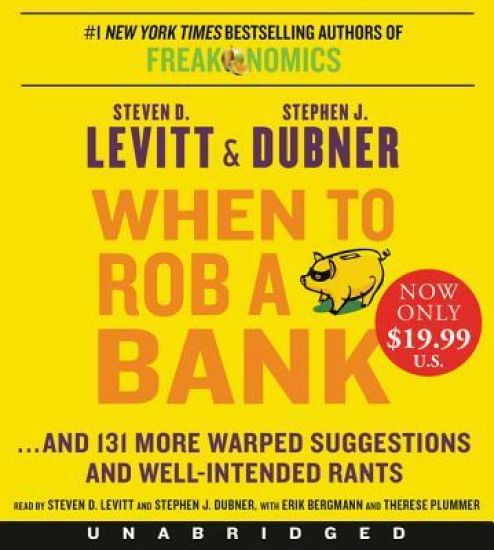
When to Rob a Bank: ...and 131 More Warped Suggestions and Well-Intended Rants
Steven D. Levitt; Stephen J. Dubner
HarperAudio
2016
cd
In celebration of the 10th anniversary of the landmark book Freakonomics comes this curated collection from the most readable economics blog in the universe. It's the perfect solution for the millions of readers who love all things Freakonomics. Surprising and erudite, eloquent and witty, When to Rob a Bank demonstrates the brilliance that has made the Freakonomics guys an international sensation, with more than 7 million books sold in 40 languages, and 150 million downloads of their Freakonomics Radio podcast.When Freakonomics was first published, the authors started a blog--and they've kept it up. The writing is more casual, more personal, even more outlandish than in their books. In When to Rob a Bank, they ask a host of typically off-center questions: Why don't flight attendants get tipped? If you were a terrorist, how would you attack? And why does KFC always run out of fried chicken?Over the past decade, Steven D. Levitt and Stephen J. Dubner have published more than 8,000 blog posts on the Freakonomics website. Many of them, they freely admit, were rubbish. But now they've gone through and picked the best of the best. You'll discover what people lie about, and why; the best way to cut gun deaths; why it might be time for a sex tax; and, yes, when to rob a bank. (Short answer: never; the ROI is terrible.) You'll also learn a great deal about Levitt and Dubner's own quirks and passions, from gambling and golf to backgammon and the abolition of the penny.
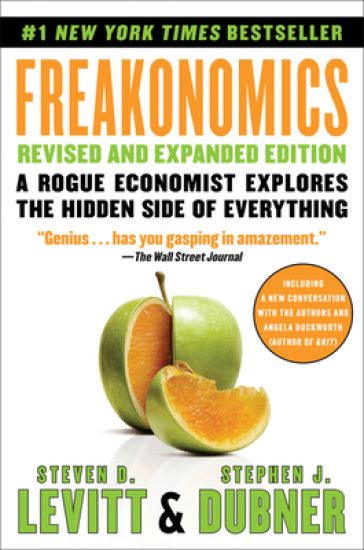
Freakonomics: A Rogue Economist Explores the Hidden Side of Everything
Steven D. Levitt; Stephen J. Dubner
William Morrow Company
2020
nidottu
The legendary bestseller that made millions look at the world in a radically different way returns in a new edition, now including an exclusive discussion between the authors and bestselling professor of psychology Angela Duckworth.Which is more dangerous, a gun or a swimming pool? Which should be feared more: snakes or french fries? Why do sumo wrestlers cheat? In this groundbreaking book, leading economist Steven Levitt--Professor of Economics at the University of Chicago and winner of the American Economic Association's John Bates Clark medal for the economist under 40 who has made the greatest contribution to the discipline--reveals that the answers. Joined by acclaimed author and podcast host Stephen J. Dubner, Levitt presents a brilliant--and brilliantly entertaining--account of how incentives of the most hidden sort drive behavior in ways that turn conventional wisdom on its head.
Freakonomics Twentieth Anniversary Edition: A Rogue Economist Explores the Hidden Side of Everything
Steven D. Levitt; Stephen J. Dubner
William Morrow Company
2025
nidottu
Modern life can be baffling and chaotic. Is there any way of making sense of it? The answer, explains groundbreaking thinker Steven Levitt, lies in economics. Not ordinary economics, but freakonomics. It is at the heart of everything we see and do and the subjects that bedevil us daily: from parenting to crime, sport to politics, fat to cheating, fear to traffic jams. In Freakonomics Levitt turns conventional economics on its head, stripping away the jargon and calculations of the experts' to explore the riddles of everyday life and examine topics such as: how chips are more likely to kill you than murder or a terrorist attack; why sportsmen cheat and how fraud can be spotted; why violent crime can be linked not to gun laws, policing or poverty, but to abortion; why a road is more efficient when everyone travels at 20mph; how the name you give your child can give them an advantage in later life; and what really causes obesity epidemics. Ultimately, he shows us that economics is all about how people get what they want, and what makes them do it. Asking provocative and profound questions about human motivation and contemporary living and reaching some astonishing conclusions, Freakonomics will make you see the familiar world through a completely original lens.
The international bestselling Freakquel to Levitt and Dubner's Freakonomics, this book sees them looking deeper, questioning harder and uncovering even more hidden truths about our world, from global cooling to patriotic prostitutes, drunk walking to why suicide bombers should buy life insurance.'Mind-blowing' Wall Street Journal'Page-turning, politically incorrect and ever-so-slightly intoxicating, like a large swig of tequila' The Times'Like Freakonomics but better ... you are guaranteed a good time' Financial Times'Great fun ... Levitt is a master at drawing counter-intuitive conclusions' Sunday Times'Studded with intriguing examples' Daily Telegraph
In this Freak 'how-to' guide, the mavericks behind the Freakonomics phenomenon teach you their secrets: how to challenge conventional wisdom, unravel life's secret codes and think differently - that is, think like a Freak. Levitt and Dubner see the world like no-one else. Now you can too.'My gut reaction to this life-changing book is "Where have you been all my life?" You will turn pages with delight' Jeffery Taylor, Sunday Express'Captivating, intellectually robust, funny, surprising and wise. What else can one ask?' Daniel Finkelstein, The Times 'Illuminating, good fun, endearing, genial ... I was delighted' Philip Roscoe, The Times Higher Education'It's about how to look at the world, and see the ugly truth ... excellent stuff' William Leith, Spectator'A phenomenon ... their approach has won them a cult following' Observer
This is the ultimate guide to the world of the Freak. Renegade thinkers and bestselling sensations Levitt and Dubner have carefully curated the very best of their blogs, conversations, wisecracks and advice from the last decade to reveal the outlandish truth about everything from lying to bankrobbing, fast food to sex taxes.'We are all Freakonomists now' Washington Post'A phenomenon ... their approach has won them a cult following' Observer'Lie back and let Levitt and Dubner's bouncy prose style carry you along from one peculiarity to the next' Sunday Telegraph'You are guaranteed a good time' Financial Times
Intense debates in recent decades have provoked major new directions in Marxist theory. Earlier reductionist notions of knowledge, dialectics, contradiction, class, and capitalism have been challenged and profoundly transformed.
Why don't flight attendants get tipped? If you were a terrorist, how would you attack? And why does KFC always run out of fried chicken? Over the past decade, Steven D. Levitt and Stephen J. Dubner have published more than 8,000 blog posts on Freakonomics.com. Now the very best of this writing has been carefully curated into one volume, the perfect solution for the millions of readers who love all things Freakonomics. Discover why taller people tend to make more money; why it's so hard to predict the Kentucky Derby winner; and why it might be time for a sex tax (if not a fat tax). You'll also learn a great deal about Levitt and Dubner's own quirks and passions. Surprising and erudite, eloquent and witty, When to Rob a Bank demonstrates the brilliance that has made their books an international sensation.
Why we should prepare for climate change now by taking anticipatory action in vulnerable regions.Global momentum is building to reduce greenhouse gas emissions. So far, so good. The less happy news is that Earth's temperatures will continue to rise for decades. And evidence shows that climbing temperatures are already having serious consequences for vulnerable people and regions through droughts, extreme weather, and melting glaciers. In this book, climate experts Michael Mastrandrea and Stephen Schneider argue that we need to start adapting to climate change, now. They write that these efforts should focus primarily on identifying the places and people most at risk and taking anticipatory action-from developing drought-resistant crops to building sea walls. The authors roundly reject the idea that reactive, unplanned adaptation will solve our problems-that species will migrate northward as climates warm, and farmers will shift to new crops and more hospitable locations. And they are highly critical of "geoengineering" schemes that are designed to cool the planet by such methods as injecting iron into oceans or exploding volcanoes. Mastrandrea and Schneider insist that smart adaptation will require a series of local and regional projects, many of them in the countries least able to pay for them and least responsible for the problem itself. Ensuring that we address the needs of these countries, while we work globally to reduce emissions over the long term, is our best chance to avert global disaster and to reduce the terrible, unfair burdens that are likely to accompany global warming.
A systematic comparison of the three major economic theories, showing how they differ and why these differences matter in shaping economic theory and practice.Contending Economic Theories offers a unique comparative treatment of the three main theories in economics as it is taught today: neoclassical, Keynesian, and Marxian. Each is developed and discussed in its own chapter, yet also differentiated from and compared to the other two theories. The authors identify each theory's starting point, its goals and foci, and its internal logic. They connect their comparative theory analysis to the larger policy issues that divide the rival camps of theorists around such central issues as the role government should play in the economy and the class structure of production, stressing the different analytical, policy, and social decisions that flow from each theory's conceptualization of economics.The authors, building on their earlier book Economics: Marxian versus Neoclassical, offer an expanded treatment of Keynesian economics and a comprehensive introduction to Marxian economics, including its class analysis of society. Beyond providing a systematic explanation of the logic and structure of standard neoclassical theory, they analyze recent extensions and developments of that theory around such topics as market imperfections, information economics, new theories of equilibrium, and behavioral economics, considering whether these advances represent new paradigms or merely adjustments to the standard theory. They also explain why economic reasoning has varied among these three approaches throughout the twentieth century, and why this variation continues today-as neoclassical views give way to new Keynesian approaches in the wake of the economic collapse of 2008.
Why America no longer leads the world in innovation, why we should be concerned, and what must be done about it This important book delivers a critical wake-up call: a fierce global race for innovation advantage is under way, and while other nations are making support for technology and innovation a central tenet of their economic strategies and policies, America lacks a robust innovation policy. What does this portend? Robert Atkinson and Stephen Ezell, widely respected economic thinkers, report on profound new forces that are shaping the global economy—forces that favor nations with innovation-based economies and innovation policies. Unless the United States enacts public policies to reflect this reality, Americans face the relatively lower standards of living associated with a noncompetitive national economy.The authors explore how a weak innovation economy not only contributed to the Great Recession but is delaying America's recovery from it and how innovation in the United States compares with that in other developed and developing nations. Atkinson and Ezell then lay out a detailed, pragmatic road map for America to regain its global innovation advantage by 2020, as well as maximize the global supply of innovation and promote sustainable globalization.
Two Views on the Doctrine of the Trinity
Stephen R. Holmes; Paul D. Molnar; Thomas H. McCall; Paul Fiddes
Zondervan
2014
nidottu
Christians have always believed in the triune God, but they haven't always understood or used the doctrine of the Trinity consistently.In order to form a coherent view of trinitarian theology, it's important for Christians to have a working knowledge of the two legitimate models for explaining this doctrine: Classical – presenting a traditional view of the Trinity, represented by the Baptist theologian Stephen R. Holmes and the Roman Catholic theologian Paul D. Molnar.Relational – presenting the promise and potential hazards of a relational doctrine, represented by the evangelical theologian Thomas H. McCall and the Baptist philosopher Paul S. Fiddes.In this volume of the Counterpoints series, leading contributors establish their models and approaches to the doctrine of the Trinity (or, the relationship between the threeness and oneness of the divine life). Each expert highlights the strengths of his view in order to argue how it best reflects the orthodox perspective. In order to facilitate a genuine debate and to make sure that the key issues are revealed, each contributor addresses the same questions regarding their trinitarian methodology, doctrine, and its implications.
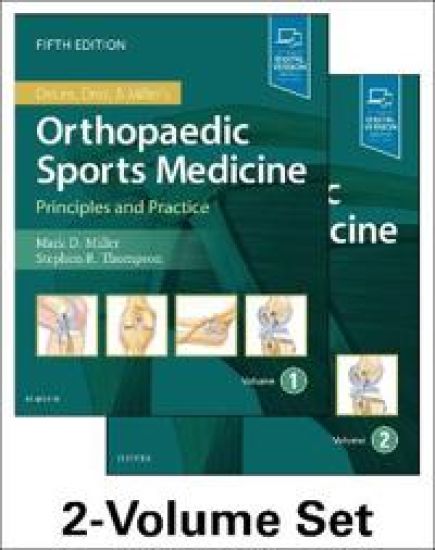
DeLee, Drez and Miller's Orthopaedic Sports Medicine
Mark D. Miller; Stephen R. Thompson
Elsevier - Health Sciences Division
2019
sidottu
Indispensable for both surgeons and sports medicine physicians, DeLee, Drez, & Miller's Orthopaedic Sports Medicine: Principles and Practice, 5th Edition, remains your go-to reference for all surgical, medical, rehabilitation and injury prevention aspects related to athletic injuries and chronic conditions. Authored by Mark D. Miller, MD and Stephen R. Thompson, MD, this 2-volume core resource provides detailed, up-to-date coverage of medical disorders that routinely interfere with athletic performance and return to play, providing the clinically focused information you need when managing athletes at any level. Provides a unique balance of every relevant surgical technique along with extensive guidance on nonsurgical issues-making it an ideal reference for surgeons, sports medicine physicians, physical therapists, athletic trainers, and others who provide care to athletes. Offers expanded coverage of revision surgery, including revision ACL and revision rotator cuff surgery. Features additional coverage of cartilage restoration procedures and meniscal transplantation. Provides significant content on rehabilitation after injury, along with injury prevention protocols. Includes access to a comprehensive video collection, with more than 100 videos new to this edition. Retains key features such as coverage of both pediatric and aging athletes; a streamlined organization for quick reference; in-depth coverage of arthroscopic techniques; extensive references; levels of evidence at the end of each chapter; and "Author’s Preferred Technique" sections. Enhanced eBook version included with purchase. Your enhanced eBook allows you to access all of the text, figures, and references from the book on a variety of devices.
Class Theory and History takes an ambitious and ground-breaking look at the entire history of the Soviet Union and presents a new kind of analysis of the history of the USSR: examining its birth, evolution, and death in class terms. Utilizing the class analytics they have developed over the last three decades, resnick and Wolff formulate the most fully developed economic theory of communism now available, and use that theory to answer the question: did communism ever exist in the USSR and if so, where, why and for how long? Their initial, and controversial, conclusion: Soviet industry never established a communist class structure. This conclusion then leads to the hypothesis that the USSR and provate capitalism in the United States to discuss the future of private capitalism, state capitalism and communism.
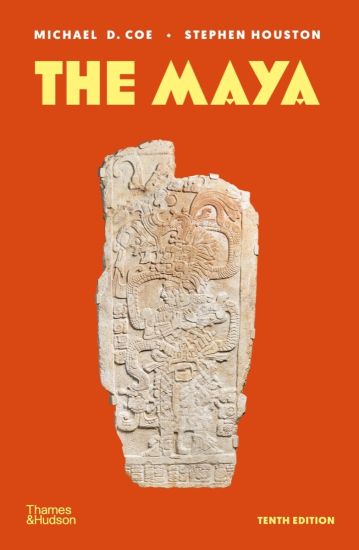
The definitive history of the Maya, fully updated with the latest archaeological studies. The Maya has long been established as the best, most readable introduction to the ancient Maya on the market today. This classic book has been updated by distilling the latest scholarship for the general reader and student. This tenth edition incorporates the most recent archaeological and epigraphic findings, which continue to proceed at a fast pace, along with full-colour illustrations. The new material includes evidence of the earliest human occupants of the Maya region and the beginnings of agriculture and settled life; analysis from lidar on swampy areas, such as Usumacinta, that show enormous rectangle earthworks, including Aguada Fénix, dating from 1050 to 750 BC; and recent advances in decoding Maya writing and imagery. It also expands on information on the roles of women, courtiers and outsiders; covers novel research about Maya cities, including research into water quality, marketplaces, fortifications and integrated road systems; and features coverage of more recent Maya history, including the displacement and mistreatment of the Maya people, along with growing affirmations of their cultural identity and rights. Highlighting the vitality of current scholarship about this brilliant culture, The Maya remains the gold standard introductory book on the subject.
Reimagining Sustainable Cities
Stephen M. Wheeler; Christina D. Rosan
University of California Press
2021
sidottu
A cutting-edge, solutions-oriented analysis of how we can reimagine cities around the world to build sustainable futures. What would it take to make urban places greener, more affordable, more equitable, and healthier for everyone? In recent years, cities have stepped up efforts to address climate and sustainability crises. But progress has not been fast enough or gone deep enough. If communities are to thrive in the future, we need to quickly imagine and implement an entirely new approach to urban development: one that is centered on equity and rethinks social, political, and economic systems as well as urban designs. With attention to this need for structural change, Reimagining Sustainable Cities advocates for a community-informed model of racially, economically, and socially just cities and regions. The book aims to rethink urban sustainability for a new era. In Reimagining Sustainable Cities, Stephen M. Wheeler and Christina D. Rosan ask big-picture questions of interest to readers worldwide: How do we get to carbon neutrality? How do we adapt to a climate-changed world? How can we create affordable, inclusive, and equitable cities? While many books dwell on the analysis of problems, Reimagining Sustainable Cities prioritizes solutions-oriented thinking—surveying historical trends, providing examples of constructive action worldwide, and outlining alternative problem-solving strategies. Wheeler and Rosan use a social ecology lens and draw perspectives from multiple disciplines. Positive, readable, and constructive in tone, Reimagining Sustainable Cities identifies actions ranging from urban design to institutional restructuring that can bring about fundamental change and prepare us for the challenges ahead.
The Excellence Engine Tool Kit
Chester D. Rowe; Stephen M. Davis
The Excellence Engine, LLC
2008
pokkari
This revised workbook introduces the use of a new Cause Investigation tool, the Cause Road Map(c) . This Cause Road Map(c) is a multi-function event cause investigation tool that provides a structured approach to finding the underlying causes for events. It will provide a comprehensive taxonomy for EVERY cause investigation including root cause, apparent cause, equipment cause, and common cause. This workbook guides the reader through the use of various investigation analysis and event modeling tools, including the Excellence Engine's Cause Road Map(c). Following the discussion on various investigation and modeling tools, the authors show why integrating multiple tools with the Cause Road Map(c) is necessary to reveal latent causal factors. This revised workbook also includes discussions on many other topics key to the success event investigations.