Kirjojen hintavertailu. Mukana 11 717 486 kirjaa ja 12 kauppaa.

Kirjahaku

Etsi kirjoja tekijän nimen, kirjan nimen tai ISBN:n perusteella.

1000 tulosta hakusanalla Steven Castryck

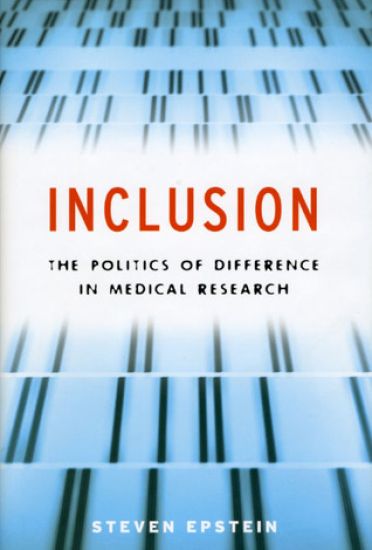
Inclusion

Inclusion

Steven Epstein

University of Chicago Press
2007
sidottu
With "Inclusion", Steven Epstein argues that strategies to achieve diversity in medical research mask deeper problems, ones that might require a different approach and different solutions. Formal concern with this issue, Epstein shows, is a fairly recent phenomenon. Until the mid-1980s, scientists often studied groups of white, middle-aged men - and assumed that conclusions drawn from studying them would apply to the rest of the population. But struggles involving advocacy groups, experts, and Congress led to reforms that forced researchers to diversify the population from which they drew for clinical research. While the prominence of these inclusive practices has offered hope to traditionally undeserved groups, Epstein argues that it has drawn attention away from the tremendous inequalities in health that are rooted not in biology but in society.
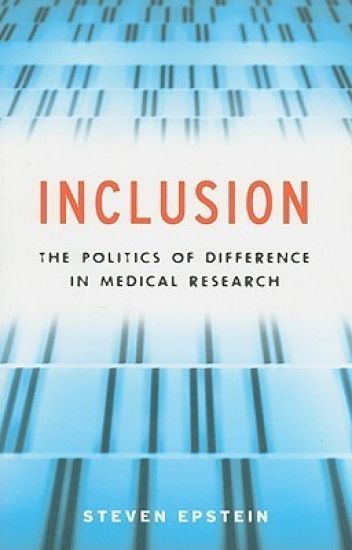
Inclusion – The Politics of Difference in Medical Research

Inclusion – The Politics of Difference in Medical Research

Steven Epstein

University of Chicago Press
2009
nidottu
With "Inclusion", Steven Epstein argues that strategies to achieve diversity in medical research mask deeper problems, ones that might require a different approach and different solutions. Formal concern with this issue, Epstein shows, is a fairly recent phenomenon. Until the mid-1980s, scientists often studied groups of white, middle-aged men - and assumed that conclusions drawn from studying them would apply to the rest of the population. But struggles involving advocacy groups, experts, and Congress led to reforms that forced researchers to diversify the population from which they drew for clinical research. While the prominence of these inclusive practices has offered hope to traditionally undeserved groups, Epstein argues that it has drawn attention away from the tremendous inequalities in health that are rooted not in biology but in society.
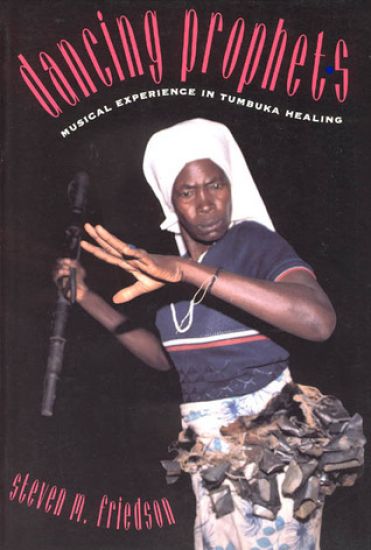
Dancing Prophets

Dancing Prophets

Steven M. Friedson

University of Chicago Press
1996
sidottu
For the Tumbuka people of Malawi, traditional medical practices are filled with music. This ethnography explores a health care system populated by dancing prophets, singing patients and drummed spirits. Tumbuka healers diagnose diseases by enacting divination trances in which they "see" the causes of past events and their consequences for patients. Music is the structural nexus where healer, patient, and spirit meet - it is the energizing heat that fuels the trance, transforming both the bodily and social functioning of the individual. Friedson shows how the sound of the ng'oma drum, the clapping of the choir, call-and-response singing and the jangle of tin belts and iron anklets do not simply accompany other more important ritual activities - they are the very substance of a sacred clinical reality. This analysis of the relation between music and mental and biological health should interest medical anthropologists, Africanists, and religious scholars as well as ethnomusicologists.
Dancing Prophets

Dancing Prophets

Steven M. Friedson

University of Chicago Press
1996
nidottu
For the Tumbuka people of Malawi, traditional medical practices are filled with music. This ethnography explores a health care system populated by dancing prophets, singing patients and drummed spirits. Tumbuka healers diagnose diseases by enacting divination trances in which they "see" the causes of past events and their consequences for patients. Music is the structural nexus where healer, patient, and spirit meet - it is the energizing heat that fuels the trance, transforming both the bodily and social functioning of the individual. Friedson shows how the sound of the ng'oma drum, the clapping of the choir, call-and-response singing and the jangle of tin belts and iron anklets do not simply accompany other more important ritual activities - they are the very substance of a sacred clinical reality. This analysis of the relation between music and mental and biological health should interest medical anthropologists, Africanists, and religious scholars as well as ethnomusicologists.
Remains of Ritual

Remains of Ritual

Steven M. Friedson

University of Chicago Press
2009
sidottu
"Remains of Ritual", Steven M. Friedson's second book on the critical role of music in African ritual, focuses on the Brekete/Gorovodu religion of the Ewe people. Friedson analyzes their practices through a historical and ethnographic study of one of the dominant ritual sites on the southern coast of Ghana: a medicine shrine whose origins lie in the northern region of the country. In each chapter of this fascinating book, Friedson considers a different facet of the Ewe's religious practices, demonstrating throughout that none of them can be conceived of separately from their musicality - in the Brekete world music functions as ritual, and ritual as music. Dance and possession, chanted calls to prayer, animal sacrifice, the sounds and movements of wake keeping, and the play of the drums all come under Friedson's careful scrutiny, and he ends with a thoughtful reflection on his own position and experiences within this ritual-dominated society.Bridging the disciplinary divide between ethnomusicology and anthropology, "Remains of Ritual" will be warmly welcomed by scholars from both camps as well as anyone interested in African culture, music, or religion.
Remains of Ritual

Remains of Ritual

Steven M. Friedson

University of Chicago Press
2009
nidottu
"Remains of Ritual", Steven M. Friedson's second book on the critical role of music in African ritual, focuses on the Brekete/Gorovodu religion of the Ewe people. Friedson analyzes their practices through a historical and ethnographic study of one of the dominant ritual sites on the southern coast of Ghana: a medicine shrine whose origins lie in the northern region of the country. In each chapter of this fascinating book, Friedson considers a different facet of the Ewe's religious practices, demonstrating throughout that none of them can be conceived of separately from their musicality - in the Brekete world music functions as ritual, and ritual as music. Dance and possession, chanted calls to prayer, animal sacrifice, the sounds and movements of wake keeping, and the play of the drums all come under Friedson's careful scrutiny, and he ends with a thoughtful reflection on his own position and experiences within this ritual-dominated society.Bridging the disciplinary divide between ethnomusicology and anthropology, "Remains of Ritual" will be warmly welcomed by scholars from both camps as well as anyone interested in African culture, music, or religion.
Serfdom and Social Control in Russia

Serfdom and Social Control in Russia

Steven L. Hoch

University of Chicago Press
1989
nidottu
This book includes an excellent analysis of the material and demographic foundations of patriarchal society, which will force historians to reevaluate the profitability of the estate economy and the standard of living among Russian serfs....This is an important book which should be read by anyone interested in peasant studies and servile systems of production.
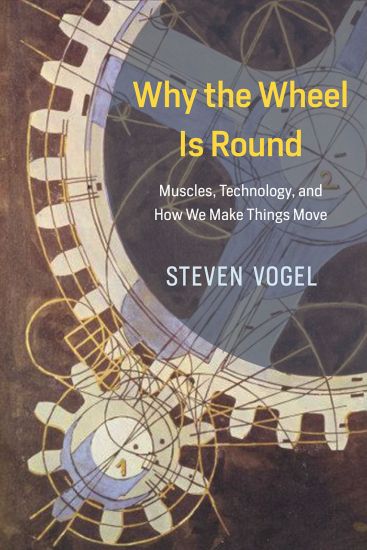
Why the Wheel Is Round

Why the Wheel Is Round

Steven Vogel

University of Chicago Press
2016
sidottu
There is no part of our bodies that fully rotates be it a wrist or ankle or arm in a shoulder socket, we are made to twist only so far. And yet, there is no more fundamental human invention than the wheel a rotational mechanism that accomplishes what our physical form cannot. Throughout history, humans have developed technologies powered by human strength, complementing the physical abilities we have while overcoming our weaknesses. Providing a unique history of the wheel and other rotational devices, like cranks, cranes, carts, and capstans, Why the Wheel Is Round examines the contraptions and tricks we have devised in order to more efficiently move and move through the physical world. Steven Vogel combines his engineering expertise with his remarkable curiosity about how things work to explore how wheels and other mechanisms were, until very recently, powered by the push and pull of the muscles and skeletal systems of humans and other animals. Why the Wheel Is Round explores all manner of treadwheels, hand-spikes, gears, and more, as well as how these technologies diversified into such things as hand-held drills and hurdy-gurdies. Surprisingly, a number of these devices can be built out of everyday components and materials, and Vogel's accessible and expansive book includes instructions and models so that inspired readers can even attempt to make their own muscle-powered technologies, like trebuchets and ballista. Appealing to anyone fascinated by the history of mechanics and technology as well as to hobbyists with home workshops, Why the Wheel Is Round offers a captivating exploration of our common technological heritage based on the simple concept of rotation. From our leg muscles powering the gears of a bicycle to our hands manipulating a mouse on a roller ball, it will be impossible to overlook the amazing feats of innovation behind our daily devices.
The Scientific Revolution

The Scientific Revolution

Steven Shapin

University of Chicago Press
2018
pokkari
“There was no such thing as the Scientific Revolution, and this is a book about it.” With this provocative and apparently paradoxical claim, Steven Shapin begins his bold vibrant exploration of early modern science. In this classic of science history, Shapin takes into account the culture – the variety of beliefs, practices, and influences – that in the 1600s shaped the origins of the modern scientific worldview.
A History of Trust in Ancient Greece

A History of Trust in Ancient Greece

Steven Johnstone

University of Chicago Press
2011
sidottu
An enormous amount of literature exists on Greek law, economics, and political philosophy. Yet no one has written a history of trust, one of the most fundamental aspects of social and economic interaction in the ancient world. In this fresh look at antiquity, Steven Johnstone explores the way democracy and markets flourished in ancient Greece not so much through personal relationships as through trust in abstract systems - including money, standardized measurement, rhetoric, and haggling. Focusing on markets and democratic politics, Johnstone draws on speeches given in Athenian courts, histories of Athenian democracy, comic writings, and laws inscribed on stone to examine how these systems worked. He analyzes their potentials and limitations and how the Greeks understood and critiqued them. In providing the first comprehensive account of these pervasive and crucial systems, "A History of Trust in Ancient Greece" links Greek political, economic, social, and intellectual history in new ways and challenges contemporary analyses of trust and civil society.
Buying and Believing

Buying and Believing

Steven Kemper

University of Chicago Press
2001
sidottu
Advertising is a central part of the global system of commerce and culture. Every day it exposes consumers around the world to practices associated with the West, urban life, prosperity, and modernity. One consequence of this exposure is that it frees people's imaginations from time and place, and imposes a new and foreign reality. In this book Steven Kemper looks at a parallel trend, arguing that advertising firms in Nairobi, Caracas, and Colombo also domesticate the imagination, insinuating images into people's minds of the traditional as well as the modern, the local as much as the global.Drawing upon fieldwork conducted over thirty years, Kemper examines the Sri Lankan advertising industry to show how executives draw on their skills as folk ethnographers to "Sri Lankanize" commodities and practices to make them locally desirable, essentially producing new forms of Sri Lankan culture. Addressing many of the most pressing agendas of contemporary anthropology, Buying and Becoming breaks new ground in studies of culture and globalization.
Buying and Believing

Buying and Believing

Steven Kemper

University of Chicago Press
2001
nidottu
Advertising is a central part of the global system of commerce and culture. Every day it exposes consumers around the world to practices associated with the West, urban life, prosperity, and modernity. One consequence of this exposure is that it frees people's imaginations from time and place, and imposes a new and foreign reality. In this book Steven Kemper looks at a parallel trend, arguing that advertising firms in Nairobi, Caracas, and Colombo also domesticate the imagination, insinuating images into people's minds of the traditional as well as the modern, the local as much as the global.Drawing upon fieldwork conducted over thirty years, Kemper examines the Sri Lankan advertising industry to show how executives draw on their skills as folk ethnographers to "Sri Lankanize" commodities and practices to make them locally desirable, essentially producing new forms of Sri Lankan culture. Addressing many of the most pressing agendas of contemporary anthropology, Buying and Becoming breaks new ground in studies of culture and globalization.
Map Men

Map Men

Steven Seegel

University of Chicago Press
2018
sidottu
More than just colorful clickbait or pragmatic city grids, maps are often deeply emotional tales: of political projects gone wrong, budding relationships that failed, and countries that vanished. In Map Men, Steven Seegel takes us through some of these historical dramas with a detailed look at the maps that made and unmade the world of East Central Europe through a long continuum of world war and revolution. As a collective biography of five prominent geographers between 1870 and 1950--Albrecht Penck, Eugeniusz Romer, Stepan Rudnyts'kyi, Isaiah Bowman, and Count Pal Teleki--Map Men reexamines the deep emotions, textures of friendship, and multigenerational sagas behind these influential maps. Taking us deep into cartographical archives, Seegel recreates the public and private worlds of these five mapmakers, who interacted with and influenced one another even as they played key roles in defining and redefining borders, territories, nations--and, ultimately, the interconnection of the world through two World Wars. Throughout, he examines the transnational nature of these processes and addresses weighty questions about the causes and consequences of the World Wars, the rise of Nazism and Stalinism, and the reasons why East Central Europe became the fault line of these worldchanging developments. At a time when East Central Europe has surged back into geopolitical consciousness, Map Men offers a timely and important look at the historical origins of how the region was defined--and the key people who helped define it.
Monet, Narcissus, and Self-Reflection

Monet, Narcissus, and Self-Reflection

Steven Z. Levine

University of Chicago Press
1995
sidottu
This text provides an understanding of the life and work of Claude Monet and the myth of the modern artist. Levine analyzes the extensive critical reception of Monet and the artist's own writings in the context of the story of Narcissus, popular in late 19th-century France. Through a balance of psychoanalytical theory and historical study, he identifies narcissism and obsession as driving forces in Monet's art and demonstrates how meaning is derived from the accumulated responses to the work.
Monet, Narcissus, and Self-Reflection

Monet, Narcissus, and Self-Reflection

Steven Z. Levine

University of Chicago Press
1995
nidottu
This text provides an understanding of the life and work of Claude Monet and the myth of the modern artist. Levine analyzes the extensive critical reception of Monet and the artist's own writings in the context of the story of Narcissus, popular in late 19th-century France. Through a balance of psychoanalytical theory and historical study, he identifies narcissism and obsession as driving forces in Monet's art and demonstrates how meaning is derived from the accumulated responses to the work.
The Reformation of Emotions in the Age of Shakespeare

The Reformation of Emotions in the Age of Shakespeare

Steven Mullaney

University of Chicago Press
2015
sidottu
The crises of faith that fractured Reformation Europe also caused crises of individual and collective identity. Structures of feeling as well as structures of belief were transformed; there was a reformation of social emotions as well as a Reformation of faith. As Steven Mullaney shows in The Reformation of Emotions in the Age of Shakespeare, Elizabethan popular drama played a significant role in confronting the uncertainties and unresolved traumas of Elizabethan Protestant England. Shakespeare and his contemporaries-audiences as well as playwrights - reshaped popular drama into a new form of embodied social, critical, and affective thought. Examining a variety of works, from revenge plays to Shakespeare's first history tetralogy and beyond, Mullaney explores how post-Reformation drama not only exposed these faultlines of society on stage but also provoked playgoers in the audience to acknowledge all the differences they shared with one another. He demonstrates that our most lasting works of culture remain powerful largely because of their deep roots in the emotional landscape of their times.
Rembrandt's Jews

Rembrandt's Jews

Steven Nadler

University of Chicago Press
2003
nidottu
There is a popular and romantic myth about Rembrandt and the Jewish people. One of history's greatest artists, we are often told, had a special affinity for Judaism. With so many of Rembrandt's works devoted to stories of the Hebrew Bible, and with his apparent penchant for Jewish themes and the sympathetic portrayal of Jewish faces, it is no wonder that the myth has endured for centuries.Rembrandt's Jews puts this myth to the test as it examines both the legend and the reality of Rembrandt's relationship to Jews and Judaism. In his elegantly written and engrossing tour of Jewish Amsterdam—which begins in 1653 as workers are repairing Rembrandt's Portuguese-Jewish neighbor's house and completely disrupting the artist's life and livelihood—Steven Nadler tells us the stories of the artist's portraits of Jewish sitters, of his mundane and often contentious dealings with his neighbors in the Jewish quarter of Amsterdam, and of the tolerant setting that city provided for Sephardic and Ashkenazic Jews fleeing persecution in other parts of Europe. As Nadler shows, Rembrandt was only one of a number of prominent seventeenth-century Dutch painters and draftsmen who found inspiration in Jewish subjects. Looking at other artists, such as the landscape painter Jacob van Ruisdael and Emmanuel de Witte, a celebrated painter of architectural interiors, Nadler is able to build a deep and complex account of the remarkable relationship between Dutch and Jewish cultures in the period, evidenced in the dispassionate, even ordinary ways in which Jews and their religion are represented—far from the demonization and grotesque caricatures, the iconography of the outsider, so often found in depictions of Jews during the Middle Ages and the Renaissance.Through his close look at paintings, etchings, and drawings; in his discussion of intellectual and social life during the Dutch Golden Age; and even through his own travels in pursuit of his subject, Nadler takes the reader through Jewish Amsterdam then and now—a trip that, under ever-threatening Dutch skies, is full of colorful and eccentric personalities, fiery debates, and magnificent art.
Why the Wheel Is Round

Why the Wheel Is Round

Steven Vogel

University of Chicago Press
2018
pokkari
There is no part of our bodies that fully rotates—be it a wrist or ankle or arm in a shoulder socket, we are made to twist only so far. And yet there is no more fundamental human invention than the wheel—a rotational mechanism that accomplishes what our physical form cannot. Throughout history, humans have developed technologies powered by human strength, complementing the physical abilities we have while overcoming our weaknesses. Providing a unique history of the wheel and other rotational devices—like cranks, cranes, carts, and capstans—Why the Wheel Is Round examines the contraptions and tricks we have devised in order to more efficiently move—and move through—the physical world. Steven Vogel combines his engineering expertise with his remarkable curiosity about how things work to explore how wheels and other mechanisms were, until very recently, powered by the push and pull of the muscles and skeletal systems of humans and other animals. Why the Wheel Is Round explores all manner of treadwheels, hand-spikes, gears, and more, as well as how these technologies diversified into such things as hand-held drills and hurdy-gurdies. Surprisingly, a number of these devices can be built out of everyday components and materials, and Vogel’s accessible and expansive book includes instructions and models so that inspired readers can even attempt to make their own muscle-powered technologies, like trebuchets and ballista. Appealing to anyone fascinated by the history of mechanics and technology as well as to hobbyists with home workshops, Why the Wheel Is Round offers a captivating exploration of our common technological heritage based on the simple concept of rotation. From our leg muscles powering the gears of a bicycle to our hands manipulating a mouse on a roller ball, it will be impossible to overlook the amazing feats of innovation behind our daily devices.
The Fear of Child Sexuality

The Fear of Child Sexuality

Steven Angelides

University of Chicago Press
2019
sidottu
Continued public outcries over such issues as the presence of young models in sexually suggestive ads and occurrences of intimate relationships between teachers and students speak to one of the most controversial fears of our time: the entanglement of children and sexuality. In this book, Steven Angelides confronts that very fear, arguing that adult alarm over child sexualization often masks the sexuality of children. Angelides explores how emotional vocabularies of anxiety, shame, and even contempt not only dominate discussions of youth sexuality but also allow adults to avoid acknowledging the sexual agency of young people. Introducing case studies and trends from Australia, the United Kingdom, and North America, he challenges prevalent assumptions toward a variety of topics, among them sex education, age-of-consent laws, and technology-driven phenomena like sexting. Along the way, Angelides contends that an unwillingness to recognize the sexual agency that children possess results less in the protection of young people than in their marginalization.
The Fear of Child Sexuality

The Fear of Child Sexuality

Steven Angelides

University of Chicago Press
2019
pokkari
Continued public outcries over such issues as the presence of young models in sexually suggestive ads and occurrences of intimate relationships between teachers and students speak to one of the most controversial fears of our time: the entanglement of children and sexuality. In this book, Steven Angelides confronts that very fear, arguing that adult alarm over child sexualization often masks the sexuality of children. Angelides explores how emotional vocabularies of anxiety, shame, and even contempt not only dominate discussions of youth sexuality but also allow adults to avoid acknowledging the sexual agency of young people. Introducing case studies and trends from Australia, the United Kingdom, and North America, he challenges prevalent assumptions toward a variety of topics, among them sex education, age-of-consent laws, and technology-driven phenomena like sexting. Along the way, Angelides contends that an unwillingness to recognize the sexual agency that children possess results less in the protection of young people than in their marginalization.