Kirjojen hintavertailu. Mukana 11 342 296 kirjaa ja 12 kauppaa.

Kirjahaku

Etsi kirjoja tekijän nimen, kirjan nimen tai ISBN:n perusteella.

1000 tulosta hakusanalla Timothy David Mack

NASB Scripture Study Notebook: 2 Timothy

NASB Scripture Study Notebook: 2 Timothy

Steadfast Bibles

Steadfast Bibles
2020
nidottu
The perfect Scripture Study Notebook for sermon or lesson preparation and personal reflection: - Full NASB 95 text - 1.25 inch side margin - Easy to read 10 pt. font - Single-column, verse-by-verse format - Extra room to write above and below each verse - Lined page opposite each Scripture page - Extra lined pages in the front & back - Thick, opaque paper - 6.5 x 9.5 inches - Lay-flat, sewn bindingHow to use these notebooks: The NASB provides a smooth but literal rendering of the original Hebrew, Aramaic, and Greek texts, giving the reader unique confidence in the accuracy and precision of the translation. - Mark up the Biblical text as you read and study Scripture - Give to a friend and study the text together - Record sermon notes - Write down prayers as you meditate on God's Word.
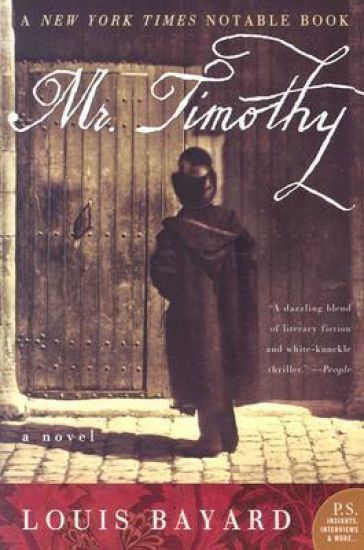
Mr. Timothy

Mr. Timothy

Louis Bayard

William Morrow Company
2004
nidottu
Seeking to gain independence from his benefactor, Ebenezer Scrooge, Timothy Cratchit loses himself in the underworld of 1860s London, where the discovery of two murdered girls prompts him to protect a third would-be victim and follow leads to a dangerous force. Reader's Guide available. Reprint. 50,000 first printing.
Paul's Utilization of Preformed Traditions in 1 Timothy
Mark Yarbrough assesses the question of whether traditional ‘preformed' material contributes to the message and understanding of Paul's first letter to Timothy. The issue is addressed in three sections. Part one evaluates previous works interacting with ‘traditional' material in the New Testament. Through a critique of historically proposed criteria, Yarbrough identifies eight criteria as the primary tools by which to discern units of preformed material. In the second part of the book Yarbrough evaluates nineteen passages in 1 Timothy according to the criteria previously determined. From this base he embraces twelve of the nineteen passages as preformed material. These passages are subsequently examined in depth according to the author's distinct methodology. Part three demonstrates four functions of the preformed traditions in 1 Timothy. Firstly, that they may be seen as strengthening the literary cohesion of the letter. Secondly, that the traditional units afford the author rhetorical leverage which may be best identified as the provision of authority, the establishment of an instant rapport with the primary audience, and the assistance conferred in addressing this implied audience. Thirdly, they present theological directives that confront the character and belief of the false teachers. Finally, Yarbrough asserts that the preformed traditions exist as a combatant against counter-mission doctrine. In conclusion, this study displays that the traditional material which may be discerned within the letter contributes significantly to the overall message and understanding of 1 Timothy.
Paul's Utilization of Preformed Traditions in 1 Timothy
Mark Yarbrough assesses the question of whether traditional ‘preformed' material contributes to the message and understanding of Paul's first letter to Timothy. The issue is addressed in three sections. Part one evaluates previous works interacting with ‘traditional' material in the New Testament. Through a critique of historically proposed criteria, Yarbrough identifies eight criteria as the primary tools by which to discern units of preformed material. In the second part of the book Yarbrough evaluates nineteen passages in 1 Timothy according to the criteria previously determined. From this base he embraces twelve of the nineteen passages as preformed material. These passages are subsequently examined in depth according to the author's distinct methodology. Part three demonstrates four functions of the preformed traditions in 1 Timothy. Firstly, that they may be seen as strengthening the literary cohesion of the letter. Secondly, that the traditional units afford the author rhetorical leverage which may be best identified as the provision of authority, the establishment of an instant rapport with the primary audience, and the assistance conferred in addressing this implied audience. Thirdly, they present theological directives that confront the character and belief of the false teachers. Finally, Yarbrough asserts that the preformed traditions exist as a combatant against counter-mission doctrine. In conclusion, this study displays that the traditional material which may be discerned within the letter contributes significantly to the overall message and understanding of 1 Timothy.
1, 2 Timothy, Titus

1, 2 Timothy, Titus

Thomas Lea; Hayne P. Griffin

Broadman Holman Publishers
1992
sidottu
THE NEW AMERICAN COMMENTARY is for the minister or Bible student who wants to understand and expound the Scriptures. Notable features include: * commentary based on THE NEW INTERNATIONAL VERSION;* the NIV text printed in the body of the commentary;* sound scholarly methodology that reflects capable research in the original languages;* interpretation that emphasizes the theological unity of each book and of Scripture as a whole;* readable and applicable exposition.
The Patriarch and the Caliph – An Eighth–Century Dialogue between Timothy I and al–Mahdi
The Patriarch and the Caliph presents the famous "dialogue without resolution" between the third Abbasid Caliph, al-Mahdi, and the first Nestorian Patriarch, Timothy I, in Baghdad in 781 CE. The abundance of versions of this intellectually rich debate between adherents of Islam and of Christianity is a testimony to its historic importance. Of particular note is the mutual respect shown between the interlocutors in a period when Islam was the dominant political and intellectual influence in the Middle Eastern and Mediterranean worlds. This volume collates an abridged sixteenth-century Arabic version based on Timothy I's Syriac original. Parallel English translations accompany the Arabic. Including annotations, indexes, glossaries, and bibliographies to further assist the reader, The Patriarch and the Caliph reveals important insights into the complex relationship between two historical figures, and through them, two major world religions.
The History of St. Timothy's Episcopal Church

The History of St. Timothy's Episcopal Church

Hugh Buckner Johnston

Hassell Street Press
2021
nidottu
This work has been selected by scholars as being culturally important and is part of the knowledge base of civilization as we know it.This work is in the public domain in the United States of America, and possibly other nations. Within the United States, you may freely copy and distribute this work, as no entity (individual or corporate) has a copyright on the body of the work.Scholars believe, and we concur, that this work is important enough to be preserved, reproduced, and made generally available to the public. To ensure a quality reading experience, this work has been proofread and republished using a format that seamlessly blends the original graphical elements with text in an easy-to-read typeface.We appreciate your support of the preservation process, and thank you for being an important part of keeping this knowledge alive and relevant.
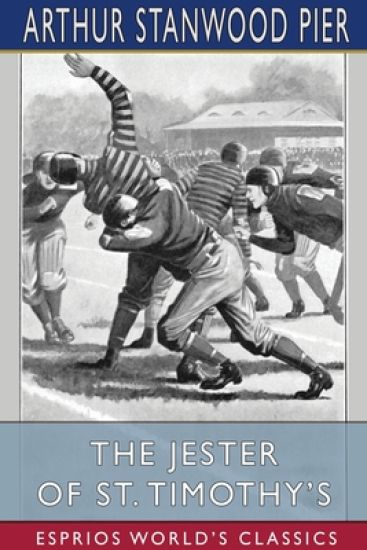
The Jester of St. Timothy's (Esprios Classics)
"In the post-office of Beasley's general store Irving Upton was eagerly sorting the mail. His eagerness at that task had not been abated by the repeated, the daily disappointments which it had caused him. During the whole summer month for which he had now been in attendance as Mr. Beasley's clerk, the arrival of the mail had constituted his chief interest. And because that for which he had been hoping had failed to come, his thin face had grown more worried, and the brooding look was more constantly in his eyes."