Kirjojen hintavertailu. Mukana 11 717 486 kirjaa ja 12 kauppaa.

Kirjahaku

Etsi kirjoja tekijän nimen, kirjan nimen tai ISBN:n perusteella.

1000 tulosta hakusanalla Toby Neighbors

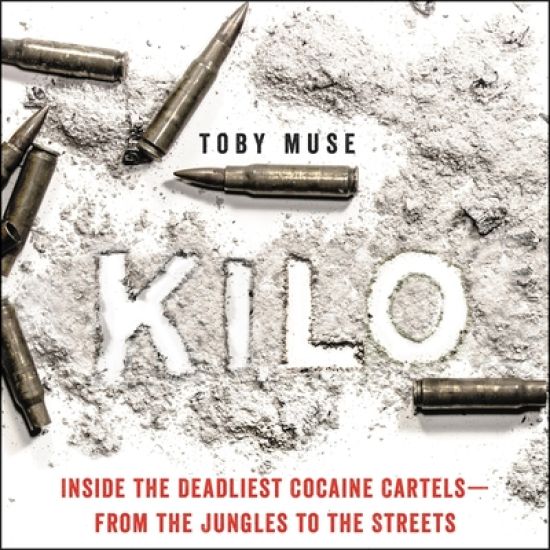
Kilo: Inside the Deadliest Cocaine Cartels--From the Jungles to the Streets
For fans of the Netflix show Narcos and readers of true crime, Kilo is a deeply reported account of life inside Colombia's drug cartels, using unprecedented access in the cartels to trace a kilo of cocaine--from the fields where it is farmed, to the hit men who protect it, to the smuggling ships that bring it to American shores.Toby Muse's tautly written account of his intimate prowl through Colombia's narco world is both compelling and unforgettable. With Kilo, cocaine now has its own Dispatches. Simply kickass."-- Jon Lee Anderson, The New Yorker and author of Che Guevara: A Revolutionary LifeCocaine is glamour, sex and murder. From the badlands of Colombia, it stretches across the globe, seducing, corrupting and destroying. A product that must be produced, distributed, and protected, it is both a harbinger of violence and a source of immense wealth. Beginning in the jungles and mountains of Colombia, it filters down to countryside villages and the nightclubs of the cities, attracting money, sex, and death. Each step in the life of a kilo reveals a different criminal underworld with its own players, rules, and dangers, ranging from the bizarre to the diabolical. The killers, the drug-lords, all find themselves seduced by cocaine and trapped in her world.Seasoned war correspondent Toby Muse has witnessed each level of this underworld, fueled by the appetite for cocaine in America and Europe. In this riveting chronicle, he takes the reader inside Colombia's notorious drug cartels to offer a never before look at the drug trade. Following a kilo of cocaine from its production in a clandestine laboratory to the smugglers who ship it abroad, he reveals the human lives behind the drug's complicated legacy. Reporting on Colombia for the world's most prestigious networks and publications, Muse gained unprecedented access to the extraordinary people who survive on the drug trade--farmers, smugglers, assassins--and the drug lords and their lovers controlling these multi-billion dollar enterprises. Uncovering stories of violence, sex, and money, he shows the allure and the madness of cocaine. And how the War on Drugs has been no match for cocaine.Piercing this veiled world, Kilo is a gripping portrait of a country struggling to end this deadly trade even as the riches flow. A human portrait of criminals and the shocking details of their lives, Kilo is a chilling, unforgettable story that takes you deep into the belly of the beast.

Intellectual Curiosity and the Scientific Revolution

Intellectual Curiosity and the Scientific Revolution

Toby E. Huff

Cambridge University Press
2010
sidottu
Seventeenth-century Europe witnessed an extraordinary flowering of discoveries and innovations. This study, beginning with the Dutch-invented telescope of 1608, casts Galileo's discoveries into a global framework. Although the telescope was soon transmitted to China, Mughal India, and the Ottoman Empire, those civilizations did not respond as Europeans did to the new instrument. In Europe, there was an extraordinary burst of innovations in microscopy, human anatomy, optics, pneumatics, electrical studies, and the science of mechanics. Nearly all of those aided the emergence of Newton's revolutionary grand synthesis, which unified terrestrial and celestial physics under the law of universal gravitation. That achievement had immense implications for all aspects of modern science, technology, and economic development. The economic implications are set out in the concluding epilogue. All these unique developments suggest why the West experienced a singular scientific and economic ascendancy of at least four centuries.
A Philosophical Guide to Chance

A Philosophical Guide to Chance

Toby Handfield

Cambridge University Press
2012
sidottu
It is a commonplace that scientific inquiry makes extensive use of probabilities, many of which seem to be objective chances, describing features of reality that are independent of our minds. Such chances appear to have a number of paradoxical or puzzling features: they appear to be mind-independent facts, but they are intimately connected with rational psychology; they display a temporal asymmetry, but they are supposed to be grounded in physical laws that are time-symmetric; and chances are used to explain and predict frequencies of events, although they cannot be reduced to those frequencies. This book offers an accessible and non-technical introduction to these and other puzzles. Toby Handfield engages with traditional metaphysics and philosophy of science, drawing upon recent work in the foundations of quantum mechanics and thermodynamics to provide a novel account of objective probability that is empirically informed without requiring specialist scientific knowledge.
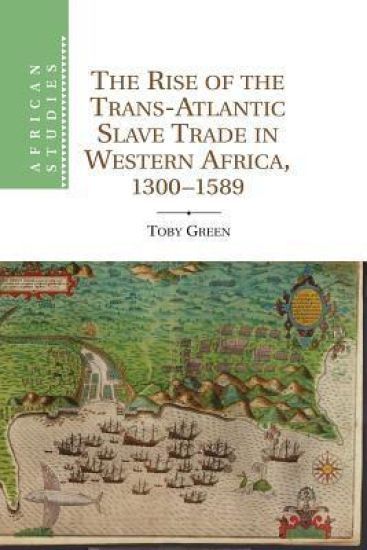
The Rise of the Trans-Atlantic Slave Trade in Western Africa, 1300–1589
The region between the river Senegal and Sierra Leone saw the first trans-Atlantic slave trade in the sixteenth century. Drawing on many new sources, Toby Green challenges current quantitative approaches to the history of the slave trade. New data on slave origins can show how and why Western African societies responded to Atlantic pressures. Green argues that answering these questions requires a cultural framework and uses the idea of creolization - the formation of mixed cultural communities in the era of plantation societies - to argue that preceding social patterns in both Africa and Europe were crucial. Major impacts of the sixteenth-century slave trade included political fragmentation, changes in identity and the re-organization of ritual and social patterns. The book shows which peoples were enslaved, why they were vulnerable and the consequences in Africa and beyond.
The Other Saudis

The Other Saudis

Toby Matthiesen

Cambridge University Press
2014
sidottu
Toby Matthiesen traces the politics of the Shia in the Eastern Province of Saudi Arabia from the nineteenth century until the present day. This book outlines the difficult experiences of being Shia in a Wahhabi state, and casts new light on how the Shia have mobilised politically to change their position. Shia petitioned the rulers, joined secular opposition parties and founded Islamist movements. Most Saudi Shia opposition activists profited from an amnesty in 1993 and subsequently found a place in civil society and the public sphere. However, since 2011 a new Shia protest movement has again challenged the state. The Other Saudis shows how exclusionary state practices created an internal Other and how sectarian discrimination has strengthened Shia communal identities. The book is based on little-known Arabic sources, extensive fieldwork in Saudi Arabia and interviews with key activists. Of immense geopolitical importance, the oil-rich Eastern Province is a crucial but little known factor in regional politics and Gulf security.
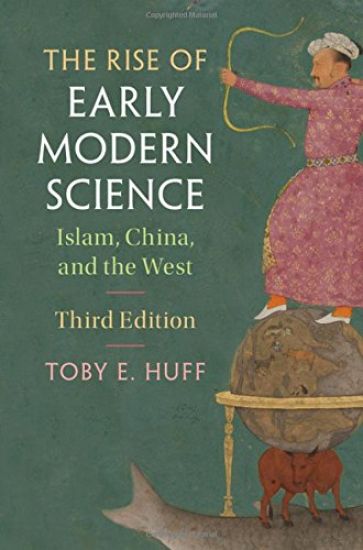
The Rise of Early Modern Science

The Rise of Early Modern Science

Toby E. Huff

Cambridge University Press
2017
sidottu
Now in its third edition, The Rise of Early Modern Science argues that to understand why modern science arose in the West it is essential to study not only the technical aspects of scientific thought but also the religious, legal and institutional arrangements that either opened the doors for enquiry, or restricted scientific investigations. Toby E. Huff explores how the newly invented universities of the twelfth and thirteenth centuries, and the European legal revolution, created a neutral space that gave birth to the scientific revolution. Including expanded comparative analysis of the European, Islamic and Chinese legal systems, Huff now responds to the debates of the last decade to explain why the Western world was set apart from other civilisations.
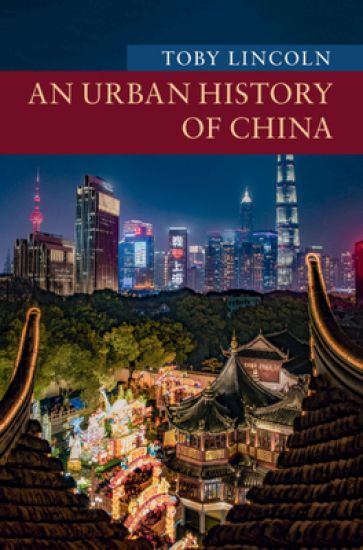
An Urban History of China

An Urban History of China

Toby Lincoln

Cambridge University Press
2021
sidottu
In this accessible new study, Toby Lincoln offers the first history of Chinese cities from their origins to the present. Despite being an agricultural society for thousands of years, China had an imperial urban civilization. Over the last century, this urban civilization has been transformed into the world's largest modern urban society. Throughout their long history, Chinese cities have been shaped by interactions with those around the world, and the story of urban China is a crucial part of the history of how the world has become an urban society. Exploring the global connections of Chinese cities, the urban system, urban governance, and daily life alongside introductions to major historical debates and extracts from primary sources, this is essential reading for all those interested in China and in urban history.
The Rise of Early Modern Science

The Rise of Early Modern Science

Toby E. Huff

Cambridge University Press
2017
pokkari
Now in its third edition, The Rise of Early Modern Science argues that to understand why modern science arose in the West it is essential to study not only the technical aspects of scientific thought but also the religious, legal and institutional arrangements that either opened the doors for enquiry, or restricted scientific investigations. Toby E. Huff explores how the newly invented universities of the twelfth and thirteenth centuries, and the European legal revolution, created a neutral space that gave birth to the scientific revolution. Including expanded comparative analysis of the European, Islamic and Chinese legal systems, Huff now responds to the debates of the last decade to explain why the Western world was set apart from other civilisations.
A Philosophical Guide to Chance

A Philosophical Guide to Chance

Toby Handfield

Cambridge University Press
2012
pokkari
It is a commonplace that scientific inquiry makes extensive use of probabilities, many of which seem to be objective chances, describing features of reality that are independent of our minds. Such chances appear to have a number of paradoxical or puzzling features: they appear to be mind-independent facts, but they are intimately connected with rational psychology; they display a temporal asymmetry, but they are supposed to be grounded in physical laws that are time-symmetric; and chances are used to explain and predict frequencies of events, although they cannot be reduced to those frequencies. This book offers an accessible and non-technical introduction to these and other puzzles. Toby Handfield engages with traditional metaphysics and philosophy of science, drawing upon recent work in the foundations of quantum mechanics and thermodynamics to provide a novel account of objective probability that is empirically informed without requiring specialist scientific knowledge.
The Rise of the Trans-Atlantic Slave Trade in Western Africa, 1300–1589
The region between the river Senegal and Sierra Leone saw the first trans-Atlantic slave trade in the sixteenth century. Drawing on many new sources, Toby Green challenges current quantitative approaches to the history of the slave trade. New data on slave origins can show how and why Western African societies responded to Atlantic pressures. Green argues that answering these questions requires a cultural framework and uses the idea of creolization - the formation of mixed cultural communities in the era of plantation societies - to argue that preceding social patterns in both Africa and Europe were crucial. Major impacts of the sixteenth-century slave trade included political fragmentation, changes in identity and the re-organization of ritual and social patterns. The book shows which peoples were enslaved, why they were vulnerable and the consequences in Africa and beyond.
On Dangerous Ground

On Dangerous Ground

Toby J. Rider; Andrew P. Owsiak

Cambridge University Press
2022
pokkari
As a rule, countries consider clearly defined international borders to be paramount for their survival and prosperity. Most borders gain definition peacefully and, once they do, these definitions stick (i.e., the border remains settled). The failure to define borders, however, produces protracted, geopolitical, militarized competitions (or rivalries) between neighboring countries. Rider and Owsiak model this failure as a particular type of bargaining problem - namely, bargaining over territory that affects the distribution of power between neighbouring states significantly - that undermines efforts to resolve border disagreements peacefully. Countries must then overcome this bargaining problem or risk falling into a protracted rivalry, which then needs to be addressed with more resources. The authors develop a theory of how borders settle. They then explore the consequences of the failure to settle, theoretically connecting it to the onset of rivalries. This leads to the process that helps rivals overcome the bargaining problem, resolve their border disagreement, and terminate their rivalry.
On Dangerous Ground

On Dangerous Ground

Toby J. Rider; Andrew P. Owsiak

Cambridge University Press
2021
sidottu
As a rule, countries consider clearly defined international borders to be paramount for their survival and prosperity. Most borders gain definition peacefully and, once they do, these definitions stick (i.e., the border remains settled). The failure to define borders, however, produces protracted, geopolitical, militarized competitions (or rivalries) between neighboring countries. Rider and Owsiak model this failure as a particular type of bargaining problem - namely, bargaining over territory that affects the distribution of power between neighbouring states significantly - that undermines efforts to resolve border disagreements peacefully. Countries must then overcome this bargaining problem or risk falling into a protracted rivalry, which then needs to be addressed with more resources. The authors develop a theory of how borders settle. They then explore the consequences of the failure to settle, theoretically connecting it to the onset of rivalries. This leads to the process that helps rivals overcome the bargaining problem, resolve their border disagreement, and terminate their rivalry.
Adapting War Horse

Adapting War Horse

Toby Malone; Christopher J. Jackman

Palgrave Macmillan
2016
sidottu
This book analyses the success and adaptation of Michael Morpurgo’s novel War Horse to stage, radio, live events, and feature film, in different cultures, on tours, and in translation. In under a decade, War Horse has gone from obscure children’s novel to arguably one of the world’s most recognisable theatrical brands, thanks to innovative puppet designs from South Africa’s Handspring Puppet Company in an acclaimed stage production from the National Theatre of Great Britain. With emphasis on embodied spectatorship, collaborative meaning-making, and imaginative ‘play,’ this book generates fresh insights into the enduring popularity of the franchise’s eponymous protagonist, Joey, offering the most in-depth study of War Horse to date.
The Ethics of Climate Engineering
This book analyzes major ethical issues surrounding the use of climate engineering, particularly solar radiation management (SRM) techniques, which have the potential to reduce some risks of anthropogenic climate change but also carry their own risks of harm and injustice. The book argues that we should approach the ethics of climate engineering via "non-ideal theory," which investigates what justice requires given the fact that many parties have failed to comply with their duty to mitigate greenhouse gas emissions. Specifically, it argues that climate justice should be approached comparatively, evaluating the relative justice or injustice of feasible policies under conditions that are likely to hold within relevant timeframes. Likely near-future conditions include "pessimistic scenarios," in which no available option avoids serious ethical problems. The book contends that certain uses of SRM can be ethically defensible in some pessimistic scenarios. This is the first book devoted to the many ethical issues surrounding climate engineering.
Heidegger and Executive Education

Heidegger and Executive Education

Toby Thompson

Routledge
2017
sidottu
Global corporations and the senior executives who oversee them have been subject to great criticism in recent times: not only do such corporations hold extreme concentrations of wealth, but they continue to sanction staggering pay inequalities between the haves and the have-nots. At the same time, university-based business schools are conducting programmes of executive education seemingly customised to sanction these same inequalities. Heidegger and Executive Education is a piece of critical philosophy that has been written from within the business school in order to examine how this sheltered process of educating in-role corporate executives operates. Thompson claims that executive education is based on a very simple premise: that an executive executes an order, and that executive education is an amelioration of that process. Thompson argues that the easiest way to conceive of executive education is to treat order and execution as cognates, as a single conceptual entity. Thus, he asks, if educating executives in line with the order-execution cognate involves swapping the boardroom for the classroom, and in keeping with the ‘critical’ tag, shouldn’t executive education be about questioning not only the execution, but also the dominant order? The author uses ‘time’ as the philosophical method by which one can undo the order-execution cognate, question the sanctity of the cognate and thereby halt the seemingly inexorable temporal sequence from order through to those orders becoming executed. This book uses Martin Heidegger’s exotic philosophy of time in order to mount a philosophical challenge to the temporal sequentiality of executive education. It will therefore be of great interest to academics, researchers and postgraduates who are interested in Heidegger, the philosophy of education and executive education. It should also be essential reading for those involved in training, developing, and educating corporate executives.
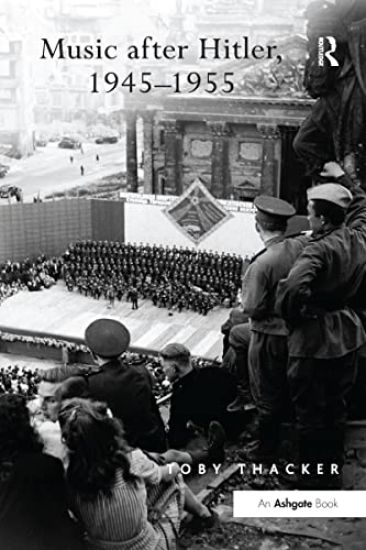
Music after Hitler, 1945–1955

Music after Hitler, 1945–1955

Toby Thacker

Routledge
2016
nidottu
The political control of music in the Third Reich has been analysed from several perspectives, and with ever increasing sophistication. However, music in Germany after 1945 has not received anything like the same treatment. Rather, there is an assumption that two separate musical cultures emerged in East and West alongside the division of Germany into two states with differing economic and political systems. There is a widely accepted view of music in West Germany as 'free', and in the East subject to party control. Toby Thacker challenges these assumptions, asking how and why music was controlled in Germany under Allied Occupation from 1945-1949, and in the early years of 'semi-sovereignty' between 1949 and 1955. The 're-education' of Germany after the Hitler years was a unique historical experiment and the place of music within this is explored here for the first time. While emphasizing political, economic and broader social structures that influenced the production and reception of different musical forms, the book is informed by a sense of human agency, and explores the role of salient individuals in the reconstruction of music in post-war Germany. The focus is not restricted to any one kind of music, but concentrates on those aspects of music, professional and amateur, live and recorded, which appeared to be the mostly highly charged politically to contemporaries. Particular attention is given to 'denazification' and to the introduction of international music. Thacker traces the development of a divide between Communist and liberal-democratic understandings of the place of music in society. The contested celebrations of the Bach Year in 1950 are used to highlight the role of music in the broader cultural confrontation between East and West. Thacker examines the ways in which central governments in East and West Germany sought to control and influence music through mechanisms of censorship and positive support. The book will therefore be of interest not only to musicologists, but also to specialists in German post-war history and cultural historians in general.
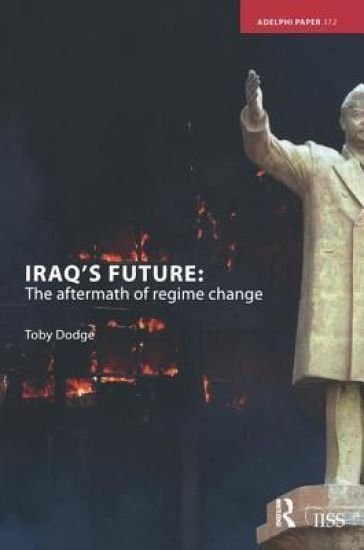
Iraq's Future

Iraq's Future

Toby Dodge

Routledge
2017
sidottu
It is hard to over estimate what is at stake in Iraq today. The removal of Saddam Hussein‘s regime in April 2003 has proved to be the beginning, not the culmination, of a long and very uncertain process of state-building. This Adelphi Paper examines this process from a military, political and sociological perspective. Possible futures for Iraq are charted, first by studying the evolution of the criminal and politically-motivated violence that has come to dominate the everyday lives of ordinary Iraqis. The paper then details the strengths and weaknesses of the political structures built after the fall of Saddam‘s regime, from the formation of the Iraqi Governing Council in 2004 to the elections of January 2005, and traces the forces driving political mobilization in post-Saddam Iraq. It concludes by analyzing the ramifications of regime change for US policy and the wider Middle East.
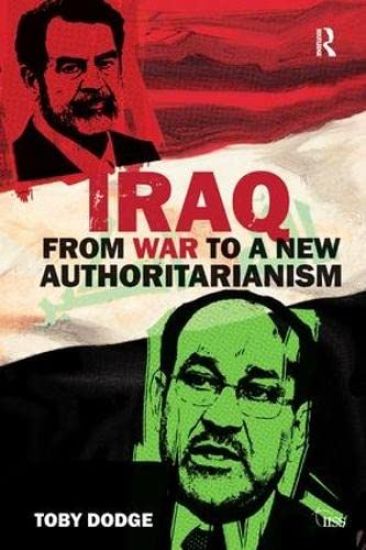
Iraq – From War to a New Authoritarianism
Iraq recovered its full sovereignty at the end of 2011, with the departure of all US military forces. The 2003 invasion was undertaken to dismantle a regime that had long threatened its own population and regional peace, as well as to establish a stable, democratic state in the heart of the Middle East. This Adelphi looks at the legacy of that intervention and subsequent state-building efforts. It analyses the evolution of the insurgency, the descent into full-scale civil war and the implementation of the ‘surge as a counterinsurgency strategy. It goes on to examine US and Iraqi efforts to reconstruct the state‘s military and civilian capacity. By developing a clear understanding of the current situation in Iraq, this book seeks to answer three questions that are central to the country‘s future. Will it continue to suffer high levels of violence or even slide back into a vicious civil war? Will Iraq continue on a democratic path, as exemplified by the three competitive national elections held since 2005? And does the new Iraq pose a threat to its neighbours?