Kirjojen hintavertailu. Mukana 11 717 486 kirjaa ja 12 kauppaa.

Kirjahaku

Etsi kirjoja tekijän nimen, kirjan nimen tai ISBN:n perusteella.

1000 tulosta hakusanalla W Timbrell Pierce

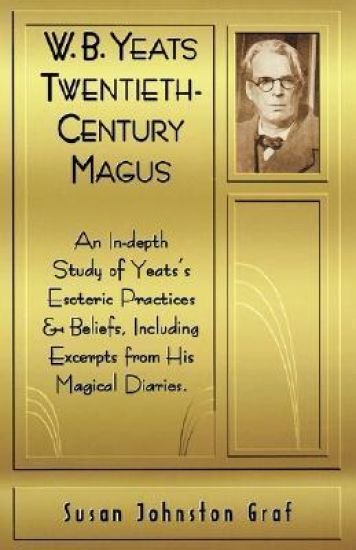
W.B.Yeats

W.B.Yeats

Graf Susan Johnston

RED WHEEL/WEISER
2000
nidottu
W.B. Yeats Twentieth Century Magus is a comprehensive study of his magical practices and beliefs. Yeats moved through many different phases of spiritual development, believing that his life was an intellectual, spiritual, and artistic questa quest greatly influenced by Celtic lore, Theosophy, Golden Dawn ceremonial magic, Swedenborg's metaphysics, the works of Jacob Boehme, and NeoPlatonism. For Yeats, writing poetry was an act of divine possession, and he believed that a perfected soul was the source of his inspiration, visiting him during times of superconscious awareness. Susan Johnston Graf meticulously documents and provides evidence that Yeat's poetry is brilliant, lyric narrative of realtiy captured through the mind of a practicing magician working in the Western Tradition.
W Juliet, Vol. 1

W Juliet, Vol. 1

Viz Media, Subs. of Shogakukan Inc
2008
pokkari
Makoto Amano wants to become an actor, but his stern father has decreed that the only way Makoto can pursue his dream is to spend the last two years of high school as a girl! He quickly makes friends with popular tomboy Ito Miura, another drama enthusiast at this new high school and the only student to find out his secret--but are they more than pals?Sixteen-year-old tomboy Ito Miura has been chosen to play Romeo in Romeo and Juliet! The problem? She doesn't want the male role! So, who will be Juliet? The favorite for the part, beautiful and vain Tsugumi, must compete with the cute new transfer student, Makoto Amano. But Makoto has a secret, and if rival Tsugumi, or anyone in the school, finds out, it could ruin Makoto's life, dragging Ito down as well!
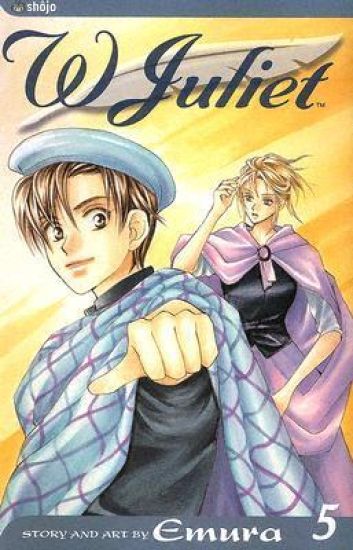
W Juliet, Vol. 5

W Juliet, Vol. 5

Viz Media, Subs. of Shogakukan Inc
2009
pokkari
Makoto Amano wants to become an actor, but his stern father has decreed that the only way Makoto can pursue his dream is to spend the last two years of high school as a girl! He quickly makes friends with popular tomboy Ito Miura, another drama enthusiast at this new high school and the only student to find out his secret--but are they more than pals?Creepy Sakamoto is looking for a girlfriend, and he wouldn't mind dating Ito or Makoto! Then Makoto's sister Tsubaki is brought in to Sakura High--she's says it's to be a teacher, but is it actually to be a spy for Makoto's father? It looks like Makoto and Ito have a few high hurdles to jump before they see the finish line!
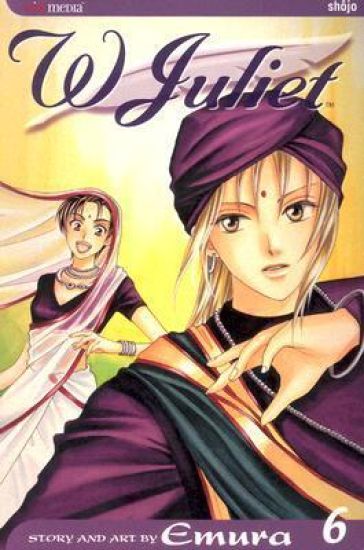
W Juliet, Vol. 6

W Juliet, Vol. 6

Viz Media, Subs. of Shogakukan Inc
2009
pokkari
Makoto Amano wants to become an actor, but his stern father has decreed that the only way Makoto can pursue his dream is to spend the last two years of high school as a girl! He quickly makes friends with popular tomboy Ito Miura, another drama enthusiast at this new high school and the only student to find out his secret--but are they more than pals?Makoto's doting sister Tsubaki finds out that Makoto hasn't kept his secret from Ito! She threatens to tell Makoto's father unless Makoto and Ito's homeroom can win a school competition. Then Makoto accompanies the entire Miura household to their ancestral home to meet Ito's eccentric, sharp-witted grandmother. Little does Ito know that her past will catch up with her there...literally!
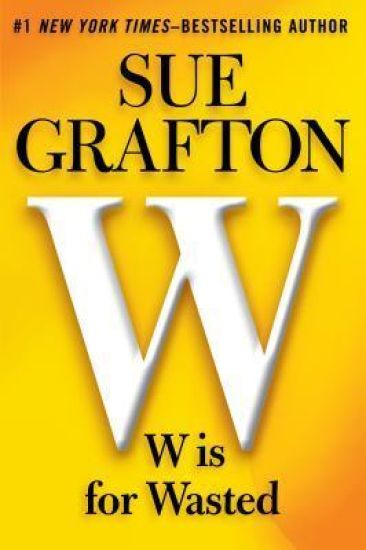
W Is for Wasted

W Is for Wasted

Sue Grafton

Large Print Press
2014
nidottu
The first victim was a local PI of suspect reputation who'd been gunned down near the beach at Santa Teresa. The other body was found on the beach six weeks later--a homeless man with Kinsey Millhone's name and number written on a slip of paper in his pants pocket. Two seemingly unrelated deaths, one a murder, the other apparently of natural causes. But as Kinsey digs deeper into the mystery of the John Doe, some very strange linkages begin to emerge. Not just between the two victims, but also to Kinsey's past. And before long Kinsey, through no fault of her own, is thoroughly compromised...
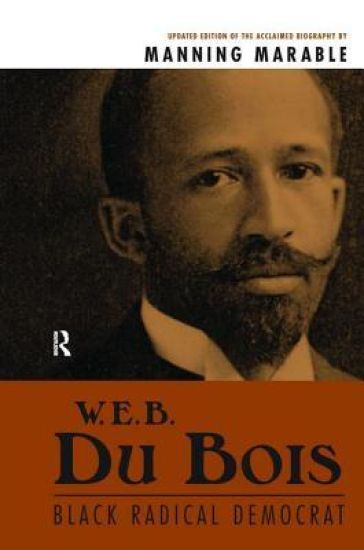
W. E. B. Du Bois

W. E. B. Du Bois

Manning Marable

Paradigm
2005
sidottu
'Marable's biography of Du Bois is the best so far available.' Dr. Herbert Aptheker, Editor, The Correspondence of W.E.B. Du Bois 'Marable's excellent study focuses on the social thought of a major black American thinker who exhibited a 'basic coherence and unity' throughout a multifaceted career stressing cultural pluralism, opposition to social inequality, and black pride.' Library Journal Distinguished historian and social activist Manning Marable's book, W. E. B. Du Bois: Black Radical Democrat, brings out the interconnections, unity, and consistency of W. E. B. Du Bois's life and writings. Marable covers Du Bois's disputes with Booker T. Washington, his founding of the NAACP, his work as a social scientist, his life as a popular figure, and his involvement in politics, placing them into the context of Du Bois's views on black pride, equality, and cultural diversity. Marable stresses that, as a radical democrat, Du Bois viewed the problems of racism as intimately connected with capitalism. The publication of this updated edition follows more than one hundred celebrations recently marking the 100th anniversary of Du Bois's The Souls of Black Folk. Marable broadens earlier biographies with a new introduction highlighting Du Bois's less-known advocacy of women's suffrage, socialism, and peace and he traces his legacy to today in an era of changing racial and social conditions.
W. E. B. Du Bois

W. E. B. Du Bois

Manning Marable

Paradigm
2004
nidottu
'Marable's biography of Du Bois is the best so far available.' Dr. Herbert Aptheker, Editor, The Correspondence of W.E.B. Du Bois 'Marable's excellent study focuses on the social thought of a major black American thinker who exhibited a 'basic coherence and unity' throughout a multifaceted career stressing cultural pluralism, opposition to social inequality, and black pride.' Library Journal Distinguished historian and social activist Manning Marable's book, W. E. B. Du Bois: Black Radical Democrat, brings out the interconnections, unity, and consistency of W. E. B. Du Bois's life and writings. Marable covers Du Bois's disputes with Booker T. Washington, his founding of the NAACP, his work as a social scientist, his life as a popular figure, and his involvement in politics, placing them into the context of Du Bois's views on black pride, equality, and cultural diversity. Marable stresses that, as a radical democrat, Du Bois viewed the problems of racism as intimately connected with capitalism. The publication of this updated edition follows more than one hundred celebrations recently marking the 100th anniversary of Du Bois's The Souls of Black Folk. Marable broadens earlier biographies with a new introduction highlighting Du Bois's less-known advocacy of women's suffrage, socialism, and peace and he traces his legacy to today in an era of changing racial and social conditions.
Of Human Bondage by W. Somerset Maugham, Fiction, Literary, Classics
She opened the door of a room on the floor below and took the child over to a bed in which a woman was lying. It was his mother. She stretched out her arms, and the child nestled by her side. He did not ask why he had been awakened. The woman kissed his eyes, and with thin, small hands felt the warm body through his white flannel nightgown. She pressed the child closer to herself. "Are you sleepy, darling?" she said. Her voice was so weak that it seemed to come already from a great distance. The child did not answer, but smiled comfortably. He was very happy in the large, warm bed, with those soft arms about him. He tried to make himself smaller still as he cuddled up against his mother, and he kissed her sleepily. In a moment he closed his eyes and was fast asleep. The doctor came forwards and stood by the bedside. "Oh, don't take him away yet," she moaned.
Moon and Sixpence by W. Somerset Maugham, Fiction, Classics
Yet now few will be found to deny his greatness. I do not speak of that greatness which is achieved by the fortunate politician or the successful soldier; that is a quality which belongs to the place he occupies rather than to the man; and a change of circumstances reduces it to very discreet proportions. The Prime Minister out of office is seen, too often, to have been but a pompous rhetorician, and the General without an army is but the tame hero of a market town. The greatness of Charles Strickland was authentic. It may be that you do not like his art, but at all events you can hardly refuse it the tribute of your interest. He disturbs and arrests. The time has passed when he was an object of ridicule, and it is no longer a mark of eccentricity to defend or of perversity to extol him. His faults are accepted as the necessary complement to his merits. It is still possible to discuss his place in art, and the adulation of his admirers is perhaps no less capricious than the disparagement of his detractors; but one thing can never be doubtful, and that is that he had genius. . . .
W.E.B. Du Bois: Black Reconstruction (LOA #350)

W.E.B. Du Bois: Black Reconstruction (LOA #350)

W.E.B. Du Bois; Eric Foner; Henry Louis Gates

The Library of America
2021
sidottu
A collector's edition of the landmark study that changed our understanding of the Civil War's aftermath and the legacy of racism in America Upon publication in 1935, W.E.B. Du Bois's Black Reconstruction offered a revelatory new assessment of Reconstruction--and of American democracy itself. One of the towering African American thinkers and activists of the twentieth century, Du Bois brought all his intellectual powers to bear on America's post-Civil War era of political reorganization, a time when African American progress was met with a white supremacist backlash and ultimately yielded to the consolidation of the unjust social order underpinning Jim Crow. Black Reconstruction is a pioneering, exemplary work of revisionist scholarship that, in the wake of censorship toward Du Bois's characterization of Reconstruction by the Encyclopaedia Britannica, was written to debunk influential historians whose racist ideas and emphases had disfigured the historical record. The chief witness in Reconstruction, the emancipated slave himself, writes Du Bois, has been almost barred from court. His written Reconstruction record has been largely destroyed and nearly always neglected. In setting the record straight Du Bois produced what Eric Foner has called an indispensable book, a magisterial work of detached scholarship that is also imbued with passionate outrage. Here presented in a handsome hardcover edition, with an illuminating editor's introduction and an authoritative text, Black Reconstruction is joined, for the first time in a single volume with important writings that trace his thinking throughout his career about Reconstruction and its centrality in understanding American democracy.
W.E.B. Du Bois and the Sociological Imagination
Introducing and presenting thirty core texts from the sociological writings of W. E. B. Du Bois, Robert Wortham's unique reader highlights Du Bois as a multifaceted researcher and thinker who, by attempting to approach African American social life from every angle, became a pioneer in American sociology. As this astute reader demonstrates, in addition to his profound contributions to our understanding of racial inequality in the United States, Du Bois made momentous advances in the areas of research methods, social problems, community studies, population studies, the sociology of religion, and crime and deviance. When sociology appeared to be heading toward a deductive methodology, Du Bois presented a strong argument for inductive methods, advocating for the use of a more interdisciplinary approach. Eventually, combining sociological perspectives with those of history and anthropology, he developed his landmark approach: methodological triangulation.In this long-overdue volume, Wortham showcases the enormous influence of Du Bois's wide-ranging sociological imagination. Organized into four major parts--""The Scientific Study of Society and Social Problems,"" ""Social Structure and Social Processes,"" ""Dimensions of Inequality,"" and ""Social Dynamics""--the reader concludes with a complete biography of Du Bois' early sociological works.
W. E. Sangster

W. E. Sangster

Andrew J Cheatle

Wipf Stock Publishers
2018
pokkari
Listened to by huge congregations in Britain, and perhaps the most recognizable British Methodist voice in the mid-twentieth century, W. E. Sangster was, in anyone's estimation, a giant of Methodism. ""A preacher without peer in the world,"" ""a prince of preachers,"" are just two of the labels attached to this preacher/theologian of the Methodist tradition. This volume captures the preaching of Sangster in his prime, on the occasion of the 1956 World Methodist Conference in Junaluska, North Carolina. Cheatle's research brings into the public domain ten sermons, nine previously unpublished in this form, delivered by Sangster at that great gathering of World Methodism. These sermons, being transcripts from recordings, picked up Sangster ""in the raw,"" at his most powerful, engaging with his listeners. This book is a resource, therefore, that aids students of homiletics and pastors in encountering a master at work, without the editorial polish of his extant sermons. The sermons on aspects of Christian holiness would be Sangster's first and last sequential series on the subject, placing before the reader some of his most mature thought on holiness and its application in daily life. ""In an age when we have lost confidence in the captivating power of the proclaimed word, Dr. Cheatle's excellent critical edition of Sangster's sermons not only offers helpful insights into the thoughts of one of the greatest preachers of the twentieth century on a variety of central themes, but also a clarion call to the church to once again attend to the compelling power of the gospel and its proclamation. Dr. Cheatle has done a great service to academy and church alike."" --Tom Greggs, Marischal Chair of Divinity, University of Aberdeen ""W. E. Sangster: Sermons in America places the reader in the pew to listen to the voice of one of the preeminent preachers of the twentieth century. This volume of transcriptions of ten previously unpublished sermons on holy living preached by Sangster at the 1956 World Methodist Conference at Lake Junaluska, North Carolina, reveals Sangster as a preacher with much to teach twenty-first century preachers. . . . Contemporary preachers, take and read "" --Alyce M. McKenzie, Director, The Perkins Center for Preaching Excellence ""In an age when the preached word does not hold the position it once did in the church's exegetical and homiletic ministry, Dr. Cheatle's careful transcription and analysis of these sermons of Sangster, recorded in the USA, provide an invaluable tool to explore one of the great Christian preachers in a period when the sermon was already losing its domination of Christian apologetic. A useful contribution to the study of preaching and especially in the Holiness tradition."" --David Hart, Methodist Minister Andrew J. Cheatle is Senior Lecturer in Theology and Pastoral Theology at Liverpool Hope University. He also serves as a University Pastor. His previous writings on Sangster include W. E. Sangster: Herald of Holiness (2010) and W. E. Sangster: Heir of John Wesley? (2013). Before becoming an academic he held pastorates in Copenhagen, Denmark, and Manchester, England.
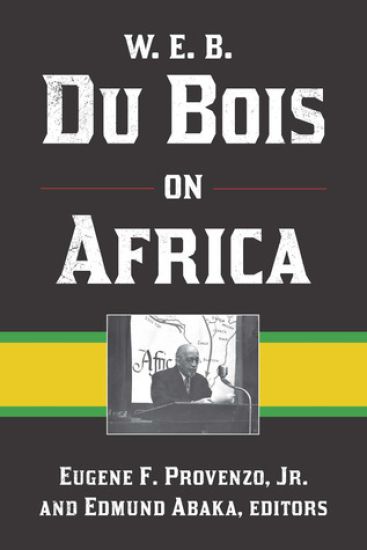
W. E. B. Du Bois on Africa

W. E. B. Du Bois on Africa

Left Coast Press Inc
2012
sidottu
W. E. B. Du Bois is arguably the most important Black intellectual of the twentieth century and among the most important intellectual figures in modern African social thought. One of the founders of Pan-Africanism and a key figure in the postwar African liberation movement, he was champion of Africa and its people throughout his life. Despite this fact, his work on Africa has been underemphasized in scholarly writing about him. This book brings together for the first time Du Bois’s writings on Africa from the beginning of the twentieth century to his death in the early 1960s. Including over 50 magazine and journal articles, poems and book chapters, the works included in this volume clearly show not only Du Bois’s genius as a writer, but his profound understanding of how the quest for racial equality involved all of the people of African origin who suffered under colonial rule in Africa and in the Black disapora. The editors include a historical introduction, headnotes and a bibliography of Du Bois’s work on Africa.
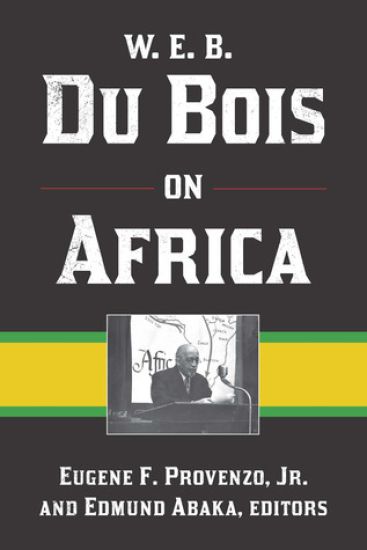
W. E. B. Du Bois on Africa

W. E. B. Du Bois on Africa

Left Coast Press Inc
2012
nidottu
W. E. B. Du Bois is arguably the most important Black intellectual of the twentieth century and among the most important intellectual figures in modern African social thought. One of the founders of Pan-Africanism and a key figure in the postwar African liberation movement, he was champion of Africa and its people throughout his life. Despite this fact, his work on Africa has been underemphasized in scholarly writing about him. This book brings together for the first time Du Bois’s writings on Africa from the beginning of the twentieth century to his death in the early 1960s. Including over 50 magazine and journal articles, poems and book chapters, the works included in this volume clearly show not only Du Bois’s genius as a writer, but his profound understanding of how the quest for racial equality involved all of the people of African origin who suffered under colonial rule in Africa and in the Black disapora. The editors include a historical introduction, headnotes and a bibliography of Du Bois’s work on Africa.