Wallace L. Dow's enduring legacy is visible throughout Sioux Falls and across South Dakota. His distinctive structures, whether civic buildings or private residences, are beholden to no single architectural style. A New Hampshire native, Dow was brought to the Dakota Territory in the 1880s by Governor Nehemiah Ordway. Dow quickly established himself as the preeminent architect of the Dakota prairie, designing iconic structures like Sioux Falls Courthouse and the penitentiary, as well as many beautiful private residences. Using local Sioux quartzite, Dow's buildings gave the emerging Dakota Territory an identity. Yet the architect himself remains something of a mystery. Join author and Dow documentarian Jennifer Dumke as she uncovers Dow's story, recounting the life and work of a true Sioux Falls original who left his mark statewide.
William Makepeace Thackeray ( 18 July 1811 - 24 December 1863) was an English novelist of the 19th century. He is famous for his satirical works, particularly Vanity Fair, a panoramic portrait of English society. Thackeray, an only child, was born in Calcutta, British India, where his father, Richmond Thackeray (1 September 1781 - 13 September 1815), was secretary to the Board of Revenue in the British East India Company. His mother, Anne Becher (1792-1864), was the second daughter of Harriet Becher and John Harman Becher, who was also a secretary (writer) for the East India Company.Richmond died in 1815, which caused Anne to send her son to England in 1816, while she remained in British India. The ship on which he travelled made a short stopover at St. Helena, where the imprisoned Napoleon was pointed out to him. Once in England he was educated at schools in Southampton and Chiswick, and then at Charterhouse School, where he became a close friend of John Leech. Thackeray disliked Charterhouse, and parodied it in his fiction as "Slaughterhouse". Nevertheless, Thackeray was honoured in the Charterhouse Chapel with a monument after his death. Illness in his last year there, during which he reportedly grew to his full height of six foot three, postponed his matriculation at Trinity College, Cambridge, until February 1829.Never too keen on academic studies, Thackeray left Cambridge in 1830, but some of his earliest published writing appeared in two university periodicals, The Snob and The Gownsman. Thackeray then travelled for some time on the continent, visiting Paris and Weimar, where he met Goethe. He returned to England and began to study law at the Middle Temple, but soon gave that up. On reaching the age of 21 he came into his inheritance from his father, but he squandered much of it on gambling and on funding two unsuccessful newspapers, The National Standard and The Constitutional, for which he had hoped to write. He also lost a good part of his fortune in the collapse of two Indian banks. Forced to consider a profession to support himself, he turned first to art, which he studied in Paris, but did not pursue it, except in later years as the illustrator of some of his own novels and other writings.Thackeray's years of semi-idleness ended after he married, on 20 August 1836, Isabella Gethin Shawe (1816-1893), second daughter of Isabella Creagh Shawe and Matthew Shawe, a colonel who had died after distinguished service, primarily in India. The Thackerays had three children, all girls: Anne Isabella (1837-1919), Jane (who died at eight months old) and Harriet Marian (1840-1875), who married Sir Leslie Stephen, editor, biographer and philosopher. Thackeray now began "writing for his life", as he put it, turning to journalism in an effort to support his young family. He primarily worked for Fraser's Magazine, a sharp-witted and sharp-tongued conservative publication for which he produced art criticism, short fictional sketches, and two longer fictional works, Catherine and The Luck of Barry Lyndon. Between 1837 and 1840 he also reviewed books for The Times. 4] He was also a regular contributor to The Morning Chronicle and The Foreign Quarterly Review. Later, through his connection to the illustrator John Leech, he began writing for the newly created magazine Punch, in which he published The Snob Papers, later collected as The Book of Snobs. This work popularised the modern meaning of the word "snob".Thackeray was a regular contributor to Punch between 1843 and 1854.
Sermons of W. L Vickers 1958-1960. W. L. "Vic" Vickers served as interim minister for two South Dakota Congregational Churches, the Ipswich Congregational Church (now Ipswich United Church of Christ), and First Congregational Church of Waubay, from 1958 to 1960. He lived with his family in Aberdeen during these years and worked for the Internal Revenue Service, where he was a special detective. He was born January 24, 1921 and died April 23, 1982. He had no formal training in theology but, as with many other disciplines, taught himself through application of tireless reading and sharp critical thinking. He studied Cruden's Complete Concordance to the Holy Scriptures (1737) and read Harry Emerson Fosdick, Nels Ferre, and J. B. Phillips carefully. He developed his thinking from these and other sources blended with his own insights. He was irrepressibly optimistic about man's progressive understanding of God and the positive role religion could and should play in everyday life.
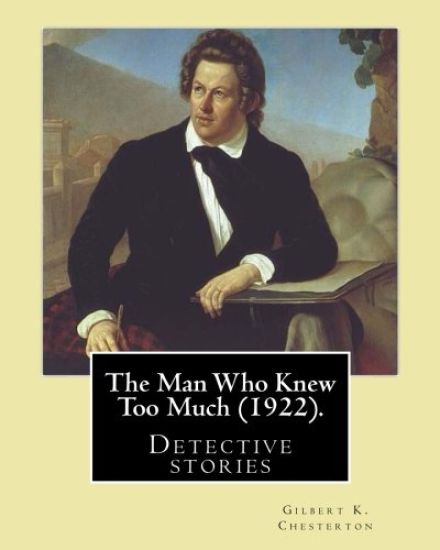
The Man Who Knew Too Much and other stories (1922) is a book of detective stories by English writer G. K. Chesterton, published in 1922 by Cassell and Company in the United Kingdom, and Harper Brothers in the United States.The book contains eight connected short stories about "The Man Who Knew Too Much", and additional unconnected stories featuring separate heroes/detectives. The United States edition contained one of these additional stories: "The Trees of Pride", while the United Kingdom edition contained "Trees of Pride" and three more, shorter stories: "The Garden of Smoke", "The Five of Swords" and "The Tower of Treason". Horne Fisher, "The Man Who Knew Too Much", is the main protagonist of the first eight stories. In the final story, "The Vengeance of the Statue", Fisher notes: "The Prime Minister is my father's friend. The Foreign Minister married my sister. The Chancellor of the Exchequer is my first cousin." Because of these intimate relationships with the leading political figures in the land, Fisher knows too much about the private politics behind the public politics of the day. This knowledge is a burden to him in the eight stories, because he is able to uncover the injustices and corruptions of the murders in each story, but in most cases the real killer gets away with the killing because to bring him openly to justice would create a greater chaos: starting a war, reinciting Irish rebellions or removing public faith in the government. In the seventh story, "The Fad of the Fisherman", the Prime Minister himself is the murderer, who kills the financier whose country house he is visiting because the financier is trying to start a war with Sweden over "the Danish ports". By killing his host, the Prime Minister seeks to avoid a war in which many more people would die, and the financier would profit at the cost of thousands of lives.In "The Vanishing Prince", an Irish rebel, Michael, is cornered in a tower, but a junior policeman named Wilson kills two senior police officers to be promoted in the field to become officer in charge of the case. He then tries to blame the two murders on the rebel to ensure he is hung. The rebel, otherwise a gentleman, is enraged and shoots (but only wounds) Wilson. Fisher, however, is forced to arrest Michael: "Wilson recovered, and we managed to persuade him to retire. But we had to pension that damnable murderer more magnificently than any hero who ever fought for England. I managed to save Michael from the worst, but we had to send that perfectly innocent man to penal servitude for a crime we know he never committed; but it was only afterwards that we could connive in a sneakish way at his escape. And Sir Walter Carey is Prime Minister of this country, which he would probably never have been if the truth had been told of such a horrible scandal in his department. It might have done for us altogether in Ireland; it would certainly have done for him. And he is my father's oldest friend, and has always smothered me in kindness. I am too tangled up in the whole thing, you see, and I was certainly never born to set it right." Fisher is accompanied in the stories by a political journalist, Harold March, but rather than being his "Watson", the stories are all written in the third person. Less a clumsy foil to reflect Fisher's brilliance, March is more of a sounding board for Fisher to discuss Chesterton's paradoxes and philosophy. Apart from the first story, in which March meets Fisher, and the final story, the stories have no internal chronology, and so can be read in any order.... Gilbert Keith Chesterton, KC*SG (29 May 1874 - 14 June 1936), better known as G. K. Chesterton, was an English writer, poet, philosopher, dramatist, journalist, orator, lay theologian, biographer, and literary and art critic. WILLIAM HATHERELL (1855-1928).William Hatherell was a Victorian era illustrator who worked for magazines such as The Graphic, Harpers, Scribner's and the Century.
Joseph Rudyard Kipling ( 30 December 1865 - 18 January 1936) was an English journalist, short-story writer, poet, and novelist. Kipling's works of fiction include The Jungle Book (1894), Kim (1901), and many short stories, including "The Man Who Would Be King" (1888).His poems include "Mandalay" (1890), "Gunga Din" (1890), "The Gods of the Copybook Headings" (1919), "The White Man's Burden" (1899), and "If-" (1910). He is regarded as a major innovator in the art of the short story; his children's books are classics of children's literature; and one critic described his work as exhibiting "a versatile and luminous narrative gift". Kipling was one of the most popular writers in the United Kingdom, in both prose and verse, in the late 19th and early 20th centuries. Henry James said: "Kipling strikes me personally as the most complete man of genius, as distinct from fine intelligence, that I have ever known." In 1907, at the age of 42, he was awarded the Nobel Prize in Literature, making him the first English-language writer to receive the prize, and its youngest recipient to date.He was also sounded out for the British Poet Laureateship and on several occasions for a knighthood, both of which he declined. Kipling's subsequent reputation has changed according to the political and social climate of the age and the resulting contrasting views about him continued for much of the 20th century. George Orwell called him a "prophet of British imperialism". Literary critic Douglas Kerr wrote: " Kipling] is still an author who can inspire passionate disagreement and his place in literary and cultural history is far from settled. But as the age of the European empires recedes, he is recognised as an incomparable, if controversial, interpreter of how empire was experienced. That, and an increasing recognition of his extraordinary narrative gifts, make him a force to be reckoned with." William Heath Robinson (31 May 1872 - 13 September 1944) was an English cartoonist and illustrator best known for drawings of ridiculously complicated machines for achieving simple objectives. In the UK, the term "Heath Robinson" entered the language during the 1914-1918 First World War as a description of any unnecessarily complex and implausible contrivance, much as "Rube Goldberg machines" came to be used in the US from the 1920s onwards as a term for similar efforts. "Heath Robinson contraption" is perhaps more often used in relation to temporary fixes using ingenuity and whatever is to hand, often string and tape, or unlikely cannibalisations. Its continuing popularity was undoubtedly linked to Second World War Britain's shortages and the need to "make do and mend".
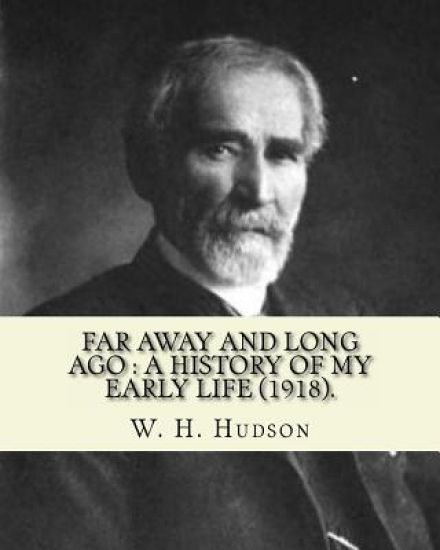
William Henry Hudson (4 August 1841 - 18 August 1922) was an author, naturalist, and ornithologist. Life and work: Hudson was born in the borough of Quilmes, now Florencio Varela of the greater Buenos Aires, in Buenos Aires Province, Argentina. He was the son of Daniel Hudson and his wife Catherine n e Kemble, United States settlers of English and Irish origin. He spent his youth studying the local flora and fauna and observing both natural and human dramas on what was then a lawless frontier, publishing his ornithological work in Proceedings of the Royal Zoological Society, initially in an English mingled with Spanish idioms. He had a special love of Patagonia. Hudson settled in England during 1874, taking up residence at St Luke's Road in Bayswater. He produced a series of ornithological studies, including Argentine Ornithology (1888-1899) and British Birds (1895), and later achieved fame with his books on the English countryside, including Hampshire Day (1903), Afoot in England (1909) and A Shepherd's Life (1910), which helped foster the back-to-nature movement of the 1920s and 1930s. It was set in Wiltshire and inspired a later book The Shepherd's Life about a Lake District farmer which was published in 2015. He was a founding member of the Royal Society for the Protection of Birds. Hudson's best known novel is Green Mansions (1904), and his best known non-fiction is Far Away and Long Ago (1918), which was made into a film. Ernest Hemingway famously referred to Hudson's book The Purple Land (1885) in his novel The Sun Also Rises and also referred to Hudson's Far Away and Long Ago in his posthumous novel The Garden of Eden (1986). In Argentina, Hudson is considered to belong to the national literature as Guillermo Enrique Hudson, the Spanish version of his name. A town in Berazategui Partido and several other public places and institutions are named after him. Towards the end of his life, Hudson moved to Worthing in Sussex, England. His grave is in Broadwater and Worthing Cemetery in Worthing.
A Crystal Age is a utopian novel/ Dystopia written by W. H. Hudson, first published in 1887.The book has been called a "significant S-F milestone"and has been noted for its anticipation of the "modern ecological mysticism" that would evolve a century later. William Henry Hudson (4 August 1841 - 18 August 1922) was an author, naturalist, and ornithologist. Life and work: Hudson was born in the borough of Quilmes, now Florencio Varela of the greater Buenos Aires, in Buenos Aires Province, Argentina. He was the son of Daniel Hudson and his wife Catherine n e Kemble, United States settlers of English and Irish origin. He spent his youth studying the local flora and fauna and observing both natural and human dramas on what was then a lawless frontier, publishing his ornithological work in Proceedings of the Royal Zoological Society, initially in an English mingled with Spanish idioms. He had a special love of Patagonia. Hudson settled in England during 1874, taking up residence at St Luke's Road in Bayswater. He produced a series of ornithological studies, including Argentine Ornithology (1888-1899) and British Birds (1895), and later achieved fame with his books on the English countryside, including Hampshire Day (1903), Afoot in England (1909) and A Shepherd's Life (1910), which helped foster the back-to-nature movement of the 1920s and 1930s. It was set in Wiltshire and inspired a later book The Shepherd's Life about a Lake District farmer which was published in 2015. He was a founding member of the Royal Society for the Protection of Birds. Hudson's best known novel is Green Mansions (1904), and his best known non-fiction is Far Away and Long Ago (1918), which was made into a film. Ernest Hemingway famously referred to Hudson's book The Purple Land (1885) in his novel The Sun Also Rises and also referred to Hudson's Far Away and Long Ago in his posthumous novel The Garden of Eden (1986). In Argentina, Hudson is considered to belong to the national literature as Guillermo Enrique Hudson, the Spanish version of his name. A town in Berazategui Partido and several other public places and institutions are named after him. Towards the end of his life, Hudson moved to Worthing in Sussex, England. His grave is in Broadwater and Worthing Cemetery in Worthing.