Kirjojen hintavertailu. Mukana 12 223 619 kirjaa ja 12 kauppaa.

Kirjahaku

Etsi kirjoja tekijän nimen, kirjan nimen tai ISBN:n perusteella.

1000 tulosta hakusanalla Wayne Mutza

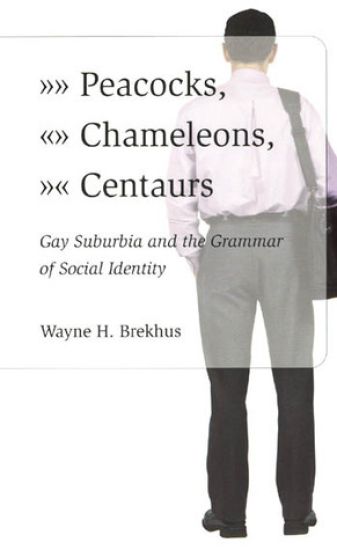
Peacocks, Chameleons, Centaurs – Gay Suburbia and the Grammar of Social Identity
What does it mean to be a gay man living in the suburbs? Do you identify primarily as gay, or suburban, or some combination of the two? For that matter, how does anyone decide what his or her identity is?In this first-ever ethnography of American gay suburbanites, Wayne H. Brekhus demonstrates that who one is depends at least in part on where and when one is. For many urban gay men, being homosexual is key to their identity because they live, work, and socialize in almost exclusively gay circles. Brekhus calls such men "lifestylers" or peacocks. Chameleons or "commuters," on the other hand, live and work in conventional suburban settings, but lead intense gay social and sexual lives outside the suburbs. Centaurs, meanwhile, or "integrators," mix typical suburban jobs and homes with low-key gay social and sexual activities. In other words, lifestylers see homosexuality as something you are, commuters as something you do, and integrators as part of yourself. Ultimately, Brekhus shows that lifestyling, commuting, and integrating embody competing identity strategies that occur not only among gay men but across a broad range of social categories. What results, then, is an innovative work that will interest sociologists, psychologists, anthropologists, and students of gay culture.
The Craft of Research, Fourth Edition

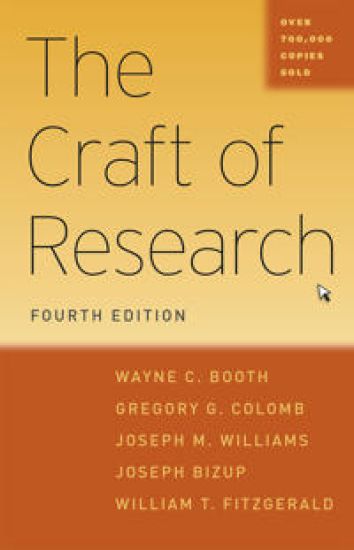
The Craft of Research, Fourth Edition

Wayne C. Booth; Gregory G. Colomb; Joseph M. Williams; Joseph Bizup; William T. FitzGerald

University of Chicago Press
2016
nidottu
With more than three-quarters of a million copies sold since its first publication, The Craft of Research has helped generations of researchers at every level from first-year undergraduates to advanced graduate students to research reporters in business and government learn how to conduct effective and meaningful research. Conceived by seasoned researchers and educators Wayne C. Booth, Gregory G. Colomb, and Joseph M. Williams, this fundamental work explains how to find and evaluate sources, anticipate and respond to reader reservations, and integrate these pieces into an argument that stands up to reader critique. The fourth edition has been thoroughly but respectfully revised by Joseph Bizup and William T. FitzGerald. It retains the original five-part structure, as well as the sound advice of earlier editions, but reflects the way research and writing are taught and practiced today. Its chapters on finding and engaging sources now incorporate recent developments in library and Internet research, emphasizing new techniques made possible by online databases and search engines. Bizup and FitzGerald provide fresh examples and standardized terminology to clarify concepts like argument, warrant, and problem. Following the same guiding principle as earlier editions that the skills of doing and reporting research are not just for elite students but for everyone this new edition retains the accessible voice and direct approach that have made The Craft of Reasearch a leader in the field of research reference. With updated examples and information on evaluation and using contemporary sources, this beloved classic is ready for the next generation of researchers.
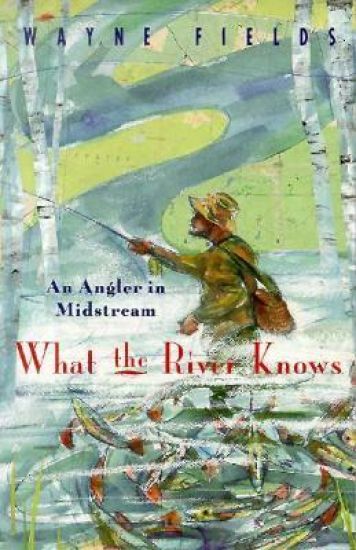
What the River Knows

What the River Knows

Wayne Fields

University of Chicago Press
1996
nidottu
At the age of forty-two, Wayne Fields set upon a sort of pilgrimage when he waded the near twenty-mile stretch of a small river in northern Michigan with fly rod in hand. He emerged with a beautiful and poignant memoir, a meditation on families and aging, and a whimsical response to what time, and streams, and those we care about bring into our lives.
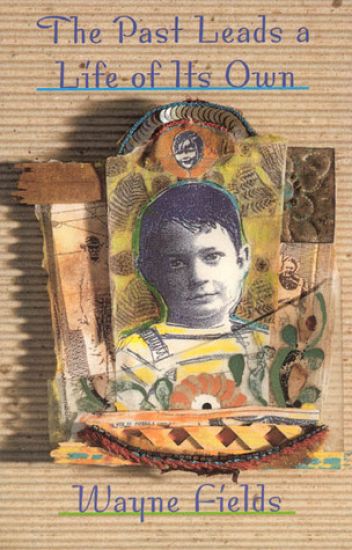
The Past Leads a Life of Its Own

The Past Leads a Life of Its Own

Wayne Fields

University of Chicago Press
1997
nidottu
The Past Leads a Life of Its Own is a compelling collection of stories centered around one boy's childhood in the rural midwest in the 1950s, his love of nature, his family, and their often nomadic existence. "Going through these pages quickly would be like chug-a-lugging a jar of honey fresh from the comb, or wolfing down a slow-cured, hickory-smoked country ham. It is a rich and complexly flavored work of fiction, a book to be savored."--Harper Barnes, St. Louis Post-Dispatch "Set against the rhythms of nature, Fields's 16 luminous, interrelated stories celebrate a boy's coming-of-age...The beauty of these deeply felt stories lies in their spare, ear-perfect language and in quiet epiphanies."--Publishers Weekly "[A] beautifully subtle work...Here are a series of vignettes, each capturing some moment in nature, poetic and ethereal...[They] are like stones skipping on water, capturing the struggles of a family leaving one way of life behind for another, Fields remembers the feeling of a time and a place gone forever."--Library Journal
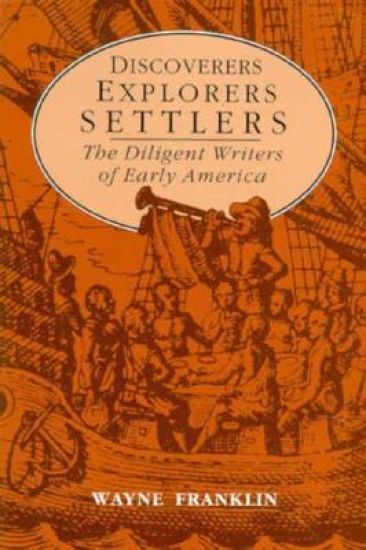
Discoverers, Explorers, Settlers

Discoverers, Explorers, Settlers

Wayne Franklin

University of Chicago Press
1989
nidottu
"Send those on land that will show themselves diligent writers." So urged the "sailing instructions" prepared for explorer Henry Hudson. With distinctive command of the primary texts created by such "diligent writers" as Columbus, William Bradford, and Thomas Jefferson, Wayne Franklin describes how the New World was created from their new words. The long verbal discovery of America, he asserts, entailed both advance and retreat, sudden insights and blind insistence on old ways of seeing. The discoverers, explorers, and settlers depicted America in words—or via maps, tables, and landscape views—as a complex spatial and political entity, a place where ancient formula and current fact were inevitably at odds.
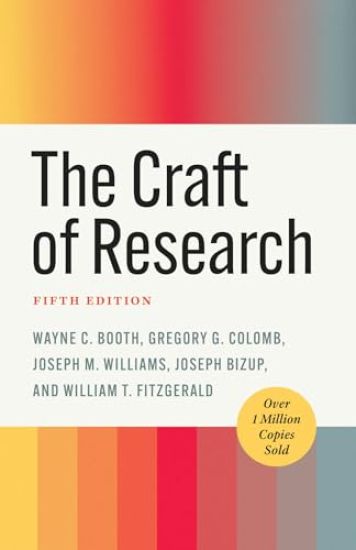
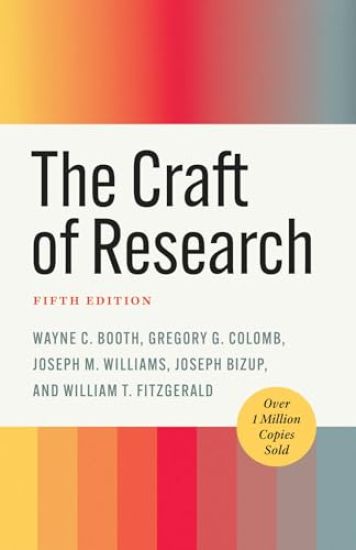
The Craft of Research, Fifth Edition

The Craft of Research, Fifth Edition

Wayne C. Booth; Gregory G. Colomb; Joseph M. Williams; Joseph Bizup; William T. FitzGerald

THE UNIVERSITY OF CHICAGO PRESS
2024
nidottu
A thoroughly updated edition of a beloved classic that has guided generations of researchers in conducting effective and meaningful research. With more than a million copies sold since its first publication, The Craft of Research has helped generations of researchers at every level—from high-school students and first-year undergraduates to advanced graduate students to researchers in business and government. Conceived by seasoned researchers and educators Wayne C. Booth, Gregory G. Colomb, and Joseph M. Williams, this fundamental work explains how to choose significant topics, pose genuine and productive questions, find and evaluate sources, build sound and compelling arguments, and convey those arguments effectively to others. While preserving the book’s proven approach to the research process, as well as its general structure and accessible voice, this new edition acknowledges the many ways research is conducted and communicated today. Thoroughly revised by Joseph Bizup and William T. FitzGerald, it recognizes that research may lead to a product other than a paper—or no product at all—and includes a new chapter about effective presentations. It features fresh examples from a variety of fields that will appeal to today’s students and other readers. It also accounts for new technologies used in research and offers basic guidelines for the appropriate use of generative AI. And it ends with an expanded chapter on ethics that addresses researchers’ broader obligations to their research communities and audiences as well as systemic questions about ethical research practices. This new edition will be welcomed by a new and more diverse generation of researchers.
The Craft of Research, Fifth Edition

The Craft of Research, Fifth Edition

Wayne C. Booth; Gregory G. Colomb; Joseph M. Williams; Joseph Bizup; William T. FitzGerald

THE UNIVERSITY OF CHICAGO PRESS
2024
sidottu
A thoroughly updated edition of a beloved classic that has guided generations of researchers in conducting effective and meaningful research. With more than a million copies sold since its first publication, The Craft of Research has helped generations of researchers at every level—from high-school students and first-year undergraduates to advanced graduate students to researchers in business and government. Conceived by seasoned researchers and educators Wayne C. Booth, Gregory G. Colomb, and Joseph M. Williams, this fundamental work explains how to choose significant topics, pose genuine and productive questions, find and evaluate sources, build sound and compelling arguments, and convey those arguments effectively to others. While preserving the book’s proven approach to the research process, as well as its general structure and accessible voice, this new edition acknowledges the many ways research is conducted and communicated today. Thoroughly revised by Joseph Bizup and William T. FitzGerald, it recognizes that research may lead to a product other than a paper—or no product at all—and includes a new chapter about effective presentations. It features fresh examples from a variety of fields that will appeal to today’s students and other readers. It also accounts for new technologies used in research and offers basic guidelines for the appropriate use of generative AI. And it ends with an expanded chapter on ethics that addresses researchers’ broader obligations to their research communities and audiences as well as systemic questions about ethical research practices. This new edition will be welcomed by a new and more diverse generation of researchers.
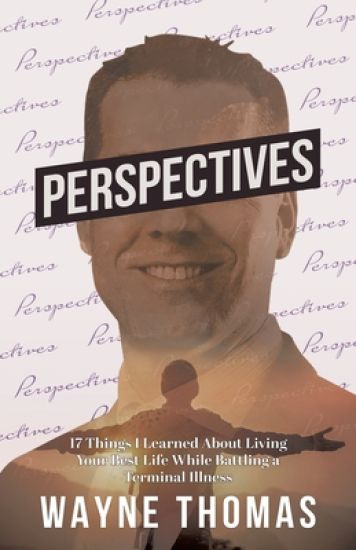
Perspectives

Perspectives

Wayne Thomas

Tellwell Talent
2020
pokkari
"ALS: the three letters that will change your life forever. Wayne Thomas shares his journey living with this devastating disease through his thoughtful insights and honest reflection. He encourages the reader to reflect on their own lives through his life's lessons and his pursuit of living the best life possible. The author is synonymous with resilience. He challenges us and at the same time inspires us with his insightful perspective. His book is timely as the world tries to cope and manage in the midst of this unprecedented time. There is so much to learn about living your best life, and we can all benefit from learning from Wayne. This is a powerful book depicting a journey battling a terminal illness and the remarkable bond between two people who gives strength and courage to each day." - Karen Caughey (Executive Director, The ALS Society of Alberta) "This is one man's story about life living with Amyotrophic Lateral Sclerosis (ALS), which includes triumphs and the tribulations, and about the indomitable love that two people have for each other. This book is not about the end of someone's life, it is about the enduring spirit of one man, Wayne Thomas, who has chosen to embrace the life given to him and to live it to the best of his ability. It is about the people surrounding him, who love and care for him, who want to share his life today. Hopefully, you, the reader, will come away with some understanding, life insights, and, indeed, some new perspectives about living your best life with love and grace, but most of all, discovering Wayne's journey can be a testament to the human spirit and a lesson to us all." - Kerrie Etson (Contributing Editor)Life is a gift and every single day is a blessing. I hope you find value, inspiration, hope, and maybe even a bit of humor in my life insights. I wish you a fulfilling and amazing adventure as you move towards living your best life no matter what comes your way. - Wayne Thomas
The Genesis of Napoleonic Propaganda, 1796–1799

The Genesis of Napoleonic Propaganda, 1796–1799

Wayne Hanley

Columbia University Press
2005
sidottu
Wayne Hanley's The Genesis of Napoleonic Propaganda, 1796-1799 makes clever use of images as well as text to show the artful self-crafting on the part of a young provincial on the make. Using a term actually invented at or near the Revolution, the book makes propaganda into a key element in the rise of Napoleon. With a solid interfacing of cultural and political history, Hanley's novel approach meshes with recent works on the Revolution by Lynn Hunt, Carla Hesse, and others.
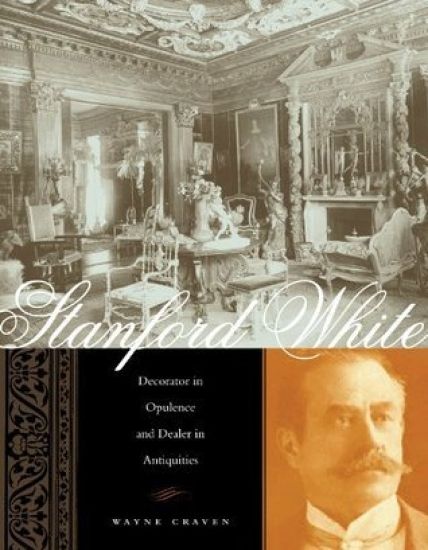
Stanford White

Stanford White

Wayne Craven

Columbia University Press
2005
sidottu
The designer of such landmarks as the Washington Square Arch, the New York Herald and Tiffany Buildings, and the homes of captains of American industry, Stanford White is a legendary figure in the history of American architecture. Yet while the exteriors and floor plans of his designs have been extensively studied and written about, no book has fully examined the other aspect of his career, which claimed at least half of his time and creativity. Wayne Craven's work offers the first study of Stanford White as an interior decorator and a dealer in antiques and the fine arts. Craven also offers a vivid portrait of the sweeping social and cultural changes taking place in the United States in the late nineteenth and early twentieth centuries. He places White's work as an interior decorator within the context of the lives and society of the nouveaux riches who built unprecedented fortunes during the Industrial Revolution. Rejecting the dominant middle-class tastes and values of the United States, the Whitneys, Vanderbilts, Astors, Paynes, Mackays, and other wealthy New York families saw themselves as the new aristocracy and desired the prestige and trappings accorded to Old World nobility. Stanford White fulfilled their hunger for aristocratic recognition by adorning their glamorous Fifth Avenue mansions and Long Island estates with the sculptures, stained-glass windows, coats of arms, and carved fireplaces of the European past. Interior decorators such as White did more than just buy single pieces for these families. They purchased entire rooms from palazzos, chateaux, villas, nunneries, and country houses; had them dismantled; and shipped-both furnishings and architectural elements-to their American clients. Through Stanford White's activities, Craven uncovers the mostly, but not always, legal business of dealing in antiquities, as American money entered and changed the European art market. Based on the archives of the Avery Architectural Library of Columbia University and the New-York Historical Society, this book recovers a neglected yet significant part of White's career, which lasted from the 1870s to his murder in 1906. White not only set the bar for twentieth-century architecture but also defined the newly emerging profession of interior design.
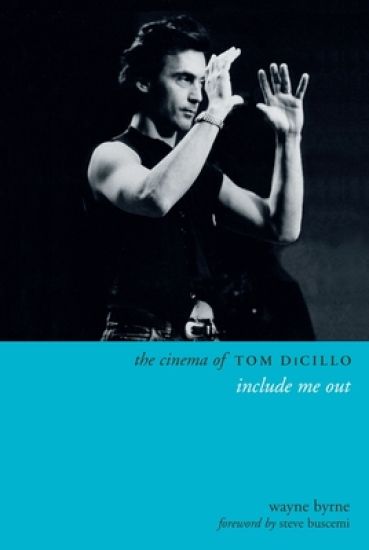
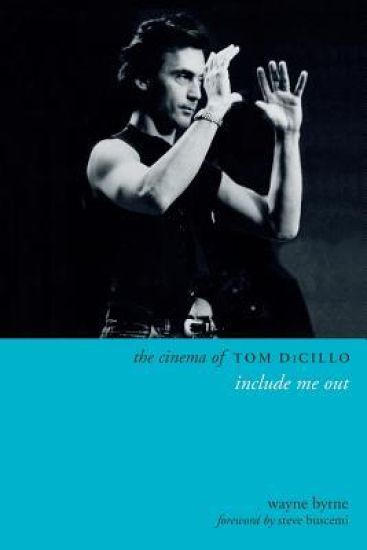
The Cinema of Tom DiCillo

The Cinema of Tom DiCillo

Wayne Byrne; Steve Buscemi

Columbia University Press
2017
sidottu
The Cinema of Tom DiCillo: Include Me Out considers for the first time in a single collection this acclaimed, award-winning director's entire oeuvre, addressing and analyzing themes such as identity, family, and masculinity, supported by in-depth coverage of the generic and aesthetic aspects of DiCillo's distinctive and influential film style. Through exhaustively detailed chapters on each of DiCillo's feature films, presented here is a candid look behind-the-scenes of both the American independent film industry-from the No Wave movement of the 1980s, through the Indie boom of the 1990s, to the contemporary milieu-and the Hollywood studio system. This comprehensive auteur study documents the writing, production, and release of every DiCillo picture, each followed by an extensive Q&A with the director. Also featured is a foreword written by acclaimed actor and filmmaker Steve Buscemi, as well as exclusive interviews and commentary with many cast members and collaborators, including Kevin Corrigan, Maxwell Caulfield, Melonie Diaz, Peter Dinklage, Gina Gershon, Catherine Keener, Alison Lohman, Matthew Modine, Chris Noth, Sam Rockwell, John Turturro, and members of legendary rock group the Doors. Films covered include Johnny Suede, Living In Oblivion, Box of Moonlight, The Real Blonde, Double Whammy, Delirious, When You're Strange, and Down in Shadowland.
The Cinema of Tom DiCillo

The Cinema of Tom DiCillo

Wayne Byrne; Steve Buscemi

Columbia University Press
2017
pokkari
The Cinema of Tom DiCillo: Include Me Out considers for the first time in a single collection this acclaimed, award-winning director's entire oeuvre, addressing and analyzing themes such as identity, family, and masculinity, supported by in-depth coverage of the generic and aesthetic aspects of DiCillo's distinctive and influential film style. Through exhaustively detailed chapters on each of DiCillo's feature films, presented here is a candid look behind-the-scenes of both the American independent film industry-from the No Wave movement of the 1980s, through the Indie boom of the 1990s, to the contemporary milieu-and the Hollywood studio system. This comprehensive auteur study documents the writing, production, and release of every DiCillo picture, each followed by an extensive Q&A with the director. Also featured is a foreword written by acclaimed actor and filmmaker Steve Buscemi, as well as exclusive interviews and commentary with many cast members and collaborators, including Kevin Corrigan, Maxwell Caulfield, Melonie Diaz, Peter Dinklage, Gina Gershon, Catherine Keener, Alison Lohman, Matthew Modine, Chris Noth, Sam Rockwell, John Turturro, and members of legendary rock group the Doors. Films covered include Johnny Suede, Living In Oblivion, Box of Moonlight, The Real Blonde, Double Whammy, Delirious, When You're Strange, and Down in Shadowland.
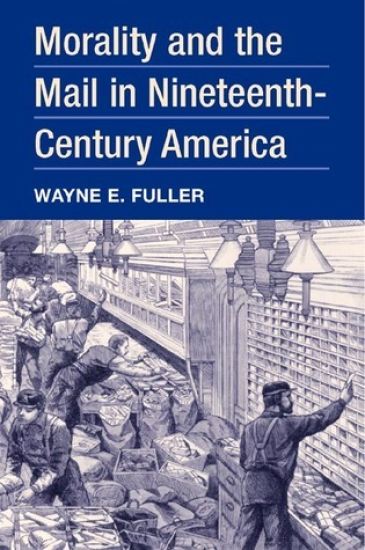
Morality and the Mail in Nineteenth-Century America

Morality and the Mail in Nineteenth-Century America

Wayne E. Fuller

University of Illinois Press
2003
sidottu
Morality and the Mail in Nineteenth-Century America explores the evolution of postal innovations that sparked a communication revolution in nineteenth-century America. Wayne E. Fuller examines how evangelical Protestants, the nation's dominant religious group, struggled against those transformations in American society that they believed threatened to paganize the Christian nation they were determined to save. Drawing on House and Senate documents, postmasters general reports, and the Congressional Record, as well as sermons, speeches, and articles from numerous religious and secular periodicals, Fuller illuminates the problems the changed postal system posed for evangelicals, from Sunday mail delivery and Sunday newspapers to an avalanche of unseemly material brought into American homes via improved mail service and reduced postage prices. Along the way, Fuller offers new perspectives on the church and state controversy in the United States as well as on publishing, politics, birth control, the lottery, censorship, Congress's postal power, and the waning of evangelical Protestant influence.
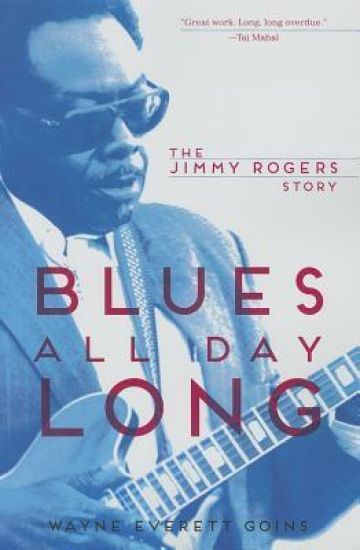
Blues All Day Long

Blues All Day Long

Wayne Everett Goins; Kim Wilson

University of Illinois Press
2014
sidottu
A member of Muddy Waters' legendary late 1940s-1950s band, Jimmy Rogers pioneered a blues guitar style that made him one of the most revered sidemen of all time. Rogers also had a significant if star-crossed career as a singer and solo artist for Chess Records, releasing the classic singles "That's All Right" and "Walking By Myself." In Blues All Day Long, Wayne Everett Goins mines seventy-five hours of interviews with Rogers' family, collaborators, and peers to follow a life spent in the blues. Goins' account takes Rogers from recording Chess classics and barnstorming across the South to a late-in-life renaissance that included new music, entry into the Blues Hall of Fame, and high profile tours with Eric Clapton and the Rolling Stones. Informed and definitive, Blues All Day Long fills a gap in twentieth century music history with the story of one of the blues' eminent figures and one of the genre's seminal bands.
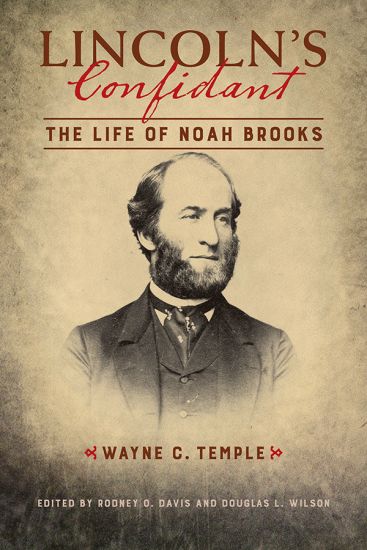
Lincoln's Confidant

Lincoln's Confidant

Wayne C. Temple

University of Illinois Press
2019
sidottu
From the legendary Lincoln scholar Wayne C. Temple comes the long-awaited full-length biography of Noah Brooks, the influential Illinois journalist who championed Abraham Lincoln in Illinois state politics and became his almost daily companion at the White House. Best remembered as one of the president's few true intimates, Brooks was also a nationally recognized man of letters, who mingled with the likes of Mark Twain and Bret Harte. Temple draws on archives and papers long thought lost to re-create Brooks's colorful life and relationship with Lincoln. Brooks's closeness to the president made him privy to Lincoln's thoughts on everything from literature to spirituality. Their frank conversations contributed to the wealth of journalism and personal observations that would make Brooks's writings a much-quoted source for historians and biographers of Lincoln. A carefully researched and well-documented scholarly resource, Lincoln's Confidant is the story of an extraordinary friendship by one of the luminaries of Lincoln scholarship.
Print Culture in a Diverse America

Print Culture in a Diverse America

Wayne A. Wiegand

University of Illinois Press
1998
nidottu
In the modern era, there arose a prolific and vibrant print culture-books, newspapers, and magazines issued by and for diverse, often marginalized, groups. This long-overdue collection offers a unique foray into the multicultural world of reading and readers in the United States. The contributors to this award-winning collection pen interdisciplinary essays that examine the many ways print culture functions within different groups. The essays link gender, class, and ethnicity to the uses and goals of a wide variety of publications and also explore the role print materials play in constructing historical events like the Titanic disaster. Contributors: Lynne M. Adrian, Steven Biel, James P. Danky, Elizabeth Davey, Michael Fultz, Jacqueline Goldsby, Norma Fay Green, Violet Johnson, Elizabeth McHenry, Christine Pawley, Yumei Sun, and Rudolph J. Vecoli
Pickin' on Peachtree

Pickin' on Peachtree

Wayne W. Daniel

University of Illinois Press
2000
nidottu
But for a few twists of fate, Atlanta could have grown to be the recording center that Nashville is today. Pickin' on Peachtree traces Atlanta's emergence in the 1920s as a major force in country recording and radio broadcasting and its forty years as a hub of country music. From the Old Time Fiddlers' Conventions and barn dances through the rise of station WSB and other key radio outlets, Wayne W. Daniel thoroughly documents the consolidation of country music as big business in Atlanta. He also profiles a vast array of performers, radio personalities, and recording moguls who transformed the Peachtree city into the nerve center of early country music.