Kirjojen hintavertailu. Mukana 12 026 489 kirjaa ja 12 kauppaa.

Kirjahaku

Etsi kirjoja tekijän nimen, kirjan nimen tai ISBN:n perusteella.

1000 tulosta hakusanalla William A. Cook

Sites Unseen

Sites Unseen

William A. Gleason

New York University Press
2011
sidottu
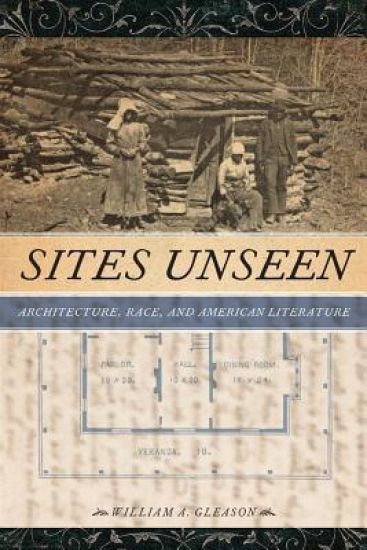
Sites Unseen examines the complex intertwining of race and architecture in nineteenth and early-twentieth century American culture, the period not only in which American architecture came of age professionally in the U.S. but also in which ideas about architecture became a prominent part of broader conversations about American culture, history, politics, and—although we have not yet understood this clearly—race relations. This rich and copiously illustrated interdisciplinary study explores the ways that American writing between roughly 1850 and 1930 concerned itself, often intensely, with the racial implications of architectural space primarily, but not exclusively, through domestic architecture. In addition to identifying an archive of provocative primary materials, Sites Unseen draws significantly on important recent scholarship in multiple fields ranging from literature, history, and material culture to architecture, cultural geography, and urban planning. Together the chapters interrogate a variety of expressive American vernacular forms, including the dialect tale, the novel of empire, letters, and pulp stories, along with the plantation cabin, the West Indian cottage, the Latin American plaza, and the "Oriental" parlor. These are some of the overlooked plots and structures that can and should inform a more comprehensive consideration of the literary and cultural meanings of American architecture. Making sense of the relations between architecture, race, and American writing of the long nineteenth century—in their regional, national, and hemispheric contexts—Sites Unseen provides a clearer view not only of this catalytic era but also more broadly of what architectural historian Dell Upton has aptly termed the social experience of the built environment.
Sites Unseen

Sites Unseen

William A. Gleason

New York University Press
2011
pokkari
Sites Unseen examines the complex intertwining of race and architecture in nineteenth and early-twentieth century American culture, the period not only in which American architecture came of age professionally in the U.S. but also in which ideas about architecture became a prominent part of broader conversations about American culture, history, politics, and—although we have not yet understood this clearly—race relations. This rich and copiously illustrated interdisciplinary study explores the ways that American writing between roughly 1850 and 1930 concerned itself, often intensely, with the racial implications of architectural space primarily, but not exclusively, through domestic architecture. In addition to identifying an archive of provocative primary materials, Sites Unseen draws significantly on important recent scholarship in multiple fields ranging from literature, history, and material culture to architecture, cultural geography, and urban planning. Together the chapters interrogate a variety of expressive American vernacular forms, including the dialect tale, the novel of empire, letters, and pulp stories, along with the plantation cabin, the West Indian cottage, the Latin American plaza, and the "Oriental" parlor. These are some of the overlooked plots and structures that can and should inform a more comprehensive consideration of the literary and cultural meanings of American architecture. Making sense of the relations between architecture, race, and American writing of the long nineteenth century—in their regional, national, and hemispheric contexts—Sites Unseen provides a clearer view not only of this catalytic era but also more broadly of what architectural historian Dell Upton has aptly termed the social experience of the built environment.
Domingo de Soto and the Early Galileo

Domingo de Soto and the Early Galileo

William A. Wallace

CRC Press Inc
2017
sidottu
The unifying theme in this second volume of essays by William A. Wallace to be published in the Variorum series is signaled in the title of the opening paper: 'Domingo de Soto and the Iberian roots of Galileo's science'. The seven essays in the first part provide textual studies of Soto's early formulations of the laws of falling bodies, the context in which they were developed in the 16th century, and the ways in which they were transmitted in Spain and Portugal to the early 17th century, mainly by Jesuit scholars. The following essays focus on the young Galileo and his work at Pisa and Padua, leading to his discovery of the law of uniform acceleration in free fall. Textual evidence is presented for an indirect influence of Soto's work on Galileo, mediated by Jesuits who were teaching at Padua in the first decade of the 17th century.
Every Second Counts

Every Second Counts

William A. Haseltine

Brookings Institution
2018
nidottu
How a public-private partnership led to the largest emergency response system in the world.Emergency medical response systems are a critical component of any nation's healthcare system. Minutes or even seconds can mean the difference between life or death. Every Second Counts tells the inspiring story of how the Indian government and a non-profit foundation, the Emergency Management and Research Institute (EMRI), partnered to create a world-class emergency response system that serves more than 700 million people and has saved more than 2 million lives.What the government of India achieved in partnership with EMRI is nothing short of groundbreaking. In Every Second Counts, William A. Haseltine describes the key factors behind the success of EMRI: the application of cutting-edge technologies, an outstanding medical education system, and a close working partnership between a well-intentioned government and a capable non-profit partner.Every Second Counts is an important book for policymakers, business leaders, and healthcare leaders who care about providing high-quality care at affordable costs to all those in need.
Filth

Filth

William A. Cohen

University of Minnesota Press
2004
nidottu
From floating barges of urban refuse to dung-encrusted works of art, from toxic landfills to dirty movies, filth has become a major presence and a point of volatile contention in modern life. This book explores the question of what filth has to do with culture: what critical role the lost, the rejected, the abject, and the dirty play in social management and identity formation. It suggests the ongoing power of culturally mandated categories of exclusion and repression.Focusing on filth in literary and cultural materials from London, Paris, and their colonial outposts in the nineteenth and early twentieth centuries, the essays in Filth, all but one previously unpublished, range over topics as diverse as the building of sewers in nineteenth-century European metropolises, the link between interior design and bourgeois sanitary phobias, fictional representations of laboring women and foreigners as polluting, and relations among disease, disorder, and sexual-racial disharmony. Filth provides the first sustained consideration, both theoretical and historical, of a subject whose power to horrify, fascinate, and repel is as old as civilization itself.Contributors: David S. Barnes, U of Pennsylvania; Neil Blackadder, Knox College; Joseph Bristow, U of California, Los Angeles; Joseph W. Childers, U of California, Riverside; Eileen Cleere, Southwestern U; Natalka Freeland, U of California, Irvine; Pamela K. Gilbert, U of Florida; Christopher Hamlin, U of Notre Dame; William Kupinse, U of Puget Sound; Benjamin Lazier, U of Chicago; David L. Pike, American U; David Trotter, U of Cambridge.William A. Cohen is associate professor of English at the University of Maryland and the author of Sex Scandal: The Private Parts of Victorian Fiction.Ryan Johnson is completing his Ph.D. in the Department of English at Stanford University, where he has served as general editor of the Stanford Humanities Review.
Contingent States

Contingent States

William A. Callahan

University of Minnesota Press
2004
nidottu
In the 1990s, Greater China became the subject of debate as the site of either the danger of the "China threat" or the promise of Confucian capitalism. William A. Callahan argues that Greater China presents challenges not only to economic and political order but also to international relations theory. In fact, Greater China, though absent from geopolitical maps and international law, is very much present in economic and cultural exchange and exemplifies the contingent state of international politics. Callahan deconstructs the mainstream geopolitical and political-economic understandings of Greater China, tracing its emergence through an ethnographic analysis of four political "problems" in East Asia: the South China Sea disputes, Sino-Korean relations, the return of Hong Kong, and cross-straits relations. Callahan shows how bureaucrats, outlaws, tycoons, academics, workers, politicians, and hooligans alike produce Greater China through networks of relations in local, national, regional, global, and transnational space. Finally, Contingent States reveals how each of the "problems" provoked theoretical innovations that depart from standard conceptions of sovereignty, democracy, and the nation-state.William A. Callahan is senior lecturer of international politics and deputy director of the Center for Contemporary Chinese Studies at the University of Durham, England, and the author of Imagining Democracy: Reading "The Events of May" in Thailand and Pollwatching, Elections, and Civil Society in Southeast Asia.
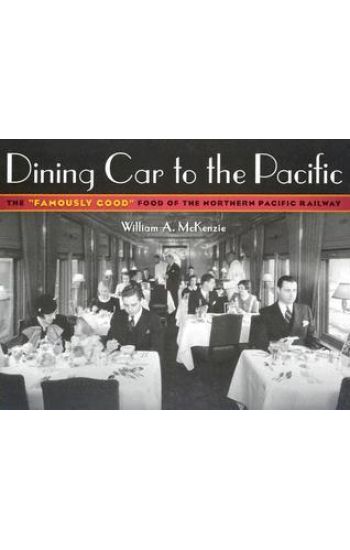
Dining Car to the Pacific

Dining Car to the Pacific

William A. Mckenzie

University of Minnesota Press
2004
nidottu
A tribute to the lost era of the railway dining car, with 150 authentic recipes-back in print! In a prevailing atmosphere of optimism and excitement, workers broke ground for the transcontinental journey of the Northern Pacific Railway in 1870. Recalling a time when travelers were treated with geniality and respect, Dining Car to the Pacific is a tribute to the most unforgettable part of the rail journey westward-a meal in the dining car.William A. McKenzie offers a lavishly illustrated and richly detailed account of hospitality on the NP-a service that many considered to be the best in the industry-drawing on sources ranging from railroad records of the 1860s to anecdotal accounts from the people who were there. In addition, McKenzie includes more than 150 authentic recipes used on the line, such as the Great Big Baked Potato, Washington Apple Pan Cake, and Northern Pacific Fruit Cake. Dining Car to the Pacific will be a treasured addition to the libraries not only of historians and cooks, but also of anyone with nostalgia for the dining car experience.
Embodied

Embodied

William A. Cohen

University of Minnesota Press
2009
nidottu
Making sense of the body in Victorian literatureWhat does it mean to be human? British writers in the Victorian period found a surprising answer to this question. What is human, they discovered, is nothing more or less than the human body itself. In literature of the period, as well as in scientific writing and journalism, the notion of an interior human essence came to be identified with the material existence of the body. The organs of sensory perception were understood as crucial routes of exchange between the interior and the external worlds. Anatomizing Victorian ideas of the human, William A. Cohen considers the meaning of sensory encounters in works by writers including Charles Dickens, Charlotte BrontË, Anthony Trollope, Thomas Hardy, and Gerard Manley Hopkins. Rather than regarding the bodily exterior as the primary location in which identity categories-such as gender, sexuality, race, and disability-are expressed, he focuses on the interior experience of sensation, whereby these politics come to be felt. In these elegant engagements with literary works, cultural history, and critical theory, Cohen advances a phenomenological approach to embodiment, proposing that we encounter the world not through our minds or souls but through our senses.
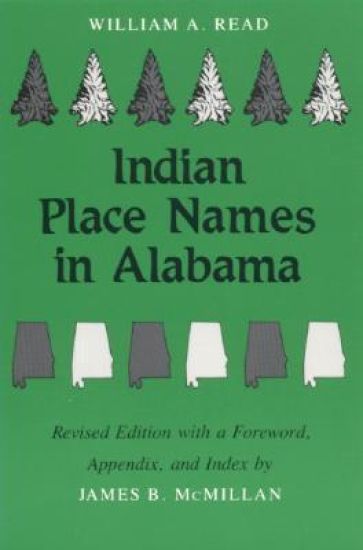
Indian Place Names in Alabama

Indian Place Names in Alabama

William A. Read; James B. McMillan

The University of Alabama Press
1984
nidottu
What is the 'meaning' of names like Coosa and Tallapoosa? Who named the Alabama and Tombigbee and Tennessee rivers? How are Cheaha and Conecuh and Talladega pronounced? How did Opelika and Tuscaloosa get their names? Questions like these, which are asked by laymen as well as by historians, geographers, and students of the English language, can be answered only by study of the origins and history of the Indian names that dot the map of Alabama.--from the Foreword Originally published by Professor Read in 1937, this volume was revised, updated, and annotated in 1984 by James B. McMillan and remains the single best compedium on the topic.
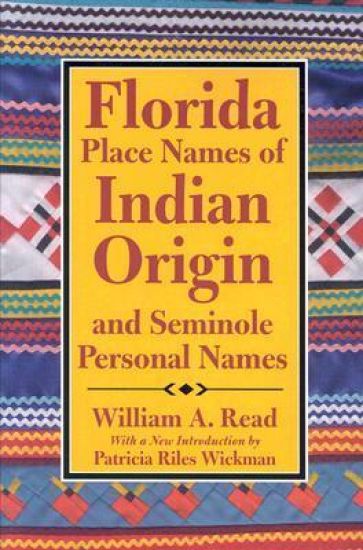
Florida Place Names of Indian Origin and Seminole Personal Names

Florida Place Names of Indian Origin and Seminole Personal Names

William A. Read

The University of Alabama Press
2003
nidottu
The first Native peoples of what is now the United States who met and interacted with Europeans were the people of the lower Southeast. They were individuals of the larger Maskoki linguistic family who inhabited much of present-day Florida, Georgia, Alabama, Mississippi, South Carolina, and eastern portions of Tennessee, Kentucky, and Louisiana. Today, the sixteen federally recognized tribes called Seminoles trace their heritage from these early Maskoki peoples, and many of them in both Florida and Oklahoma still speak and understand this root language. The continuing vitality of this core language, and of Seminole culture and influence, makes this linguistic examination by William Read ever more valuable. A companion to his study of Indian Place Names in Alabama, this long out-of-print guide offers a new introduction from Patricia Wickman in which she provides current understandings of Seminole language and derivations and a brief analysis of Read's contribution to the preservation of the Native linguistic record.
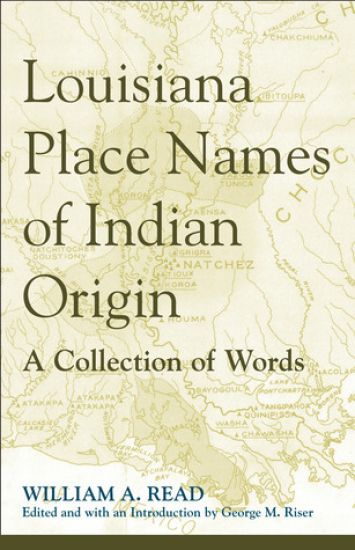
Louisiana Place Names of Indian Origin

Louisiana Place Names of Indian Origin

William A. Read

The University of Alabama Press
2008
nidottu
William A. Read (1869-1962) was an internationally educated and renowned linguist whose career included 38 years as a professor of English at Louisiana State University. His writings spanned five decades and have been instrumental across a wide range of academic disciplines. Most importantly, Read devoted a good portion of his research to the meaning of place names in the southeastern United States - especially as they related to Indian word adoption by Europeans.This volume includes his three Louisiana articles combined: ""Louisiana Place-Names of Indian Origin"" (1927), ""More Indian Place-Names in Louisiana"" (1928), and ""Indian Words"" (1931). Joining Alabama's reprint of ""Indian Place Names in Alabama"" and ""Florida Place Names of Indian Origin"" and ""Seminole Personal Names"", this volume completes the republication of the southern place name writings of William A. Read.
How to Win Arguments

How to Win Arguments

William A. Rusher

University Press of America
1985
nidottu
This entertaining work, sprinkled with illustrative real-life anecdotes, is a comprehensive guide to the techniques, rhetorical devices and principles of successful argumentation. The author, a debater since age thirteen, has lectured widely. Publisher of the National Review, Rusher is also a television commentator and syndicated columnist. Originally published by Doubleday in 1981.
Take the Dimness of My Soul Away

Take the Dimness of My Soul Away

William A. Ritter

Morehouse Publishing
2004
pokkari
In 1994 William Ritter's adult son committed suicide, sending Ritter and his family on a journey no family wants to take. Part of Ritter's own process of healing the loss of his son was to preach about it occasionally from the pulpit. This book is a collection of the sermons he preached, the first one just three weeks after his son's death, and the final one nine years later. Through them, we get a glimpse of a father and a family struggling honestly with their pain and gradually-over the years-coming to grips with their loss. Take the Dimness of My Soul Away will be a welcome companion to anyone who has lost a loved one to suicide, as well as to pastors and counselors who work with those who are grieving. Ritter offers no easy solutions, no rosy pictures, and no silver linings, but speaks honestly instead about the difficult emotions and confusion of this kind of loss, and ultimately, about a sense of hopefulness for the survivors of suicide.
Cuban Tobacco in the Age of Second Slavery

Cuban Tobacco in the Age of Second Slavery

William A. Morgan

UNIVERSITY OF GEORGIA PRESS
2026
pokkari
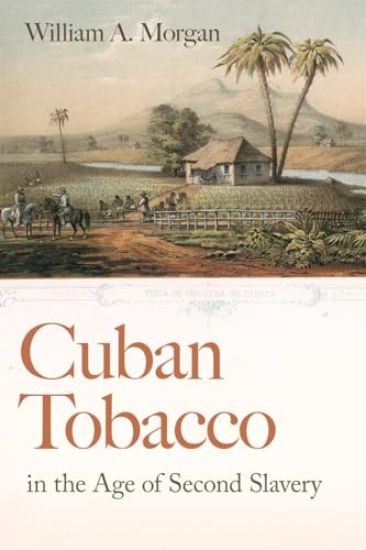
By 1865, more than 750,000 enslaved Africans had arrived in Cuba, making it the leading Spanish American slave colony and the epicenter of slavery in the Atlantic. At the height of the global tobacco economy, tens of thousands of these slaves labored in Pinar del Río, Cuba—a region devoted exclusively to tobacco cultivation. These enslaved people were responsible for exporting a record fourteen million pounds of raw tobacco per year, leaving one contemporary writer to argue that no agricultural economy produced more value, in proportion to the capital and labor employed, than tobacco. While tobacco was second only to sugar in export significance and in the number of rural enslaved, tobacco was unequivocally as dependent on enslaved labor as the more infamous export. Despite Cuba being one of the first-introduced and last-abolished slave societies in the Atlantic world, this slave economy remains largely ignored, existing outside the considerable and recent scholarship on the region. Cuban Tobacco in the Age of Second Slavery directly refutes the myth of tobacco as a small-scale, family, and free-labor crop promoted by both contemporary and current scholarship. It also rejects the prevailing use of sugar as the model for epitomizing Cuban slavery—a paradigm that obscures the full measure of diversity in this region and era. Arguing tobacco was more counterpart than counterpoint to sugar, Cuban Tobacco in the Age of Second Slavery focuses on the development of tobacco as a plantation economy—and the exponential increase in forced labor supporting it—to suggest an alternative narrative in understanding both Cuban and Atlantic slavery in this period.
Cuban Tobacco in the Age of Second Slavery

Cuban Tobacco in the Age of Second Slavery

William A. Morgan

UNIVERSITY OF GEORGIA PRESS
2026
sidottu
By 1865, more than 750,000 enslaved Africans had arrived in Cuba, making it the leading Spanish American slave colony and the epicenter of slavery in the Atlantic. At the height of the global tobacco economy, tens of thousands of these slaves labored in Pinar del Río, Cuba—a region devoted exclusively to tobacco cultivation. These enslaved people were responsible for exporting a record fourteen million pounds of raw tobacco per year, leaving one contemporary writer to argue that no agricultural economy produced more value, in proportion to the capital and labor employed, than tobacco. While tobacco was second only to sugar in export significance and in the number of rural enslaved, tobacco was unequivocally as dependent on enslaved labor as the more infamous export. Despite Cuba being one of the first-introduced and last-abolished slave societies in the Atlantic world, this slave economy remains largely ignored, existing outside the considerable and recent scholarship on the region. Cuban Tobacco in the Age of Second Slavery directly refutes the myth of tobacco as a small-scale, family, and free-labor crop promoted by both contemporary and current scholarship. It also rejects the prevailing use of sugar as the model for epitomizing Cuban slavery—a paradigm that obscures the full measure of diversity in this region and era. Arguing tobacco was more counterpart than counterpoint to sugar, Cuban Tobacco in the Age of Second Slavery focuses on the development of tobacco as a plantation economy—and the exponential increase in forced labor supporting it—to suggest an alternative narrative in understanding both Cuban and Atlantic slavery in this period.
Against Capitalism

Against Capitalism

William A. Pelz

Peter Lang Publishing Inc
2007
sidottu
Typically the gains in living standards and political rights of Europeans are presented as flowing from the good graces of industrial capitalism. In reality, as this book proves, it was the massive, militant struggle of millions of average persons who forced concessions such as the welfare state and free elections to Parliament. Without understanding the revolutionary vision and the pressure it placed on European rulers, it is difficult to understand contemporary society.
Radio

Radio

William A. Richter

Peter Lang Publishing Inc
2006
nidottu
From payola to podcasting, from the advertising office to the DJ booth to the station antenna, Radio: A Complete Guide to the Industry offers a concise, one-stop introduction to all aspects of the radio industry. Readers are taken on a lively tour of radio's history from the early experiments with wireless to today's satellite and digital radio. Industry veteran William A. Richter brings readers inside the typical station to explain who does what and how all the pieces fit together. The book also includes some brief interviews from working professionals for more perspective. Richter explains how ratings work, gives an overview of the major industry players, and guides readers through FCC regulations and other ethical and legal issues that impact radio. Written in a crisp, easy style, and including glossaries in each chapter, Radio is well suited for a range of courses on radio. It is a valuable resource for anyone interested in radio, from aspiring college DJs to general managers of radio stations.
Radio

Radio

William A. Richter

Peter Lang Publishing Inc
2006
sidottu
From payola to podcasting, from the advertising office to the DJ booth to the station antenna, "Radio: A Complete Guide to the Industry" offers a concise, one-stop introduction to all aspects of the radio industry. Readers are taken on a lively tour of radio's history from the early experiments with wireless to today's satellite and digital radio. Industry veteran William A. Richter brings readers inside the typical station to explain who does what and how all the pieces fit together. The book also includes some brief interviews from working professionals for more perspective. Richter explains how ratings work, gives an overview of the major industry players, and guides readers through FCC regulations and other ethical and legal issues that impact radio. Written in a crisp, easy style, and including glossaries in each chapter, Radio is well suited for a range of courses on radio. It is a valuable resource for anyone interested in radio, from aspiring college DJs to general managers of radio stations.