
Kirjahaku
Etsi kirjoja tekijän nimen, kirjan nimen tai ISBN:n perusteella.
1000 tulosta hakusanalla William R Cook
Tales of a Hot Planet: Climate Change Denial, Policy and Geoengineering
William R. McPherson Ph. D.
Createspace Independent Publishing Platform
2012
nidottu

Flooded Area and Plant Zonation in Isolated Wetlands in Well Fields in the Northern Tampa Bay Region, Florida, Following Reductions in Groundwater-Wit
William R. Pfeiffer; U. S. Department of the Interior; U. S. Geological Survey
Createspace Independent Publishing Platform
2014
nidottu
Hispanic Nations of the New World V50: Chronicles of America
William R. Shepherd
Literary Licensing, LLC
2014
nidottu
The Goddess of Atvatabar: Being the History of the Discovery of the Interior World and Conquest of Atvatabar
William R. Bradshaw
Literary Licensing, LLC
2014
nidottu

The American Vignola, Part 2: Arches and Vaults, Roofs and Domes, Doors and Windows, Walls and Ceilings, Steps and Staircases (1906)
William R. Ware
Literary Licensing, LLC
2014
nidottu


The Struggle for Power in Colonial America, 1607–1776
William R. Nester
Lexington Books
2017
sidottu
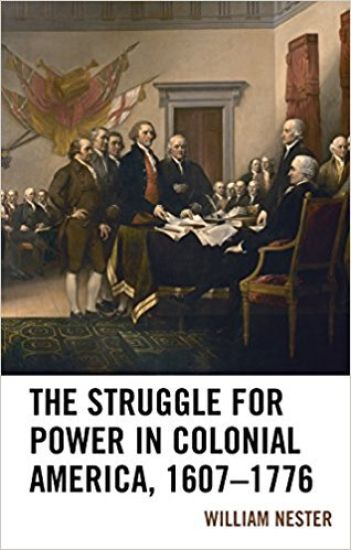
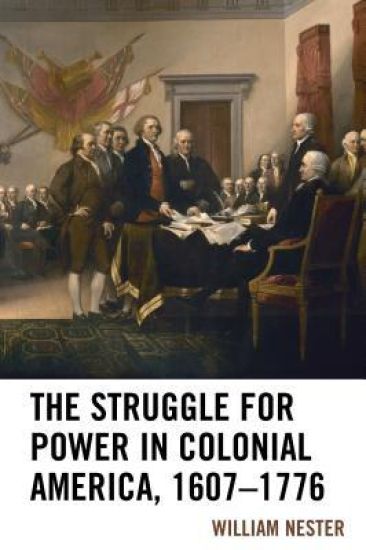
America’s colonial era began and ended dramatically, with the founding of the first enduring settlement at Jamestown on May 14, 1607 and the Declaration of Independence in Philadelphia on July 4, 1776. During those 169 years, conflicts were endemic and often overlapping among the colonists, between the colonists and the original inhabitants, between the colonists and other imperial European peoples, and between the colonists and the mother country. As conflicts were endemic, so too were struggles for power. This study reveals the reasons for, stages, and results of these conflicts. The dynamic driving this history are two inseparable transformations as English subjects morphed into American citizens, and the core American cultural values morphed from communitarianism and theocracy into individualism and humanism. These developments in turn were shaped by the changing ways that the colonists governed, made money, waged war, worshipped, thought, wrote, and loved. Extraordinary individuals led that metamorphosis, explorers like John Smith and Daniel Boone, visionaries like John Winthrop and Thomas Jefferson, entrepreneurs like William Phips and John Hancock, dissidents like Rogers Williams and Anne Hutchinson, warriors like Miles Standish and Benjamin Church, free spirits like Thomas Morton and William Byrd, and creative writers like Anne Bradstreet and Robert Rogers. Then there was that quintessential man of America’s Enlightenment, Benjamin Franklin. And finally, George Washington who, more than anyone, was responsible for winning American independence when and how it happened.
The Struggle for Power in Colonial America, 1607–1776
William R. Nester
Lexington Books
2019
nidottu
America’s colonial era began and ended dramatically, with the founding of the first enduring settlement at Jamestown on May 14, 1607 and the Declaration of Independence in Philadelphia on July 4, 1776. During those 169 years, conflicts were endemic and often overlapping among the colonists, between the colonists and the original inhabitants, between the colonists and other imperial European peoples, and between the colonists and the mother country. As conflicts were endemic, so too were struggles for power. This study reveals the reasons for, stages, and results of these conflicts. The dynamic driving this history are two inseparable transformations as English subjects morphed into American citizens, and the core American cultural values morphed from communitarianism and theocracy into individualism and humanism. These developments in turn were shaped by the changing ways that the colonists governed, made money, waged war, worshipped, thought, wrote, and loved. Extraordinary individuals led that metamorphosis, explorers like John Smith and Daniel Boone, visionaries like John Winthrop and Thomas Jefferson, entrepreneurs like William Phips and John Hancock, dissidents like Rogers Williams and Anne Hutchinson, warriors like Miles Standish and Benjamin Church, free spirits like Thomas Morton and William Byrd, and creative writers like Anne Bradstreet and Robert Rogers. Then there was that quintessential man of America’s Enlightenment, Benjamin Franklin. And finally, George Washington who, more than anyone, was responsible for winning American independence when and how it happened.
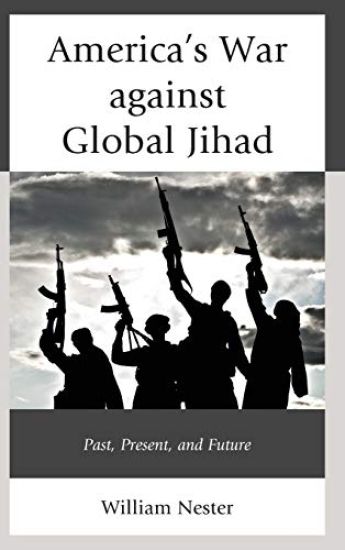
A specter haunts America, the specter of Global Jihad, Islamic Holy War. This specter was never more horrific than on September 11, 2001, when nineteen fanatics hijacked four jetliners and used them as guided missiles to destroy the twin World Trade Towers, damage the Pentagon, murder nearly 3,000 people, and cause as much as several hundred billion dollars’ worth of direct and indirect damage to New York City and the national economy. But Jihadists have periodically attacked Americans ever since November 1979, when mobs shouting death to America overran the American embassy in Tehran and held 52 officials hostage for 444 days. President George W. Bush responded to the September 11 atrocities by declaring a global war on terror. Now in its second decade, that war has cost the United States thousands of lives and trillions of dollars. Americans are haunted by horrific televised images from across a swath of the Muslim world of bomb-blasted cities, hundreds of slaughtered bodies, thousands of refugees huddled in squalid camps, and American journalists in orange jump suits kneeling in the desert before the black robed and masked men who will behead them. Americans increasingly question whether the global war on terror has been worth those costs for their own nation and the lands where it is fought. This book analyzes America’s crusade against Jihadism. The key related questions it addresses are these: Looking back, what were the successes and failures of Washington’s counter-Jihadist strategy before and after September 11? Looking ahead, should Americans stay the course or cut their losses in Iraq, Afghanistan, and elsewhere? Was the catastrophic September 11 attack a one-time event or could its equivalent or worse in death and destruction happen again? Renowned Harvard professor Samuel Huntington asserted that: “The underlying problem for the West is not Islamic fundamentalism, it is Islam, a different civilization, whose people are convinced of the superiority of their culture and are obsessed with the inferiority of their power.” Is that true? Just what of Muhammad’s words and deeds, if any, justifies the barbarism of al Qaeda, Islamic State, and other Jihadists? Finally, just how corporeal is that specter of global Jihad to the United States? A startling surprise awaits the reader in the final chapter as acclaimed expert William Nester weighs the specter of global Jihad against an array of other national security threats.
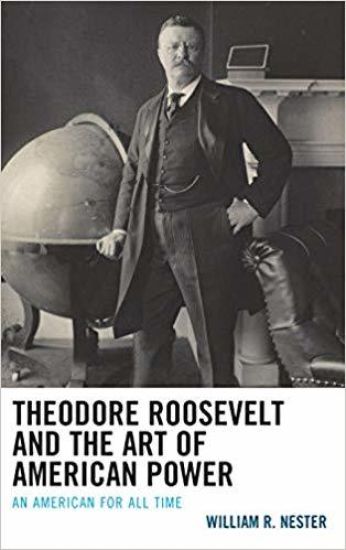
Theodore Roosevelt is an American icon, his face carved in granite alongside those of Washington, Jefferson, and Lincoln on Mt. Rushmore. He is the only American awarded both the Medal of Honor and Nobel Peace Prize. As president, he pushed through a stubborn Congress to breakup corporate monopolies strangling the economy, impose health standards on the food and drug industries, and conserve America’s natural heritage, including the Grand Canyon and Redwood forest. He was a brilliant diplomat who ended a war between Japan and Russia, and prevented a war between Germany and France. He engineered independence for the province of Panama from Columbia, then signed a treaty with the new country that entitled the United States to build, run, and defend a Panama canal. He crusaded for progressive reforms as a New York assemblyman, U.S. civil service commissioner, New York City police commissioner, and New York governor. He led scientific expeditions across East Africa’s savanna and Brazil’s rainforest. During the war with Spain, he raised a cavalry regiment and led his Rough Riders to a decisive victory at San Juan Heights. As a Dakota rancher during the frontier’s twilight, he squared off with outlaws and renegade Indians. He was a prolific writer, authoring 38 books and hundreds of essays. Roosevelt was among the most charismatic presidents. Yet, although most Americans adored him, most Wall Street moguls and political bosses hated him for his reforms. He was complex, simultaneously peacemaker and warmonger, progressive and conservative, Machiavellian and Kantian, avid hunter and nature lover. Roosevelt accomplished all that he did because he mastered the art of American power. His motto “speak softly and carry a big stick” exemplified how he asserted power to defend or enhance American interests. Time after time he bested such titans as J.P. Morgan or Kaiser Wilhelm at the game of power. Although he is the subject of dozens of books, this is the first to comprehensively explore just how Roosevelt understood, massed, and wielded power to pursue his vision for an America as the world’s most prosperous, just, and influential nation.
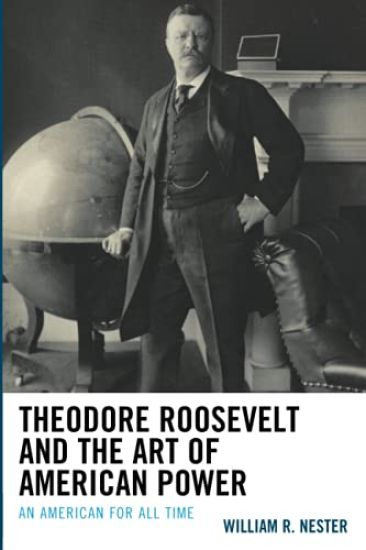
This study comprehensively and systematically explores how Theodore Roosevelt understood, massed, and wielded power to pursue his vision for an America that was the world’s most prosperous, just, and influential nation.