Kirjojen hintavertailu. Mukana 11 717 486 kirjaa ja 12 kauppaa.

Kirjahaku

Etsi kirjoja tekijän nimen, kirjan nimen tai ISBN:n perusteella.

1000 tulosta hakusanalla "Polymers"

Synthetic Biodegradable and Biobased Polymers

Synthetic Biodegradable and Biobased Polymers

Springer International Publishing AG
2024
nidottu
This volume presents the recent developments in synthetic biodegradable and biobased polymers. The syntheses of many polymer types such as polyesters and polyamides, and also their processing technologies are discussed herein, and new aspects from fundamental and from industrial research are covered. This combination of both perspectives within this volume will be of interest for many research scientists from academia and industry and also for lectures and teachers. Chapters ''BioPBSTM (Polybutylene succinate)'' and ''Polymer biodegradability 2.0: A holistic view on polymer biodegradation in natural and engineered environments'' are available open access under a Creative Commons Attribution 4.0 International License via link.springer.com. For further details see license information in the chapter.
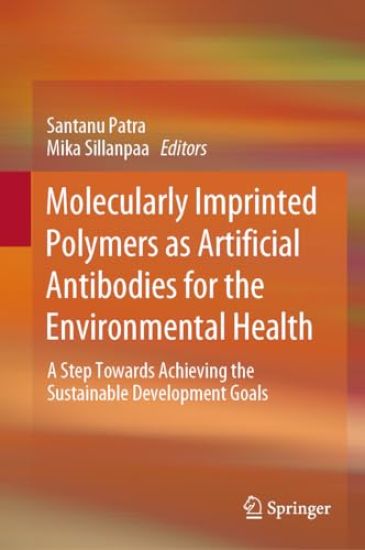
Molecularly Imprinted Polymers as Artificial Antibodies for the Environmental Health
This book covers the fundamental principles of molecularly imprinted polymers (MIPs) and their synthesis methodologies, offering readers a solid understanding of these unique materials. It delves into the design and selection of template molecules for imprinting, as well as polymerization techniques and strategies for optimizing MIP performance. With a focus on real-world applications, the book showcases the wide range of environmental health problems that MIPs can address. It discusses the detection and quantification of pollutants in air, water, and soil using MIP-based sensors and biosensors. Additionally, it explores the use of MIPs in environmental remediation, such as the adsorption and removal of contaminants, as well as the development of MIP-based materials for water and soil treatment. The book also highlights the analytical applications of MIPs in environmental health, including separation and purification techniques, sample preparation, and preconcentration methods. It examines how MIPs can be integrated into analytical instrumentation and detection systems to enhance environmental analysis. By bringing together interdisciplinary knowledge from the fields of environmental science, chemistry, polymer science, analytical chemistry, and environmental engineering, this book provides readers with a comprehensive understanding of the potential of MIPs as artificial antibodies for environmental health. With its emphasis on real-world applications and case studies, it offers practical insights that researchers, academics, and professionals can apply in environmental monitoring, remediation, and analysis projects.
Molecularly Imprinted Polymers

Molecularly Imprinted Polymers

Springer International Publishing AG
2024
sidottu
This book provides an overview of the latest technology and advances in the field of molecularly imprinted polymers (MIPs) and their diverse applications in healthcare diagnostics, food safety and quality, as well as environmental monitoring. Divided into 3 parts, the book offers an introduction to the basics of molecular imprinting and affinity materials, followed by an outline of the main sensor applications and the contribution of smart nanomaterials to molecular imprinting. The last part of the book compares MIP-based diagnostics technologies with antibody- and aptamer-based diagnostics, and discusses existing and further commercial opportunities for MIPs. Through this book, readers will get a wide range of information from basics to advanced applications in the molecular imprinting area and discover the impact of integrated approaches such as computational studies and nanotechnology on the development of imprinting techniques for biotechnological applications covering healthcare, environmental and food safety research. With its rich content, the book is a unique contribution to the field and it holds great potential to be a reference work not only for researchers working in the field but also for the researchers who plan to design collaborative research projects to contribute to their particular field (e.g., medical scientists, medical doctors, agricultural or food engineers).
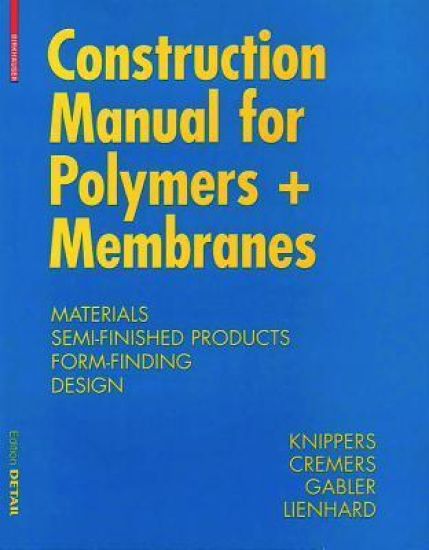
Construction Manual for Polymers + Membranes

Construction Manual for Polymers + Membranes

Jan Knippers; Jan Cremers; Markus Gabler; Julian Lienhard

Birkhauser
2011
isokokoinen pokkari
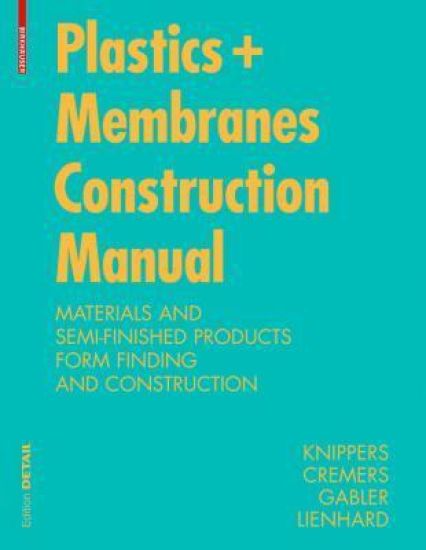
Ob als transluzente Platten, weit gespannte Membranen, luftgefülltes Folienkissen oder in organisch geschwungener Gestalt: In den unterschiedlichsten Formen und Anwendungsbereichen finden Kunststoffe Verwendung in der Architektur. Innovative technische Entwicklungen verbessern stetig seine Materialeigenschaften, gleichzeitig wächst ein neues Bewusstsein für dieses Material als Baustoff. Wurden Kunststoffe früher hauptsächlich als preisgünstige Variante zu traditionellen Baustoffen eingesetzt, erfreuen sie sich heute im Bauwesen zunehmend einer ernstzunehmenden Alternative, sei es als Tragkonstruktion, Dach, Fassade oder Inneneinrichtung. Nicht zuletzt durch diesen dem Material innewohnenden eigenständigen Charakter erfreuen Kunststoffe sich einer nicht gekannten Beliebtheit selbst bei der internationalen Avantgarde der Architekten – in Form einer besonderen Struktur als Stegplatte, als gewellte und faserverstärkte Tafel, als Schüttung zwischen Glas. Und spätestens die neue Generation ökologischer Bio-Kunststoffe zollt auch der Nachhaltigkeitsdebatte Tribut und entledigt die Kunststoffe ihres ihnen anhaftenden Umweltsünderrufs. Beginnend mit der Geschichte der Kunststoffe und Membrane in der Architektur bringt das „Plastics and Membranes Construction Manual" über die Werkstoffeigenschaften bis hin zu Anforderungen an Entwurf und Konstruktion in gewohnter DETAIL-Qualität fundiertes und umfassendes Fachwissen auf den Punkt. Ausgewählte Projektbeispiele runden das Nachschlagewerk ab und machen es unabdingbar für den Planungsalltag und jede Architekturbibliothek.
Construction Manual for Polymers + Membranes

Construction Manual for Polymers + Membranes

Jan Knippers; Jan Cremers; Markus Gabler; Julian Lienhard

Birkhauser
2011
sidottu
Whether it be as translucent sheets, broadly stretched membranes, and inflated foil cushions or in graceful, organic curves, architecture today is utilizing plastics in the most disparate forms and for a wide variety of purposes. Innovative technical developments are constantly improving its material properties; at the same time, there is a growing new awareness of its potential as a construction material. While plastics used to be employed primarily as an inexpensive variant on traditional building materials, they are increasingly regarded in the construction world today as a serious and viable alternative, be it as supporting structures, roofs, facades, or elements of interior design and decoration. Thanks in large part to this inherent self-sufficiency, plastics are currently enjoying an unprecedented surge in popularity, even among the international architectural avant-garde – as multiwall sheets or corrugated, fiber-reinforced panels, or as filling between glass panes. And the new generation of ecological bioplastics also pays tribute to the debate on sustainability, ridding plastics of their lingering reputation as environmental offenders. From the history of plastics and membranes in architecture to their material properties and requirements in construction and design, the Plastics and Membranes Construction Manual cuts to the chase, providing the kind of solid and comprehensive overview of the subject that readers have come to expect from the Im DETAIL series. Selected project examples round off the reference work and make it indispensable for the day-to-day life of the professional planner and for every architecture library.
Environmentally Friendly Polymers and Polymer Composites
Continuous research advances have been observed in the field of environmentally-friendly polymers and polymer composites due to the dependence of polymers on fossil fuels and the sustainability issues related to plastic wastes. This book compiles the most recent research works in biopolymers, their blends and composites, and the use of natural additives, such as vegetable oils and other renewable and waste-derived liquids, with their marked environmental efficiency devoted to developing novel sustainable materials. Therefore, Environmentally Friendly Polymers and Polymer Composites provides an overview to scientists of the potential of these environmentally friendly materials and helps engineers to apply these new materials for industrial purposes.
Functional Coordination Polymers and Metal-Organic Frameworks
This book is a collection of contributions on the synthesis, characterization, andapplications of Metal-Organic Frameworks (MOF) and Coordination Polymers(CP). Coordination Polymers (CP) and Metal-Organic Frameworks (MOF) areat the core of contemporary research on inorganic materials. The virtuallyinfinite combination of their building blocks-inorganic metallic nodes (singleions or clusters) and organic polytopic linkers (polycarboxylates, bridging N-/S-/O-containing heterocycles)-generates solid air- and water-stable compounds.Interesting features from an applicative point of view are porosity, large surfacearea, and lattice flexibility (the "breathing" effect). These properties make themubiquitous in several fields of materials science: gas storage and separation, luminescent sensing, heterogeneous catalysis, and magnetism.
Ionic Conductive Polymers for Electrochemical Devices
Increasing levels of pollution and climate change are pushing the scientific community towards more sustainable solutions for the conversion and storage of energy. This book is dedicated to ionic conductive polymers, fundamental components of devices such as fuel cells (FCs), redox flow batteries (RFBs), and electrolyzers that can help to significantly decrease the amount of greenhouse gases emission. The book focuses on commercial polymers such as Nafion, a benchmark for proton-conducting membranes, acid doped polybenzimidazole (PBI), or blended membranes containing hyperbranched poly(arylene ether sulfone (PAES)/Linear poly(phenylene oxide) (PPO) as anion exchange membranes (AEMs). Promising and low-cost sulfonated aromatic polymers (SAP), or solid polymer blend electrolytes (SPBEs) based on natural chitosan (CS) and methylcellulose (MC). This book is also reports some strategies to enhance mechanical stability, such as cross-linking (XL), or several techniques, including classical casting methods or electrospinning (ES). I am confident that this book will serve to further stimulate advances in this research area, in both the sectors of membranes and catalysts, the first is essential for the long-term functioning of the system, and the second for a drastic reduction in costs, especially in fuel cells.
Function of Polymers in Encapsulation Process
An interdisciplinary book that brings together, at an international level, a high-quality collection of reviews and original research articles dealing with the importance of natural or synthetic polymers in encapsulation processes and their applications. A deep understanding and relevant theoretical calculations for exploring the functions of the materials (involved in the formulations) have also been presented along with fundamental investigations. This book has explored the latest research on the function of polymers in encapsulation technology including fundamental theory and experiments together with reviews and articles. Moreover, the present book offers easy-to-achieve approaches that have been developed so far and could create a platform for industrial material production.
Advances in Thermoresponsive Polymers
Thermoresponsive polymers, materials able to undergo sharp and often reversible phase separations in response to temperature stimuli, are introducing new paradigms in different fields, including medicine, advanced separations and oil and gas. In "Advances in Thermoresponsive Polymers", a clear picture of the frontiers reached in the understanding of the mechanistic behavior associated with temperature-induced phase separation, the influence of the polymer structure in regulating the macroscopic behavior of these materials and the latest applications for which thermoresponsive polymers show great potential is provided.
Water-Soluble and Insoluble Polymers and Biopolymers for Biomedical, Environmental, and Biological Applications
The use of polymers in biological applications is defined by the interactions promoted between living organisms and polymeric chains, which are generally associated with the polymers' hydrophilic and hydrophobic behaviors. However, these water-friendly structures are also very useful for other applications, such as the adsorption of pollutants from sewage water. The modulation of the final properties of water-soluble and insoluble polymers tends to define the spectra of features associated with their final applications.
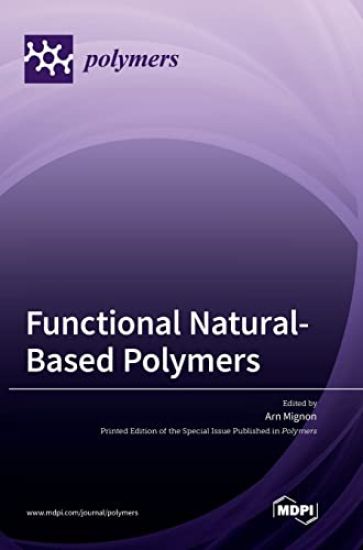
Functional Natural-Based Polymers
Natural polymers are already used for a variety of biomedical applications, including drug delivery, wound healing, tissue engineering, biosensors, etc. However, they have also found other applications, for example, in the food industry, the pharmaceutical industry, as firefighting materials, water purification, etc. Different polysaccharide and protein-based systems have been developed. They each have their properties that render them useful for certain applications such as the water solubility of alginate, the thermo-sensitivity of chitosan, the abundance of cellulose and starch, or the cell adhesion and proliferation of gelatin and collagen. This Special Issue will explore the design, synthesis, processing, characterization, and applications of new functional natural-based polymers.
Advanced Thermoplastic Polymers and Composites
In the last decade, design and material innovations for manufacturing composites have reached new heights. Thermoplastic polymers and their composites have become the most in-demand materials in recent times as they provide numerous advantages over thermoset composites. Thermoplastic polymers have a high damage tolerance, high impact resistance, recyclability, formability, weldability, repairability, and cost-effectiveness compared with thermoset composites. Thermoplastic polymers and composites are widely used in automotive, aerospace, electrical and electronics, industrial, and medical applications. Thermoplastic composites are estimated to grow from USD 28.0 billion in 2019 to USD 36.0 billion by 2024. High-performance thermoplastic materials are used in conjunction with a multitude of manufacturing processes like injection moulding, thermoforming, prepreg, liquid injection processes, automated tape placement, filament winding, pultrusion, additive manufacturing, and other processes. The material limits, design, and assembly requirements, as well as the processing constraints, are significantly important for the realisation of novel product development using a manufacturing process by simultaneously optimising reliability, safety, and other performance-related issues. The current thermoplastic material systems and manufacturing techniques still have plenty of room for optimisation and advancement. This reprint presents the latest scientific and technical advances in thermoplastic materials and their composites, processing, characterisation, product development, and manufacturing process parameter optimisations.
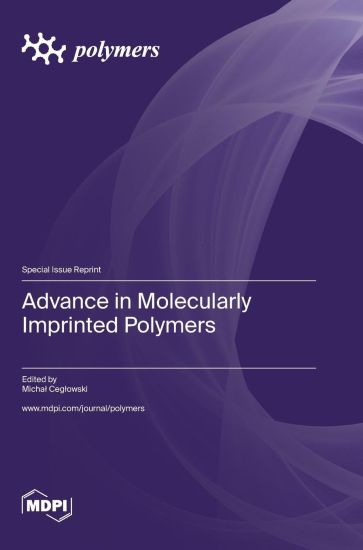
Advance in Molecularly Imprinted Polymers
The "Advance in Molecularly Imprinted Polymers" Special Issue establishes a connection between original research papers and reviews that showcase recent progress in the formulation, creation, and wide-ranging utilization of molecularly imprinted polymers. The content within this Special Issue encompasses a range of subjects pertaining to the chemistry of MIPs, encompassing aspects such as molecular modeling, the utilization of novel monomers and innovative synthesis methods for crafting MIPs, the synthesis and application of ion-imprinted materials, the selective extraction of organic compounds, the preparation of sensors, and the implementation of MIPs in the field of medicine. The compilation of scientific papers presented in this collection demonstrates the diverse landscape of research within MIPs chemistry, ultimately leading to the enhancement of desired traits and the exploration of fresh potential applications for these materials.