Kirjojen hintavertailu. Mukana 11 717 486 kirjaa ja 12 kauppaa.

Kirjahaku

Etsi kirjoja tekijän nimen, kirjan nimen tai ISBN:n perusteella.

1000 tulosta hakusanalla 1906- Baron

In the Days of the Comet (1906). By: H. G. Wells: In the Days of the Comet (1906) is a science fiction novel by H. G. Wells
In the Days of the Comet (1906) is a science fiction novel by H. G. Wells in which humanity is "exalted" when a comet causes "the nitrogen of the air, the old azote," to "change out of itself" and become "a respirable gas, differing indeed from oxygen, but helping and sustaining its action, a bath of strength and healing for nerve and brain."The result: "The great Change has come for evermore, happiness and beauty are our atmosphere, there is peace on earth and good will to all men." Plot: An unnamed narrator is the author of a prologue ("The Man Who Wrote in the Tower") and an epilogue ("The Window of the Tower"). In these short texts is depicted an encounter with a "happy, active-looking" old man: the protagonist and author of the first-person narrative, writing the story of his life immediately before and after "the Change". This narrative is divided into three "books" Book I: The Comet; Book II: The Green Vapours; and Book III: The New World. Book I, recounts that William ("Willie") Leadford, "third in the office staff of Rawdon's pot-bank a place where pottery is made] in Clayton,"quits his job just as an economic recession caused by American dumping hits industrial Britain, and is unable to find another position. His emotional life is dominated by his attachment to Nettie Stuart, "the daughter of the head gardener of the rich Mr. Verrall's widow", 3] of a village called Checkshill Towers. Converted to socialism by his friend 'Parload', Leadford blames class-based injustice for the squalid living conditions in which he and his mother live. The date of the action is unspecified. When Nettie jilts Leadford for the son and heir of the Verrall family, Leadford buys a revolver, intending to kill them both and himself. As this plot matures, a comet with an "unprecedented band in the green" in its spectroscopy looms gradually larger in the sky, eventually becoming brighter than the Moon. Just as Leadford is about to kill his rivals, the green comet enters the Earth's atmosphere and disintegrates, causing a soporific green fog. Book II opens with Leadford's awakening, in which he is acutely aware of the beauty in the world and his attitude toward others is one of generous fellow-feeling. The same effects occur in every human being, who accordingly re-organize human society.By chance, Leadford falls in with a Cabinet minister and briefly becomes his secretary. Book III begins with an intense discussion by Verrall, Leadford, and Nettie, about their future. Although Nettie wants to establish a m nage trois, Leadford and Verrall reject the idea, and Leadford devotes himself to his mother until her death. Leadford marries Anna, who has been helping care for his mother, and they have a son; but soon thereafter Nettie contacts Leadford. In the epilogue, the 72-year-old Leadford reveals that he, Nettie, Verrall, and Anna were from then on "very close, you understand, we were friends, helpers, personal lovers in a world of lovers". The author is troubled "by my uneasy sense of profound moral differences."... Herbert George Wells (21 September 1866 - 13 August 1946)-known as H. G. Wells-was a prolific English writer in many genres, including the novel, history, politics, social commentary, and textbooks and rules for war games. Wells is now best remembered for his science fiction novels and is called a "father of science fiction", along with Jules Verne and Hugo Gernsback.His most notable science fiction works include The Time Machine (1895), The Island of Doctor Moreau (1896), The Invisible Man (1897), and The War of the Worlds (1898). He was nominated for the Nobel Prize in Literature four times....
The Mirror of the Sea (1906). By: Joseph Conrad: First published in 1906, The Mirror of the Sea was the first of Joseph Conrad's two autobiographical
First published in 1906, The Mirror of the Sea was the first of Joseph Conrad's two autobiographical memoirs. Discussing it, he called the book "a very intimate revelation. . . . I have attempted here to lay bare with the unreserve of a last hour's confession the terms of my relation with the sea, which beginning mysteriously, like any great passion the inscrutable Gods send to mortals, went on unreasoning and invincible, surviving the test of disillusion, defying the disenchantment that lurks in every day of a strenuous life; went on full of love's delight and love's anguish, facing them in open-eyed exultation without bitterness and without repining, from the first hour to the last." Joseph Conrad (Polish pronunciation: born J zef Teodor Konrad Korzeniowski; 3 December 1857 - 3 August 1924) was a Polish-British writer regarded as one of the greatest novelists to write in the English language. He joined the British merchant marine in 1878, and was granted British nationality in 1886. Though he did not speak English fluently until his twenties, he was a master prose stylist who brought a non-English sensibility into English literature.He wrote stories and novels, many with a nautical setting, that depict trials of the human spirit in the midst of an impassive, inscrutable universe. Conrad is considered an early modernist, though his works still contain elements of 19th-century realism. His narrative style and anti-heroic characters have influenced many authors, including F. Scott Fitzgerald, William Faulkner, Ernest Hemingway, Andr Malraux, George Orwell, Graham Greene, Gabriel Garc a M rquez, John le Carr , V. S. Naipaul, Philip Roth, J. M. Coetzee, and Salman Rushdie. Many films have been adapted from, or inspired by, Conrad's works. Writing in the heyday of the British Empire, Conrad drew on, among other things, his native Poland's national experiences note 3] and his own experiences in the French and British merchant navies, to create short stories and novels that reflect aspects of a European-dominated world-including imperialism and colonialism-and that profoundly explore the human psyche.
The Story and Song of Black Roderick (1906) by Dora Sigerson Shorter

The Story and Song of Black Roderick (1906) by Dora Sigerson Shorter

Dora Sigerson Shorter

Createspace Independent Publishing Platform
2017
nidottu
Dora Maria Sigerson Shorter (16 August 1866 - 6 January 1918) was an Irish poet and sculptor, who after her marriage in 1895 wrote under the name Dora Sigerson Shorter.She was born in Dublin, Ireland, the daughter of George Sigerson, a surgeon and writer, and Hester (n e Varian), also a writer. She was a major figure of the Irish Literary Revival, publishing many collections of poetry from 1893. Her friends included Katharine Tynan, Rose Kavanagh and Alice Furlong, writers and poets. In 1895 she married Clement King Shorter, an English journalist and literary critic. They lived together in London, until her death at age 51 from undisclosed causes
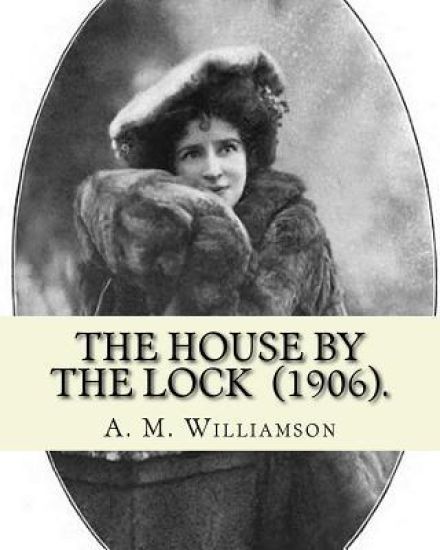
The House by the Lock (1906) by: A. M. Williamson ( Written as Mrs. C. N. Williamson )

The House by the Lock (1906) by: A. M. Williamson ( Written as Mrs. C. N. Williamson )

A. M. Williamson

Createspace Independent Publishing Platform
2017
nidottu
Alice Muriel Williamson, nee Livingston (1869 - 24 September 1933) was an American-British novelist, who styled herself Mrs. C. N. Williamson after her marriage.Alice Muriel Livingston was born in America, the daughter of Mark Livingston of Poughkeepsie. She came to England when young. In 1894, soon after arrival in England, she married the magazine editor Charles Norris Williamson (1859-1920), "the first editor to whom she presented an introduction". Many of her books were jointly written with her husband. After her marriage she introduced herself as Mrs. C. N. Williamson. A number of their novels cover the early days of motoring and can also be read as travelogues.
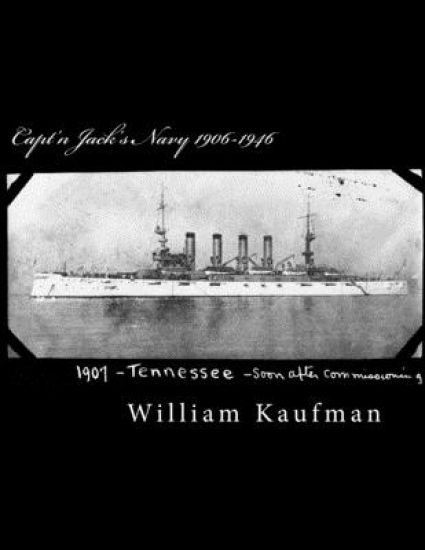
Capt'n Jack's Navy 1906-1946

Capt'n Jack's Navy 1906-1946

William Kaufman

Createspace Independent Publishing Platform
2017
nidottu
This is a Navy that is long gone, a navy of steam ships. Captain Jack was part of a fleet that went to Samoa when that was a remote and strange place. He was part of the fleet that guided the NC-4 flight over the Atlantic, a flight that predated Lindbergh by many years. He offered Jack Benny one of his first professional appearances. He was the Athletic Director for the winning team in the 1919 Rose Bowl.
A Short History of Roman Law [1906]

A Short History of Roman Law [1906]

Paul F Girard

Lawbook Exchange, Ltd.
2020
pokkari
"The best book for the student on all questions of the history of Roman legal precepts and doctrines." Roscoe Pound Outlines of Lectures on Jurisprudence (1943) 244A translation of the "Introduction Historique" from Girard's classic Manuel l mentaire de Droit Romain (first ed. 1896). Much more than a historical outline, it is a sophisticated introduction to the principles of Roman law. v, 228 pp.
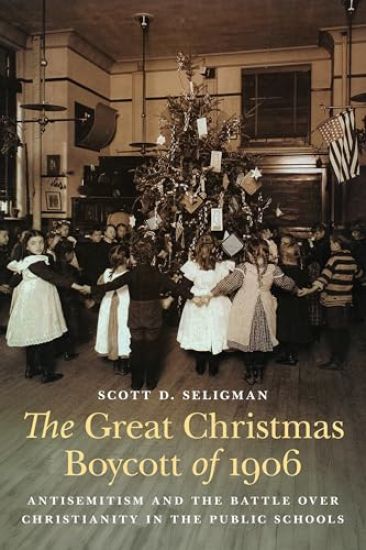
The Great Christmas Boycott of 1906

The Great Christmas Boycott of 1906

Scott D. Seligman

Potomac Books Inc
2025
sidottu
Today’s battles over Christianity in U.S. public schools have deep roots. In the nineteenth century it was an intramural struggle between Protestants and later-arriving Catholics. But at Christmastime in 1905, when Frank Harding, the Presbyterian principal of a Brooklyn elementary school, urged his Jewish students to be more like Jesus, the Jewish community entered the fray in a big way. It was just the trigger Orthodox Jewish activist Albert Lucas had been waiting for. Fresh from battling Christian settlement houses intent on converting Jewish children, Lucas accused the public schools of illegal proselytizing and called for Harding’s ouster. After the Board of Education let Harding off in 1906 with a slap on the wrist and declined to clarify the rules governing religion in schools, New York’s Jews staged a boycott of school Christmas pageants in protest. The board’s concession to exclude sectarian hymns and religious compositions generated enormous antisemitic public backlash. Jews were accused of waging war on Christmas and of being less than true Americans.The Great Christmas Boycott of 1906 traces the Christmas celebration dispute to the present day and describes how Jewish organizations of the twenty-first century, persuaded that politics are unlikely ever to permit a victory, seem to have reconciled themselves to the status quo and moved on to other, more winnable issues.
The House by the Lock (1906). By: A. M. Williamson: Gothic Mystery / Adventure / Thriller... Alice Muriel Williamson, née Livingston (1869 - 24 Septem
Alice Muriel Williamson, n e Livingston (1869 - 24 September 1933) was an American-British novelist, who styled herself Mrs. C. N. Williamson after her marriage. Biography: Alice Muriel Livingston was born in America, the daughter of Mark Livingston of Poughkeepsie. She came to England when young. In 1894, soon after arrival in England, she married the magazine editor Charles Norris Williamson (1859-1920), "the first editor to whom she presented an introduction". 1] Many of her books were jointly written with her husband. After her marriage she introduced herself as Mrs. C. N. Williamson. A number of their novels cover the early days of motoring and can also be read as travelogues. Under the pseudonym Alice Stuyvesant she wrote "The Hidden House", serialised in The Cavalier on 13, 20 and 27 December 1913; 3 and 10 January 1914. Alice apparently said of her husband "Charlie Williamson could do anything in the world except write stories" she said of herself "I can't do anything else." She continued to write after her husband's death in 1920.
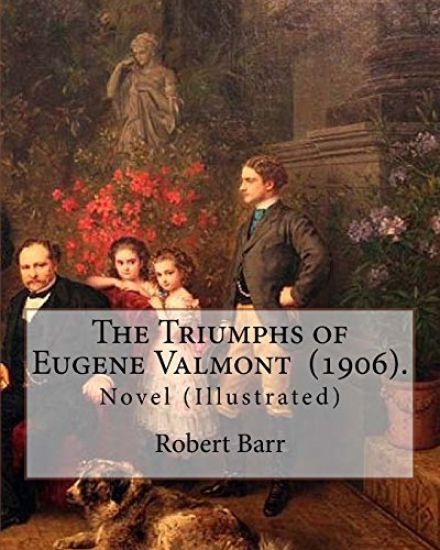
The Triumphs of Eugene Valmont (1906). By: Robert Barr: Novel (Illustrated)

The Triumphs of Eugene Valmont (1906). By: Robert Barr: Novel (Illustrated)

Robert Barr

Createspace Independent Publishing Platform
2018
nidottu
Robert Barr (16 Septem: ber 1849 - 21 October 1912) was a Scottish-Canadian short story writer and novelist, born in Glasgow, Scotland. Early Years in Canada Barr emigrated with his parents to Upper Canada at age four and was educated in Toronto at Toronto Normal School. Barr became a teacher and eventual headmaster of the Central School of Windsor, Ontario. While he had that job he began to contribute short stories-often based on personal experiences-to the Detroit Free Press. In 1876 Barr quit his teaching position to become a staff member of that publication, in which his contributions were published with the pseudonym "Luke Sharp." This nom de plume was derived from the time he attended school in Toronto. At that time he would pass on his daily commute a shop sign marked, "Luke Sharpe, Undertaker", a combination of words Barr considered amusing in their incongruity. 2] Barr was promoted by the Detroit Free Press, eventually becoming its news editor. London years: In 1881 Barr decided to "vamoose the ranch", as he stated, and relocated to London, to establish there the weekly English edition of the Detroit Free Press. In 1892 he founded the magazine The Idler, choosing Jerome K. Jerome as his collaborator (wanting, as Jerome said, "a popular name"). He retired from its co-editorship in 1895. In London of the 1890s Barr became a more prolific author-publishing a book a year-and was familiar with many of the best-selling authors of his day, including Bret Harte and Stephen Crane. Most of his literary output was of the crime genre, then quite in vogue. When Arthur Conan Doyle's Sherlock Holmes stories were becoming well-known Barr published in the Idler the first Holmes parody, "The Adventures of Sherlaw Kombs" (1892), a spoof that was continued a decade later in another Barr story, "The Adventure of the Second Swag" (1904). Despite the jibe at the growing Holmes phenomenon Barr and Doyle remained on very good terms. Doyle describes him in his memoirs Memories and Adventures as, "a volcanic Anglo-or rather Scot-American, with a violent manner, a wealth of strong adjectives, and one of the kindest natures underneath it all." Robert Barr died from heart disease on 21 October 1912, at his home in Woldingham, a small village to the southeast of London.
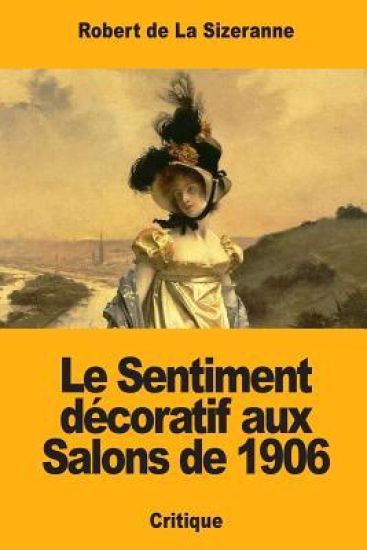
Le Sentiment décoratif aux Salons de 1906

Le Sentiment décoratif aux Salons de 1906

Robert de la Sizeranne

Createspace Independent Publishing Platform
2018
nidottu
... Ces Salons ne modifient pas la courbe qu'on serait tent de tracer pour figurer l' volution de l'art depuis une dizaine d'ann es. Sur tous les points les artistes s'y montrent indiff rents aux m mes choses, pr occup s des m mes id es, attach s aux m mes formules. Il n'y a pas, dans les deux Salons, une seule bonne peinture religieuse et, dans tout le Salon de l'avenue d'Antin, il n'y en a m me pas un essai. Il n'y a pas davantage, dans aucun des deux, un bon tableau de batailles, et, avenue d'Antin, nul ne l'a m me tent . Aucun grand fait de l'histoire contemporaine, aucune f te publique, aucune solennit de la guerre, ni de la paix, n'a inspir un grand artiste. Il semblerait qu'il ne s'est rien pass encore au XXe si cle qui soit digne d' tre comm mor . Les grands drames d roul s pendant si longtemps la pointe de l'Afrique ou au nord de l'Asie n'ont pas veill la moindre curiosit dans les meilleurs ateliers dont voici les oeuvres. Ils n'ont branl aucune grande imagination...
Personal Idealism and Mysticism: Paddock Lectures for 1906, Delivered at the General Seminary New York
In these engaging lectures, William Ralph Inge shares his views on religion, and the philosophy with which he approached belief.Inge was popular in the USA for his novel approach and serene discussions of religious topics. He was a Professor of Divinity at Cambridge University, and worked as a priest in the Anglican church. These lectures are a good introduction to his views: that spiritual experience and an emotional connection to God and to Christ are more important than an authoritative presence. Inge sought to emphasize how the personality of Biblical figures, both in the Old and New Testament, offered a way for readers to relate to the narratives of the scriptures.Several of Inge's ideas are related to neo-Platonism, which itself is an evolution of the ancient Greek philosopher Plato's views. The author is also well-acquainted with modern philosophy, which he energetically reconciles with the principles of the Christian believer. The final essay concerns the problems of sin; how sinfulness is treated both historically and in modern Christianity is discussed at length, and its interplay with moral values and shifting attitudes.