Kirjojen hintavertailu. Mukana 12 016 292 kirjaa ja 12 kauppaa.

Kirjahaku

Etsi kirjoja tekijän nimen, kirjan nimen tai ISBN:n perusteella.

1000 tulosta hakusanalla Aaron Gerrity

Cisco ThousandEyes

Cisco ThousandEyes

Aaron Trompeter; Robert Webb

PEARSON EDUCATION (US)
2024
nidottu
Cisco ThousandEyes, the cloud-based network intelligence tool, delivers expanded visibility, automated insights, and seamless workflows to ensure digital experiences across any network—whether on premise, on the Internet, or in the cloud. ThousandEyes is the authority when monitoring SaaS, hybrid, and multi-cloud environments. With unparalleled real-time analytics and insights, it enables IT admins to quickly identify and resolve issues for a reduction of downtime and improved user experience. In Cisco ThousandEyes, network solutions specialists Aaron Trompeter and Robert Webb offer a deep dive into the intricacies and power of the Cisco ThousandEyes platform and demonstrate how to leverage it to solve complex problems and optimize your digital experience. Through real-world experiences and use cases, the authors demonstrate how to plan and design network monitoring solutions, as well as how to improve performance and availability. You’ll also learn how ThousandEyes can be integrated with other Cisco products and third-party tools. This is an essential resource for any network administrator, DevOps engineer, IT professional, enterprise IT team, cloud engineer, application team, and service provider responsible for managing and optimizing the performance of an organization’s network infrastructure and application performance. Explore Cisco ThousandEyes and its capabilities, and learn how to harness its potential for your organizationDelve into agent setup, test configurations, alerts, and dashboards, and learn how to apply them effectivelyUnderstand the intricacies of monitoring and troubleshooting network performance issues, and use these skills to enhance network efficiencyConduct advanced tests using transactional scripts and integrations, and use them for complex problem-solvingImplement best practices for test optimization and device monitoring to ensure optimal functionalityUnderstand the importance of account settings and automation and their roles in streamlining operationsAlign the role of business strategy in the context of digital experience monitoring with your organization’s goals
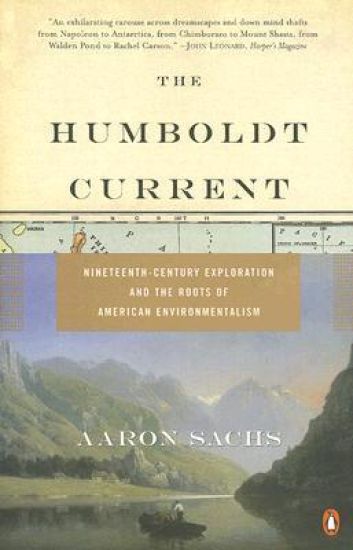
The Humboldt Current: Nineteenth-Century Exploration and the Roots of American Environmentalism
A masterly and beautifully written account of the impact of Alexander von Humboldt on nineteenth-century American history and culture The naturalist and explorer Alexander von Humboldt (1769-1859) achieved unparalleled fame in his own time. Today, however, he and his enormous legacy to American thought are virtually unknown. In The Humboldt Current, Aaron Sachs traces Humboldt's pervasive influence on American history through examining the work of four explorers--J. N. Reynolds, Clarence King, George Wallace, and John Muir--who embraced Humboldt's idea of a "chain of connection" uniting all peoples and all environments. A skillful blend of narrative and interpretation that also discusses Humboldt's influence on Emerson, Whitman, Thoreau, Melville, and Poe, The Humboldt Current offers a colorful, passionate, and superbly written reinterpretation of nineteenth-century American history.
Text, Don't Call

Text, Don't Call

Aaron Caycedo-Kimura

J.P.Tarcher,U.S./Perigee Bks.,U.S.
2017
nidottu
As seen in Real Simple's 2017 Gift Guide An illustrated guide to the challenges and pleasures of the introverted lifeIntroversion is "in." But there are still many misconceptions about introverts in the world. They're shy. Anti-social. They don't want to have close relationships. They're all cat people. They don't like big parties (okay, that last one might be true). INFJoe, the cartoon persona of artist and introvert Aaron Caycedo-Kimura, is here to set the record straight. Filled with charming comic book style illustrations, this book provides invaluable insights into the introverted life with plenty of humor and wit. Full of moments that will make introverts say, "That's so me " as well as helpful tips on surviving at parties and in the workplace, Text, Don't Call is the perfect gift for your quiet friends, or the extroverted ones who could use some help to better understand the introverts in their lives.
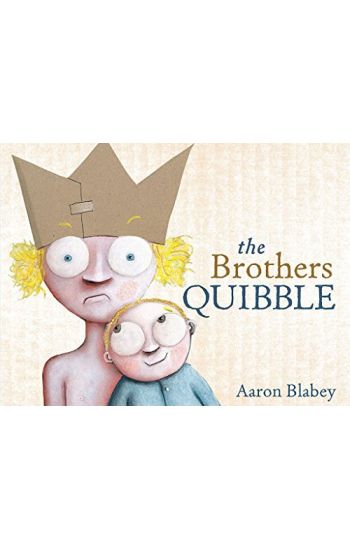
The Brothers Quibble

The Brothers Quibble

Aaron Blabey

Puffin Au
2015
nidottu
Spalding Quibble ruled the roost. He shared it with no other. But then his parents introduced a brand new baby brother. Uh oh.A book about love (and war) from the award-winning author of Pearl Barley and Charlie Parsley, The Dreadful Fluff, and Noah Dreary.
Spontaneous

Spontaneous

Aaron Starmer

PENGUIN BOOKS
2020
nidottu
Now a new motion picture starring Katherine Langford, Charlie Plummer, and Hayley Law "Truly the smartest and funniest book about spontaneous combustion you will ever read." -John Green, #1 bestselling author of The Fault in Our Stars Mara Carlyle's senior year is going as normally as could be expected, until fellow senior Katelyn Ogden explodes during third period pre-calc. Katelyn is the first, but she won't be the last teenager to blow up without warning or explanation. As the national eye turns to Mara's suburban New Jersey hometown, the FBI rolls in and the search for a reason is on. Mara narrates the end of their world as she knows it while trying to make it to graduation in one piece. It's an explosive year punctuated by romance, quarantine, lifelong friendship, hallucinogenic mushrooms, bloggers, ice cream trucks, and Bon Jovi. Aaron Starmer rewrites the rulebook with Spontaneous. But beneath the outrageous is a ridiculously funny, super honest, and truly moving exemplar of the absurd and raw truths of being a teenager in the 21st century . . . and the heartache of saying goodbye. "Wildly inventive." -Entertainment Weekly "Must List" "A comically surreal novel that will blow your mind." -People Magazine
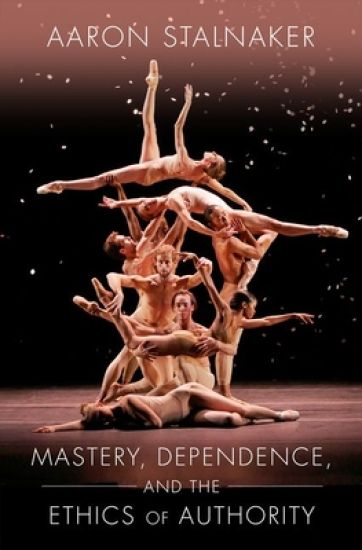
Mastery, Dependence, and the Ethics of Authority

Mastery, Dependence, and the Ethics of Authority

Aaron Stalnaker

Oxford University Press Inc
2020
sidottu
Over the last few decades, skepticism about political and moral experts has grown into a serious social problem, undermining the functioning of liberal democratic regimes. Indeed, meritocracy-that is, government by hard working, public-spirited people with high levels of relevant expertise-has never looked so promising as an alternative to the dangers of know-nothing populism. One cultural tradition has devoted sustained attention to the idea of meritocracy, as well as to the cultivation of true expertise or mastery: Confucianism. Mastery, Dependence, and the Ethics of Authority presents a compelling analysis of expertise and authority, and examines classical Confucian conceptions of mastery, dependence, and human relationships in order to suggest new approaches to these issues in ethics and political theory. Contemporary Westerners are heirs to multiple traditions that are suspicious of authority, especially coercive political authority. We are also increasingly wary of dependence, which now often seems to signify weakness, neediness, and pathology. Analysts commonly presume that both authority and dependence threaten human autonomy, and are thus intrinsically problematic. But these judgments are mistaken. Our capacity for autonomy needs to be cultivated over time through deliberate practices of training, in which we depend on the guidance of virtuous and skilled teachers. Confucian thought provides a subtle and powerful analysis of one version of this training process, and of the social supports such an education in autonomy requires-as well as the social value of having virtuous and skilled leaders. Early Confucians also argue that human life is marked by numerous interacting forms of dependence, which are not only ineradicable, but in many ways good. On a Confucian view, it is natural, healthy, and good for people to be deeply dependent on others in a variety of ways across the full human lifespan. They teach us that individual autonomy only develops within a social matrix, structured by relationships of mutual dependence that can either help or hinder it, including a variety of authority relations.
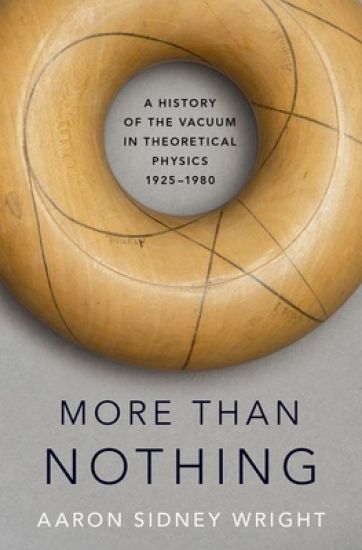
More than Nothing

More than Nothing

Aaron Sidney Wright

OXFORD UNIVERSITY PRESS INC
2024
sidottu
The vacuum is central to physicists' best theories of subatomic particles, gravitation, and cosmology. Nothingness provides the reference point with which to compare new particle creation and annihilation. Cosmologists use empty universes to study the causal structure of spacetime. Paradoxically, our best physical theories of particles, gravity, and spacetime are theories of nothingness. Stranger still, the physicists' vacuum is a hive of activity. Quantum fluctuations fill empty space with particles, and astronomers measure gravitational waves, the vibrations of empty spacetime itself. More than Nothing uses the history of the vacuum to show how technical concepts in physics are made real through everyday practice. It provides new insight into the development of twentieth-century theoretical physics through sustained analysis of understudied figures including John Wheeler's geometrodynamics and Sidney Coleman's false vacuum. It reveals the surprising influence on physicists from the psychology of impossible objects to drawings of the black hole, and the ways in which the development of the physics of the vacuum became inseparable from the development of larger cultural movements in aesthetics, art, psychology, and fiction. Across decades and across disciplines, More than Nothing shows how physicists over and again chose to study the vacuum for insight into the world around them. Drawing on newly unearthed laboratory notes, private letters, and published material, More than Nothing offers a scoping history of the vacuum as a lens into the development of modern physics.
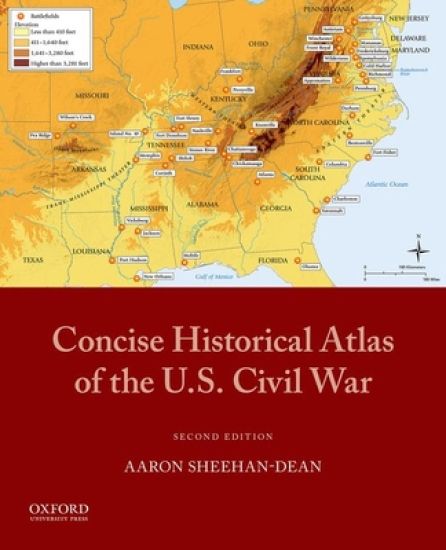
Concise Historical Atlas of the U.S. Civil War

Concise Historical Atlas of the U.S. Civil War

Aaron Sheehan-Dean

Oxford University Press
2020
nidottu
Offering a striking and reasonably priced alternative to expensive atlases that focus almost exclusively on military movements, Concise Historical Atlas of the U.S. Civil War, Second Edition, is the only atlas that includes data maps and covers key issues before and after the war years. It balances military and non-military coverage, presenting maps that deal with political and social changes along with campaign and battle maps. Accessible to students with limited geographic knowledge, the maps are clearly labeled, with key features marked. Each map is accompanied by a short narrative that provides helpful contextual information.
How Scholars Write

How Scholars Write

Aaron Ritzenberg; Sue Mendelsohn

Oxford University Press Inc
2020
nidottu
How Scholars Write is an affordable, pocket-sized writing guide that offers a descriptive approach to research and composition. Instead of providing specific formulas or asserting how one "should" write, the authors examine how actual scholars work. Designed to be easy to integrate into existing curricula, How Scholars Write demystifies the scholarly writing process by detailing expert strategies that all writers can use.
Paradigms of International Human Rights Law

Paradigms of International Human Rights Law

Aaron X. Fellmeth

Oxford University Press Inc
2016
sidottu
Paradigms of International Human Rights Law explores the legal, ethical, and other policy consequences of three core structural features of international human rights law: the focus on individual rights instead of duties; the division of rights into substantive and nondiscrimination categories; and the use of positive and negative right paradigms. Part I explains the types of individual, corporate, and state duties available, and analyzes the advantages and disadvantages of incorporating each type of duty into the world public order, with special attention to supplementing individual rights with explicit individual and state duties. Part II evaluates how substantive rights and nondiscrimination rights are used to protect similar values through different channels; summarizes the nondiscrimination right in international practice; proposes refinements; and explains how the paradigms synergize. Part III discusses negative and positive paradigms by dispelling a common misconception about positive rights, and then justifies and defines the concept of negative rights, justifies positive rights, and concludes with a discussion of the ethical consequences of structuring the human rights system on a purely negative paradigm. For each set of alternatives, the author analyzes how human rights law incorporates the paradigms, the technical legal implications of the various alternatives, and the ethical and other policy consequences of using each alternative while dispelling common misconceptions about the paradigms and considering the arguments justifying or opposing one or the other.
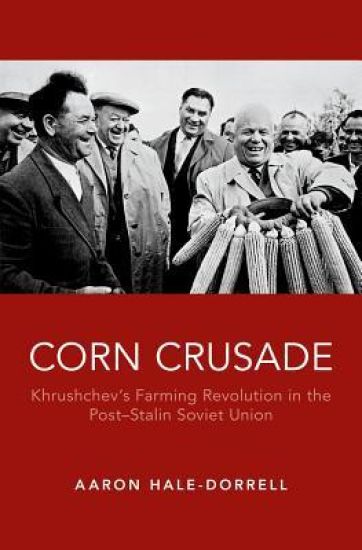
Corn Crusade

Corn Crusade

Aaron T. Hale-Dorrell

Oxford University Press Inc
2018
sidottu
Corn Crusade: Khrushchev's Farming Revolution in the Post-Stalin Soviet Union is the first history of Nikita Khrushchev's venture to cover the Soviet Union in corn, a crop common globally but hitherto rare in his country. Lasting from 1953 until 1964, this crusade was an emblematic component of his efforts to resolve agrarian crises inherited from Joseph Stalin. Using policies and propaganda to pressure farms to expand corn plantings tenfold, Khrushchev expected the resulting bounty to feed not people, but the livestock necessary to produce the meat and dairy products required to make good on his frequent pledges that the Soviet Union was soon to "catch up to and surpass America." This promised to enrich citizens' hitherto monotonous diets and score a victory in the Cold War, which was partly recast as a "peaceful competition" between communism and capitalism. Khrushchev's former comrades derided corn as one of his "harebrained schemes" when ousting him in October 1964. Echoing them, scholars have ridiculed it as an "irrational obsession," blaming the failure on climatic conditions. Corn Crusade brings a more complex and revealing history to light. Borrowing technologies from the United States, Khrushchev expected farms in the Soviet Union to increase productivity because he believed that innovations developed under capitalism promised greater returns under socialism. These technologies generated results in many economic, social, and climatic contexts after World War II but fell short in the Soviet Union. Attempting to make agriculture more productive and ameliorate exploitative labor practices established in the 1930s, Khrushchev achieved only partial reform of rural economic life. Enjoying authority over formal policy, Khrushchev stood atop an undisciplined hierarchy of bureaucracies, local authorities, and farmworkers. Weighing competing incentives, they flouted his authority by doing enough to avoid penalties, but too little to produce even modest harvests of corn, let alone the bumper crops the leader envisioned.
Shared Identities

Shared Identities

Aaron W. Hughes

Oxford University Press Inc
2017
sidottu
In this controversial study, Aaron W. Hughes breaks with received opinion, which imagines two distinct religions, Judaism and Islam, interacting in the centuries immediately following the death of Muhammad in the early seventh century. Tradition describes these relations using tropes such as that of "symbiosis." Hughes instead argues that various porous groups--neither fully Muslim nor Jewish--exploited a shared terminology to make sense of their social worlds in response to the rapid process of Islamicization. What emerged as normative rabbinic Judaism on the one hand, and Sunni and Shi'a Islam on the other were ultimately responses to such marginal groups. The so-called "Golden Age" in places such as Muslim Spain and North Africa continued to see the articulation of this "Islamic" Judaism in the writings of luminaries such as Bahya ibn Paquda, Abraham ibn Ezra, Judah Halevi, and Moses Maimonides. Drawing on social theory, comparative religion, and primary texts, Hughes presents a compelling case for rewriting our understanding of Jews and Muslims in their earliest centuries of interaction. Not content to remain solely in the past, he examines the continued interaction of Muslims and Jews, now reimagined as Palestinians and Israelis, into the present.
Neuroimmunology

Neuroimmunology

Aaron E. Miller; Tracy DeAngelis; Michelle Fabian; Ilana Katz Sand

Oxford University Press Inc
2018
nidottu
Part of the What Do I Do Now?" series, Neuroimmunology uses a case-based approach to cover common and important topics in the examination, investigation, and management of central and peripheral demyelinating diseases, vasculitis, and other immune system related neurological disorders. Each chapter provides a discussion of the diagnosis, key points to remember, and selected references for further reading. For this new edition, all cases and references have been updated and new cases have been added, including POEMS, CASPR2 Antibody Syndrome, Isaac's Syndrome, Histiocytosis, and Churg-Strauss. Neuroimmunology is an engaging collection of thought-provoking cases which clinicians can utilize when they encounter difficult patients. The volume is also a self-assessment tool that tests the reader's ability to answer the question, "What do I do now?"
Singularities

Singularities

Aaron Ridley

Oxford University Press
2024
sidottu
These essays, half of them appearing here for the first time, address issues concerning the two key singularities that Kant identified in aesthetics: artistic creativity and aesthetic judgement. Ranging from Kant himself to contemporary debates, from song to conceptual art, from ethics to atheism, from function to failure, Aaron Ridley explores the ways in which the one-off character of creativity and judgement may defy our ordinary expectations of what an explanation should be like. Intended equally for specialists and students, this collection offers a distinctive approach to aesthetics that will be of interest to any reader concerned with philosophical reflection upon the arts.
On Apology

On Apology

Aaron Lazare

Oxford University Press Inc
2005
nidottu
One of the most profound interactions that can occur between people, apologies have the power to heal humiliations, free the mind from deep-seated guilt, remove the desire for vengeance, and ultimately restore broken relationships. With On Apology, Aaron Lazare offers an eye-opening analysis of this vital interaction, illuminating an often hidden corner of the human heart. He discusses the importance of shame, guilt, and humiliation, the initial reluctance to apologize, the simplicity of the act of apologizing, the spontaneous generosity and forgiveness on the part of the offended, the transfer of power and respect between two parties, and much more. Readers will not only find a wealth of insight that they can apply to their own lives, but also a deeper understanding of national and international conflicts and how we might resolve them. The act of apologizing is quite simply immensely fulfilling. On Apology opens a window onto this common occurrence to reveal the feelings and actions at the heart of this profound interaction.
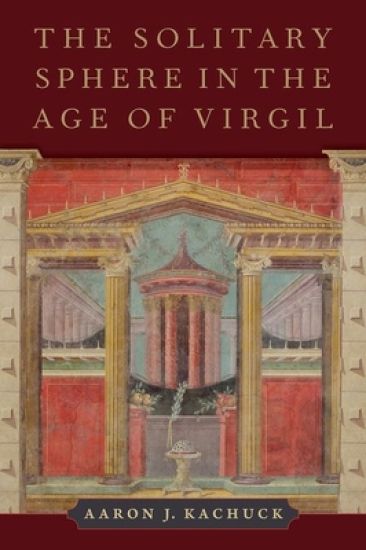
The Solitary Sphere in the Age of Virgil

The Solitary Sphere in the Age of Virgil

Aaron J. Kachuck

Oxford University Press Inc
2022
sidottu
The Solitary Sphere in the Age of Virgil uses an enriched tripartite model of Roman culture-touching not only the public and the private, but also the solitary-in order to present a radical re-interpretation of Latin literature and of the historical causes of this third sphere's relative invisibility in scholarship. By connecting Cosmos and Imperium to the Individual, the solitary sphere was not so much a way of avoiding politics, as a political education in itself. As re-imagined by literature in this age literature, this sphere was an essential space for the formation of the new Roman citizen of the Augustan revolution, and was behind many of the notable features of the literary revolution of Virgil's age: the expansion of the possibilities of the book of poetry, the birth of the literary cursus, new coordinations of cosmology and politics within strictly organized schemes, the attraction of first-person genres, and the subjective style. Through close readings of Cicero's late works and the oeuvres of Virgil, Horace, and Propertius and the works of other authors in the age of Virgil, The Solitary Sphere thus presents a revelatory reassessment of the classicism of classical Roman literature, and contributes to the study of pre-modern culture more generally, especially for traditions that have taken antiquity as too fixed a point in their own literary, religious, and cultural histories.
Guide to Latin in International Law

Guide to Latin in International Law

Aaron X. Fellmeth; Maurice Horwitz

Oxford University Press Inc
2021
sidottu
As knowledge of Latin continues to diminish, its frequent use in cases, textbooks, treaties, and scholarly works baffles law students, practitioners, and scholars alike. Many of the Latin terms commonly used by international lawyers are not included in some of the more popular law dictionaries. Terms and phrases included in modern dictionaries usually offer nothing more than a literal translation without sufficient explanation or context provided. The Guide to Latin in International Law provides a comprehensive approach and includes both literal translations and definitions with several useful innovations. Included is not only the modern English pronunciation but also the classical or "restored" pronunciation. Its etymology is more complete than the leading law dictionary on the market, and the definition for each term includes examples used in context whenever helpful. Each entry is also cross-referenced to related terms for ease of use. This updated edition is the quintessential desktop reference for understanding Latin terms and phrases across all areas of international law.
An Anxious Inheritance

An Anxious Inheritance

Aaron W. Hughes

OXFORD UNIVERSITY PRESS INC
2022
sidottu
An Anxious Inheritance reveals the tensions between the early framers of Islam and the ever-expandable category of non-Muslims. Examining the encounter with these religious others, and showing how the Qur'an functioned as both a script to understand them and a map to classify them, this study traces the key role that these religious others played in what would ultimately emerge as (Sunni) orthodoxy. This orthodoxy would appear to be the natural outgrowth of the Prophet Muhammad's preaching, but it ultimately amounted to little more than a retroactive projection of later ideas onto the earliest period. Non-Muslims (among them Christians, Jews, Zoroastrians) and the "wrong" kinds of Muslims (e.g., the Shi'a) became integral--by virtue of their perceived stubbornness, infidelity, heresy, or the like--to the understanding of what true religion was not and, just as importantly, what it should be. These non-Muslims were rarely real individuals or groups; rather, they functioned as textual foils that could be conveniently orchestrated, and ultimately controlled, to facilitate Muslim self-definition. Without such religious others proper belief could, quite literally, not be articulated. Shedding new light on the early history of Islam, while also problematizing the binary of orthodoxy/heresy in the study of religion, An Anxious Inheritance makes significant contributions to a number of diverse academic fields.