
Kirjahaku
Etsi kirjoja tekijän nimen, kirjan nimen tai ISBN:n perusteella.
1000 tulosta hakusanalla Ambrose Edson
Celephais
Ambrose Bierce; Lord Dunsany; Edgar Allan Poe
Createspace Independent Publishing Platform
2017
nidottu
Celepha s is a collection of fantastic short stories authored by Howard Lovecraft, Lord Dunsany, Ambrose Bierce and Edgar Allan Poe with an introduction by Sigmund Freud. The main theme of the stories is the dream world, whether dreams inspired during sleep or with the help of exotic drugs. "Celepha s", a fantasy story inspired by a dream recorded in Howard Lovecraft commonplace book as "Dream of flying over city", is a fictional city created in a dream by Kuranes, the anti-hero of the story. Celepha s is described as being situated in the valley of Ooth-Nargai beside the Cerenerian Sea and its most remarkable feature is that it is unaffected by the passage of time, and takes no decay or wear, so that a person may leave it and return many years later to find that nothing has changed. "Celepha s" was inspired by a tale by Lord Dunsany, "The Coronation of Mr. Thomas Shap", included in this collection, where the main character becomes more and more engrossed in the imaginary kingdom of Larkar, that he created, until he begins to neglect business and routine tasks of daily living. Ambrose Bierce's "A Horseman in the Sky", also included in this collection, inspired the imagery of the horses drifting off the cliff where the horizon of Celepha s meets the sky. Other fantastic stories in this anthology include: Ambrose Bierce's Beyond the Wall, Edgar Allan Poe's SIOPE, Manuscript in a Bottle and The Oval Portrait as well as Howard Lovecraft's Azathoth, Beyond the Wall of Sleep, Dagon and Hypnos. The collection offers an excellent introduction to Howard Lovecraft's dream world complete with the inspirational stories that shaped its development. If you have enjoyed reading Necronomicon, The Call of Cthulhu, Robert Bloch's Psycho, Neil Gaiman' American Gods or Frederik Pohl's Virtual Nightmare you will definitely enjoy reading Celepha s. Howard Lovecraft was the forefather of modern horror fiction having inspired such writers as Stephen King, Robert Bloch and Neil Gaiman. The influence of his Cthulhu mythos can be seen in film (Re-Animator, Hellboy, and Alien), games (The Call of Cthulhu role playing enterprise), music (Metallica, Iron Maiden and Black Sabbath) and pop culture in general.

More than Brer Fox and Brer Rabbit, Gullahfolklore claims a rich cultural heritage, yet few beyond the Carolina coastknow much about it. However, it is growing in both popularity and interest, asattested by recent scholarly and entertaining examinations of the dialect andstories.The author, Ambrose E. Gonzales, realized Gullah's unique appeal someseventy-odd years ago. This Gullah dialect is interesting, not merely forits richness, which falls upon the ear as opulently as the Irish brogue,he wrote, but also for the quaint and homely similes in which it aboundsand for the native wit and philosophy of its users.Gonzales collected many Gullah stories with such captivating titles asThe 'Wiles That in the Women Are,' Mingo the DrillMaster, and Conductor Smith's Dilemma. A handy Gullahglossary is included as well, to aid the reader in interpreting the dialect.Today, Gullah is alive and well. Virginia Mixson Geraty, the world'sforemost authority on Gullah and Gullah instructor at the College ofCharleston, is the author of Gullah Night Before Christmas and narrator of the companion audiocassette. Both arepublished by Pelican.
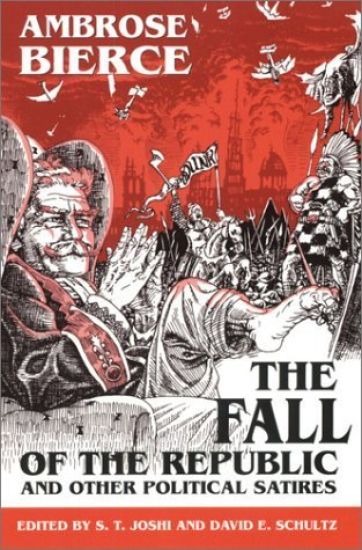
A prolific journalist and author well known for his tales of horror and stories about the Civil War, Ambrose Bierce (1842-1914?) was also a mordant commentator on the political, social, legal, and intellectual failings of his countrymen. Throughout his career, he remained an unapologetic curmudgeon who took a dim view of everything from trade unions and the temperance movement to Americans’ insatiable thirst for money. Even the very principles of democracy did not escape his skeptical pen. This volume brings together a generous sampling of Bierce’s scathing fictional satires, many of which have not been reprinted since their first appearance a century ago. In writing these works, Bierce often employed fanciful devices, such as assuming the perspective of a future historian looking back on the follies of the nineteenth and early twentieth centuries. Among such selections, “Ashes of the Beacon” is perhaps the finest, with its trenchant comments on socialism, anarchy, and the problems of republican government. In another fictional piece, “The Land Beyond the Blow,” Bierce recounts voyages to an imaginary world in the style of Gulliver’s Travels, commenting on bizarre political and social customs that, not coincidentally, mirror America’s own. The volume also includes a rich array of still-relevant nonfiction essays on such topics as capital punishment, the evils of insurance, and the unpleasant disposition of the canines that roam the nation’s capital. These pieces reflect many of the same concerns Bierce addresses in his fictional satires, albeit in a more direct way. The selections are drawn from contributions to newspapers and magazines and from Bierce’s Collected Works, and include many unsigned editorials that Bierce wrote for the San Francisco Examiner. Editors S.T. Joshi and David E. Schultz have thoroughly annotated the pieces and have written a substantial introduction outlining the aspects of Bierce’s political thought. The resulting volume is essential reading for anyone who appreciates lively commentary desgined to puncture the hypocrisies and sentimentality of Bierce’s contemporaries, whatever their beliefs. It fills a major gap in Bierce scholarship and allows us to see the world as the notorious cynic did. The Editors: S.T. Joshi and David E. Schultz have collaborated extensively on books devoted to Ambrose Bierce, H.P. Lovecraft, and other literary figures. The edited Bierce’s A Sole Survivor: Bits of Autobiography, also published by the University of Tennessee Press, and an annotated edition of Bierce’s Devil’s Dictionary.
History, n. an account mostly false, of events mostly unimportant, which are brought about by rulers mostly knaves, and soldiers mostly fools. Marriage, n. The state or condition of a community consisting of a master, a mistress, and two slaves, making in all two. Self-Esteem, n. An erroneous appraisement. These caustic aphorisms, collected in The Devil's Dictionary, helped earn reporter Ambrose Bierce the epithet's Bitter Bierce, the Devil's Lexicographer, and the Wickedest Man in San Francisco. First published as The Cynic's Word Book (1906) and later reissued under its preferred title in 1911, Bierce's notorious collection of barbed definitions forcibly contradicts Samuel Johnson's earlier definition of a lexicographer as a harmless drudge.
Preface; Hinduism: The Vedas; The Upanishads; The Bhagavad; Buddhism: The Pali Cannon; Confucianism: Lun-yu (The Analects); Taoism: Tao te Ching; Judaism: The Torah, Nev'im, Ketuvim, Talmud; Christianity: The New Testament (Gospels, Acts of the Apostles and the Epistles); Islam: Qur'an, Hadith; Zoroastrianism: Gathas, Yashts, Vendidad; Jainism: Tattvartha Sutra (Moksha Sutra); Sikhism: Guru Granth Sahib (Adi Granth); Shinto: Kojiki, Rokkokushi, Shoku Nikhaigi, Jinno Shotoki; Latter Day Saints: The Book of Mormon; Index.

A Son of the Gods and a Horseman in the Sky - Bierce
Ambrose Bierce; Bierce Ambrose Bierce
Book Jungle
2007
pokkari
![Ten Tales [Moxon's Master and Other Tales]](/covers/9781614278252.jpg)
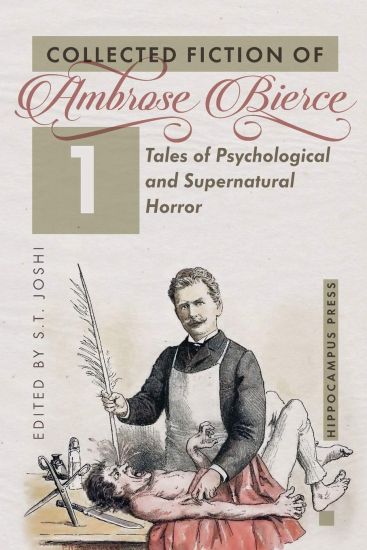
From the beginning of his career, Ambrose Bierce wrote stories of all different types-humorous sketches, satirical squibs, and weird tales. This volume prints some of his most memorable fiction-his tales of psychological and supernatural horror. Bierce was a profound student of the psychology of fear, and his tales depicted human beings succumbing to the fear of death ("A Watcher by the Dead"), fear of wild animals ("The Man and the Snake," "The Eyes of the Panther"), and the inhumanity of human beings against their own kind ("A Holy Terror," "A Baby Tramp"). Other tales venture into the supernatural, introducing the notion of revenants ("The Death of Halpin Frayser"), ghosts ("The Moonlit Road"), and haunted houses ("The Boarded Window"). Some stories are forward-looking tales of science fiction ("The Damned Thing," "Moxon's Master"), while others appear to be parodies of the fashionable spiritualism of the day. Ambrose Bierce (1842-1914?) was the leading American writer of weird fiction between Edgar Allan Poe and H. P. Lovecraft. Having served in some of the bloodiest battles of the Civil War, Bierce settled in San Francisco, where he became a fearless journalist and satirist, attacking corrupt politicians, long-winded clerics, wretched poetasters, and others who incurred his wrath. The stories in this volume are presented in definitive texts based on a consultation of manuscripts and early publications. They are edited by S. T. Joshi, a leading authority on Bierce and weird fiction.
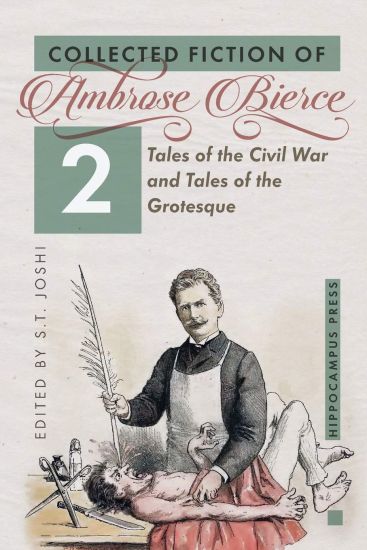
It took Ambrose Bierce some time to process his Civil War experiences and transmute them into fiction, but when he did so, beginning in the 1880s, he produced some of the most memorable stories to emerge out of that conflict. Many of these tales border on the weird, as in the celebrated "Occurrence at Owl Creek Bridge," a masterful tale of psychological terror; the grisly "Chickamauga"; "One of the Missing," a grim account of the fear of death; and "A Horseman in the Sky," which mingles realism and fantasy. Another side of Bierce is revealed in his tales of the grotesque, where outrageous scenarios and broad humor are the keynotes. Many of these tales are set in the Wild West, where encounters with bears, Native Americans, and others can lead to horror and death. Particularly memorable are a quartet of stories that Bierce labelled "The Parenticide Club." Ambrose Bierce (1842-1914?) was the leading American writer of weird fiction between Edgar Allan Poe and H. P. Lovecraft. Having served in some of the bloodiest battles of the Civil War, Bierce settled in San Francisco, where he became a fearless journalist and satirist, attacking corrupt politicians, long-winded clerics, wretched poetasters, and others who incurred his wrath. The stories in this volume are presented in definitive texts based on a consultation of manuscripts and early publications. They are edited by S. T. Joshi, a leading authority on Bierce and weird fiction.