La obra m s importante de este genial periodista estadounidense.Nacido en 1842 en Ohio, y desaparecido misteriosamente en M xico hacia 1913, Bierce fue un escritor cido, c nico, desenfadado e inteligente. Nada escap de su original pluma, ni las instituciones de su pa s ni el feminismo. Este diccionario se presenta hoy en una edici n revisada y ampliada con m s de 800 nuevas palabras. Cada una de sus definiciones supone un instante de regocijo para el lector. Un libro para tener siempre a mano y leer cada noche.
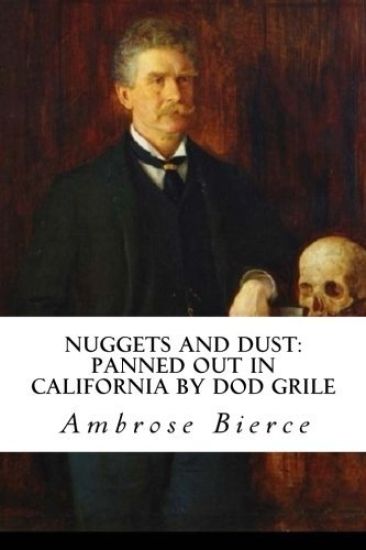
The second book from Ambrose Bierce is a broad collection of cynical wit, anecdote and story-telling. First published under the pseudonym Dod Grile in 1873, Ambrose Bierce was already a successful and well-known writer as a journalist for the San Francisco News Letter and California Advertiser. He went on to write his most famous works "An Occurrence at Owl Creek Bridge" (1890) and "The Devil's Dictionary" (1906), before vanishing mysteriously in Mexico in 1913.
The Devil's Dictionary is a satirical dictionary written by American Civil War soldier, journalist, and short story writer Ambrose Bierce consisting of common words followed by "howlingly funny" 1] definitions. The lexicon was written over three decades as a series of installments for magazines and newspapers. Bierce's witty definitions were imitated and plagiarized for years before he gathered them into books, first as The Cynic's Word Book in 1906 and then in a more complete version as The Devil's Dictionary in 1911.Initial reception of the book versions was mixed. In the decades following, however, the stature increased of The Devil's Dictionary. It has been widely quoted, frequently translated, and often imitated, earning a global reputation. In the 1970s, The Devil's Dictionary was named as one of "The 100 Greatest Masterpieces of American Literature" by the American Revolution Bicentennial Administration. 2] Wall Street Journal columnist Jason Zweig said that The Devil's Dictionary is "probably the most brilliant work of satire written in America. And maybe one of the greatest in all of world literature
Cu nto sabemos de la estructura del ADN y sus GENES en nuestros cuerpos? Sabemos ya que la mayor a de nuestras enfermedades est n causadas por mutaciones en varios de nuestros genes, y que las caracter sticas de nuestra personalidad tambi n reflejan los contenidos de otros genes? S , en este libro hemos reunido los descubrimientos cient ficos de los ltimos 50 a os en las reas de gen tica, las nuevas bio-tecnologias, y los tratamientos creados para una lista larga de esas enfermedades, incluidas la diabetes, el c ncer, en envejecimiento, condiciones cardio-vasculares, y el Alzheimer.
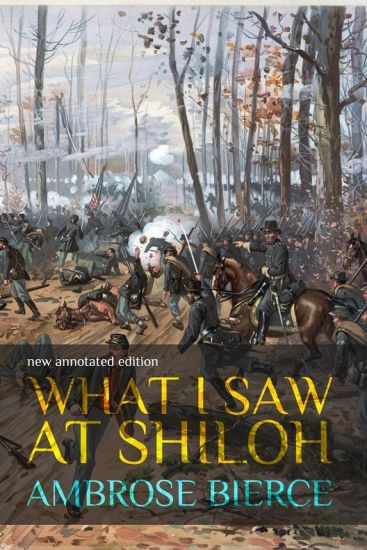
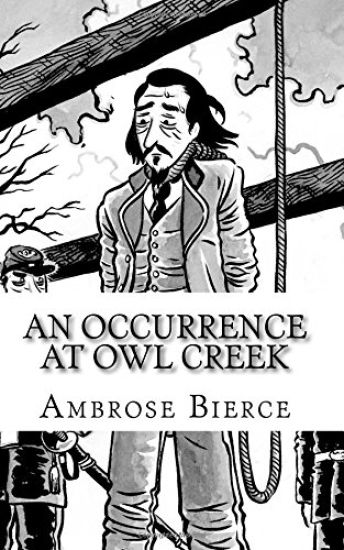
Ambrose Bierce wrote realistically of the terrible things he had seen in the war in such stories as "An Occurrence at Owl Creek Bridge", "A Horseman in the Sky", "One of the Missing", "What I Saw at Shiloh" and "Chickamauga". His grimly realistic cycle of 25 war stories has been called "the greatest anti-war document in American literature".At Shiloh, Bierce was a sergeant in C Company of the 9th Indiana in General Buell's army. "What I Saw of Shiloh", written in 1874 and twice revised in the following 35 years, is a recollection of his experience of the battle. Some scholars think "What I Saw of Shiloh" is Bierce's best work.
Unlike some other reproductions of classic texts (1) We have not used OCR(Optical Character Recognition), as this leads to bad quality books with introduced typos. (2) In books where there are images such as portraits, maps, sketches etc We have endeavoured to keep the quality of these images, so they represent accurately the original artefact. Although occasionally there may be certain imperfections with these old texts, we feel they deserve to be made available for future generations to enjoy.
This work has been selected by scholars as being culturally important, and is part of the knowledge base of civilization as we know it. This work was reproduced from the original artifact, and remains as true to the original work as possible. Therefore, you will see the original copyright references, library stamps (as most of these works have been housed in our most important libraries around the world), and other notations in the work.This work is in the public domain in the United States of America, and possibly other nations. Within the United States, you may freely copy and distribute this work, as no entity (individual or corporate) has a copyright on the body of the work.As a reproduction of a historical artifact, this work may contain missing or blurred pages, poor pictures, errant marks, etc. Scholars believe, and we concur, that this work is important enough to be preserved, reproduced, and made generally available to the public. We appreciate your support of the preservation process, and thank you for being an important part of keeping this knowledge alive and relevant.
Celepha s is a collection of fantastic short stories authored by Howard Lovecraft, Lord Dunsany, Ambrose Bierce and Edgar Allan Poe with an introduction by Sigmund Freud. The main theme of the stories is the dream world, whether dreams inspired during sleep or with the help of exotic drugs. "Celepha s", a fantasy story inspired by a dream recorded in Howard Lovecraft commonplace book as "Dream of flying over city", is a fictional city created in a dream by Kuranes, the anti-hero of the story. Celepha s is described as being situated in the valley of Ooth-Nargai beside the Cerenerian Sea and its most remarkable feature is that it is unaffected by the passage of time, and takes no decay or wear, so that a person may leave it and return many years later to find that nothing has changed. "Celepha s" was inspired by a tale by Lord Dunsany, "The Coronation of Mr. Thomas Shap", included in this collection, where the main character becomes more and more engrossed in the imaginary kingdom of Larkar, that he created, until he begins to neglect business and routine tasks of daily living. Ambrose Bierce's "A Horseman in the Sky", also included in this collection, inspired the imagery of the horses drifting off the cliff where the horizon of Celepha s meets the sky. Other fantastic stories in this anthology include: Ambrose Bierce's Beyond the Wall, Edgar Allan Poe's SIOPE, Manuscript in a Bottle and The Oval Portrait as well as Howard Lovecraft's Azathoth, Beyond the Wall of Sleep, Dagon and Hypnos. The collection offers an excellent introduction to Howard Lovecraft's dream world complete with the inspirational stories that shaped its development. If you have enjoyed reading Necronomicon, The Call of Cthulhu, Robert Bloch's Psycho, Neil Gaiman' American Gods or Frederik Pohl's Virtual Nightmare you will definitely enjoy reading Celepha s. Howard Lovecraft was the forefather of modern horror fiction having inspired such writers as Stephen King, Robert Bloch and Neil Gaiman. The influence of his Cthulhu mythos can be seen in film (Re-Animator, Hellboy, and Alien), games (The Call of Cthulhu role playing enterprise), music (Metallica, Iron Maiden and Black Sabbath) and pop culture in general.
More than Brer Fox and Brer Rabbit, Gullahfolklore claims a rich cultural heritage, yet few beyond the Carolina coastknow much about it. However, it is growing in both popularity and interest, asattested by recent scholarly and entertaining examinations of the dialect andstories.The author, Ambrose E. Gonzales, realized Gullah's unique appeal someseventy-odd years ago. This Gullah dialect is interesting, not merely forits richness, which falls upon the ear as opulently as the Irish brogue,he wrote, but also for the quaint and homely similes in which it aboundsand for the native wit and philosophy of its users.Gonzales collected many Gullah stories with such captivating titles asThe 'Wiles That in the Women Are,' Mingo the DrillMaster, and Conductor Smith's Dilemma. A handy Gullahglossary is included as well, to aid the reader in interpreting the dialect.Today, Gullah is alive and well. Virginia Mixson Geraty, the world'sforemost authority on Gullah and Gullah instructor at the College ofCharleston, is the author of Gullah Night Before Christmas and narrator of the companion audiocassette. Both arepublished by Pelican.
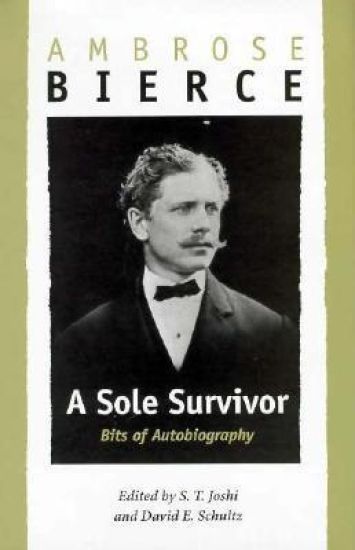
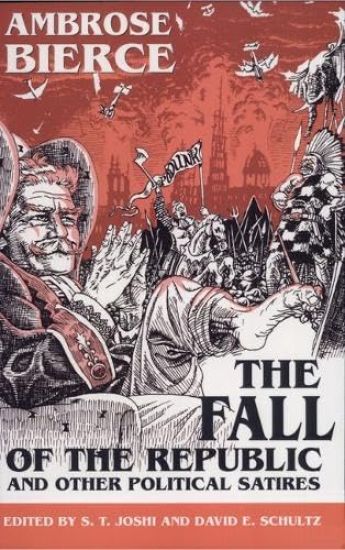
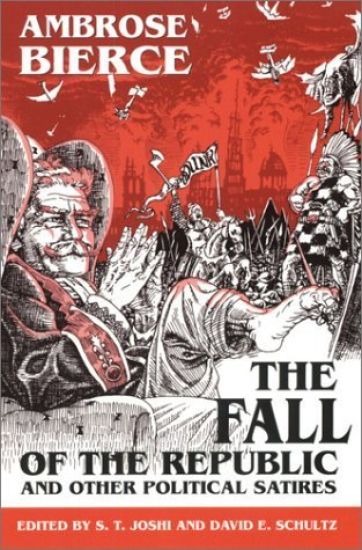
A prolific journalist and author well known for his tales of horror and stories about the Civil War, Ambrose Bierce (1842-1914?) was also a mordant commentator on the political, social, legal, and intellectual failings of his countrymen. Throughout his career, he remained an unapologetic curmudgeon who took a dim view of everything from trade unions and the temperance movement to Americans’ insatiable thirst for money. Even the very principles of democracy did not escape his skeptical pen. This volume brings together a generous sampling of Bierce’s scathing fictional satires, many of which have not been reprinted since their first appearance a century ago. In writing these works, Bierce often employed fanciful devices, such as assuming the perspective of a future historian looking back on the follies of the nineteenth and early twentieth centuries. Among such selections, “Ashes of the Beacon” is perhaps the finest, with its trenchant comments on socialism, anarchy, and the problems of republican government. In another fictional piece, “The Land Beyond the Blow,” Bierce recounts voyages to an imaginary world in the style of Gulliver’s Travels, commenting on bizarre political and social customs that, not coincidentally, mirror America’s own. The volume also includes a rich array of still-relevant nonfiction essays on such topics as capital punishment, the evils of insurance, and the unpleasant disposition of the canines that roam the nation’s capital. These pieces reflect many of the same concerns Bierce addresses in his fictional satires, albeit in a more direct way. The selections are drawn from contributions to newspapers and magazines and from Bierce’s Collected Works, and include many unsigned editorials that Bierce wrote for the San Francisco Examiner. Editors S.T. Joshi and David E. Schultz have thoroughly annotated the pieces and have written a substantial introduction outlining the aspects of Bierce’s political thought. The resulting volume is essential reading for anyone who appreciates lively commentary desgined to puncture the hypocrisies and sentimentality of Bierce’s contemporaries, whatever their beliefs. It fills a major gap in Bierce scholarship and allows us to see the world as the notorious cynic did. The Editors: S.T. Joshi and David E. Schultz have collaborated extensively on books devoted to Ambrose Bierce, H.P. Lovecraft, and other literary figures. The edited Bierce’s A Sole Survivor: Bits of Autobiography, also published by the University of Tennessee Press, and an annotated edition of Bierce’s Devil’s Dictionary.
History, n. an account mostly false, of events mostly unimportant, which are brought about by rulers mostly knaves, and soldiers mostly fools. Marriage, n. The state or condition of a community consisting of a master, a mistress, and two slaves, making in all two. Self-Esteem, n. An erroneous appraisement. These caustic aphorisms, collected in The Devil's Dictionary, helped earn reporter Ambrose Bierce the epithet's Bitter Bierce, the Devil's Lexicographer, and the Wickedest Man in San Francisco. First published as The Cynic's Word Book (1906) and later reissued under its preferred title in 1911, Bierce's notorious collection of barbed definitions forcibly contradicts Samuel Johnson's earlier definition of a lexicographer as a harmless drudge.