A collection of 30 well-known Russian songs arranged for intermediate accordion by Russian-born accordionist Andreas Wins. Each piece provides the arranged melody and a variation with a really nice, native harmonization.
System Design: A Practical Guide with SpecC presents the system design flow following a simple example through the whole process in an easy-to-follow, step-by-step fashion. Each step is described in detail in pictorial form and with code examples in SpecC. For each picture slide a detailed explanation is provided of the concepts presented. This format is suited for tutorials, seminars, self-study, as a guided reference carried by examples, or as teaching material for courses on system design. Features: Comprehensive introduction to and description of the SpecC language and design methodology; IP-centric language and methodology with focus on design reuse; Complete framework for system-level design from specification to implementation for SOCs and other embedded HW/SW systems. System Design: A Practical Guide with SpecC will benefit designers and design managers of complex SOCs, or embedded systems in general, by allowing them to develop new methodologies from these results, in order to increase design productivity by orders of magnitude. Designers at RTL, logical or physical levels, who are interested in moving up to the system level, will find a comprehensive overview within. The design models in the book define IP models and functions for IP exchange between IP providers and their users. A well-defined methodology like the one presented in this book will help product planning divisions to quickly develop new products or to derive completely new business models, like e-design or product-on-demand. Finally, researchers and students in the area of system design will find an example of a formal, well-structured design flow in this book.
Since their invention in the late seventies, public key cryptosystems have become an indispensable asset in establishing private and secure electronic communication, and this need, given the tremendous growth of the Internet, is likely to continue growing. Elliptic curve cryptosystems represent the state of the art for such systems. Elliptic Curves and Their Applications to Cryptography: An Introduction provides a comprehensive and self-contained introduction to elliptic curves and how they are employed to secure public key cryptosystems. Even though the elegant mathematical theory underlying cryptosystems is considerably more involved than for other systems, this text requires the reader to have only an elementary knowledge of basic algebra. The text nevertheless leads to problems at the forefront of current research, featuring chapters on point counting algorithms and security issues. The Adopted unifying approach treats with equal care elliptic curves over fields of even characteristic, which are especially suited for hardware implementations, and curves over fields of odd characteristic, which have traditionally received more attention. Elliptic Curves and Their Applications: An Introduction has been used successfully for teaching advanced undergraduate courses. It will be of greatest interest to mathematicians, computer scientists, and engineers who are curious about elliptic curve cryptography in practice, without losing the beauty of the underlying mathematics.
In this updated edition of his successful textbook, leading evangelical New Testament scholar Andreas Köstenberger offers a survey of John's gospel that is informed by current scholarship but written at an accessible level. The book has been revised throughout and features a new interior design. Photos, sidebars, and other pedagogical aids are included.
The liberalization of transatlantic trade relations since the Great Depression is one of the key developments in the global political economy of the last hundred years. This period has seen the negotiated reduction of both tariffs and nontariff barriers among developed countries, which allowed for the rapid expansion of trade flows, a driving force of economic globalization. In Protection for Exporters, Andreas Dür provides a novel explanation for this phenomenon that stresses the role of societal interests in shaping trade politics. He argues that exporters lobby more in reaction to losses of foreign market access than in pursuit of opportunities, thus providing a rationale for periods of acceleration and slowdown in the pace of liberalization. Dür also presents hypotheses about the form in which protection for exporters is provided (preferential or nonpreferential) and the balance of concessions that is exchanged in trade negotiations. Protection for Exporters includes case studies of major developments in international trade relations, such as the passage of the Reciprocal Trade Agreements Act in the 1930s, the creation of the General Agreement on Tariffs and Trade in the 1940s, the Kennedy Round in the 1960s, the debate over Fortress Europe in the 1980s, and U.S.-European competition over access to emerging markets in the early 2000s. Dür's rigorous argument and systematic empirical analyses not only explain transatlantic trade relations but also allow for a better understanding of the dynamics of international economic relations.
"The ancient Egyptian sources come alive, speaking to us without seeming alien to our modern ways of thinking. Andreas Schweizer invites us to join the nocturnal voyage of the solar barque and to immerse ourselves, with the 'Great Soul' of the sun, into the darkness surrounding us. Here in the illustrations and texts of the Amduat, threats hidden in the depths of our soul become visible as concrete images, an analysis of which remains ever worthwhile: even in the guise of the evil, ominous, or dark side of godhead with which Schweizer concerns himself. The netherworld into which we descend underlies our own world. Creative energies of dreadful intensity are active there, and only death, to which all must surrender, makes us truly alive by offering us regeneration from the depths."—Erik Hornung, from the Foreword The Amduat (literally "that which is in the netherworld") tells the story of the nocturnal journey of Re, the Egyptian Sungod, through the netherworld from the time when the sun dies, after setting in the west, to its rebirth at sunrise in the east. In the middle of the night, in the profoundest depths of the netherworld, this resurrection is made possible by a mystical union of the sun with the mummified body of Osiris, god of the dead. This great mystery of the union between the freely moving soul of the Sungod, longing for the bright and boundless sky, with Osiris's corpse, which is irrevocably bound to the subterranean realm of the dead, evokes the renewal of all life and the restoration of totality. In the Egyptian belief system, the pharaohs and in later times all blessed dead embarked on this same "night-sea journey" after death, ultimately becoming one with Re and living forever. The vision of the afterlife elaborated in the Amduat, dating from around 1500 B.C.E., has been influential for millennia, providing the model for an entire genre of Egyptian literature, the Books of the Afterlife, which in turn endured into the Greco-Roman era. Its themes and images persisted into gnostic and alchemical texts and made their way into early Christian portrayals of the beyond. In The Sungod's Journey through the Netherworld, Andreas Schweizer guides the reader through the Amduat, offering a psychological interpretation of its principal textual and iconographic elements. He is concerned with themes that run deep and wide in human experience, drawing on Jungian archetypes to find similar expression in many cultures worldwide: sleep as death; resurrection as reawakening or rebirth; and salvation or redemption, whether from original sin (as for Christians) or from the total annihilation of death (as for the ancient Egyptians).
Dur provides a novel explanation for the rise of global free trade that stresses the role of societal interests in shaping trade politics. He argues that exporters lobby more in reaction to losses of foreign market access than in pursuit of opportunities.
The ongoing conflict in the western Sudanese region of Darfur has received unprecedented attention from the international media and human rights organizations, and it has captured the attention of millions of people around the world. Those seeking to learn about the conflict, as well as those who have reported on it, often rely on information produced by the various organizations that are addressing the humanitarian crises spawned by the conflict. In turn, most coverage of the Darfur crisis provides only a cursory understanding of the historical, economic, political, sociological, and environmental factors that contribute to the conflict. Moreover, the perspectives of the people of Darfur and the Sudan have not been adequately heard. As a result, Sudanese civil society's active engagement in resolving the country's problems goes unrecognized. Darfur and the Crisis of Governance in Sudan remedies this situation by bringing together a diverse group of contributors from Sudan and beyond—scholars, activists, NGO and aid workers, members of government and the Darfurian rebel movements, and artists—who share a deep knowledge of the situation in Darfur and Sudan. Together, they provide the most comprehensive, balanced, and nuanced account yet published of the conflict's roots and the contemporary realities that shape the experiences of those living in the region. The cross-disciplinary dialogue fostered by Salah M. Hassan and Carina E. Ray yields a comprehensive understanding of the causes, manifestations, and implications of the ongoing conflict. Many of the contributors emphasize that despite the international attention Darfur has received, it is those within Darfur and Sudan—both in preexisting organizations and in newly formed alliances—who have taken the lead in seeking local solutions. This book features a portfolio of affecting full-color photographs of daily life in Darfur by the acclaimed photographer Issam A. Abdelhafiez and, significantly, an extensive appendix of official local and international documents about the conflict—laws, decrees, resolutions, reports, and governmental statements—that have shaped both the crisis and its global perception. Collected here for the first time, these documents are invaluable as primary sources for researchers, students, activists, NGOs, and anyone else trying to understand the complexities of the crisis.
This important new work explores in depth the relationship between the mission of Jesus and of the disciples as presented in the Gospel of John, and explores the implications of these findings for the contemporary church. Based on a comprehensive semantic field of study that integrates biblical studies, theology, and missiology, this volume represents the first time such an approach has been used for the study of mission in John. Andreas Kostenberger begins by surveying the state of research on mission in the Fourth Gospel, then covers foundational linguistic, definitional, and literary matters. The succeeding two chapters contain the actual study of the missions of Jesus and of the disciples. In discussing the disciples' mission, special attention is given to the question of how later generations of disciples should be related to Jesus' original followers. The volume concludes with a chapter on the implications of Kostenberger's findings for the Fourth Gospel's purpose and for the mission of the contemporary church.Kostenberger engages recent missiological constructs based on the Fourth Gospel, most notably the so-called "incarnational model" of mission, and concludes that this model is seriously flawed and should be replaced by a "representational model" that views Jesus' followers as his representatives, who do not share in the theologically unique aspects of his incarnation.
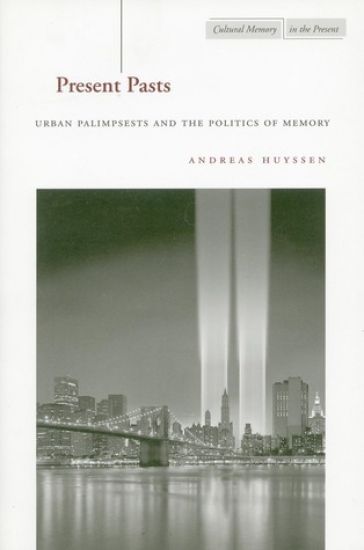
Memory of historical trauma has a unique power to generate works of art. This book analyzes the relation of public memory to history, forgetting, and selective memory in Berlin, Buenos Aires, and New York—three late-twentieth-century cities that have confronted major social or political traumas. Berlin experienced the fall of the Berlin Wall and the city's reemergence as the German capital; Buenos Aires lived through the dictatorships of the 1970s and 1980s and their legacy of state terror and disappearances; and New York City faces a set of public memory issues concerning the symbolic value of Times Square as threatened public space and the daunting task of commemorating and rebuilding after the attack on the World Trade Center. Focusing on the issue of monumentalization in divergent artistic and media practices, the book demonstrates that the transformation of spatial and temporal experience by memory politics is a major cultural effect of globalization.
Memory of historical trauma has a unique power to generate works of art. This book analyzes the relation of public memory to history, forgetting, and selective memory in Berlin, Buenos Aires, and New York—three late-twentieth-century cities that have confronted major social or political traumas. Berlin experienced the fall of the Berlin Wall and the city's reemergence as the German capital; Buenos Aires lived through the dictatorships of the 1970s and 1980s and their legacy of state terror and disappearances; and New York City faces a set of public memory issues concerning the symbolic value of Times Square as threatened public space and the daunting task of commemorating and rebuilding after the attack on the World Trade Center. Focusing on the issue of monumentalization in divergent artistic and media practices, the book demonstrates that the transformation of spatial and temporal experience by memory politics is a major cultural effect of globalization.
This book provides an in-depth investigation of the link between human capital and economic growth. The authors take an innovative approach, examining the determinants of economic growth through a historical overview of the concept of human capital. The text fosters a deep understanding of the connection between human capital and economic growth through the exploration of different theoretical approaches, a review of the literature, and the application of nonlinear estimation techniques to a comprehensive data set. The authors discuss nonparametric econometric techniques and their application to estimating nonlinearities—which has emerged as one of the most salient features of empirical work in modeling the human capital-growth relationship, and the process of economic growth in general. By delving into the topic from theoretical and empirical standpoints, this book offers an insightful new view that will be extremely useful for scholars, students, and policy makers.
A hopeful approach to climate change that offers us practical tools to band together across the political spectrum and create the green energy-powered sustainable world that's in our grasp Andreas Karelas brings a hopeful message that we don't often hear about--we're actually already on our way to solving the climate crisis, and with more people involved, in both big and small ways, we have a chance at preserving our environment. We're on our way because there's a new approach to climate change that recognizes that people, not politics, are the agents of change that can create a sustainable world. And that in order to engage people in climate solutions, we need a new way of framing the problem. The problem is not that climate change is an insurmountable challenge--it's that it can seem like it is. Instead of focusing on governmental gridlock and apocalyptic visions, Climate Courage emphasizes the rate of job creation in the green economy, introduces the reader to the growing number of conservatives and people of faith already engaged in climate solutions, and tells the stories of the many groups and organizations brainstorming clean energy solutions and putting them into place. Environmental activists and citizens will find inspiration to build trust between red and blue America, to avoid succumbing to despair and the inaction it breeds. In coming together, we just may rediscover community, gratitude, and service--values which help us live more fulfilling, less consumption-oriented lives.
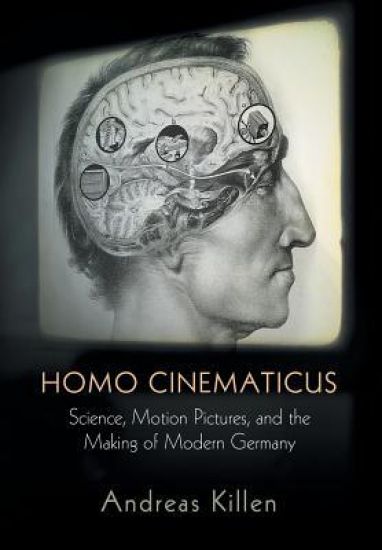
In the early decades of the twentieth century, two intertwined changes began to shape the direction of German society. The baptism of the German film industry took place amid post-World War I conditions of political and social breakdown, and the cultural vacuum left by collapsing institutions was partially filled by moving images. At the same time, the emerging human sciences-psychiatry, neurology, sexology, eugenics, industrial psychology, and psychoanalysis-began to play an increasingly significant role in setting the terms for the way Germany analyzed itself and the problems it had inherited from its authoritarian past, the modernizing process, and war. Moreover, in advancing their professional and social goals, these sciences became heavily reliant on motion pictures. Situated at the intersection of film studies, the history of science and medicine, and the history of modern Germany, Homo Cinematicus connects the rise of cinema as a social institution to an inquiry into the history of knowledge production in the human sciences. Taking its title from a term coined in 1919 by commentator Wilhelm Stapel to identify a new social type that had been created by the emergence of cinema, Killen's book explores how a new class of experts in these new disciplines converged on the figure of the "homo cinematicus" and made him central to many of that era's major narratives and social policy initiatives. Killen traces film's use by the human sciences as a tool for producing, communicating, and popularizing new kinds of knowledge, as well as the ways that this alliance was challenged by popular films that interrogated the truth claims of both modern science and scientific cinema. In doing so, Homo Cinematicus endeavors to move beyond the divide between scientific and popular film, examining their historical coexistence and coevolution.
In Strategies of Compliance with the European Court of Human Rights, Andreas von Staden looks at the nature of human rights challenges in two enduring liberal democracies-Germany and the United Kingdom. Employing an ambitious data set that covers the compliance status of all European Court of Human Rights judgments rendered until 2015, von Staden presents a cross-national overview of compliance that illustrates a strong correlation between the quality of a country's democracy and the rate at which judgments have met compliance. Tracing the impact of violations in Germany and the United Kingdom specifically, he details how governments, legislators, and domestic judges responded to the court's demands for either financial compensation or changes to laws, policies, and practices. Framing his analysis in the context of the long-standing international relations debate between rationalists who argue that actions are dictated by an actor's preferences and cost-benefit calculations, and constructivists, who emphasize the influence of norms on behavior, von Staden argues that the question of whether to comply with a judgment needs to be analyzed separately from the question of how to comply. According to von Staden, constructivist reasoning best explains why Germany and the United Kingdom are motivated to comply with the European Court of Human Rights judgments, while rationalist reasoning in most cases accounts for how these countries bring their laws, policies, and practices into sufficient compliance for their cases to be closed. When complying with adverse decisions while also exploiting all available options to minimize their domestic impact, liberal democracies are thus both norm-abiding and rational-instrumentalist at the same time-in other words, they choose their compliance strategies rationally within the normative constraint of having to comply with the Court's judgments.
This concise, comprehensive primer on modern American social and political thought is the ideal introduction to the rich intellectual tradition of the United Sates. Andreas Hess helps the reader to understand of American culture and politics through careful exploration of key and theorists. In the first half of the book he focuses on the core traditions of American social and political thoughtAmerican exceptionalism, Calvinist Protestantism, republicanism, liberalism and 20th century pragmatism. The second half of the book applies these traditions to a broad range of 20th century conditions and issuespower and democracy, justice and injustice, multiculturalism and pluralism, civil society, social theory and the role of the intellectual. The works of some of the most influential figures in the field, such as De Tocqueville, Lipset, Arendt, Hartz, Pocock, Dewey, Moore, Rawls, Walzer, Rorty and Alexander, are drawn upon to illustrate the theories and issues being discussed. Accessibly written and jargon free, this treatment will be useful for students and scholars alike.
This concise, comprehensive primer on modern American social and political thought is the ideal introduction to the rich intellectual tradition of the United Sates. Andreas Hess helps the reader to understand of American culture and politics through careful exploration of key and theorists. In the first half of the book he focuses on the core traditions of American social and political thoughtAmerican exceptionalism, Calvinist Protestantism, republicanism, liberalism and 20th century pragmatism. The second half of the book applies these traditions to a broad range of 20th century conditions and issuespower and democracy, justice and injustice, multiculturalism and pluralism, civil society, social theory and the role of the intellectual. The works of some of the most influential figures in the field, such as De Tocqueville, Lipset, Arendt, Hartz, Pocock, Dewey, Moore, Rawls, Walzer, Rorty and Alexander, are drawn upon to illustrate the theories and issues being discussed. Accessibly written and jargon free, this treatment will be useful for students and scholars alike.
This reader provides substantial extracts from the core texts in the field of American social and political thought. It demonstrates the rich intellectual tradition of the United States, giving an unparalleled understanding of American society and politics through the reproduction of key writings from a wide variety of thinkers. The first part covers the core traditions of American social and political thought--American Exceptionalism, Political Theology, Republicanism, Liberalism, and Pragmatism. In the second part, texts have been selected to demonstrate the ways in which these traditions have been applied to a broad range of issues and conditions. Exceptionally well-written and jargon-free, with helpful introductions and selections from Frederick Jackson Turner, Max Weber, Michael Sandel, John Rawls, C. Wright Mills, Sheldon Wolin, Judith N. Shklar, bell hooks, Michael Walzer and Richard Rorty, among others, American Social and Political Thought will be the core text in the field.
This reader provides substantial extracts from the core texts in the field of American social and political thought. It demonstrates the rich intellectual tradition of the United States, giving an unparalleled understanding of American society and politics through the reproduction of key writings from a wide variety of thinkers. The first part covers the core traditions of American social and political thought--American Exceptionalism, Political Theology, Republicanism, Liberalism, and Pragmatism. In the second part, texts have been selected to demonstrate the ways in which these traditions have been applied to a broad range of issues and conditions. Exceptionally well-written and jargon-free, with helpful introductions and selections from Frederick Jackson Turner, Max Weber, Michael Sandel, John Rawls, C. Wright Mills, Sheldon Wolin, Judith N. Shklar, bell hooks, Michael Walzer and Richard Rorty, among others, American Social and Political Thought will be the core text in the field.
Before skyscrapers forever transformed the landscape of the modern metropolis, the conveyance that made them possible had to be created. Invented in New York in the 1850s, the elevator became an urban fact of life on both sides of the Atlantic by the early twentieth century. While it may at first glance seem a modest innovation, it had wide-ranging effects, from fundamentally restructuring building design to reinforcing social class hierarchies by moving luxury apartments to upper levels, previously the domain of the lower classes. The cramped elevator cabin itself served as a reflection of life in modern growing cities, as a space of simultaneous intimacy and anonymity, constantly in motion. In this elegant and fascinating book, Andreas Bernard explores how the appearance of this new element changed notions of verticality and urban space. Transforming such landmarks as the Waldorf-Astoria and Ritz Tower in New York, he traces how the elevator quickly took hold in large American cities while gaining much slower acceptance in European cities like Paris and Berlin. Combining technological and architectural history with the literary and cinematic, Bernard opens up new ways of looking at the elevator--as a secular confessional when stalled between floors or as a recurring space in which couples fall in love. Rising upwards through modernity, Lifted takes the reader on a compelling ride through the history of the elevator.