This fantastic range of fiction for Shared, Guided and Independent reading gives you stories your children will love to read over and over again. Gaelic and Scottish teaching support also accompanies this reading series.
"Could change the historiography of Barry Goldwater and his times." -Jerry Kammer, author of "The Second Long Walk: The Navajo-Hopi Land Dispute" and winner of the Pulitzer Prize for journalism (2006). "A fascinating new book by Dave Wagner ... makes an important contribution." -Jon Talton, RogueColumnist.com.. "A close history of 20th-century Arizona politics that reads a lot like a crime novel." -Paul Buhle, Lecturer in history, Brown University. In 1977, after Arizona courts sent three men to prison for the murder of reporter Don Bolles, most Arizonans agreed with The New York Times when it declared that, despite the outcome of a series of trials, the Bolles case remained "unsolved." None of the three imprisoned men had a personal motive for the killing. Two were paid assassins and the third was a courier. As the decades passed with no further resolution of the case, the more urgent question was not who killed Bolles but who took control of the investigation and shut it down. Bolles' was the fourth in a string of five highly publicized message murders in Phoenix between 1955 and 1986. Only one of the murders was solved: the killing of accountant Edward Lazar hours before he was to testify in an historic land-fraud case. Chicago police discovered that Lazar's murder was the work of contract killers, but others, including a dozen or more that were disguised as heart attacks, suicides or accidents, remain open to this day. 'The Politics of Murder' presents the major players on both sides of the law-crime bosses, politicians, killers, journalists and cops-as a history of organized crime in modern Phoenix. In its closing chapters, the book reveals new archival evidence about the motives of the man who wanted Bolles dead and the powerful politician who made the decision to leave Arizona justice in limbo.
San Francisco 1944Barry Keys successfully concludes his espionage case at Mare Island only to find the FBI has branded him a loose cannon. He storms out of his boss's office leaving his badge and gun behind. It's time for a new life and back to chasing down bad guys his way.He and his wife, Mary, open their own detective agency. Business is slow until the commandant of Mare Island Shipyard sends Keys an urgent order to find black marketers who are stealing vital war goods. The commandant wants them rooted out fast.When Keys discovers the black market gang has stolen a Mark 18 torpedo, the case heats up. Keys realizes a Nazi provocateur heads the gang and has a diabolical plan to destroy the shipyard.As Keys gets closer, the Nazi grows desperate; bodies pile up and Keys and Mary are next on the Nazi's death list. It begins to look like nothing can stop his mad plan before he destroys the shipyard.
James Barry was an innovative medical pioneer, radical humanitarian and flamboyant dandy who traversed the British Empire during the nineteenth century. He campaigned tirelessly for the humanitarian rights of the patient. On three continents, Barry implemented new methods of hygiene, sanitation, quarantine, diet and effective treatment of some of the most virulent diseases known to the age. Barry's medical reforms saved the lives of thousands of people. But Barry was not what he seemed. He courted controversy throughout his life - sexual scandal, a fiery temper, extravagant dress and rampant vegetarianism set him apart from his fellows. Yet, all the while he concealed a secret that went right to the heart of his identity. Rachel Holmes pursues Barry's tumultuous adventures across the globe, bringing alive through vivid storytelling this extraordinary Victorian who caused outrage wherever he went. A fascinating story of nineteenth century science and the mysteries of sexuality, "James Barry" brings to life one of the most enigmatic figures of his time. Wherever Barry went he sparked gossip, made enemies and inspired relentless curiosity about his identity, yet through it all he defiantly lived a life that otherwise would have been denied him.
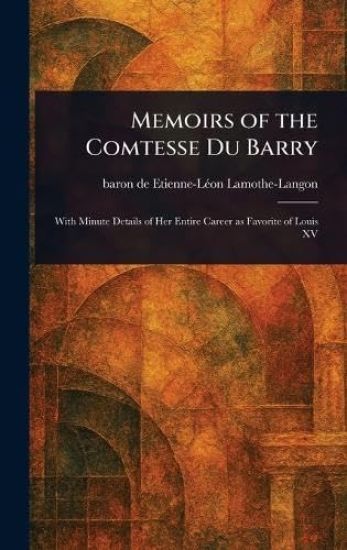
Delve into the captivating world of 18th-century France with the "Memoirs of the Comtesse du Barry, With Minute Details of Her Entire Career as Favorite of Louis XV Written by Herself." This meticulously prepared print edition offers a rare and intimate glimpse into the life of Jeanne B cu, Comtesse du Barry, one of the most controversial and influential figures of her time. Explore the inner workings of the French court through the eyes of a woman who rose from humble beginnings to become the last official mistress of King Louis XV. These memoirs, attributed to Etienne Leon Lamothe-Langon, provide a firsthand account of her experiences, offering invaluable insights into French history, the social dynamics of the era, and the events leading up to the French Revolution. A vital resource for anyone interested in biography, European history, and women's studies, this historical text unveils the complexities of a life lived at the heart of power, marked by both extraordinary privilege and ultimately, tragic fate. Discover the story of the "Comtesse du Barry" and her indelible mark on French history.This work has been selected by scholars as being culturally important, and is part of the knowledge base of civilization as we know it.This work is in the public domain in the United States of America, and possibly other nations. Within the United States, you may freely copy and distribute this work, as no entity (individual or corporate) has a copyright on the body of the work.Scholars believe, and we concur, that this work is important enough to be preserved, reproduced, and made generally available to the public. We appreciate your support of the preservation process, and thank you for being an important part of keeping this knowledge alive and relevant.
Delve into the captivating world of 18th-century France with the "Memoirs of the Comtesse du Barry, With Minute Details of Her Entire Career as Favorite of Louis XV Written by Herself." This meticulously prepared print edition offers a rare and intimate glimpse into the life of Jeanne B cu, Comtesse du Barry, one of the most controversial and influential figures of her time. Explore the inner workings of the French court through the eyes of a woman who rose from humble beginnings to become the last official mistress of King Louis XV. These memoirs, attributed to Etienne Leon Lamothe-Langon, provide a firsthand account of her experiences, offering invaluable insights into French history, the social dynamics of the era, and the events leading up to the French Revolution. A vital resource for anyone interested in biography, European history, and women's studies, this historical text unveils the complexities of a life lived at the heart of power, marked by both extraordinary privilege and ultimately, tragic fate. Discover the story of the "Comtesse du Barry" and her indelible mark on French history.This work has been selected by scholars as being culturally important, and is part of the knowledge base of civilization as we know it.This work is in the public domain in the United States of America, and possibly other nations. Within the United States, you may freely copy and distribute this work, as no entity (individual or corporate) has a copyright on the body of the work.Scholars believe, and we concur, that this work is important enough to be preserved, reproduced, and made generally available to the public. We appreciate your support of the preservation process, and thank you for being an important part of keeping this knowledge alive and relevant.
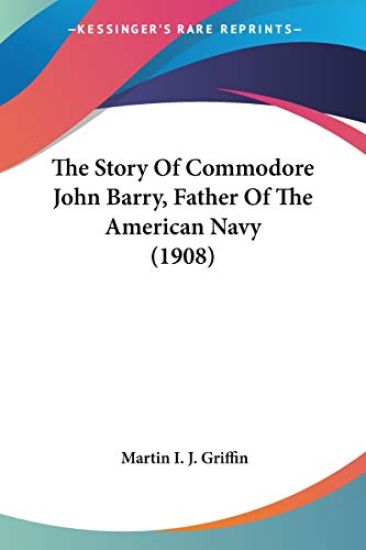
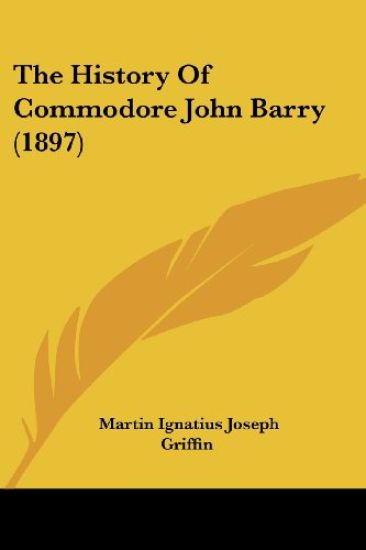
Discover the remarkable life of a forgotten hero in "The Story of Commodore John Barry" by Martin Griffin. This meticulously researched biography chronicles the extraordinary career of John Barry, an Irish American who rose to prominence as a pivotal figure in the American Revolution and the establishment of the Continental Navy. Delve into the naval history of the United States' formative years as you explore Barry's contributions, leadership, and unwavering commitment to the cause of American independence. Griffin's biography offers a compelling portrait of a military leader whose courage and strategic brilliance helped shape the nation's destiny. A testament to the enduring spirit of patriotism and the pursuit of liberty, "The Story of Commodore John Barry" is essential reading for anyone interested in military biography, the American Revolution, or the untold stories of the individuals who forged a new nation. This historical account ensures Barry's legacy as a true American hero lives on.This work has been selected by scholars as being culturally important, and is part of the knowledge base of civilization as we know it.This work is in the public domain in the United States of America, and possibly other nations. Within the United States, you may freely copy and distribute this work, as no entity (individual or corporate) has a copyright on the body of the work.Scholars believe, and we concur, that this work is important enough to be preserved, reproduced, and made generally available to the public. We appreciate your support of the preservation process, and thank you for being an important part of keeping this knowledge alive and relevant.
Step back into the opulent and scandalous world of 18th-century France with the "Memoirs of the Comtesse du Barry." This captivating historical document offers a unique glimpse into the life of Jeanne B cu, the controversial Comtesse du Barry, and her tumultuous career as the favorite of King Louis XV. Compiled with meticulous detail by Baron Etienne Leon Lamothe-Langon, these memoirs provide an intimate portrait of the French court, filled with intrigue, lavish displays, and the ever-present threat of political maneuvering. Delve into the Comtesse's own account of her experiences, offering firsthand insight into her rise to power, her relationships, and the events that shaped her destiny during a pivotal era in French history. A vital resource for anyone interested in French history, the reign of Louis XV, or the lives of remarkable women who defied societal norms, these memoirs offer a timeless look at a fascinating historical figure and a captivating period in European history.This work has been selected by scholars as being culturally important, and is part of the knowledge base of civilization as we know it.This work is in the public domain in the United States of America, and possibly other nations. Within the United States, you may freely copy and distribute this work, as no entity (individual or corporate) has a copyright on the body of the work.Scholars believe, and we concur, that this work is important enough to be preserved, reproduced, and made generally available to the public. We appreciate your support of the preservation process, and thank you for being an important part of keeping this knowledge alive and relevant.
Step back into the opulent and scandalous world of 18th-century France with the "Memoirs of the Comtesse du Barry." This captivating historical document offers a unique glimpse into the life of Jeanne B cu, the controversial Comtesse du Barry, and her tumultuous career as the favorite of King Louis XV. Compiled with meticulous detail by Baron Etienne Leon Lamothe-Langon, these memoirs provide an intimate portrait of the French court, filled with intrigue, lavish displays, and the ever-present threat of political maneuvering. Delve into the Comtesse's own account of her experiences, offering firsthand insight into her rise to power, her relationships, and the events that shaped her destiny during a pivotal era in French history. A vital resource for anyone interested in French history, the reign of Louis XV, or the lives of remarkable women who defied societal norms, these memoirs offer a timeless look at a fascinating historical figure and a captivating period in European history.This work has been selected by scholars as being culturally important, and is part of the knowledge base of civilization as we know it.This work is in the public domain in the United States of America, and possibly other nations. Within the United States, you may freely copy and distribute this work, as no entity (individual or corporate) has a copyright on the body of the work.Scholars believe, and we concur, that this work is important enough to be preserved, reproduced, and made generally available to the public. We appreciate your support of the preservation process, and thank you for being an important part of keeping this knowledge alive and relevant.