Kirjojen hintavertailu. Mukana 11 342 296 kirjaa ja 12 kauppaa.

Kirjahaku

Etsi kirjoja tekijän nimen, kirjan nimen tai ISBN:n perusteella.

1000 tulosta hakusanalla Bryan Lambert

Colour Atlas of Woody Plants and Trees
Trees and plants are important components of the human environment having significant presence beyond agricultural and recreational values. Colour Atlas of Woody Plants and Trees presents a photographic compilation of morphological features of trees and shrubs giving attention to their unique aspects not presented in existing books. By increasing awareness to users through high quality, full-color photographs and informative text, this book demonstrates the enormous diversity of vascular trees and plants living today.Features:Full color atlas offers concise, but highly informative text accompanied by over 200 high-resolution digital tree imagesContains images of the anatomy of tree structures and evolution of the most important features of treesPresents information on the varied structure and morphology exhibited by trees and demonstrates their vital importance in the current struggle for the survival of our human societySurveys the most important morphological features of plants, shrubs and treesPresents aspects of plants and trees both common and rarely seen in natureBryan Geoffrey Bowes is a retired Senior Lecturer in the Botany Department at Glasgow University and was a Research Fellow in ETH Zurich, Harvard University, and University of New England, Australia. His research interests encompass plant anatomy and ultrastructure, plant regeneration, and morphogenesis in vitro.
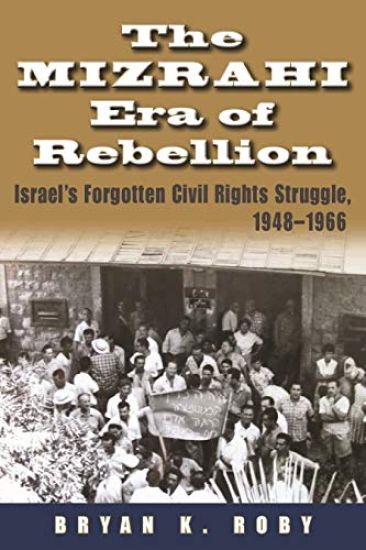
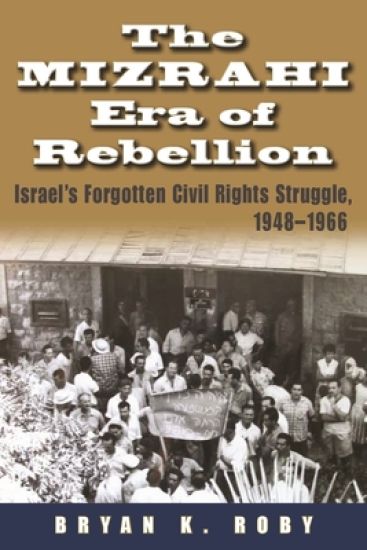
The Mizrahi Era of Rebellion

The Mizrahi Era of Rebellion

Bryan K. Roby

SYRACUSE UNIVERSITY PRESS
2026
pokkari
During the postwar period of 1948–56, over 400,000 Jews from the Middle East and Asia immigrated to the newly established state of Israel. By the end of the 1950s, Mizrahim, also known as "Oriental Jewry," represented the ethnic majority of the Israeli Jewish population. Despite their large numbers, Mizrahim were considered outsiders because of their non-European origins. Viewed as foreigners who came from culturally backward and distant lands, they suffered decades of socioeconomic, political, and educational injustices. In this pioneering work, Roby traces the Mizrahi population’s struggle for equality and civil rights in Israel. Although the daily "bread and work" demonstrations are considered the first political expression of the Mizrahim, Roby explores the myriad ways in which they agitated for change. Drawing upon a wealth of archival sources, many then recently declassified, Roby details the activities of the highly ideological and politicized young Israel. Police reports, court transcripts, and protester accounts document a diverse range of resistance tactics, including sit-ins, tent protests, and hunger strikes. Roby shows how the Mizrahi intellectuals and activists in the 1960s began to take note of the American civil rights movement, gaining inspiration from its development and drawing parallels between their experience and that of other marginalized ethnic groups. The Mizrahi Era of Rebellion shines a light on a largely forgotten part of Israeli social history, one that profoundly shaped the way Jews from African and Asian countries engaged with the newly founded state of Israel.
The Mizrahi Era of Rebellion

The Mizrahi Era of Rebellion

Bryan K. Roby

Syracuse University Press
2015
sidottu
During the postwar period of 1948–56, over 400,000 Jews from the Middle East and Asia immigrated to the newly established state of Israel. By the end of the 1950s, Mizrahim, also known as Oriental Jewry, represented the ethnic majority of the Israeli Jewish population. Despite their large numbers, Mizrahim were considered outsiders because of their non-European origins. Viewed as foreigners who came from culturally backward and distant lands, they suffered decades of socioeconomic, political, and educational injustices.In this pioneering work, Roby traces the Mizrahi population’s struggle for equality and civil rights in Israel. Although the daily ""bread and work"" demonstrations are considered the first political expression of the Mizrahim, Roby demonstrates the myriad ways in which they agitated for change. Drawing upon a wealth of archival sources, many only recently declassified, Roby details the activities of the highly ideological and politicized young Israel. Police reports, court transcripts, and protester accounts document a diverse range of resistance tactics, including sit-ins, tent protests, and hunger strikes. Roby shows how the Mizrahi intellectuals and activists in the 1960s began to take note of the American civil rights movement, gaining inspiration from its development and drawing parallels between their experience and that of other marginalized ethnic groups. The Mizrahi Era of Rebellion shines a light on a largely forgotten part of Israeli social history, one that profoundly shaped the way Jews from African and Asian countries engaged with the newly founded state of Israel.
Dodger Blue Will Fill Your Soul

Dodger Blue Will Fill Your Soul

Bryan Allen Fierro

University of Arizona Press
2016
nidottu
Two brothers bury a statue of Saint Jude for their grieving nana. A Griffith Park astronomer makes his own discovery at an East L.A. wedding. A young man springs his Cherokee-obsessed grandfather from the confines of senility. The common thread? Each is weaving their way through the challenging field of play that is living and loving in Los Angeles. In Dodger Blue Will Fill Your Soul, Bryan Allen Fierro brings to life the people and places that form the fragile heart of the East Los Angeles community. In the title story, a father’s love of Dodger baseball is matched only by the disconnect he must bridge with his young son. In another story, a young widower remembers his wedding day with his father-in-law. The boys and men in this collection challenge masculine stereotypes, while the girls and women defy gender roles. Hope and faith in their own community defines the characters, and propels them toward an awareness of their own personal responsibility to themselves and to their families, even as they eschew those closest to them in pursuit of a different future. Dodger Blue Will Fill Your Soul is a tour de force—the first collection of an authentic new voice examining community with humour, hope, and brutal honesty.
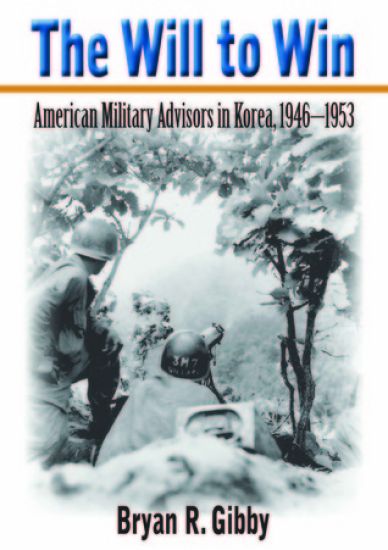
The Will to Win

The Will to Win

Bryan Gibby

The University of Alabama Press
2012
sidottu
Focuses on the substantial role of US military advisors to the Republic of Korea Army (ROKA) from 1946 until 1953 in one of America’s early attempts at nation building. Gibby describes ROKA’s structure, mission, challenges, and successes, thereby linking the South Korean army and their US advisors to the traditional narrative of this ‘forgotten war’.
George Galphin's Intimate Empire

George Galphin's Intimate Empire

Bryan C. Rindfleisch

The University of Alabama Press
2019
sidottu
A revealing saga detailing the economic, familial, and social bonds forged by Indian trader George Galphin in the early American South. A native of Ireland, George Galphin arrived in South Carolina in 1737 and quickly emerged as one of the most proficient deerskin traders in the South. This was due in large part to his marriage to Metawney, a Creek Indian woman from the town of Coweta, who incorporated Galphin into her family and clan, allowing him to establish one of the most profitable merchant companies in North America. As part of his trade operations, Galphin cemented connections with Indigenous and European peoples across the South, while simultaneously securing links to merchants and traders in the British Empire, continental Europe, and beyond. In George Galphin's Intimate Empire: The Creek Indians, Family, and Colonialism in Early America, Bryan C. Rindfleisch presents a complex narrative about eighteenth-century cross-cultural relationships. Reconstructing the multilayered bonds forged by Galphin and challenging scholarly understandings of life in the Native South, the American South more broadly, and the Atlantic World, Rindfleisch looks simultaneously at familial, cultural, political, geographical, and commercial ties—examining how eighteenth-century people organized their world, both mentally and physically. He demonstrates how Galphin's importance emerged through the people with whom he bonded. At their most intimate, Galphin's multilayered relationships revolved around the Creek, Anglo-French, and African children who comprised his North American family, as well as family and friends on the other side of the Atlantic. Through extensive research in primary sources, Rindfleisch reconstructs an expansive imperial world that stretches across the American South and reaches into London and includes Indians, Europeans, and Africans who were intimately interconnected and mutually dependent. As a whole, George Galphin's Intimate Empire provides critical insights into the intensely personal dimensions and cross-cultural contours of the eighteenth-century South and how empire-building and colonialism were, by their very nature, intimate and familial affairs.
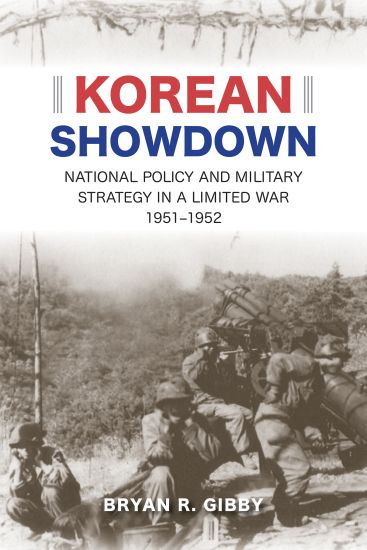
Korean Showdown

Korean Showdown

Bryan R. Gibby

The University of Alabama Press
2021
sidottu
A historical analysis of the policies and military strategies applied during the Korean War stalemate period Korean Showdown: National Policy and Military Strategy in a Limited War, 1951–1952 takes a holistic and integrative approach to strategy, operations, and tactics during the Korean War’s stalemate period and demonstrates how these matters shaped each other and influenced, or were influenced by, political and strategic policy decision-making. Bryan R. Gibby offers an analysis of the major political and military decisions affecting how the war was conducted operationally and diplomatically by examining American, Chinese, North Korean, and South Korean operations in the context of fighting a limited war with limited means, but for objectives that were not always limited in scope or ambition. The foundational political decision was Harry Truman’s voluntary repatriation policy, which extended the war by up to eighteen months. Its military counterpart was the American-led Operation Showdown, the last deliberate military offensive to coerce concessions at the negotiation table. Showdown’s failure (and the Communists’ own equally disappointing military efforts) opened up new avenues for solving the war short of a militarily imposed solution. Gibby’s research draws on primary sources from American, Korean, and Chinese archives and publications. Many of these sources have not yet been mined in diplomatic and military histories of the Korean War. This innovative book also addresses a significant gap in the study of Korean military operations—the linkage between ground and air pressure campaigns, as well as the many Chinese and American operations conducted to establish negotiation positions. Gibby also explores many political and propagandist developments that assumed great importance in the summer of 1952, such as prisoner of war riots, the bombing of hydroelectric dams, and the South Korean constitutional crisis, which significantly influenced American and Chinese military decision-making. Ultimately, this volume serves as a cautionary analysis of the limits of force, the necessity to understand an adversary, and the importance of strategic consensus. It also offers an effective case study on an underappreciated period of civil-military tension during the Cold War and on how civilian politicians and military leaders must collaborate to determine a realistic and effective strategy.
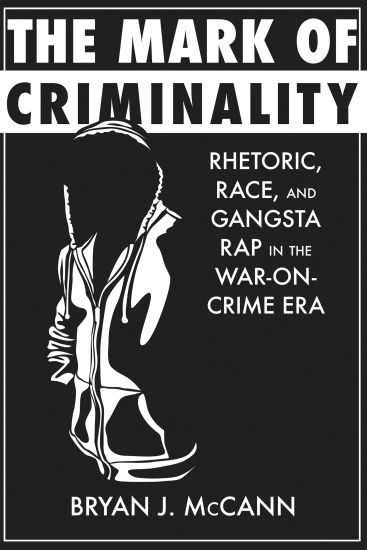
The Mark of Criminality

The Mark of Criminality

Bryan J. McCann

The University of Alabama Press
2019
nidottu
Illustrates the ways that the ""war on crime"" became conjoined—aesthetically, politically, and rhetorically—with the emergence of gangsta rap as a lucrative and deeply controversial subgenre of hip-hop.In The Mark of Criminality: Rhetoric, Race, and Gangsta Rap in the War-on-Crime Era, Bryan J. McCann argues that gangsta rap should be viewed as more than a damaging reinforcement of an era's worst racial stereotypes. Rather, he positions the works of key gangsta rap artists, as well as the controversies their work produced, squarely within the law-and-order politics and popular culture of the 1980s and 1990s to reveal a profoundly complex period in American history when the meanings of crime and criminality were incredibly unstable. At the center of this era—when politicians sought to prove their ""tough-on-crime"" credentials—was the mark of criminality, a set of discourses that labeled members of predominantly poor, urban, and minority communities as threats to the social order. Through their use of the mark of criminality, public figures implemented extremely harsh penal polices that have helped make the United States the world's leading jailer of its adult population. At the same time when politicians like Ronald Reagan, George H. W. Bush, and Bill Clinton and television shows such as COPS and America's Most Wanted perpetuated images of gang and drug-filled ghettos, gangsta rap burst out of the hip-hop nation, emanating mainly from the predominantly black neighborhoods of South Central Los Angeles. Groups like NWA and solo artists (including Dr. Dre, Snoop Dogg, and Tupac Shakur) became millionaires by marketing the very discourses political and cultural leaders used to justify their war on crime. For these artists, the mark of criminality was a source of power, credibility, and revenue. By understanding gangsta rap as a potent, if deeply imperfect, enactment of the mark of criminality, we can better understand how crime is always a site of struggle over meaning. Furthermore, by underscoring the nimble rhetorical character of criminality, we can learn lessons that may inform efforts to challenge our nation's failed policies of mass incarceration.
The Will to Win

The Will to Win

Bryan R. Gibby

University Alabama Press
2026
nidottu
The Will to Win focuses on the substantial role of US military advisors to the Republic of Korea Army (ROKA) from 1946 until 1953 in one of America's early attempts at nation building. Gibby describes ROKA's structure, mission, challenges, and successes, thereby linking the South Korean army and their US advisors to the traditional narrative of this "forgotten war." The work also demonstrates the difficulties inherent in national reconstruction, focusing on barriers in culture and society, and the effects of rapid decolonization combined with intense nationalism and the appeal of communism to East Asia following the destruction of the Japanese empire. Key conclusions include the importance of individual advisors, the significance of the prewar advisory effort, and the depth of the impact these men had on individual Korean units and in a few cases on the entire South Korean army. The success or failure of South Korean government in the decade following the end of World War II hinged on the loyalty, strength, and fighting capability of its army, which in turn relied on its American advisors. Gibby argues that without a proficient ROKA, the 1953 armistice, still in effect today, would not have been possible. He reexamines the Korean conflict from its beginning in 1945--particularly Korean politics, military operations, and armed forces--and demonstrates the crucial role the American military advisory program and personnel played to develop a more competent and reliable Korean army.
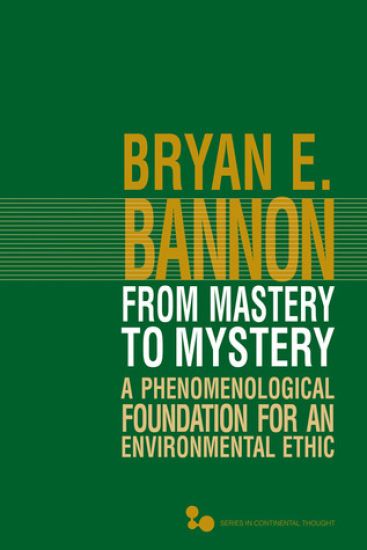
From Mastery to Mystery

From Mastery to Mystery

Bryan Edward Bannon

Ohio University Press
2014
sidottu
From Mastery to Mystery is an original and provocative contribution to the burgeoningfield of ecophenomenology. Informed by current debates in environmental philosophy, Bannon critiques the conception of nature as u200a"substance" that he finds tacitly assumed by the major environmental theorists. Instead, this book reconsiders the basic goals of an environmental ethic by questioning the most basic presupposition that most environmentalists accept: that nature is in need of preservation. Beginning with Bruno Latour's idea that continuing to speak of nature in the way we popularly conceive of it is ethically and politically disastrous, this book describes a way in which the concept of nature can retain its importance in our discussion of the contemporary state of the environment. Based upon insights from the phenomenological tradition, specifically the work of Martin Heidegger and Maurice Merleau-Ponty, the concept of nature developed in the book preserves the best antihumanistic intuitions of environmentalists without relying on either a reductionistic understanding of nature and the sciences or dualistic metaphysical constructions.
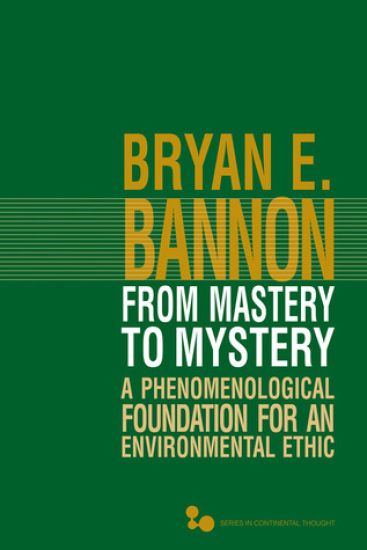
From Mastery to Mystery

From Mastery to Mystery

Bryan Edward Bannon

Ohio University Press
2014
pokkari
From Mastery to Mystery is an original and provocative contribution to the burgeoningfield of ecophenomenology. Informed by current debates in environmental philosophy, Bannon critiques the conception of nature as u200a"substance" that he finds tacitly assumed by the major environmental theorists. Instead, this book reconsiders the basic goals of an environmental ethic by questioning the most basic presupposition that most environmentalists accept: that nature is in need of preservation. Beginning with Bruno Latour's idea that continuing to speak of nature in the way we popularly conceive of it is ethically and politically disastrous, this book describes a way in which the concept of nature can retain its importance in our discussion of the contemporary state of the environment. Based upon insights from the phenomenological tradition, specifically the work of Martin Heidegger and Maurice Merleau-Ponty, the concept of nature developed in the book preserves the best antihumanistic intuitions of environmentalists without relying on either a reductionistic understanding of nature and the sciences or dualistic metaphysical constructions.
Hello, Hello Brazil

Hello, Hello Brazil

Bryan McCann

Duke University Press
2004
pokkari
“Hello, hello Brazil” was the standard greeting Brazilian radio announcers of the 1930s used to welcome their audience into an expanding cultural marketplace. New genres like samba and repackaged older ones like choro served as the currency in this marketplace, minted in the capital in Rio de Janeiro and circulated nationally by the burgeoning recording and broadcasting industries. Bryan McCann chronicles the flourishing of Brazilian popular music between the 1920s and the 1950s. Through analysis of the competing projects of composers, producers, bureaucrats, and fans, he shows that Brazilians alternately envisioned popular music as the foundation for a unified national culture and used it as a tool to probe racial and regional divisions.McCann explores the links between the growth of the culture industry, rapid industrialization, and the rise and fall of Getúlio Vargas’s Estado Novo dictatorship. He argues that these processes opened a window of opportunity for the creation of enduring cultural patterns and demonstrates that the understandings of popular music cemented in the mid–twentieth century continue to structure Brazilian cultural life in the early twenty-first.
Hello, Hello Brazil

Hello, Hello Brazil

Bryan McCann

Duke University Press
2004
sidottu
“Hello, hello Brazil” was the standard greeting Brazilian radio announcers of the 1930s used to welcome their audience into an expanding cultural marketplace. New genres like samba and repackaged older ones like choro served as the currency in this marketplace, minted in the capital in Rio de Janeiro and circulated nationally by the burgeoning recording and broadcasting industries. Bryan McCann chronicles the flourishing of Brazilian popular music between the 1920s and the 1950s. Through analysis of the competing projects of composers, producers, bureaucrats, and fans, he shows that Brazilians alternately envisioned popular music as the foundation for a unified national culture and used it as a tool to probe racial and regional divisions.McCann explores the links between the growth of the culture industry, rapid industrialization, and the rise and fall of Getúlio Vargas’s Estado Novo dictatorship. He argues that these processes opened a window of opportunity for the creation of enduring cultural patterns and demonstrates that the understandings of popular music cemented in the mid–twentieth century continue to structure Brazilian cultural life in the early twenty-first.
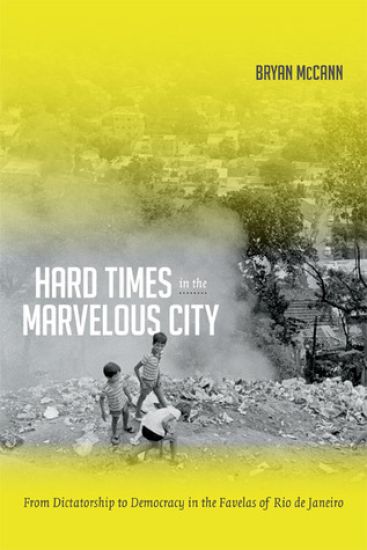
Hard Times in the Marvelous City

Hard Times in the Marvelous City

Bryan McCann

Duke University Press
2014
sidottu
Beginning in the late 1970s, activists from the favelas of Rio de Janeiro challenged the conditions-such as limited access to security, sanitation, public education, and formal employment-that separated favela residents from Rio's other citizens. The activists built a movement that helped to push the nation toward redemocratization. They joined with political allies in an effort to institute an ambitious slate of municipal reforms. Those measures ultimately fell short of aspirations, and soon the reformers were struggling to hold together a fraying coalition. Rio was bankrupted by natural disasters and hyperinflation and ravaged by drug wars. Well-armed drug traffickers had become the new lords of the favelas, protecting their turf through violence and patronage. By the early 1990s, the promise of the favela residents' mobilization of the late 1970s and early 1980s seemed out of reach. Yet the aspirations that fueled that mobilization have endured, and its legacy continues to shape favela politics in Rio de Janeiro.
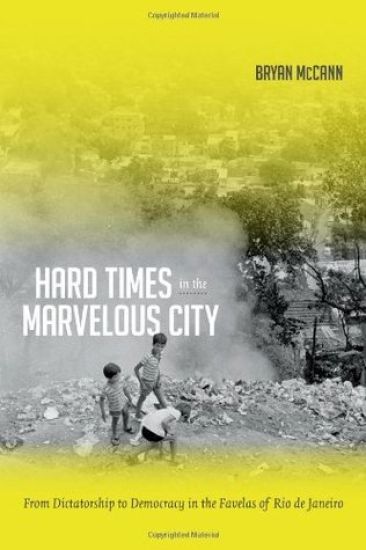
Hard Times in the Marvelous City

Hard Times in the Marvelous City

Bryan McCann

Duke University Press
2014
pokkari
Beginning in the late 1970s, activists from the favelas of Rio de Janeiro challenged the conditions-such as limited access to security, sanitation, public education, and formal employment-that separated favela residents from Rio's other citizens. The activists built a movement that helped to push the nation toward redemocratization. They joined with political allies in an effort to institute an ambitious slate of municipal reforms. Those measures ultimately fell short of aspirations, and soon the reformers were struggling to hold together a fraying coalition. Rio was bankrupted by natural disasters and hyperinflation and ravaged by drug wars. Well-armed drug traffickers had become the new lords of the favelas, protecting their turf through violence and patronage. By the early 1990s, the promise of the favela residents' mobilization of the late 1970s and early 1980s seemed out of reach. Yet the aspirations that fueled that mobilization have endured, and its legacy continues to shape favela politics in Rio de Janeiro.
Rhetorics of Resistance

Rhetorics of Resistance

Bryan Trabold

University of Pittsburgh Press
2018
nidottu
The period of apartheid was a perilous time in South Africa’s history. This book examines the tactics of resistance developed by those working for the Weekly Mail and New Nation, two opposition newspapers published in South Africa in the mid- and late 1980s. The government, in an attempt to crack down on the massive political resistance sweeping the country, had imposed martial law and imposed even greater restrictions on the press. Bryan Trabold examines the writing, legal, and political strategies developed by those working for these newspapers to challenge the censorship restrictions as much as possible—without getting banned. Despite the many steps taken by the government to silence them, including detaining the editor of New Nation for two years and temporarily closing both newspapers, the Weekly Mail and New Nation not only continued to publish but actually increased their circulations and obtained strong domestic and international support. New Nation ceased publication in 1994 after South Africa made the transition to democracy, but the Weekly Mail, now the Mail & Guardian, continues to publish and remains one of South Africa’s most respected newspapers.
The Buddhist Dead (Studies in East Asian Buddhism)

The Buddhist Dead (Studies in East Asian Buddhism)

Bryan J. Cuevas

University of Hawai'i Press
2011
nidottu
In its teachings, practices, and institutions, Buddhism in its varied Asian forms has been--and continues to be--centrally concerned with death and the dead. Yet surprisingly "death in Buddhism" has received little sustained scholarly attention. The Buddhist Dead offers the first comparative investigation of this topic across the major Buddhist cultures of India, Sri Lanka, China, Japan, Tibet, and Burma. Its individual essays, representing a range of methods, shed light on a rich array of traditional Buddhist practices for the dead and dying; the sophisticated but often paradoxical discourses about death and the dead in Buddhist texts; and the varied representations of the dead and the afterlife found in Buddhist funerary art and popular literature. This important collection moves beyond the largely text--and doctrine--centered approaches characterizing an earlier generation of Buddhist scholarship and expands its treatment of death to include ritual, devotional, and material culture.
Ritualized Writing

Ritualized Writing

Bryan D. Lowe

University of Hawai'i Press
2017
sidottu
Ritualized Writing takes readers into the fascinating world of Japanese Buddhist manuscript cultures. Using archival sources that have received scant attention in English, primarily documents from an eighth-century Japanese scriptorium and colophons from sutra manuscripts, Bryan D. Lowe uncovers the ways in which the transcription of Buddhist scripture was a highly ritualized endeavor. He takes a ground-level approach by emphasizing the activities and beliefs of a wide range of individuals, including scribes, provincial patrons, and royals, to reassess the meaning of scripture and reevaluate scholarly narratives of Japanese Buddhist history.Copying scripture is a central Buddhist practice and one that thrived in East Asia. Despite this, there are no other books dedicated to the topic. This work demonstrates that patrons and scribes treated sutras differently from other modes of writing. Scribes purified their bodies prior to transcription. Patrons held dedicatory ceremonies on days of abstinence, when prayers were pronounced and sutras were recited. Transcribing sutras helped scribes and patrons alike realize this- and other-worldly ambitions and cultivate themselves in accord with Buddhist norms. Sutra copying thus functioned as a form of ritualized writing, a strategic practice that set apart scripture as uniquely efficacious and venerable. Lowe employs this notion of ritualized writing to challenge historical narratives about ancient Japan (late seventh through early ninth centuries), a period when sutra copying flourished. He contends that Buddhist practice fulfilled a variety of social, political, and spiritual roles beyond ideological justification. Moreover, he demonstrates the inadequacy of state-folk dichotomies for understanding the social groups, institutions, and individual beliefs and practices of ancient Japanese Buddhism, highlighting instead common organizations across social class and using models that reveal shared concerns among believers from diverse social backgrounds.Ritualized Writing makes broader contributions to the study of ritual and scripture by introducing the notion of scriptural cultures, an analytic tool that denotes a series of dynamic relationships and practices involving texts that have been strategically set apart or ritualized. Scripture, Lowe concludes, is at once a category created by humans and a body of texts that transforms individuals and social organizations who come into contact with it.