
Kirjahaku
Etsi kirjoja tekijän nimen, kirjan nimen tai ISBN:n perusteella.
1000 tulosta hakusanalla Bryan W. Strong
In the third century CE, Emperor Septimius Severus unleashed a shocking and severe persecution against the Christian church. Witnessing the fear and confusion in his congregations, the presbyter Hippolytus crafted his Commentary on Daniel to encourage Christians confronted with the reality of martyrdom and persecution. In a work which comes to us as the earliest orthodox Christian commentary on scripture, Hippolytus interprets the text through allegory, typology, theodicy, paraenesis, and reflection to create a motif of martyrdom. By doing so, Hippolytus guides Christians iin their communities as they stand heroically before the tribunal of Caesar, like the Danielic characters stood before authorities in Babylon. His purpose in the commentary is clearly pastoral, arising from his role as presbyter: to exhort his Christian congregations to prepare to be martyred for Christ amidst Roman persecution.

How does a person learn to counsel others with the truth of God’s Word? Bob Kellemen believes that the best way to learn counseling is by doing it—by giving and receiving biblical counseling in the context of real, raw Christian community.Gospel Conversations explores the four compass-points of biblical counseling:Sustaining: “It’s Normal to Hurt.”Healing: “It’s Possible to Hope.”Reconciling: “It’s Horrible to Sin, but Wonderful to Be Forgiven.”Guiding: “It’s Supernatural to Mature.”These four compass points combine to equip readers to develop twenty-two ministry relational competencies—the “how to” of caring like Christ. This book serves as a practical training manual that can be used for lab and small group interaction.Gospel Conversations is the second volume in The Equipping Biblical Counselors Series, a comprehensive relational training curriculum for the local church that provides a model for equipping God’s people to change lives with Christ’s changeless truth. This two-volume series weaves together comprehensive biblical insight with compassionate Christian engagement.

The Blue Planet: An Introduction to Earth System Science
Brian J. Skinner; Barbara W. Murck
WILEY
2011
irtolehti
The Third Edition of Blue Planet: An Introduction to Earth System Science treats earth science from a systems perspective, showing how the four spheres (lithosphere, hydrosphere, atmosphere, biosphere) are interrelated. In this edition, significant emphasis is placed on cycling of materials and energy, and interactions among the spheres. The text also places much clearer emphasis on basic science, which can be seen in the reorganization of topics into Energy and Matter chapters, as well as a new "The Basics" feature in each chapter. This edition is also more systematic about documenting human impacts on the various spheres of the Earth system.

The Blue Planet: An Introduction to Earth System Sciences, 3rd Edition is an innovative text for the earth systems science course. It treats earth science from a systems perspective, now showing the five spheres and how they are interrelated. There are many photos and figures in the text to develop a strong understanding of the material presented. This along with the new media for instructors makes this a strong text for any earth systems science course.
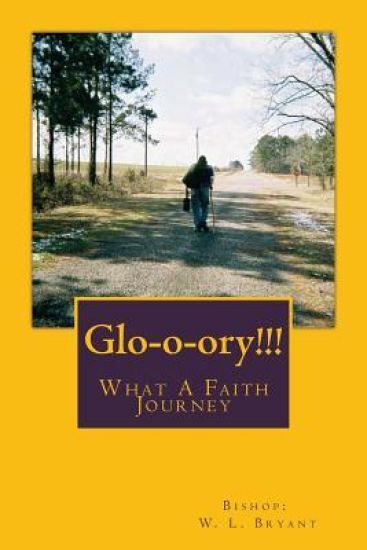
This book is the journey of a man that for one year lived a life of faith. Many times we may say whatever God wants me to do I am willing to do. But what if God gave you the greatest challenge of your life and spoke to you like he did Abram saying, "Get thee out of thy country, and from thy kindred, and from thy father's house, unto a land that I will shew thee." Genesis 12:1 Often we hear the voice of God, and we pretend we didn't hear anything. Just imagine you are told to leave everything, and go on a homeless journey. You must leave all the luxuries and comforts of home behind to be homeless for a year. You are told to take nothing with you, but the clothes on your back. No credit cards, checks, passbook savings, no drivers license, Social Security card, no ID, and no cash. NOTHING but F-A-I-T-H What would you do? Here is a story of faith, courage and obedience from a man of God that forsook all at the Master's call to go on a journey that would change his entire life. This book will restore your faith, deepen your dedication for God, your love for your fellowman and help you to see that life has purpose and we each are called to minister to the least of them. The words that you want to hear from the Master at the end of your journey are; for, "Inasmuch as ye have done it unto one of the least of these my brethren, ye have done it unto me." Matthew 25:40 Bishop: W. L. Bryant is a man of God that has seen God move on many occasions. He is no stranger to the power of God and this book is just another testimony of the awesomeness of the God he serves. Bishop Bryant has always had a burden in his heart for the homeless with an effort to try to recruit others into this worthy ministry. Bishop Bryant wrote this book with the hope that it will be used to open the hearts, minds, and eyes to a problem that we see every day yet we try to sweep under the rug. Bishop wants to see the church taking a more active role and he pray that this book will help the church to deal with the needs of the homeless with love, compassion, and wisdom. ALL HOMELESS INDIVIDUALS ARE A CREATION OF THE CREATOR And it's time that we take up the torch and treat them as such so that we can hear the words of the Master saying, "For I was hungered, and ye gave me meat: I was thirsty, and ye gave me drink: I was a stranger, and ye took me in: Naked, and ye clothed me: I was sick, and ye visited me." Matthew 25:35-36a

Preaching Mark in Two Voices
Brian K. Blount; Gary W. Charles
Westminster/John Knox Press,U.S.
2003
nidottu
Brian Blount and Gary Charles team up to introduce us anew to Mark's Gospel. Reinterpreting Mark through sermons preached out of very different socio-cultural contexts, Blount draws parallels between Mark's message and the African American church's heritage of slavery and oppression while Charles wrestles with making the Gospel relevant to well-educated white suburbanites. Each chapter begins with an exegetical study and sermon by one author. Then, the other preacher responds from his own context, offering a different view of the text.
Guidance of American Youth
John W M Rothney; Bert A Roens; James Bryant Conant
Harvard University Press
1950
sidottu

A Noble Bet in Early Care and Education
Brian P. Gill; Jacob W. Dembosky; Jonathan P. Caulkins
RAND
2002
pokkari
Lessons learned from Pittsburgh's bold but troubled Early Childhood Initiative The Early Childhood Initiative (ECI), an ambitious effort launched in Pittsburgh in 1996 to provide high-quality early care and education services to at-risk children, failed to achieve its goals, although participating children may have derived substantial benefits from it. This report summarizes ECI's organizational history, analyzes and explains its critical weaknesses, and articulates lessons to inform the design and implementation of future large-scale reform initiatives. The Early Childhood Initiative (ECI) was an ambitious effort launched in Pittsburgh in 1996 to provide high-quality early care and education services to at-risk children, on a countywide scale and under the direction of local neighborhood agencies. Its goal was to improve the preparation of these children for kindergarten, promote their long-term educational attainment, and give them the early tools to help them become productive, successful members of society.Initially funded by foundations and private donors, ECI planned to become financially sustainable over the long term by persuading the state of Pennsylvania to commit to funding the program at the end of a startup period. Four years after its launch, ECI was far short of its enrollment targets, the cost per child was significantly higher than expected, and the effort to secure a commitment of state funding had failed. ECI was therefore converted to a small-scale demonstration program, leaving a residue of disappointment in many communities around the county. Although findings from a parallel study suggest that participating children may have derived substantial benefits from ECI, it failed to achieve its goals in terms of scale and sustainability. In the aftermath of ECI's scale-down, RAND was commissioned by the Heinz Endowments (ECI's largest funder) to study why ECI fell short of its objectives and to learn from its mistakes.The findings of the study are presented in this report, which summarizes ECI's organizational history, analyzes and explains critical weaknesses that hindered ECI's ability to succeed, and articulates lessons to inform the design and implementation of future large-scale reform initiatives, whether in early care and education or in other areas of social services. (JDL)
A Noble Bet in Early Care and Education
Brian P. Gill; Jacob W. Dembosky; Jonathan P. Caulkins
RAND
2002
pokkari
Lessons learned from Pittsburgh's bold but troubled Early Childhood Initiative; The Early Childhood Initiative (ECI), an ambitious effort to provide high-quality early care and education services to at-risk children, failed to achieve its goals, although participating children may have derived substantial benefits from it. This report summarizes ECI's organizational history, analyzes and explains its critical weaknesses, and articulates lessons to inform the design and implementation of future large-scale reform initiatives.
Christ calls us to share his love with others--but how do we do that? For many Christians, our preconceptions about evangelism can be intimidating. Pastors Kerry Willis and Margaret Michael, with Brian Charette, challenge us to shift our focus from procedures and formulas to true connections and real relationships. With scriptural insights, testimonies, and stories of lives changed, the authors demonstrate that we don't all have to be academic theologians or dynamic crusaders to be faithful witnesses to the Gospel of Jesus Christ. All we have to do is be sensitive and faithful to the power of presence and realize that we can change lives just by Showing Up.
A Vertebrate Faunal Analysis Coding System, with North American Taxonomy and dBase Support Programs and Procedures (Version 3.3)
Brian S. Shaffer; Barry W. Baker
The University of Michigan Press
1992
nidottu
The authors present the constructs for a logical and hierarchal vertebrate coding system for use in the analysis of faunal remains from archaeological sites. FACS consists of a series of numeric codes for recording information on 24 attributes for each faunal specimen.
Organizational Stigma
Bryant Ashley Hudson; Karen D. W. Patterson; Lin Dong
Cambridge University Press
2025
nidottu
The purpose of this Element is to provide a comprehensive overview of organizational stigma research development and to identify future research directions, focusing specifically on the organization as the level of analysis. It provides a historical and contemporary review of the organizational stigma literature, identifies the most essential topics of discussion when researching organizational stigma, and moves through them to highlight the most salient topics for future research. Organizational stigma is a multidimensional and multidirectional conception. While attached to the organization, organizational stigma is developed based on the evaluation of an attribute, characteristics, or behavior of the organization by an organizational audience. In other words, the stigma is in the eye of the beholder, a result of the sociocognitive processes of heterogenous audiences. The authors hope to illustrate the important role that stigma and other social evaluations play in organizations and their inherently inseparable role in society.

Organizational Stigma
Bryant Ashley Hudson; Karen D. W. Patterson; Lin Dong
Cambridge University Press
2025
sidottu
The purpose of this Element is to provide a comprehensive overview of organizational stigma research development and to identify future research directions, focusing specifically on the organization as the level of analysis. It provides a historical and contemporary review of the organizational stigma literature, identifies the most essential topics of discussion when researching organizational stigma, and moves through them to highlight the most salient topics for future research. Organizational stigma is a multidimensional and multidirectional conception. While attached to the organization, organizational stigma is developed based on the evaluation of an attribute, characteristics, or behavior of the organization by an organizational audience. In other words, the stigma is in the eye of the beholder, a result of the sociocognitive processes of heterogenous audiences. The authors hope to illustrate the important role that stigma and other social evaluations play in organizations and their inherently inseparable role in society.
Fire Performance Analysis for Buildings
Robert W. Fitzgerald; Brian J. Meacham
John Wiley Sons Inc
2017
sidottu
A building fire is dynamic. A continually changing hostile fire environment influences time relationships that affect fire defenses and risks to people and building functions. The fire and fire defenses in each building interact with different sequences and distinct ways. Risks are characterized by the building’s performance. Significantly updated and restructured new edition Fire Performance Analysis for Buildings, 2nd Edition organizes the complex interactions into an analytical framework to evaluate any building - at any location - built under any regulatory jurisdiction or era. Systematic, logical procedures evaluate individual component behavior and integrate results to understand holistic performance. The Interactive Performance Information (IPI) chart structures complex time-related interactions among the fire, fire defenses, and associated risks. Quantification uses state-of-the-art deterministic methods of fire safety engineering and fire science. Managing uncertainty is specifically addressed. Key features: Emphasizes fire performance analysis for new or existing buildings.Augments fire dynamics calculation methods with qualitative methods to form a more complete understanding of the effects of hostile fire characteristics on building performance.Describes fire ground operations for engineers with no fire service experience. An analysis evaluates ways the site and building design help or hinder manual fire suppression.Establishes a transition from traditional structural requirements to modern calculation based structural analysis and design for fire conditions. Structural concepts are described for non-structural engineers to enable the roles of each profession to be integrated into comprehensive performance evaluations. Addresses techniques of managing uncertainty to improve understanding and communication with professionals of other disciplines.Describes methods of risk management using information from the building’s performance analysis. Fire Performance Analysis for Buildings, 2nd Edition has been completely restructured around a performance based framework. Applications integrate traditional fire defenses with fire science and engineering to combine component performance with holistic performance.
Visualizing Geology
Barbara W. Murck; Brian J. Skinner; Dana Mackenzie
John Wiley Sons Inc
2015
nidottu
Visualizing Geology employs uniquely designed visual pedagogy to help students acquire the skills they need to become better learners. Visualizing Geology is a comprehensive, modern book for today's geology course. With current examples, thorough coverage of geologists tools and technology, and a visual design that is accessible without sacrificing content, it is a title that will appeal to a broad range of instructors. Visualizing Geologyimmerses students in course material through visuals (both in print and rich multimedia resources) while organizing complex processes and related course information into easily digestible segments.
The newly revised Fourth Edition of Visualizing Geology, WileyPLUS NextGen Card and Loose-leaf Set Single Semester delivers an authoritative and thorough exploration of introductory Earth system science and geology in the distinctive style of the Wiley Visualizing series. Students learn about the three grand geologic cycles - tectonic, rock, and water - and how they interact to create and shape the geologic features we see and experience. This single-semester loose-leaf set includes access to the renowned WileyPLUS NextGen digital learning environment, an indispensable pedagogical addition to any classroom.

Plastering
Brian F. Pegg; W. D. Stagg
Wiley-Blackwell (an imprint of John Wiley Sons Ltd)
2007
nidottu
This book will serve as an excellent text for NVQ plastering students, whilst its encyclopaedic structure enables the experienced plasterer to select information quickly on finer points when faced with an unfamiliar task. Architects and surveyors will welcome it as a guide to the scope of the craft and its materials, and as a reference for conservation work. It provides a thorough introduction to the techniques of modern plastering and a comprehensive treatment of present-day fibrous plasterwork. Also included are full technical details of solid work, and thorough coverage of obsolete practices for the purpose of conservation work. It features working drawings in isometric projection to present a three dimensional picture of specific jobs. The Fourth Edition has been updated to take account of new products and techniques, in particular machine plastering, and changes in health and safety requirements. The sections on Floorlaying, Plasterboard and Internal Plastering have been totally rewritten and all subjects have been checked against Standards. Legislation and regulations have been brought up to date. Published in association with the Plasterers’ Craft Guild.
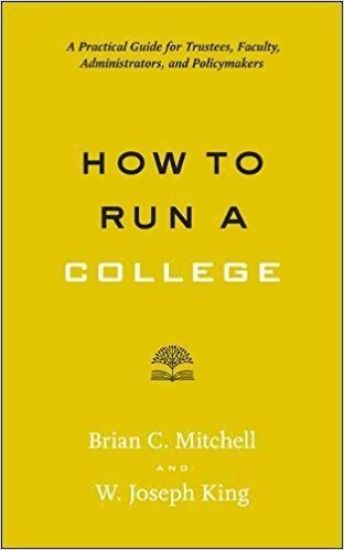
How can colleges stay relevant in the twenty-first century?Residential colleges are the foundation on which US higher education is based. These institutions possess storied traditions fondly cherished by students, alumni, and faculty. There is no denying, however, that all colleges today struggle with changing consumer preferences, high sticker prices, and aging infrastructure. Technological and pedagogical alternatives—not to mention growing political pressure—present complex challenges. What can colleges and smaller universities do to stay relevant in today’s educational and economic climate? In their concise guide, How to Run a College, Brian C. Mitchell and W. Joseph King analyze how colleges operate. Widely experienced as trustees, administrators, and faculty, they understand that colleges must update their practices, monetize their assets, and focus on core educational strategies in order to build strong institutions.Mitchell and King offer a frank yet optimistic vision for how colleges can change without losing their fundamental strengths. To survive and become sustainable, they must be centers of dynamic learning, as well as economic engines able to power regional, state, and national economies. Rejecting the notion that American colleges are holdovers from a bygone time, How to Run a College shows instead that they are centers of experimentation and innovation that heavily influence higher education not only in the United States but also worldwide.