

Kirjahaku
Etsi kirjoja tekijän nimen, kirjan nimen tai ISBN:n perusteella.
1000 tulosta hakusanalla C Jenkin
![C. Julii CÃ]saris Commentariorum De Bello Gallico Libr I. Ii (iii. Iv) Revised, With Intr., Notes, By G.b. Wheeler...](/covers/9781024896374.jpg)
C. Julii CÃ]saris Commentariorum De Bello Gallico Libr I. Ii (iii. Iv) Revised, With Intr., Notes, By G.b. Wheeler...
Gaius Julius Caesar
Hutson Street Press
2025
sidottu
![C. Julii CÃ]saris Commentariorum De Bello Gallico Libr I. Ii (iii. Iv) Revised, With Intr., Notes, By G.b. Wheeler...](/covers/9781024900569.jpg)
C. Julii CÃ]saris Commentariorum De Bello Gallico Libr I. Ii (iii. Iv) Revised, With Intr., Notes, By G.b. Wheeler...
Gaius Julius Caesar
Hutson Street Press
2025
pokkari
The Principles Of English Grammar Applied To The Interpretation Of Scripture, By C.w.h
C W H; English Grammar
Hutson Street Press
2025
sidottu
The Principles Of English Grammar Applied To The Interpretation Of Scripture, By C.w.h
C W H; English Grammar
Hutson Street Press
2025
pokkari
![Algebra For Beginners [by C. Smith]. [with] Answers To](/covers/9781024947069.jpg)

C-130 E/H Loadmaster Tactical Checklist
Hutson Street Press
2025
sidottu

C-130 E/H Loadmaster Tactical Checklist
Hutson Street Press
2025
pokkari

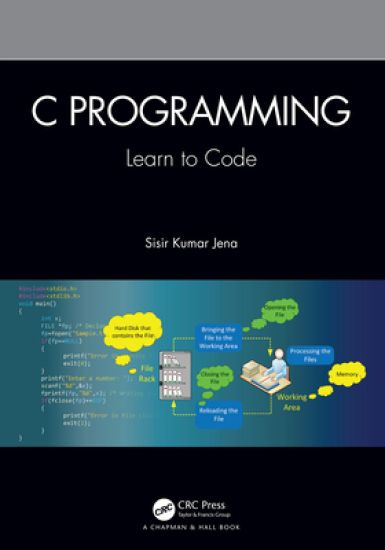
The C programming language is a popular language in industries as well as academics. Since its invention and standardized as ANSI C, several other standards known as C99, C11, and C17 were published with new features in subsequent years. This book covers all the traits of ANSI C and includes new features present in other standards. The content of this book helps a beginner to learn the fundamental concept of the C language. The book contains a step-by-step explanation of every program that allows a learner to understand the syntax and builds a foundation to write similar programs. The explanation clarity, exercises, and illustrations present in this book make it a complete textbook in all aspects.Features: Other than ANSI C, the book explains the new C standards like C99, C11, and C17. Most basic and easy-to-follow programs are chosen to explain the concepts and their syntax. More emphasis is given to the topics like Functions, Pointers, and Structures. Recursion is emphasized with numerous programming examples and diagrams. A separate chapter on the command-line argument and preprocessors is included that concisely explains their usage. Several real-life figures are taken to explain the concepts of dynamic memory allocation, file handling, and the difference between structure and union. The book contains more than 260 illustrations, more than 200 programs, and exercises at the end of each chapter.This book serves as a textbook for UG/PG courses in science and engineering. The researcher, postgraduate engineers, and embedded software developers can also keep this book as reference material for their fundamental learning.
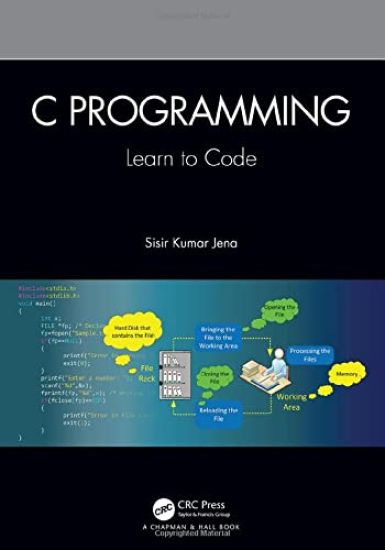
The C programming language is a popular language in industries as well as academics. Since its invention and standardized as ANSI C, several other standards known as C99, C11, and C17 were published with new features in subsequent years. This book covers all the traits of ANSI C and includes new features present in other standards. The content of this book helps a beginner to learn the fundamental concept of the C language. The book contains a step-by-step explanation of every program that allows a learner to understand the syntax and builds a foundation to write similar programs. The explanation clarity, exercises, and illustrations present in this book make it a complete textbook in all aspects.Features: Other than ANSI C, the book explains the new C standards like C99, C11, and C17. Most basic and easy-to-follow programs are chosen to explain the concepts and their syntax. More emphasis is given to the topics like Functions, Pointers, and Structures. Recursion is emphasized with numerous programming examples and diagrams. A separate chapter on the command-line argument and preprocessors is included that concisely explains their usage. Several real-life figures are taken to explain the concepts of dynamic memory allocation, file handling, and the difference between structure and union. The book contains more than 260 illustrations, more than 200 programs, and exercises at the end of each chapter.This book serves as a textbook for UG/PG courses in science and engineering. The researcher, postgraduate engineers, and embedded software developers can also keep this book as reference material for their fundamental learning.
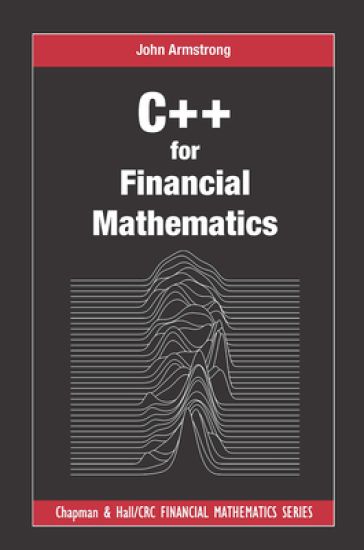
If you know a little bit about financial mathematics but don’t yet know a lot about programming, then C++ for Financial Mathematics is for you.C++ is an essential skill for many jobs in quantitative finance, but learning it can be a daunting prospect. This book gathers together everything you need to know to price derivatives in C++ without unnecessary complexities or technicalities. It leads the reader step-by-step from programming novice to writing a sophisticated and flexible financial mathematics library. At every step, each new idea is motivated and illustrated with concrete financial examples.As employers understand, there is more to programming than knowing a computer language. As well as covering the core language features of C++, this book teaches the skills needed to write truly high quality software. These include topics such as unit tests, debugging, design patterns and data structures. The book teaches everything you need to know to solve realistic financial problems in C++. It can be used for self-study or as a textbook for an advanced undergraduate or master’s level course.
Collected Works of C.G. Jung: Alchemical Studies (Volume 13)
C.G. Jung
TAYLOR FRANCIS LTD
2023
sidottu
The psychological and religious implications of alchemy were Jung's major preoccupation during the last thirty years of his life. The essays composing the present volume complete the publication of his alchemial researches, to which three entire volumes have been devoted ^DDL the monumental Mysterium Coniunctionis, Psychology and Alchemy, and Aion ^DDL besides shorter papers in other volumes.This collection of shorter Alchemial Studies has special value as an introduction to Jung's work on alchemy. The first study, on Chinese alchemy, marked the beginning of his interest in the subject, and was originally published in a volume written jointly with Richard Wilhelm. The other four are now published for the first time completely in English.
This bibliography records the initial publication of each original work by C.G. Jung, each translation, and significant revisions and expansions of both, up to 1975. In nearly every case, the compilers have examined the publications in German, French and English. Translations are recorded in Danish, Dutch, English, Finnish, French, Greek Hebrew, Hungarian, Italian, Japanese, Norwegian, Portuguese, Russian, Serbo-Croatian, Slovenian, Spanish, Swedish and Turkish. It is arranged according to language, with German and English first, publications being listed chronologically in each language.The General Bibliography lists the contents of the respective volumes of the Collected Works (of which this is Volume 19) and the Gesammelte Werke, published in Switzerland, and shows the interrelation of the two editions. It also lists Jung's seminars and provides, where possible, information about the origin of works that were first conceived as lectures. An index is provided of all the titles in English and German, and all original works in the other languages. Three specialist indexes, of personal names, organizations and societies and periodicals, complete the work.The publication of the General Bibliography, together with the General Index (Volume 20 of the Collected Works), complete the publication of the Collected Works of C.G. Jung in English.
THE COLLECTED WORKS OF C. G. JUNG: Mysterium Coniunctionis (Volume 14)
C.G. Jung
TAYLOR FRANCIS LTD
2023
sidottu
Mysterium Coniunctionis was first published in the Collected Works of C.G. Jung in 1963. For this second edition of the work, numerous corrections and revisions have been made in cross-references to other volumes of the Collected Works now available and likewise in the Bibliography.Mysterium Coniunctionis was Jung's last work of book length and gives a final account of his lengthy researches in alchemy. It was Jung's empirical discovery that certain key problems of modern man were prefigures in what t he alchemists called their 'art' or 'process'. Jung maintained that 'the world of alchemical symbols does not belong to the rubbish heap of the past, but stands in a very real and living relationship to our most recent discoveries concerning the psychology of the unconscious'. The volume includes ten plates, a Bibliography, an Index, and an Appendix of original Latin and Greek texts quoted in the work.
THE COLLECTED WORKS OF C. G. JUNG: Symbols of Transformation (Volume 5)
C.G. Jung
TAYLOR FRANCIS LTD
2023
sidottu
In 1911 Jung published a book of which he says: '...it laid down a programme to be followed for the next few decades of my life.' It was vastly erudite and covered innumerable fields of study: psychiatry, psychoanalysis, ethnology and comparitive religion amongst others. In due course it became a standard work and was translated into French, Dutch and Italian as well as English, in which language it was given the well-known but somewhat misleading title of The Psychology of the Unconscious.In the Foreword to the present revised edition which first appeared in 1956, Jung says: '...it was the explosion of all those psychic contents which could find no room, no breathing space, in the constricting atmosphere of Freudian psychology... It was an attempt, only partially successful, to create a wider setting for medical psychology and to bring the whole of the psychic phenomena within its purview.'For this edition, appearing ten years after the first, bibliographical citations and entries have been revised in the light of subsequent publications in the Collected Works and in the standard edition of Freud's works, some translations have been substituted in quotations, and other essential corrections have been made, but there have been no changes of substance in the text.