Title: The Hand of Destiny; or, the Life of Marianne ... Translated by Sir Gilbert Campbell, Bart.Publisher: British Library, Historical Print EditionsThe British Library is the national library of the United Kingdom. It is one of the world's largest research libraries holding over 150 million items in all known languages and formats: books, journals, newspapers, sound recordings, patents, maps, stamps, prints and much more. Its collections include around 14 million books, along with substantial additional collections of manuscripts and historical items dating back as far as 300 BC.The NOVELS OF THE 18th & 19th CENTURIES collection includes books from the British Library digitised by Microsoft. The collection includes major and minor works from a period which saw the development and triumph of the English novel. These classics were written for a range of audiences and will engage any reading enthusiast. ++++The below data was compiled from various identification fields in the bibliographic record of this title. This data is provided as an additional tool in helping to insure edition identification: ++++ British Library Carlet de Chamblain de Marivaux, Pierre; Campbell, Gilbert Edward; 1889.]. 160 p.; 8 . 12623.f.24.
This book contains over 25 years of genealogical research of the Carmon, Campbell and Fontenot Families of Southwest Louisiana. Louisa John, a former slave, mothered three sets of children. Her history as well as the histories of the fathers who parented the children were investigated. She had ten children and each has been chronicled with pictures, civil documents, interviews, church records, etc. in a concise narrative. As a number of generations have passed since her birth, she has had over 22,000 descendants as of 2016.
Why do we hurt the ones that love us the most?This isn't your typical Second Chance story. My name is Jaxson Campbell. I have been married to the love of my life for five years. We have an amazing daughter. Over the years, I have lost sight of what's important. I have been a terrible husband. After a life altering dream that everything in perspective, I know that if I don't get my act together, I will lose the best thing that has ever happened to me.This is story of how was given a second chance to be a good husband.This a short, safe, steamy read. Insta-love Valentine's Day romance. No cliffhangers. No cheating. Mild OW drama. If you believe in redemption stories, then this is for you. Warning: one mild dub-con scene.
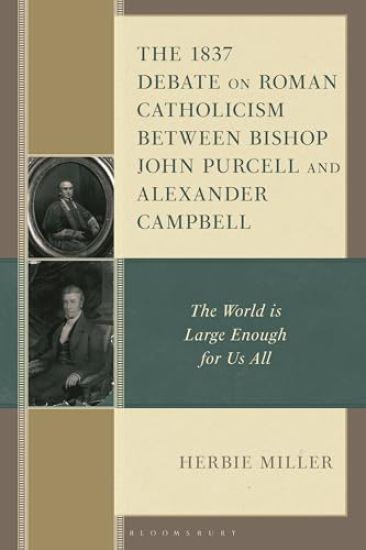
In January 1837, a remarkable event unfolded in a small Baptist church in Cincinnati, Ohio: the Catholic Bishop John Purcell and the Protestant minister Alexander Campbell engaged in a weeklong public debate that captivated the community. Against a backdrop of intense anti-Catholic sentiment in America, these two towering religious leaders participated in a civil yet passionate dialogue on theology, politics, and the role of Catholicism in America. Over seven propositions, they dissected contentious topics such as apostolic succession, the authority of Scripture, and the Catholic Church’s compatibility with American republicanism. This book delves into the story of this unprecedented debate, exploring its historical context, the lives of its participants, and its lasting impact on American religious discourse. More than a clash of ideologies, the debate became a “third space” where religious and cultural boundaries were crossed, fostering mutual respect and understanding. This book offers a compelling narrative of one of the most significant religious debates in American history, illustrating how two leaders with profound disagreements created a model of dialogue and civility that remains relevant today.
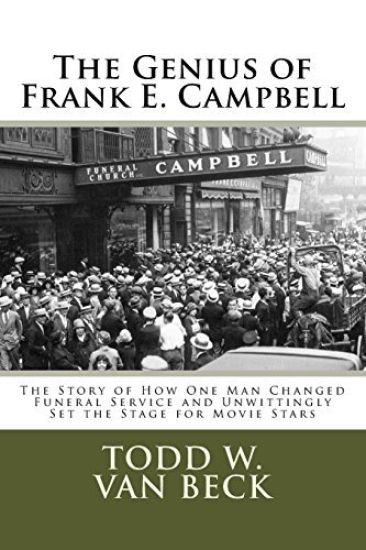
Talk about branding Frank E. Campbell. The name says it all, well at least with New Yorkers and funeral professionals around the world. Walk down any street in the boroughs of New York City and ask anybody you meet this questions, "Name a funeral home in Manhattan?" Chances are very good that the response will be, "Frank E. Campbell." This author was dining in the Oak Room at the Plaza Hotel in New York City several years ago and I asked the bartender "Do you know a funeral director in the "city"? He responded immediately without hesitation, "Sure, Frank E. Campbell." Now ask any funeral director, "Who is the most famous funeral director ever?" The response will most often be: Frank E. Campbell. Added to all this is that the policy of the New York Times, when they run obituaries of the rich and famous is to NOT mention specific funeral home names, unless the funeral is being conducted by Frank E. Campbell. The clientele of Frank E. Campbell reads like a veritable who's who of the rich and famous. Here is a very small idea of celebrity and social luminaries who have been cared for by Frank E. Campbell, The Funeral Chapel: Elizabeth Arden, Yul Brenner, James Cagney, Jacqueline Kennedy, Robert F. Kennedy, John Lennon, Judy Garland, J.C. Penny, Mae West, and of course Rudolph Valentino. Today the Frank E. Campbell building at 81st and Madison Avenue in Manhattan is very discrete and draws little attention to itself. The founder however, Frank E. Campbell was not discrete at times, and certainly was an expert at drawing attention to himself and his firm. Frank E. Campbell is still the reigning funeral home in Manhattan, but the man himself has been dead for over 80 years. It is time that his story be told, and what a story it is. We begin by asking some interesting questions. Who was Frank E. Campbell? How did he become a funeral director, and how did this one funeral director attract such a lustrous clientele? What was Frank E. Campbell like as a real live human being, and why was Mr. Campbell's remains not permanently buried until almost seventy five years after his death? This work attempts to answer these and a myriad of other questions about the life and career of Frank E. Campbell. In the annals of funeral service history it is generally conceded and accepted by students of the subject that one man Frank E. Campbell, Mortician (he himself preferred mortician to funeral director) produced one of the most profound and lasting impacts on American funeral service practices in the late 19th, and the early 20th century. This is a fascinating story about a famous funeral director