Kirjojen hintavertailu. Mukana 12 016 292 kirjaa ja 12 kauppaa.

Kirjahaku

Etsi kirjoja tekijän nimen, kirjan nimen tai ISBN:n perusteella.

1000 tulosta hakusanalla Chad Cramer

Environmental Decision-Making in Context

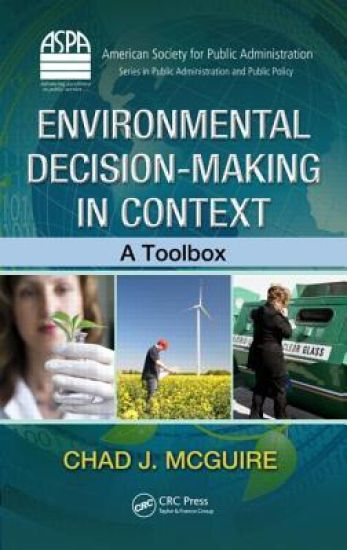
Environmental Decision-Making in Context

Chad J. McGuire

Routledge Member of the Taylor and Francis Group
2012
sidottu
Because of the complexity involved in understanding the environment, the choices made about environmental issues are often incomplete. In a perfect world, those who make environmental decisions would be armed with a foundation about the broad range of issues at stake when making such decisions. Offering a simple but comprehensive understanding of the critical roles science, economics, and values play in making informed environmental decisions, Environmental Decision-Making in Context: A Toolbox provides that foundation.The author highlights a primary set of intellectual tools from different disciplines and places them into an environmental context through the use of case study examples. The case studies are designed to stimulate the analytical reasoning required to employ environmental decision-making and ultimately, help in establishing a framework for pursuing and solving environmental questions, issues, and problems. They create a framework individuals from various backgrounds can use to both identify and analyze environmental issues in the context of everyday environmental problems.The book strikes a balance between being a tightly bound academic text and a loosely defined set of principles. It takes you beyond the traditional pillars of academic discipline to supply an understanding of the fundamental aspects of what is actually involved in making environmental decisions and building a set of skills for making those decisions.
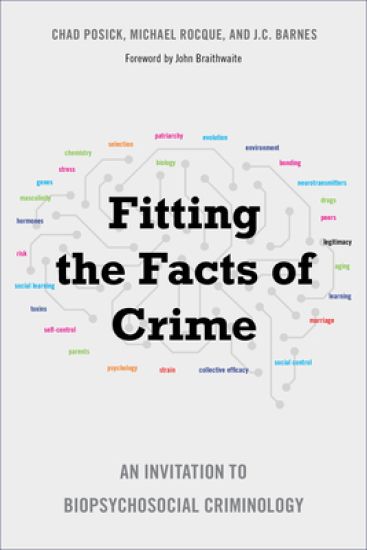
Fitting the Facts of Crime

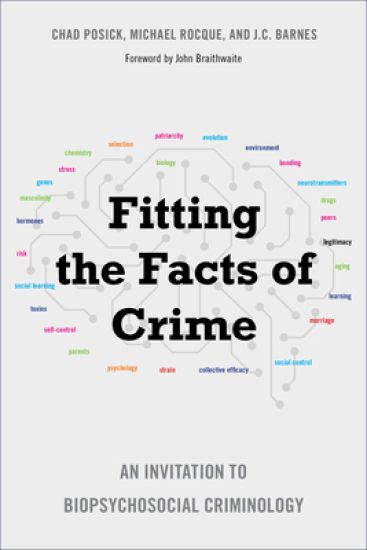
Fitting the Facts of Crime

Chad Posick; Michael Rocque; J.C. Barnes; John Braithwaite

Temple University Press,U.S.
2022
sidottu
Biosocial criminology-and biosocial criminologists-focuses on both the environmental and biological factors that contribute to antisocial behavior. Importantly, these two domains are not separate parts of an equation but pieces of the same puzzle that fit together for a complete picture of the causes of crime/antisocial behavior. Fitting the Facts of Crime applies a biopsychosocial lens to the “13 facts of crime” identified by John Braithwaite in his classic book, Crime, Shame and Reintegration. The authors unpack established facts-about gender and sex, age, environment, education, class, social bonds and associations, stress, and other influences-providing both empirical research and evidence from biopsychosocial criminology to address the etiology behind these facts and exactly how they are related to deviant behavior.With their approach, the authors show how biopsychosocial criminology can be a unifying framework to enrich our understanding of the most robust and well-established topics in the field. In so doing, they demonstrate how biological and psychological findings can be responsibly combined with social theories to lend new insight into existing inquiries and solutions. Designed to become a standard text for criminology in general, Fitting the Facts of Crime introduces key concepts and applies them to real-world situations.
Fitting the Facts of Crime

Fitting the Facts of Crime

Chad Posick; Michael Rocque; J.C. Barnes; John Braithwaite

Temple University Press,U.S.
2021
nidottu
Biosocial criminology-and biosocial criminologists-focuses on both the environmental and biological factors that contribute to antisocial behavior. Importantly, these two domains are not separate parts of an equation but pieces of the same puzzle that fit together for a complete picture of the causes of crime/antisocial behavior. Fitting the Facts of Crime applies a biopsychosocial lens to the “13 facts of crime” identified by John Braithwaite in his classic book, Crime, Shame and Reintegration. The authors unpack established facts-about gender and sex, age, environment, education, class, social bonds and associations, stress, and other influences-providing both empirical research and evidence from biopsychosocial criminology to address the etiology behind these facts and exactly how they are related to deviant behavior.With their approach, the authors show how biopsychosocial criminology can be a unifying framework to enrich our understanding of the most robust and well-established topics in the field. In so doing, they demonstrate how biological and psychological findings can be responsibly combined with social theories to lend new insight into existing inquiries and solutions. Designed to become a standard text for criminology in general, Fitting the Facts of Crime introduces key concepts and applies them to real-world situations.
I Can Do That - Furniture Projects

I Can Do That - Furniture Projects

Chad Stanton

Popular Woodworking Books
2018
nidottu
What do you do when you need furniture for a specific space or purpose in your home and nothing you find fits the bill? Build your own! This book is comprised of 20 furniture projects based on the popular I Can Do That method presented in Popular Woodworking's ICDT video series hosted by Chad Stanton. These projects look good, are well made, yet at the same time achievable for even a beginner with an inexpensive (but decent) set of tools. You'll find clear instructions with complete step-by-step photos, illustrations and cutting lists to help you every step of the way.
America's Addiction to Automobiles

America's Addiction to Automobiles

Chad Frederick

Praeger Publishers Inc
2017
sidottu
A provocative look at our nation's dependency on the automobile and how its potential impact on urban design will either make or break our health, economy, and quality of life.In this thought-provoking work, author and urban planning expert Chad Frederick scrutinizes the use of automobiles in cities, investigating its role in exacerbating urban inequalities and thwarting sustainability of modern society. Through a comprehensive, thoughtful discussion, Frederick illustrates how the automobile is fundamentally at odds with the very nature of cities. He shows how cars impose huge burdens on our health, equity, environment, local and national economy, and quality of life. Most of all, he shows how automobile dependency has put our entire society at risk. The book delves into the monumental role of automobiles in the development of cities after the Great Depression, impacting the American identity and affecting the way we produce and manage urban spaces. Frederick provides compelling evidence that cities with more diverse modes of transportation are greener, healthier, more prosperous, and even more enjoyable places to live than automobile-dependent cities. He identifies one institution responsible for our inability to improve our cities: the social sciences, and examines the root cause of our inability to make progress toward more multi-modal cities. In conclusion, the author offers a radical solution for moving beyond the underlying logic that forces us to create automobile-dependent cities.
A People's History of Environmentalism in the United States

A People's History of Environmentalism in the United States

Chad Montrie

Continuum Publishing Corporation
2011
sidottu
This book offers a fresh and innovative account of the history of environmentalism in the United States, challenging the dominant narrative in the field. In the widely-held version of events, the US environmental movement was born with the publication of Rachel Carson's Silent Spring in 1962 and was driven by the increased leisure and wealth of an educated middle class. Chad Montrie's telling moves the origins of environmentalism much further back in time and attributes the growth of environmental awareness to working people and their families. From the antebellum era to the end of the twentieth century, ordinary Americans have been at the forefront of organizing to save themselves and their communities from environmental harm. This interpretation is nothing short of a substantial recasting of the past, giving a more accurate picture of what happened, when, and why at the beginnings of the environmental movement.
Evil: A Guide for the Perplexed

Evil: A Guide for the Perplexed

Chad V. Meister

Continuum Publishing Corporation
2012
sidottu
One of the most perplexing problems facing believers in God is the problem of evil. The words of Epicurus put the point concisely: "Either God wants to abolish evil, and cannot; or he can, but does not want to. If he wants to, but cannot, he is impotent. If he can, but does not want to, he is wicked. If God can abolish evil, and God really wants to do it, why is there evil in the world?" This is a difficult problem to unpick and it remains an issue that continues to concern people and inspire debate. The problem has taken a variety of forms over the centuries; in fact, there are numerous "problems" of evil-problems for theists but, perhaps surprisingly, problems for non-theists as well. Evil: A Guide for the Perplexed explores, in a rigorous but engaging way, central challenges to religious belief raised by evil and suffering in the world as well as significant responses to them from both theistic and non-theistic perspectives.
Evil: A Guide for the Perplexed

Evil: A Guide for the Perplexed

Chad V. Meister

Continuum Publishing Corporation
2012
nidottu
This title explores challenges to religious belief raised by evil and suffering in the world as well as responses to them from both theistic and non-theistic perspectives. One of the most perplexing problems facing believers in God is the problem of evil. The words of Epicurus put the point concisely: 'Either God wants to abolish evil, and cannot; or he can, but does not want to. If he wants to, but cannot, he is impotent. If he can, but does not want to, he is wicked. If God can abolish evil, and God really wants to do it, why is there evil in the world'? This is a difficult problem to unpick and it remains an issue that continues to concern people and inspire debate. The problem has taken a variety of forms over the centuries; in fact, there are numerous 'problems' of evil - problems for theists but, perhaps surprisingly, problems for non-theists as well. "Evil: A Guide for the Perplexed" explores, in a rigorous but engaging way, central challenges to religious belief raised by evil and suffering in the world as well as significant responses to them from both theistic and non-theistic perspectives. "Continuum's Guides for the Perplexed" are clear, concise and accessible introductions to thinkers, writers and subjects that students and readers can find especially challenging. Concentrating specifically on what it is that makes the subject difficult to grasp, these books explain and explore key themes and ideas, guiding the reader towards a thorough understanding of demanding material.
A People's History of Environmentalism in the United States

A People's History of Environmentalism in the United States

Chad Montrie

Continuum Publishing Corporation
2011
nidottu
This title provides a fresh look at the history of environmentalism in the United States, challenging current thinking and presenting an innovative perspective. This book offers a fresh and innovative account of the history of environmentalism in the United States, challenging the dominant narrative in the field. In the widely-held version of events, the US environmental movement was born with the publication of Rachel Carson's Silent Spring in 1962 and was driven by the increased leisure and wealth of an educated middle class. Chad Montrie's account moves the origins of environmentalism much further back in time and attributes the growth of environmental awareness to working people. Autoworkers in Michigan and coal miners in Kentucky in the 1940s, and even antebellum mill girls and farmers, all took direct action to protest industrial waste in rivers, polluted air and the damage that strip mining was doing to the environment. They and countless common people drew on their own unique experiences to acquire a grasp of ecological principles, and act. This account is nothing short of a substantial recasting of the past, giving a more accurate picture of what happened, when and why at the beginnings of the environmental movement.
Hardware Based Packet Classification for High Speed Internet Routers

Hardware Based Packet Classification for High Speed Internet Routers

Chad R. Meiners; Alex X. Liu; Eric Torng

Springer-Verlag New York Inc.
2010
sidottu
Hardware Based Packet Classification for High Speed Internet Routers presents the most recent developments in hardware based packet classification algorithms and architectures. This book describes five methods which reduce the space that classifiers occupy within TCAMs; TCAM Razor, All-Match Redundancy Removal, Bit Weaving, Sequential Decomposition, and Topological Transformations. These methods demonstrate that in most cases a substantial reduction of space is achieved. Case studies and examples are provided throughout this book. About this book: • Presents the only book in the market that exclusively covers hardware based packet classification algorithms and architectures. • Describes five methods which reduce the space that classifiers occupy within TCAMs: TCAM Razor, All-Match Redundancy Removal, Bit Weaving, Sequential Decomposition, and Topological Transformations. • Provides case studies and examples throughout. Hardware Based Packet Classification for High Speed Internet Routers is designed for professionals and researchers who work within the related field of router design. Advanced-level students concentrating on computer science and electrical engineering will also find this book valuable as a text or reference book.
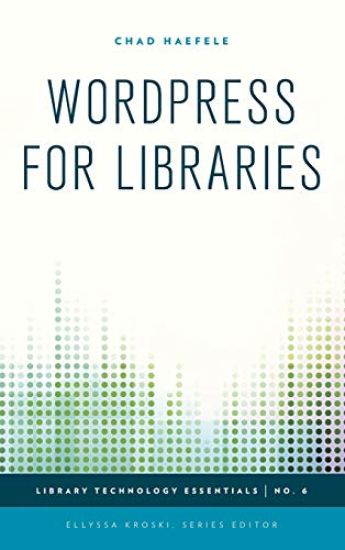
WordPress for Libraries

WordPress for Libraries

Chad Haefele

Rowman Littlefield
2015
sidottu
WordPress is not only the most popular blogging software in the world, but it is also a powerful content management system that runss more than 23 percent of all websites. The current version alone has been downloaded almost 20 million times, and the WordPress community has built more than 38,000 plugins to extend and enhance the system. Libraries are using this technology to create community-oriented websites, blogs, subject guides, digital archives, and more. This hands-on, practical book walks readers through the entire process of setting up a WordPress website for their library, provides tips and best practices for using themes and library-oriented plug-ins, and contains information on how to use WordPress to create nontraditional library websites. No matter your library’s size or resources, this all-in-one practical manual will show you how to improve your website by building it in WordPress through projects such as: ·How to Install and Use Common Plugins ·How to Install and Customize a Theme ·How to Build an Exhibit to Display an Image Collection ·How to Analyze and Manage Your Content in WordPress ·How to Create Re-Usable Chunks of Text With Shortcodes ·How to Build a Professional Library Website
WordPress for Libraries

WordPress for Libraries

Chad Haefele

Rowman Littlefield
2015
nidottu
WordPress is not only the most popular blogging software in the world, but it is also a powerful content management system that runs more than 23 percent of all websites. The current version alone has been downloaded almost 20 million times, and the WordPress community has built more than 38,000 plugins to extend and enhance the system. Libraries are using this technology to create community-oriented websites, blogs, subject guides, digital archives, and more. This hands-on, practical book walks readers through the entire process of setting up a WordPress website for their library, provides tips and best practices for using themes and library-oriented plug-ins, and contains information on how to use WordPress to create nontraditional library websites. No matter your library’s size or resources, this all-in-one practical manual will show you how to improve your website by building it in WordPress through projects such as: ·How to Install and Use Common Plugins ·How to Install and Customize a Theme ·How to Build an Exhibit to Display an Image Collection ·How to Analyze and Manage Your Content in WordPress ·How to Create Re-Usable Chunks of Text With Shortcodes ·How to Build a Professional Library Website