From the formal carvings of the nineteenth century to the colorful and informal plastic and glass examples of molded relief jewelry, this revised and expanded guide is the perfect reference for those on a search for cameos. Fourteen new designs are included in vibrant detail, along with values and tips that will assist today's shopper with appropriate cameo choice befitting their tastes and styles. See shell, stone, plastic, ivory, lava, glass, plastics, and metal cameos used in jewelry and ornamental objects. They were produced by inspired artists in fine detail using old-world crafting and are displayed here in full color. An excellent pocket guide reference for collectors or anyone who appreciates the simplicity and beauty of cameo designs.
In Theological Context for Pastoral Caregiving, Howard W. Stone helps his fellow pastors and worship leaders provide effective and faithful pastoral care and counseling through the study of the correlation between pastoral care and theology. You will learn that in order for pastoral care to be effective it must have a theological base to shape the caregiving experience. At the same time, theology must be informed by the needs and experiences of the people being served and by the ministry of pastoral care. By relating these two issues, you gain a unique viewpoint not offered by books with simply a psychological focus.The author draws from his day-to-day clinical practice of pastoral care and counseling to show how pastoral care and theology can be brought together. Through Howard Stone’s work, the reader learns of:an overview of pastoral care and counseling today how to provide a pastoral assessment of the persons served the author’s theological understanding of the ministry of pastoral care and counseling methods for correlating theology and pastoral care how spiritual direction as a discipline can help pastoral care and counseling ministry regain a solid theological base theological themes that might be more explicitly and intentionally related to pastoral careTheological Context for Pastoral Caregiving provides useful information for parish pastors, people in training to be parish pastors, and specialists in the field of pastoral care counseling. As one of the easiest-to-read books on this subject, it can also be used as a text for graduate-level classes in courses such as Theology and Pastoral Care, Pastoral Theology, and Practical Theology. With this book, seminary students will finally be able to relate the practical things learned in pastoral counseling classes with what is learned in theology classes.
In Theological Context for Pastoral Caregiving, Howard W. Stone helps his fellow pastors and worship leaders provide effective and faithful pastoral care and counseling through the study of the correlation between pastoral care and theology. You will learn that in order for pastoral care to be effective it must have a theological base to shape the caregiving experience. At the same time, theology must be informed by the needs and experiences of the people being served and by the ministry of pastoral care. By relating these two issues, you gain a unique viewpoint not offered by books with simply a psychological focus.The author draws from his day-to-day clinical practice of pastoral care and counseling to show how pastoral care and theology can be brought together. Through Howard Stone’s work, the reader learns of:an overview of pastoral care and counseling today how to provide a pastoral assessment of the persons served the author’s theological understanding of the ministry of pastoral care and counseling methods for correlating theology and pastoral care how spiritual direction as a discipline can help pastoral care and counseling ministry regain a solid theological base theological themes that might be more explicitly and intentionally related to pastoral careTheological Context for Pastoral Caregiving provides useful information for parish pastors, people in training to be parish pastors, and specialists in the field of pastoral care counseling. As one of the easiest-to-read books on this subject, it can also be used as a text for graduate-level classes in courses such as Theology and Pastoral Care, Pastoral Theology, and Practical Theology. With this book, seminary students will finally be able to relate the practical things learned in pastoral counseling classes with what is learned in theology classes.
Ministry With the Aging--the one most frequently used textbook in seminary courses that deal with ministry and aging--is now available from The Haworth Press. Here is a genuinely useful and informative text in which an all-star cast of authors reflects on the current situation of the aged in our society. Ministry With the Aging encourages a deeper appreciation of the presence and role of aging people with contemporary religion, addresses the challenges that the church and society face in a rapidly aging society, and provides practical applications for an effective ministry with the aging. Each chapter, whether it focuses on the role of the elderly in the early church, death and dying, ageism, retirement, or caring for elderly parents, is written by an eminent scholar who has chosen only the most relevant issues for discussion. A past runner up for the “Book of the Year Award” by the Academy of Parish Clergy, Ministry With the Aging is a landmark volume that can offer theology students a unique and insightful look at how they can best meet the needs of their elderly parishioners.
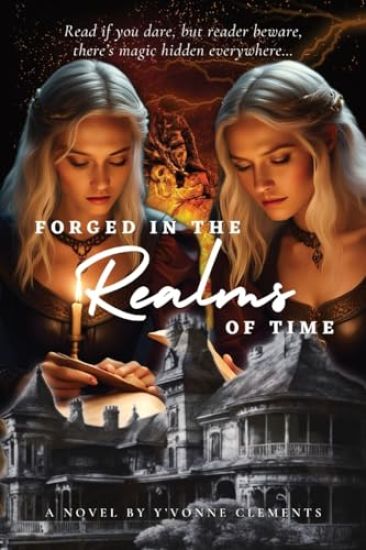
In this captivating fantasy novel, 'Forged In The Realms of Time, ' readers are introduced to Hannah, and her best friend Shelly, who are chosen by the enigmatic Esmeralda to receive a mysterious gift - a set of bracelets. These bracelets, unbeknownst to the girls, hold incredible power, setting them on a thrilling and perilous journey. Esmeralda saw something special in Hannah and Shelly, a unique strength and potential that made them the perfect candidates for this extraordinary gift. As the girls delve deeper into the secrets of the bracelets, they uncover their true potential and the destiny that awaits them. With each twist and turn, Hannah and Shelly must navigate a world filled with magic, danger, and unexpected allies. Will they unlock the full extent of the bracelets' power and fulfil their destiny, or will they succumb to the forces that seek to control them?
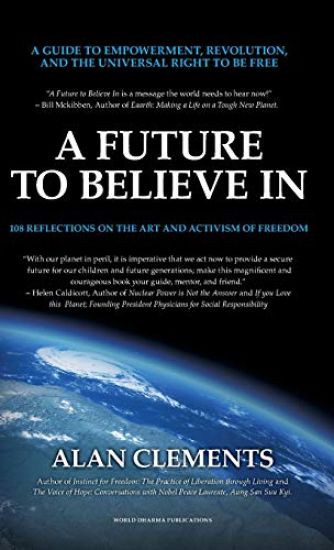
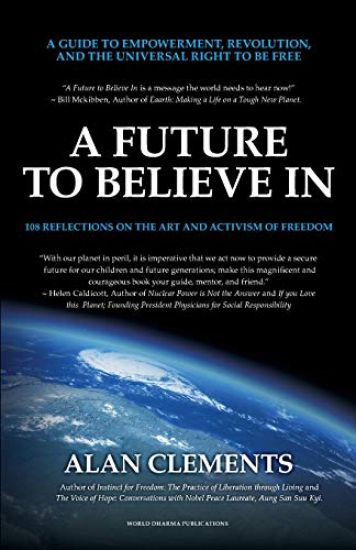
"This book should be made mandatory world-wide for all heads of state." Lissa Wolsak, Author of In Defense of Being."A Future to Believe In is a message the world needs to hear now " Bill McKibben, Author of Earth: Making a Life on a Tough New Planet.After four years in creation, Alan Clements brings us a visionary new book, A Future to Believe In: 108 Reflections On the Art and Activism of Freedom. In it he weaves the wisdom of hundreds of the world's most creative and courageous thinkers - artists, activists, scientists, and risk-takers - in with his own most compelling life-lessons, questions, and discoveries, from his forty-year long pursuit of truth and freedom - an epic journey of world travel, spiritual exploration, scholarly study and political activism, that has taken him from the sacredness of monastic silence deep into the dark heart of war zones.An iconoclastic blend of radical cultural commentary, edgy political punditry and provocative life-inquiry, this field guide for revolutionaries, and a model for a new society, is designed to liberate the human spirit - igniting gutsy transformation in one's daily life and nonviolent political change around the world. Burma's Nobel Peace laureate, Aung San Suu Kyi, with whom Clements co-authored the acclaimed book of conversations, The Voice of Hope, calls this global movement a revolution of the spirit or the awakening of a new language of freedom. By fearlessly fusing timeless spiritual values with nonviolent political actions, we can unite and co-create a future to believe in."Alan Clements' magnificent book provides a courageous and intelligent compass personifying our aspirations for freedom and wisdom, and in so doing, offers insights on how to shape a future that gives life hope; make this book your guide, mentor and friend." Dr Helen Caldicott, Author of Nuclear Power is Not the Answer and If you Love this Planet, Founding President Physicians for Social Responsibility."In this radiant book is a new consciousness." Lowry Burgess, artist, professor, creator of the first official Non-Scientific Art Payload taken into outer space by NASA in 1989."This book provides the essential wisdom - the spiritual intelligence - to learn to listen to the planet, to life - the core intelligence of nature and the human heart." Derrick Jensen, Author of Culture of Make Believe."A Future to Believe In is a treasure, not a mere book." Paul Hawken, Author of Blessed Unrest. "At a time when the contemporary spiritual landscape has become dangerously gentrified and domesticated, Alan Clements restores us to our senses - wild and elemental. He summons the voices of those who, along side him, have not traded their souls for the market-driven need to be tame or acceptable, and points us to the wilderness of true, engaged, fiercely authentic awakening. This is why we are alive--to set freedom free, in ourselves and for others, in every aspect of our lives from the most mundane daily task, to the most profound political act." Kelly Wendorf, author and editor Stories of Belonging"This book is the music of wisdom, a dance with the finest places of the human heart. You will want to keep this timeless treasure within reach, so you can open it to any page, and let a paragraph or a line ignite you again to the truth of your own being." Joanna Macy, Buddhist teacher, activist and author of World as Lover, World As Self.
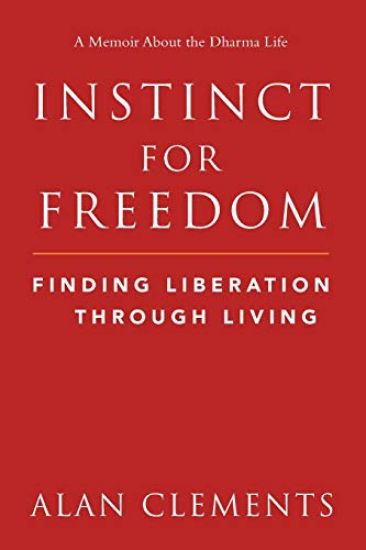
Alan Clements is an author, activist, performing artist and one of the first Americans to become a Buddhist monk in the country of Burma (Myanmar), where he lived for years training in intensive mindfulness meditation and existential Buddhist psychology. Since leaving Burma, he has become a spiritual maverick, working for global human rights and sharing his contemporary understanding of liberation to audiences around the world.After decades of leading retreats, Instinct for Freedom is radical book of personal and planetary exploration, a visionary blend of adventurous autobiography, self-inquiry and independent thinking. Here Alan presents what he calls World Dharma, an approach to personal development that mirrors the narrative of his visionary life. He gives voice to an essential calling that is common to all people -- a world dharma based in one precious human value: freedom, the liberation from fear, ignorance and dogma, and the elevation of dignity, conscience, and beauty.For Clements, freedom is rooted in real life experience, in holding life's complexities in balance with its wondrous gifts, and in the transformational power of relationships with other people and with the world. Exploring the nature of consciousness and our place in the mysterious cosmos may be the key to our freedom, he says. In detailing the early years of his Dharma life living in silence in a Burmese monastery, Clements presents a rare, beautiful, and nuanced account of the actual experience of intensive mindfulness meditation and what it can offer. Yet Clements's approach is not a doctrine. It is an intuitive process realized through deep inner trust, gentle self-inquiry and naturalness of spirit and expresses itself in daily acts of courage and love. No amount of spiritual practice or meditative training can adequately prepare us for life, he says. We must find our liberation through living in love, in this very moment, now, in whatever circumstances we face. Clements has been interviewed on ABC National, Talk to America, CBC, VOA, BBC, the New York Times, Time and Newsweek magazines, the Sydney Morning Herald, Utne Reader, Yoga Journal, and scores of other media worldwide. He also delivered a keynote at Amnesty International's 30th Year Anniversary at the John Ford Theater in LA. You can learn more about Alan's work on his website: www.AlanClements.com."Alan's life is material for a legend. An intellectual artist, freedom fighter, former Buddhist monk, he shares his insights and experience with a passion rarely seen and even more rarely lived. He'll make you think and feel in ways that challenge your entire way of being." -- Catherine Ingram, In the Footsteps of Gandhi and Passionate Presence
"This book should be made mandatory world-wide for all heads of state." Lissa Wolsak, Author of In Defense of Being."A Future to Believe In is a message the world needs to hear now " Bill McKibben, Author of Earth: Making a Life on a Tough New Planet.After four years in creation, Alan Clements brings us a visionary new book, A Future to Believe In: 108 Reflections On the Art and Activism of Freedom. In it he weaves the wisdom of hundreds of the world's most creative and courageous thinkers - artists, activists, scientists, and risk-takers - in with his own most compelling life-lessons, questions, and discoveries, from his forty-year long pursuit of truth and freedom - an epic journey of world travel, spiritual exploration, scholarly study and political activism, that has taken him from the sacredness of monastic silence deep into the dark heart of war zones.An iconoclastic blend of radical cultural commentary, edgy political punditry and provocative life-inquiry, this field guide for revolutionaries, and a model for a new society, is designed to liberate the human spirit - igniting gutsy transformation in one's daily life and nonviolent political change around the world. Burma's Nobel Peace laureate, Aung San Suu Kyi, with whom Clements co-authored the acclaimed book of conversations, The Voice of Hope, calls this global movement a revolution of the spirit or the awakening of a new language of freedom. By fearlessly fusing timeless spiritual values with nonviolent political actions, we can unite and co-create a future to believe in."Alan Clements' magnificent book provides a courageous and intelligent compass personifying our aspirations for freedom and wisdom, and in so doing, offers insights on how to shape a future that gives life hope; make this book your guide, mentor and friend." Dr Helen Caldicott, Author of Nuclear Power is Not the Answer and If you Love this Planet, Founding President Physicians for Social Responsibility."In this radiant book is a new consciousness." Lowry Burgess, artist, professor, creator of the first official Non-Scientific Art Payload taken into outer space by NASA in 1989."This book provides the essential wisdom - the spiritual intelligence - to learn to listen to the planet, to life - the core intelligence of nature and the human heart." Derrick Jensen, Author of Culture of Make Believe."A Future to Believe In is a treasure, not a mere book." Paul Hawken, Author of Blessed Unrest. "At a time when the contemporary spiritual landscape has become dangerously gentrified and domesticated, Alan Clements restores us to our senses - wild and elemental. He summons the voices of those who, along side him, have not traded their souls for the market-driven need to be tame or acceptable, and points us to the wilderness of true, engaged, fiercely authentic awakening. This is why we are alive--to set freedom free, in ourselves and for others, in every aspect of our lives from the most mundane daily task, to the most profound political act." Kelly Wendorf, author and editor Stories of Belonging"This book is the music of wisdom, a dance with the finest places of the human heart. You will want to keep this timeless treasure within reach, so you can open it to any page, and let a paragraph or a line ignite you again to the truth of your own being." Joanna Macy, Buddhist teacher, activist and author of World as Lover, World As Self.
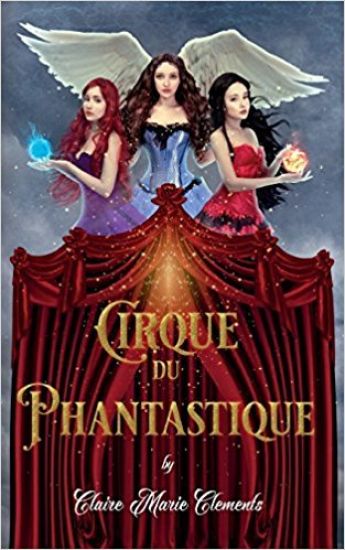
The Ringmaster had been through this routine many times before, seeing his troupe nervously waiting around him, bursting to get onto the stage, hungry for an audience, hearts beating fast, blood rushing through their quivering, rubber-like bodies. And yet, every time, his heart swelled with pride and happiness, at his little band of travellers, all bonded by the same insatiable, overwhelming, seductive desire: the desire to entertain....Alain nodded to Fenton and the dwarf opened the velvet dividers that separated two very different worlds. Blinded by the dazzling lights, surrounded by applause, Alain du Maurier stepped forward and began the show in his rich seductive tones. "Ladies and Gentlemen, welcome to Cirque du Phantastique."The show is a success and the next day Cirque du Phantastique leave their manor in Varatale to embark on their annual tour; a tour which takes them through ten very different worlds. As they travel from city to city, however, it becomes clear that this tour will be quite different from previous years and will test the strength of each troupe member as well as their relationships with each other. Batlling everything from an Australian heatwave to a tyrant in a frozen world, the perils that come with being labelled an outcast, and ultimately a colourless monster, who forces them into a multi-universal game of cat and mouse, Alain du Maurier and his loveable band of misfits must fight to save themselves and the lives of those around them, all while continuing to entertain their loyal audiences.For the show must always go on.
This work has been selected by scholars as being culturally important and is part of the knowledge base of civilization as we know it.This work is in the public domain in the United States of America, and possibly other nations. Within the United States, you may freely copy and distribute this work, as no entity (individual or corporate) has a copyright on the body of the work.Scholars believe, and we concur, that this work is important enough to be preserved, reproduced, and made generally available to the public. To ensure a quality reading experience, this work has been proofread and republished using a format that seamlessly blends the original graphical elements with text in an easy-to-read typeface.We appreciate your support of the preservation process, and thank you for being an important part of keeping this knowledge alive and relevant.
This work has been selected by scholars as being culturally important and is part of the knowledge base of civilization as we know it.This work is in the public domain in the United States of America, and possibly other nations. Within the United States, you may freely copy and distribute this work, as no entity (individual or corporate) has a copyright on the body of the work.Scholars believe, and we concur, that this work is important enough to be preserved, reproduced, and made generally available to the public. To ensure a quality reading experience, this work has been proofread and republished using a format that seamlessly blends the original graphical elements with text in an easy-to-read typeface.We appreciate your support of the preservation process, and thank you for being an important part of keeping this knowledge alive and relevant.