Kirjojen hintavertailu. Mukana 12 083 983 kirjaa ja 12 kauppaa.

Kirjahaku

Etsi kirjoja tekijän nimen, kirjan nimen tai ISBN:n perusteella.

1000 tulosta hakusanalla Conley E. Murray

Wiley Pathways Network Security Fundamentals

Wiley Pathways Network Security Fundamentals

Eric Cole; Ronald L. Krutz; James Conley; Brian Reisman; Mitch Ruebush; Dieter Gollmann

John Wiley Sons Inc
2008
nidottu
You can get there Whether you're already working and looking to expand your skills in the computer networking and security field or setting out on a new career path, Network Security Fundamentals will help you get there. Easy-to-read, practical, and up-to-date, this text not only helps you learn network security techniques at your own pace; it helps you master the core competencies and skills you need to succeed. With this book, you will be able to: * Understand basic terminology and concepts related to security * Utilize cryptography, authentication, authorization and access control to increase your Windows, Unix or Linux network's security * Recognize and protect your network against viruses, worms, spyware, and other types of malware * Set up recovery and fault tolerance procedures to plan for the worst and to help recover if disaster strikes * Detect intrusions and use forensic analysis to investigate the nature of the attacks Network Security Fundamentals is ideal for both traditional and online courses. The accompanying Network Security Fundamentals Project Manual ISBN: 978-0-470-12798-8 is also available to help reinforce your skills. Wiley Pathways helps you achieve your goals The texts and project manuals in this series offer a coordinated curriculum for learning information technology. Learn more at www.wiley.com/go/pathways.

Wiley Pathways Network Security Fundamentals Project Manual

Wiley Pathways Network Security Fundamentals Project Manual

Eric Cole; Ronald L. Krutz; James Conley; Brian Reisman; Mitch Ruebush; Dieter Gollman; Rachelle Reese

John Wiley Sons Inc
2008
nidottu
You can get there The Network Security Fundamentals Project Manual offers a wealth of easy-to-read, practical, and up-to-date activities that reinforce fundamental network security concepts. You will develop the core competencies and skills you'll need in the real world, including how to: * Install Network Monitor and capture traffic * Encrypt files using folder properties and the cipher command * Install and use Certificate Services * Configure an IPsec policy that requires authentication and encryption * Use RSoP to view effective policy settings * Configure Automatic Updates using the System utility and Group Policy * Choose an IDS and position it on a network With five to seven projects per chapter ranging from easy to more advanced, the Network Security Fundamentals Project Manual is ideal for both traditional and online courses and is an excellent companion to Cole's Network Security Fundamentals ISBN: 978-0-470-10192-6. Wiley Pathways helps you achieve your goals The texts and project manuals in this series offer a coordinated curriculum for learning information technology. Learn more at www.wiley.com/go/pathways.
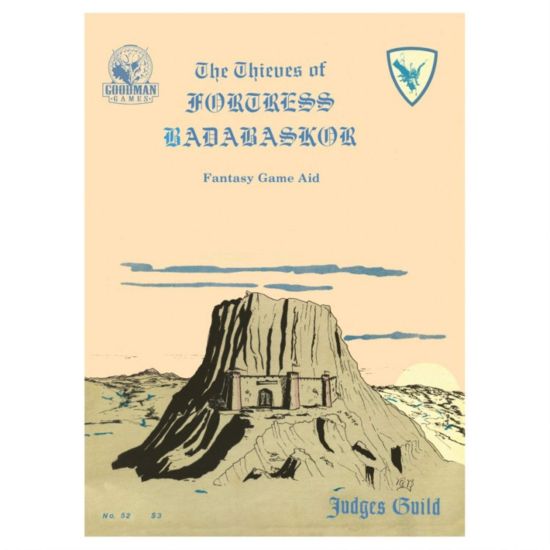
Thieves of Fortress Badabaskor

Thieves of Fortress Badabaskor

Bob Bledsaw; Marc Summerlott; Mike Petrowsky; Craig Fogel; Bill Owen; Tony Floren; Robert Conley

Goodman Games
2024
nidottu
Reprinting the classic adventure from Judges Guild An adventure in the wilderness stronghold of a band of brigands that includes the background and statistics of an evil local deity, plus history, maps, and keyed room descriptions of a five-level dungeon carved out of the side of a mountain. The first three levels are fairly easy and suitable for breaking in new and inexperienced players; but the lower two are far tougher, and include a cavern that has a series of four dragon dens, indicative of the difficulty of the lower levels.
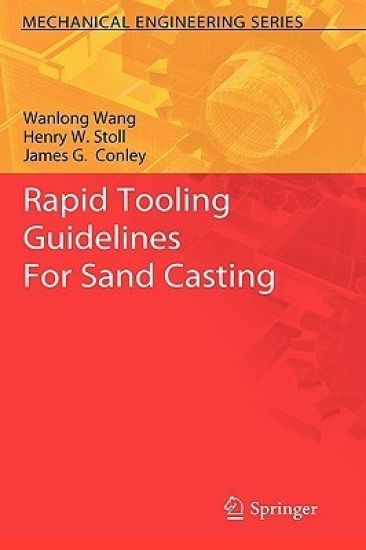
Rapid Tooling Guidelines For Sand Casting

Rapid Tooling Guidelines For Sand Casting

Wanlong Wang; Henry W. Stoll; James G. Conley

Springer-Verlag New York Inc.
2010
sidottu
Rapid Tooling Guidelines for Sand Casting describes the guidelines for the sand casting industry in using rapid tooling processes. Topics in the seven chapters include sand casting processes, tool design and construction, fast freeform fabrication processes, rapid tooling processes, sand casting dimension control, rapid tooling evaluation methods and decision making processes. Twelve case studies will also be examined in the book.
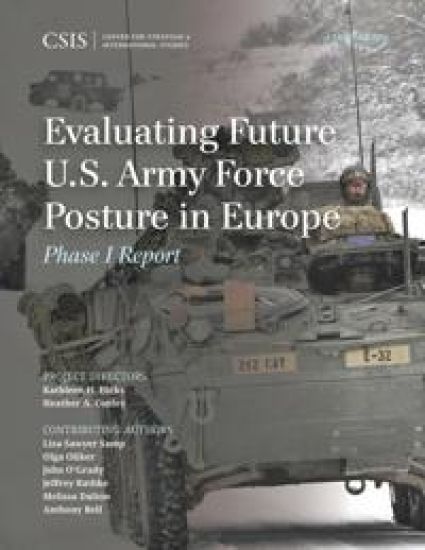
Evaluating Future U.S. Army Force Posture in Europe

Evaluating Future U.S. Army Force Posture in Europe

Kathleen H. Hicks; Heather A. Conley

Centre for Strategic International Studies,U.S.
2016
nidottu
This report offers a reexamination of U.S. Army posture in Europe amid heightened tensions between the United States and Russia over the geopolitical orientation of Ukraine. This study reviews Russian military capabilities; considers alternative U.S. force posture arrangements; assesses how to determine whether assurance and deterrence goals are being met; and offers concrete recommendations in order to optimize the U.S. Army’s presence in Europe to deter Russian aggression against the most vulnerable NATO members.
Rapid Tooling Guidelines For Sand Casting

Rapid Tooling Guidelines For Sand Casting

Wanlong Wang; Henry W. Stoll; James G. Conley

Springer-Verlag New York Inc.
2012
nidottu
Rapid Tooling Guidelines for Sand Casting describes the guidelines for the sand casting industry in using rapid tooling processes. Topics in the seven chapters include sand casting processes, tool design and construction, fast freeform fabrication processes, rapid tooling processes, sand casting dimension control, rapid tooling evaluation methods and decision making processes. Twelve case studies will also be examined in the book.
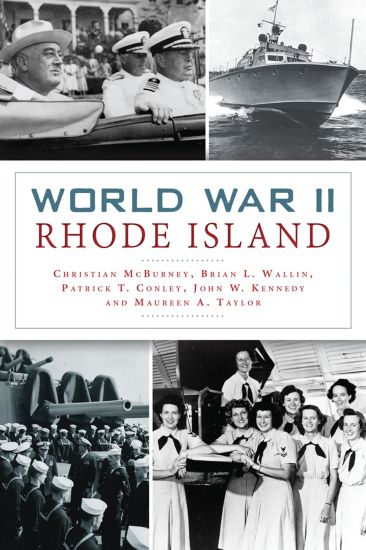
World War II Rhode Island

World War II Rhode Island

Christian McBurney; Brian L. Wallin; Patrick T. Conley

History Press
2017
nidottu
Rhode Island's contribution to World War II vastly exceeded its small size.Narragansett Bay was an armed camp dotted by army forts and navy facilities. They included the country's most important torpedo production and testing faciliti
Writers After Dark

Writers After Dark

Jennifer Innes; Elsa Russo; Patrick J. Conley

Createspace Independent Publishing Platform
2014
nidottu
So many stories never see the light of day, often because they address topics that are taboo or risqu . The Athens Writers Association presents this captivating collection of stories and poetry that highlight those conversations we tend to shy away from in the daylight. This inaugural publication includes local writers exploring aspects of our world that haunt us all but feel more appropriate to discuss After Dark.
Bitch Planet: Triple Feature Volume 1

Bitch Planet: Triple Feature Volume 1

Kelly Sue DeConnick; Cheryl Lynn Eaton; Andrew Aydin; Conley Lyons

Image Comics
2017
nidottu
DECONNICK & DE LANDRO PRESENT: The Triple Feature! Ripped directly from the world of BITCH PLANET, a crack team of creators spin fifteen teeth-clenching tales of rage, revolution and ridicule. Patriarchy beware...this scifi kidney punch can't be stopped...! 100% Grade A satire. Accept no substitutes.Featuring writers CHERYL LYNN EATON, ANDREW AYDIN, CONLEY LYONS, CHE GRAYSON, DANIELLE HENDERSON, JORDAN CLARK, ALISSA SALLAH, DYLAN MECONIS, KIT COX, MARC DESCHAMPS, SARA WOOLLEY, VITA AYALA, JON TSUEI & MORE! With art by creators MARIA FRÖHLICH, JOANNA ESTEP, CRAIG YEUNG, SHARON LEE DE LA CRUZ, TED BRANDT, RO STEIN, NAOMI FRANQUIZ, ALEC VALERIUS, DYLAN MECONIS, VANESA R. DEL REY, MINDY LEE, SARA WOOLLEY, ROSSI GIFFORD & MORE!Collects issues 1-5.
World War II Rhode Island

World War II Rhode Island

Christian McBurney; Brian L. Wallin; Patrick T. Conley

History Press Library Editions
2017
sidottu
Rhode Island's contribution to World War II vastly exceeded its small size. Narragansett Bay was an armed camp dotted by army forts and navy facilities. They included the country's most important torpedo production and testing facilities at Newport and the Northeast's largest naval air station at Quonset Point. Three special, top-secret German POW camps were based in Narragansett and Jamestown. Meanwhile, Rhode Island workers from all over the state--including, for the first time, many women--manufactured military equipment and built warships, most notably the Liberty ships at Providence Shipyard. Authors from the Rhode Island history blog smallstatebighistory.com trace Rhode Island's outsized wartime role, from the scare of an enemy air raid after Pearl Harbor to the war's final German U-boat sunk off Point Judith.
Aboard the Fabre Line to Providence: Immigration to Rhode Island

Aboard the Fabre Line to Providence: Immigration to Rhode Island

William J. Jennings Jr; Patrick T. Conley

History Press
2013
nidottu
In an era when immigration was at its peak, the Fabre Line offered the only transatlantic route to southern New England. One of its most important ports was in Providence, Rhode Island. Nearly eighty-four thousand immigrants were admitted to the country between the years 1911 and 1934. Almost one in nine of these individuals elected to settle in Rhode Island after landing in Providence, amounting to around eleven thousand new residents. Most of these immigrants were from Portugal and Italy, and the Fabre Line kept up a brisk and successful business. However, both the line and the families hoping for a new life faced major obstacles in the form of World War I, the immigration restriction laws of the 1920s, and the Great Depression. Join authors Patrick T. Conley and William J. Jennings Jr. as they chronicle the history of the Fabre Line and its role in bringing new residents to the Ocean State.
The Influence of Chemistry on New Foods and Traditional Products

The Influence of Chemistry on New Foods and Traditional Products

Giampiero Barbieri; Caterina Barone; Arpan Bhagat; Giorgia Caruso; Zachary Ryan Conley; Salvatore Parisi

Springer International Publishing AG
2014
nidottu
This Brief concerns the influence of chemistry in the modern food and beverages industry. The world of traditional foods has been soundlessly but increasingly interconnected with the chemical industry in the last century. Different areas are considered in a multidisciplinary approach: - the production of chemical additives and of non-food components needed in the food industry (e.g. packaging materials)- the regulatory perspective of the whole food production chain - commercialization of food commodities- the problem of food safety from the viewpoint of official auditors with medical or veterinarian competencies- new and emerging risks related to food packaging materials- the assessment of the authenticity of edible products. This Brief includes different viewpoints, ranging from the management of allergens and food additives in the food plant to the complex matter of the formulation of traditional products with the consequent production of “alternative” versions of the same food.
Wellness Counseling

Wellness Counseling

Jonathan H. Ohrt; Philip B. Clarke; Abigail H. Conley

American Counseling Association
2019
pokkari
This innovative text presents a comprehensive review of the theoretical and empirical support for a wellness approach to counseling with current techniques for client assessment, case conceptualization, treatment planning, and intervention. The authors provide holistic strategies for wellness promotion with children, adolescents, and young, midlife, and older adults, as well as in counseling with groups, couples, and families. Each chapter includes reflection questions, learning activities, and resources to deepen readers' understanding of the content and application to practice. Wellness boosters offer quick methods for clients and counselors to increase their domain-specific and overall well-being. In addition, experienced counselors share their personal experiences implementing wellness interventions in "Practitioner Spotlight" vignettes. A chapter on counselor self-care completes the book.
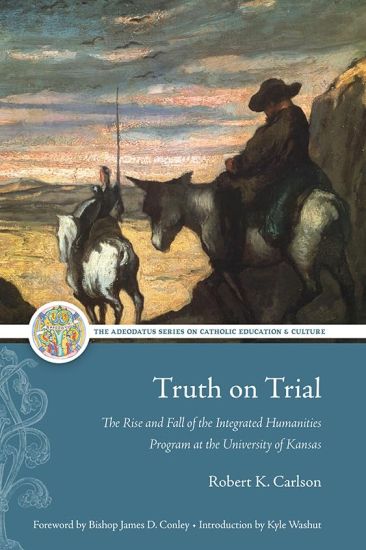
Truth on Trial

Truth on Trial

Robert K. Carlson; James D. Conley

THE CATHOLIC UNIVERSITY OF AMERICA PRESS
2026
pokkari
In this reprinting of Truth on Trial, Robert Carlson outlines the sad state of higher education in America, where "learning" is increasingly disconnected from the pursuit of truth, goodness, and beauty that has always been its most important heritage, replaced by an environment where any view that is not ‘politically correct’ is persecuted and disdained. Drawing upon his own experiences in the transformational Integrated Humanities Program (IHP) at the University of Kansas (KU), Carlson details the crisis that faces education today, and uses the lessons learned through that program’s meteoric rise (and eventual demise) to propose a solution to that same crisis. Launching in the early 1970’s, the IHP was the "Great Books" brainchild of a trio of KU professors—Dennis Quinn, Franklyn Nelick, and John Senior—who understood that wonder is not only the beginning but also the sustaining principle of the best education, and who sought to offset the radical disintegration permeating Western culture in general and higher education in particular. Convinced that the fragmentation of such major cultural institutions as the family, the church, and the world of education was profoundly affecting students, these three teachers invited freshmen and sophomores at the public university to join their fledgling program, where they would study, hear, and discuss the classics of ancient and medieval literature, listen to their professors converse on "the greatest that has been thought and said," memorize poems, stargaze, take courses in Latin and rhetoric, and much more. The program’s growth was immediate and rapid—student enrollment increased from 20 in 1970 to 140 in 1971, and 186 in 1972—but its counter-cultural stance put it on fragile ground at KU, and within a year, it was under intense scrutiny, culminating in a public, quasi-judicial proceeding in which a dean-appointed committee sought to determine whether the IHP should continue to exist. Quinn, Nelick, and Senior, professors with a combined total of 90 years in teaching, were now on trial at the university, not because they had taught poorly, but because they had taught too well. On January 20, 1979, the Advisory Committee charged with investigating the Program rendered its verdict, placing it under the administration of a new Humanities Committee, effectively annihilating the IHP. While its initial trial felt like a defeat, God had other plans in store. Thankfully (and to paraphrase Twain’s famous words), the effects of the IHP’s death were greatly exaggerated. In the years since its untimely demise on the KU campus, its impact on the world of Catholic education has only grown stronger—the fruitfulness of its alumni and friends serving as the ultimate proof of its vision’s great worth. Since the program’s closing in 1979, it has inspired the founding of both Clear Creek Abbey and Wyoming Catholic College, as well as St. Gregory’s Academy in Pennsylvania (which eventually led to Gregory the Great Academy), and St. Martin’s Academy in Kansas. Perhaps most tellingly of all, its clear call to make wonder, beauty, and experience vital parts of any educational program has impacted countless homeschooling families, private and public school teachers, and educational programs in the subsequent years.
Hypoxia in the Northern Gulf of Mexico

Hypoxia in the Northern Gulf of Mexico

Virginia H. Dale; Catherine L. Kling; Judith L. Meyer; James Sanders; Holly Stallworth; Thomas Armitage; David Wangsness; Thomas Bianchi; Alan Blumberg; Walter Boynton; Daniel J. Conley; William Crumpton; Mark David; Denis Gilbert; Robert W. Howarth; Richard Lowrance; Kyle Mankin; James Opaluch; Hans Paerl; Kenneth Reckhow; Andrew N. Sharpley; Thomas W. Simpson; Clifford S. Snyder; Donelson Wright

Springer-Verlag New York Inc.
2010
sidottu
Since 1985, scientists have been documenting a hypoxic zone in the Gulf of Mexico each year. The hypoxic zone, an area of low dissolved oxygen that cannot s- port marine life, generally manifests itself in the spring. Since marine species either die or ee the hypoxic zone, the spread of hypoxia reduces the available habitat for marine species, which are important for the ecosystem as well as commercial and recreational shing in the Gulf. Since 2001, the hypoxic zone has averaged 2 1 16,500 km during its peak summer months , an area slightly larger than the state 2 2 of Connecticut, and ranged from a low of 8,500 km to a high of 22,000 km . To address the hypoxia problem, the Mississippi River/Gulf of Mexico Watershed Nutrient Task Force (or Task Force) was formed to bring together represen- tives from federal agencies, states, and tribes to consider options for responding to hypoxia. The Task Force asked the White House Of ce of Science and Technology Policy to conduct a scienti c assessment of the causes and consequences of Gulf hypoxia through its Committee on Environment and Natural Resources (CENR).
Hypoxia in the Northern Gulf of Mexico

Hypoxia in the Northern Gulf of Mexico

Virginia H. Dale; Catherine L. Kling; Judith L. Meyer; James Sanders; Holly Stallworth; Thomas Armitage; David Wangsness; Thomas Bianchi; Alan Blumberg; Walter Boynton; Daniel J. Conley; William Crumpton; Mark David; Denis Gilbert; Robert W. Howarth; Richard Lowrance; Kyle Mankin; James Opaluch; Hans Paerl; Kenneth Reckhow; Andrew N. Sharpley; Thomas W. Simpson; Clifford S. Snyder; Donelson Wright

Springer-Verlag New York Inc.
2012
nidottu
Since 1985, scientists have been documenting a hypoxic zone in the Gulf of Mexico each year. The hypoxic zone, an area of low dissolved oxygen that cannot s- port marine life, generally manifests itself in the spring. Since marine species either die or ee the hypoxic zone, the spread of hypoxia reduces the available habitat for marine species, which are important for the ecosystem as well as commercial and recreational shing in the Gulf. Since 2001, the hypoxic zone has averaged 2 1 16,500 km during its peak summer months , an area slightly larger than the state 2 2 of Connecticut, and ranged from a low of 8,500 km to a high of 22,000 km . To address the hypoxia problem, the Mississippi River/Gulf of Mexico Watershed Nutrient Task Force (or Task Force) was formed to bring together represen- tives from federal agencies, states, and tribes to consider options for responding to hypoxia. The Task Force asked the White House Of ce of Science and Technology Policy to conduct a scienti c assessment of the causes and consequences of Gulf hypoxia through its Committee on Environment and Natural Resources (CENR).
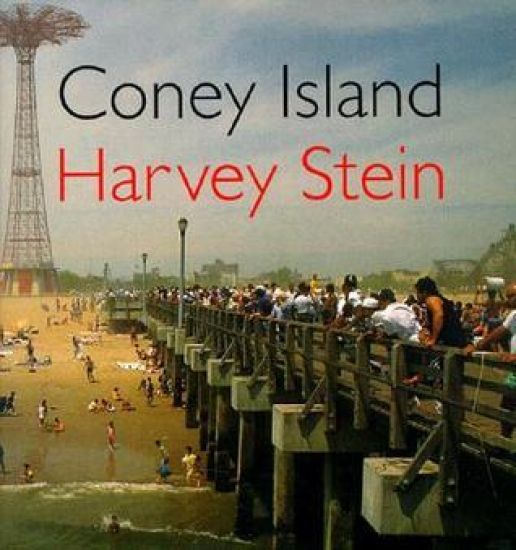
Coney Island

Coney Island

Harvey Stein

WW Norton Co
1998
nidottu
Referred to as the "Sodom by the Sea" by the New York Times in 1894, this most famed amusement complex was a twenty-block mecca for rollercoasters, side shows, carnival acts of all kinds, and food without end. Home of Famous Nathan's Hot Dogs, a lively boardwalk, and a white sand beach that at times was so filled you couldn't lie down, Coney Island was the summer destination for generations of city dwellers who couldn't afford the Catskills or the Hamptons. Today, Coney Island remains a vivid living reminder of the past and still attracts sun worshipers and thrill seekers. It has been the favorite subject of photographers for decades. And all who know or ever knew it will rejoice in this book.